ART
BEAUTY & WELLNESS
CRAFT
CULTURE & HISTORY
ENTERTAINMENT
ENVIRONMENT
FOOD & DRINKS
REVERSE ENGINEERING
SCIENCES
SPORTS
TECHNOLOGY
WEARABLES
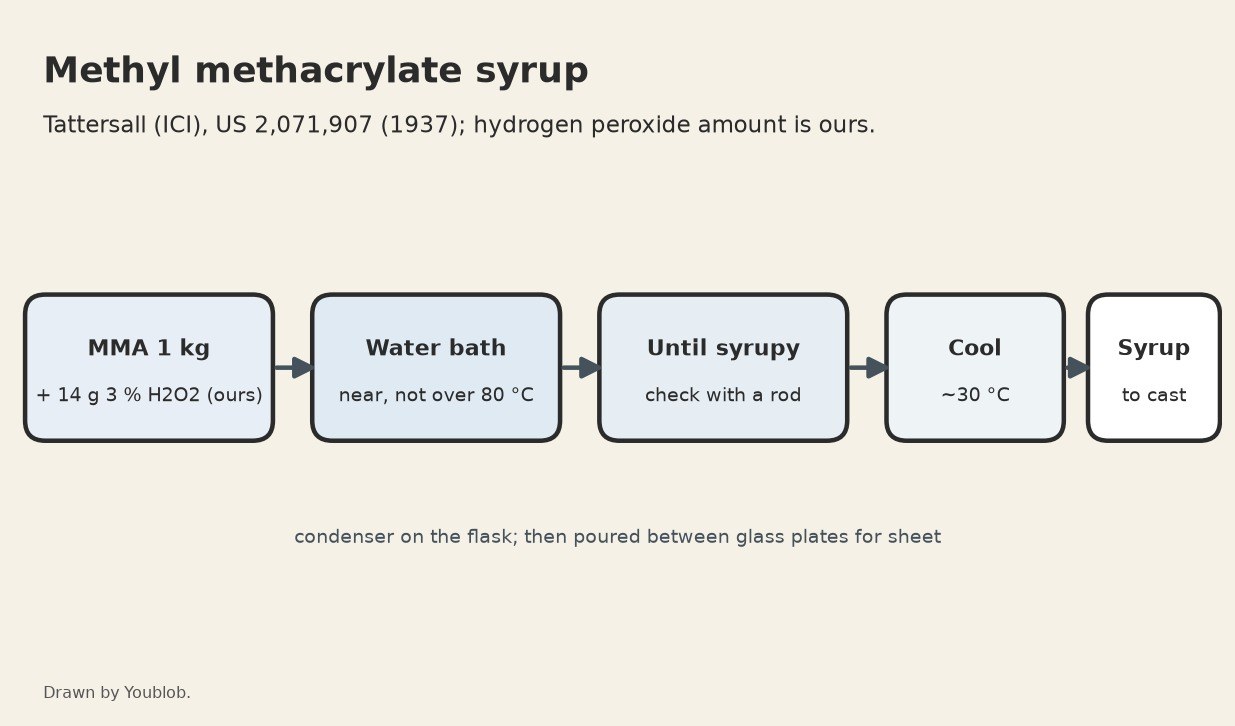


Methyl Methacrylate Syrup: Partly Polymerised below 80 °C with Hydrogen Peroxide
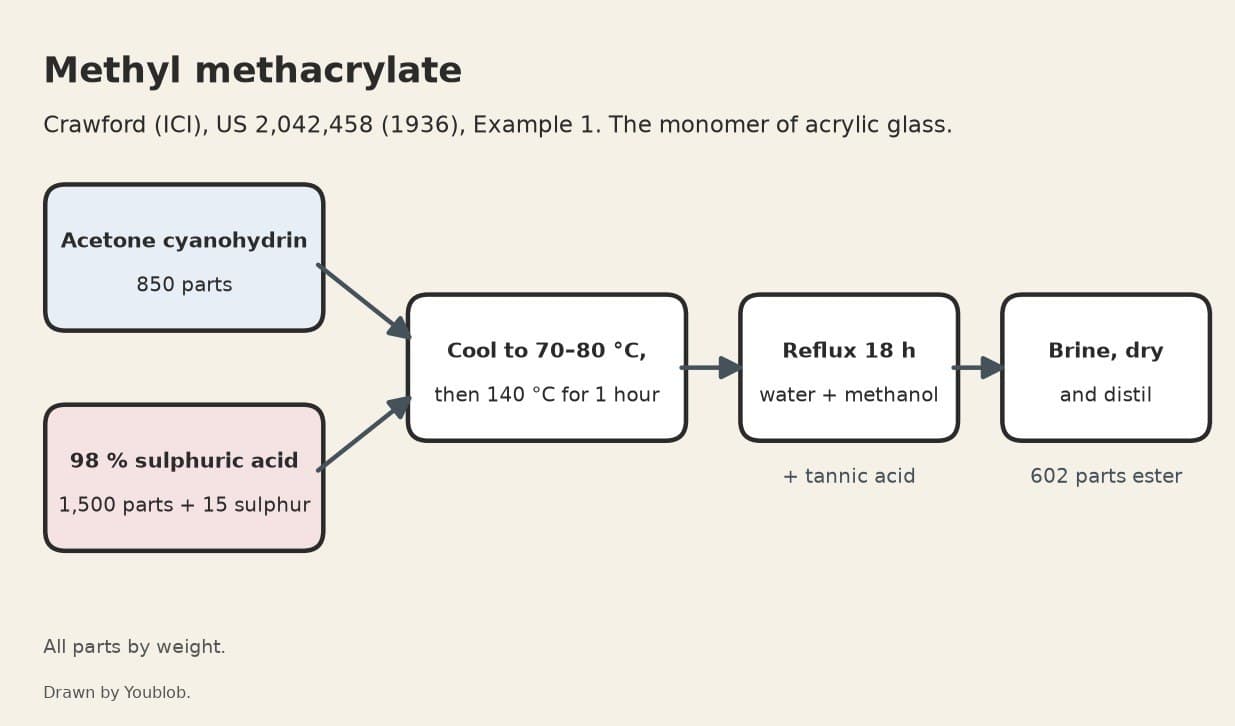
Methyl methacrylate syrup is the monomer partly polymerised until it is thick: the stock that is poured between glass plates to cast acrylic sheet. ICI's Tattersall (US 2,071,907, 1937) heats the liquid monomer with a little catalyst, never above 80 °C, until it is syrupy, then cools it. His example used benzoyl peroxide and he names hydrogen peroxide as an alternative but gives no amount. Our choice: 14 g of 3 % hydrogen peroxide per kg of monomer, as many peroxide molecules as his 0.3 % benzoyl peroxide. Methyl methacrylate is flammable: no open flame.
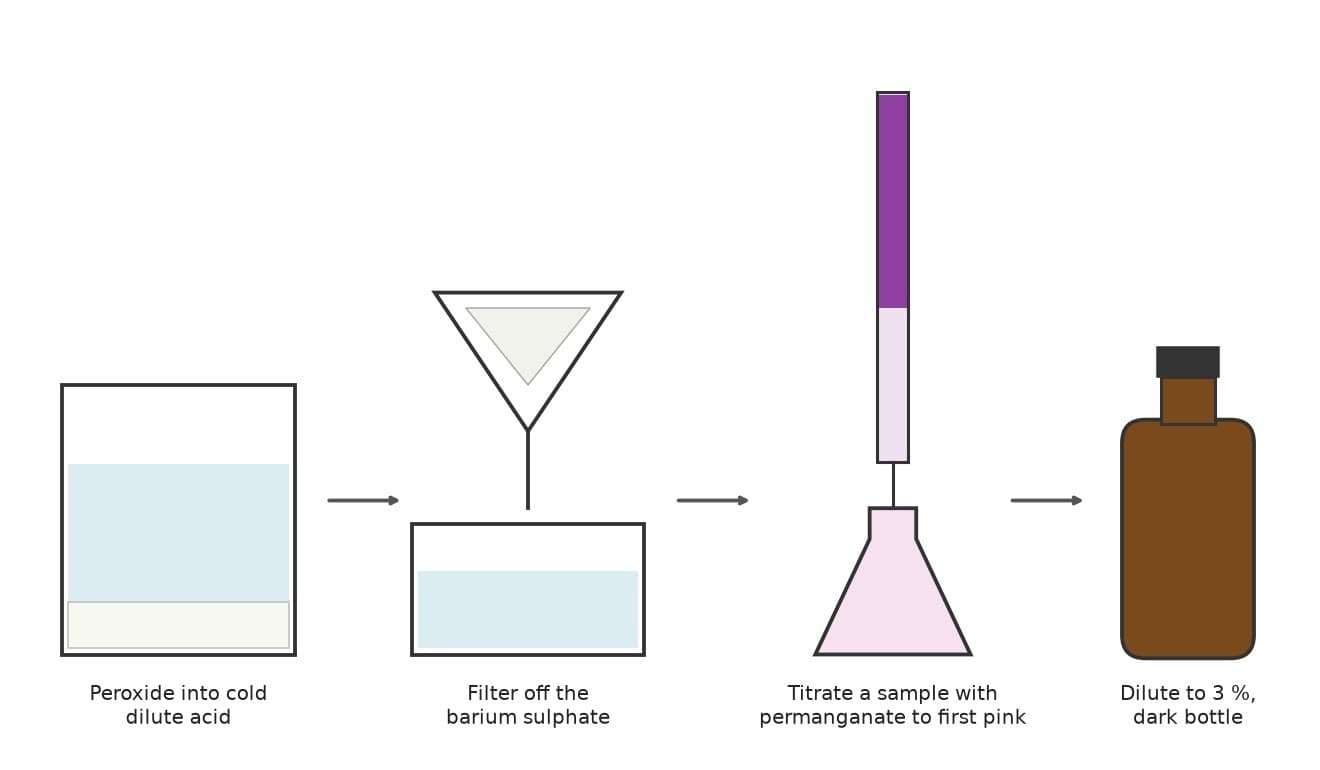
The picture: our diagram.
Intermediate
Half a day
Instructions
1
1
Weigh monomer and peroxide
Weigh monomer and peroxide
Weigh liquid methyl methacrylate into a round-bottom flask and add 14 g of 3 % hydrogen peroxide per kg of monomer (our amount; the patent only says a relatively small amount).
Materials for this step:
 Methyl Methacrylate1 kg
 Hydrogen Peroxide (3%)14 g
Tools needed:
 Round-Bottom Flask
 Balance Scale
 Chemical Splash Goggles
 Rubber Gloves
 Fume Hood (Ducted)
2
2
Heat, never above 80 °C
Heat, never above 80 °C
Fit a reflux condenser and warm the flask in a water bath to near but not above 80 °C. Above 80 °C the finished sheet is not flawless; lower temperatures work but take longer.
Tools needed:
Round-Bottom Flask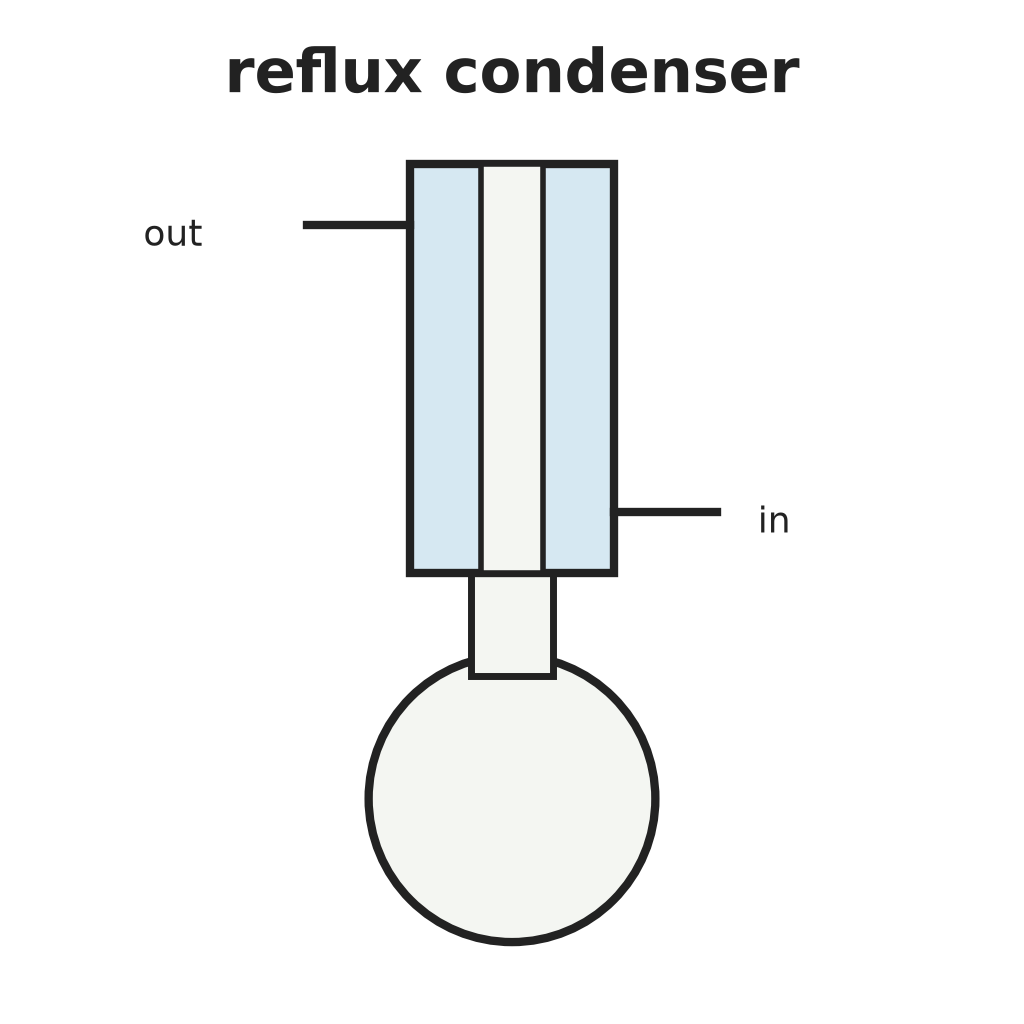 Reflux Condenser
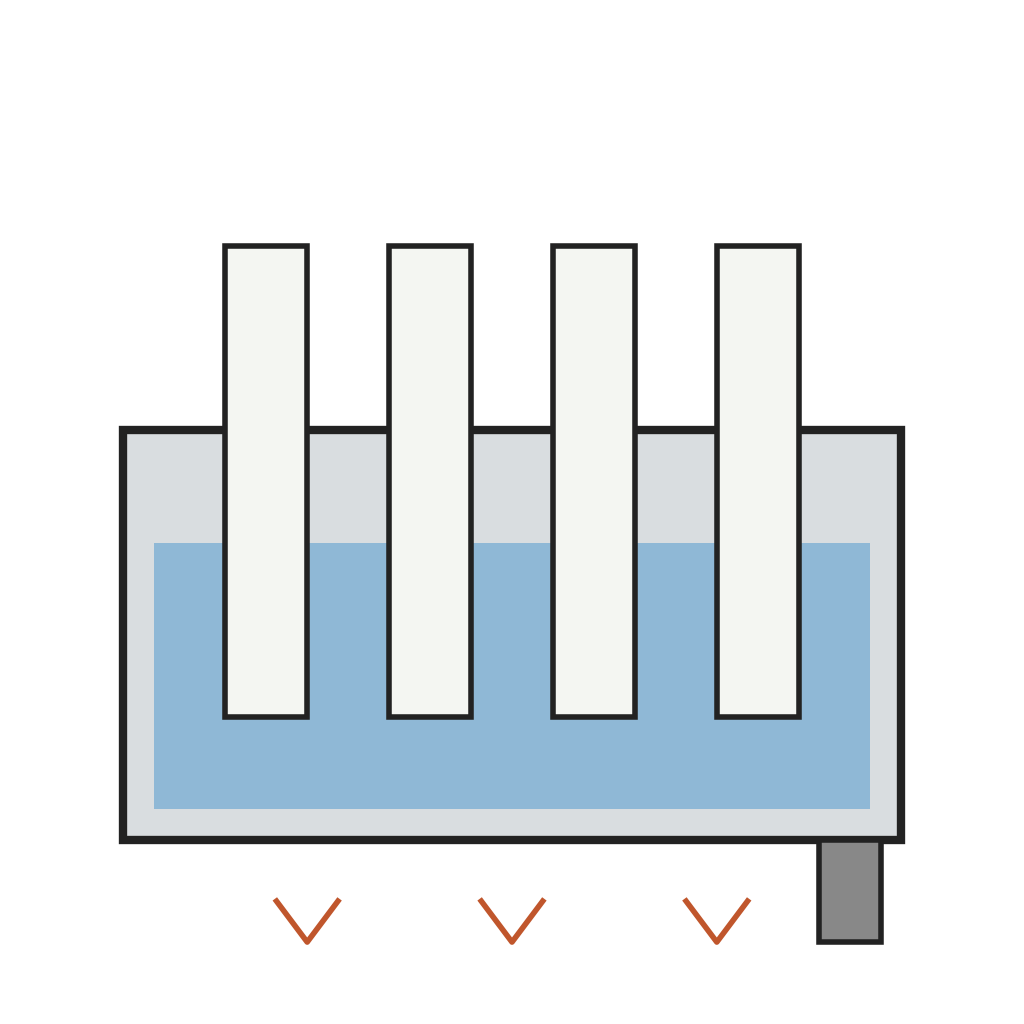 Water Bath
 Hot Plate
 Thermometer - LabFume Hood (Ducted)
3
3
Stop when it is syrupy
Stop when it is syrupy
Check the thickness now and then with a glass rod. Stop when the liquid has become a syrup. The patent took its example to a molecular weight of 3000, measured by viscosity, and gives no time.
Tools needed:
 Glass Stirring RodThermometer - Lab
4
4
Cool to room temperature
Cool to room temperature
Cool the syrup to about room temperature (30 °C in the example) in cold water. It is then ready to pour between glass plates and cast into sheet.
Tools needed:
 Water Cooling BathThermometer - LabRubber Gloves
Materials
2- Placeholder
- Placeholder
Tools Required
11- Placeholder
- Placeholder
- Placeholder
- Placeholder
- Placeholder
- Placeholder
- Placeholder
- Placeholder
- Placeholder
- Placeholder
- Placeholder
This blueprint makes
Related Blueprints
These blueprints share knowledge with this one — techniques, materials, or principles that connect them in the learning graph.
CC0 Public Domain
This blueprint is released under CC0. You are free to copy, modify, distribute, and use this work for any purpose, without asking permission.
Support the Maker by purchasing products through their Blueprint where they earn a Maker Commission set by Vendors, or create a new iteration of this Blueprint and include it as a connection in your own Blueprint to share revenue.