ART
BEAUTY & WELLNESS
CRAFT
CULTURE & HISTORY
ENTERTAINMENT
ENVIRONMENT
FOOD & DRINKS
REVERSE ENGINEERING
SCIENCES
SPORTS
TECHNOLOGY
WEARABLES
English

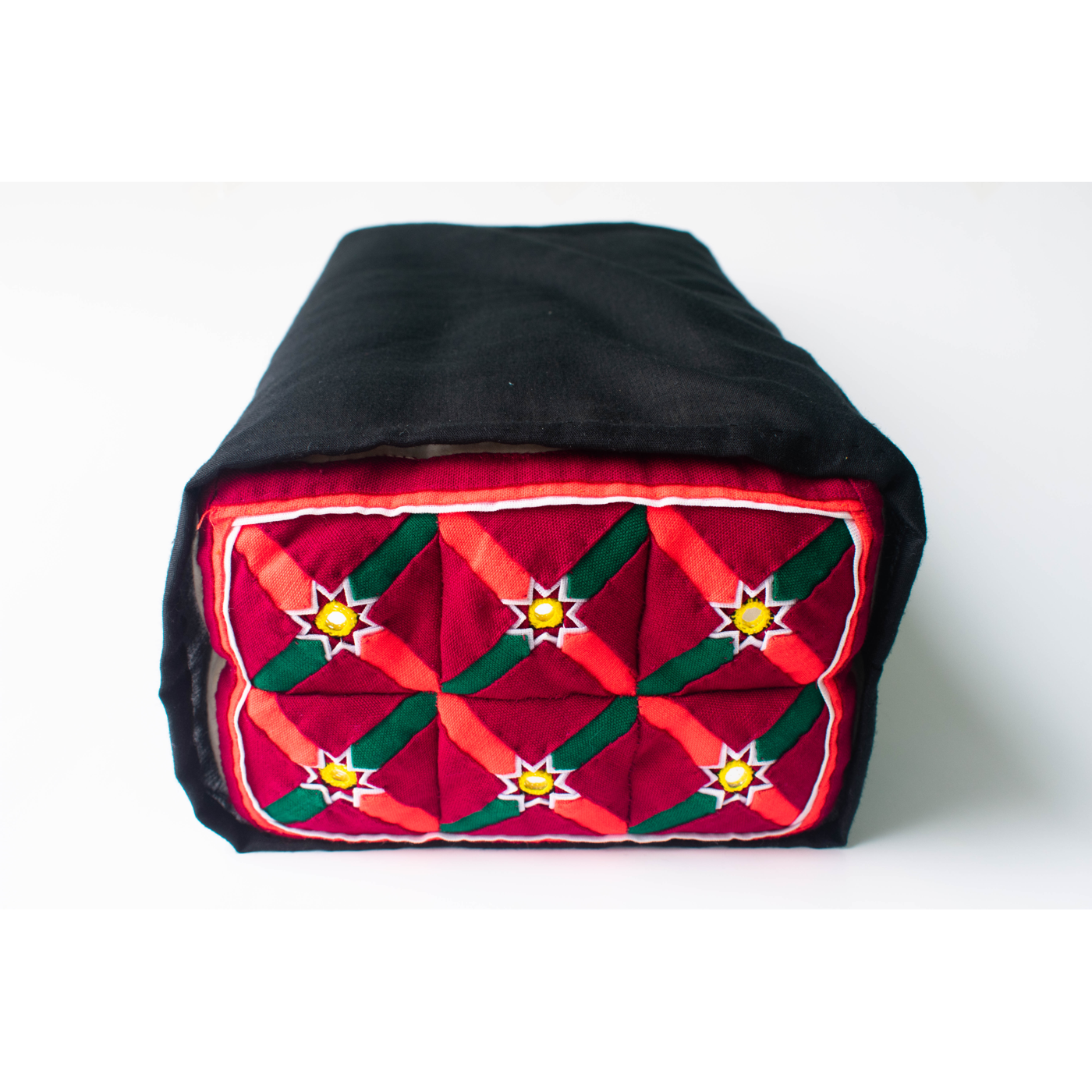
Mon Tai Dam (Tai Dam Kapok Pillow) — Eight White Cotton Tubes Stuffed with Kapok, 18 × 30 × 12 cm, Eight-Petal Appliqué Ends, Black Cotton Case
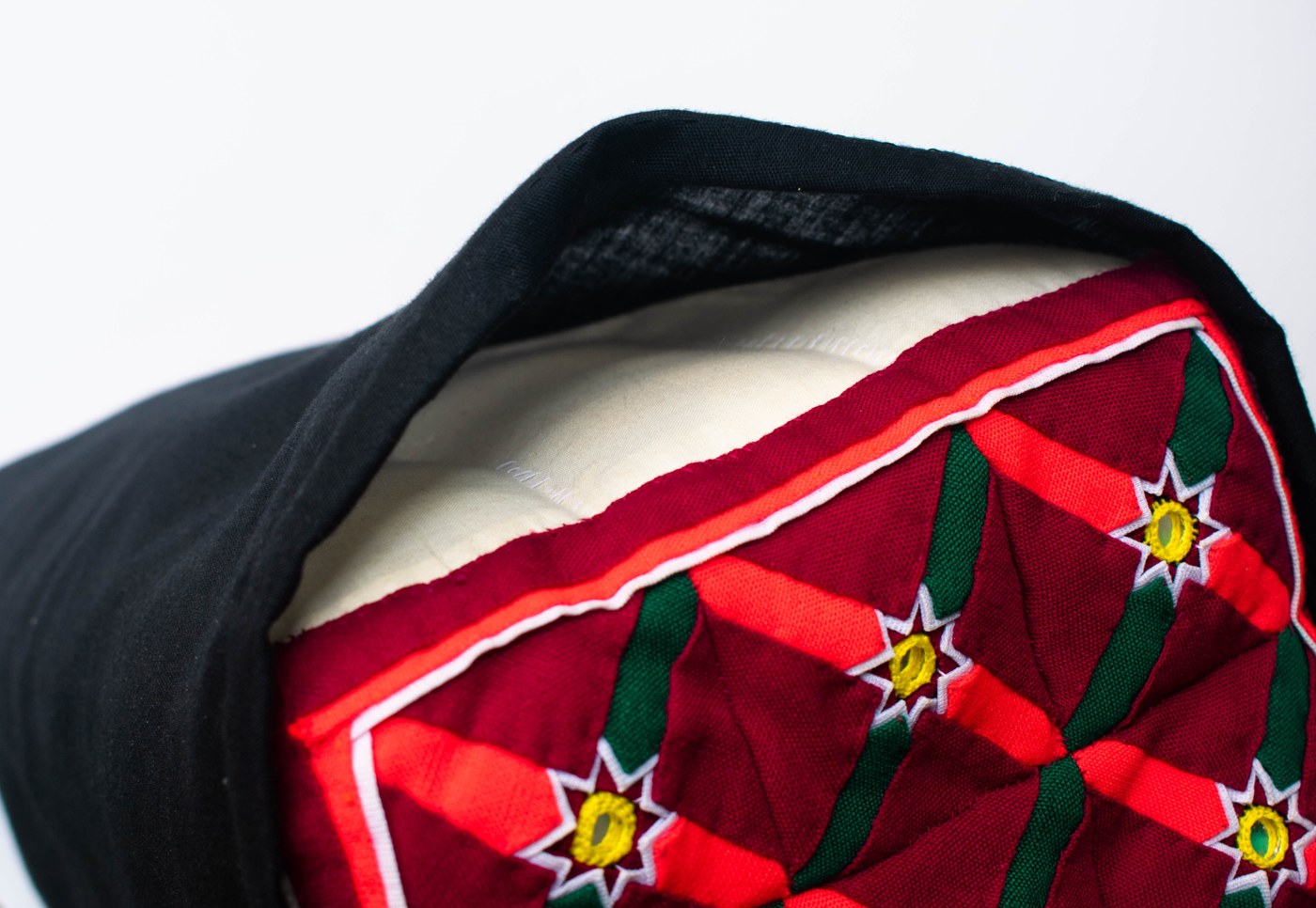
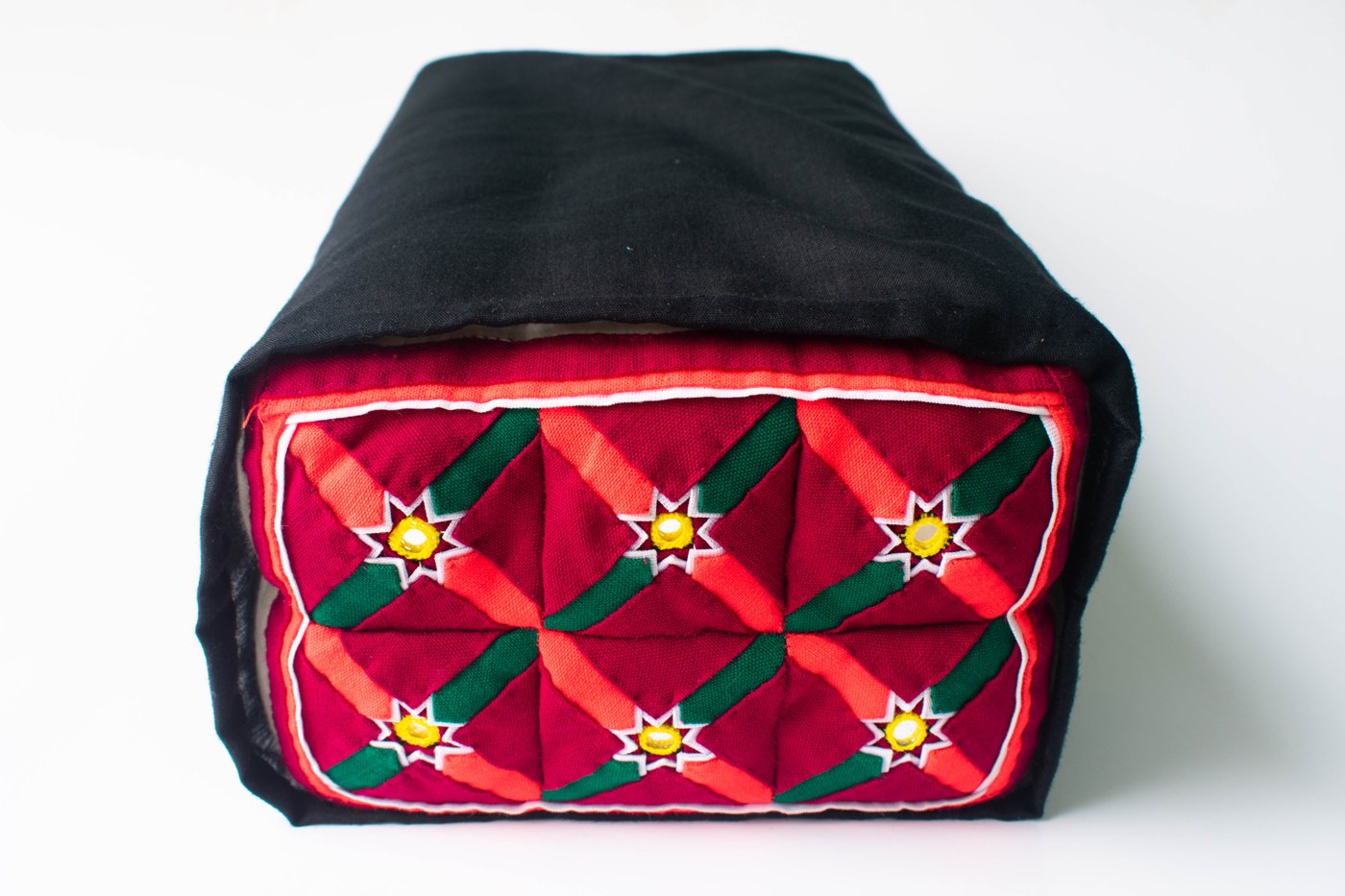
The Tai Dam pillow is a rectangular block; both ends carry multicoloured appliqué in the eight-petal flower pattern. The body is white cotton stuffed firmly with kapok, in a black cotton case.
This blueprint sews a real Tai Dam pillow to the sizes in the source.
Intermediate
Several days
Instructions
1
1
Real sizes
Real sizes
Loading Jupyter Notebook...
2
2
Pillows, before it
Pillows, before it
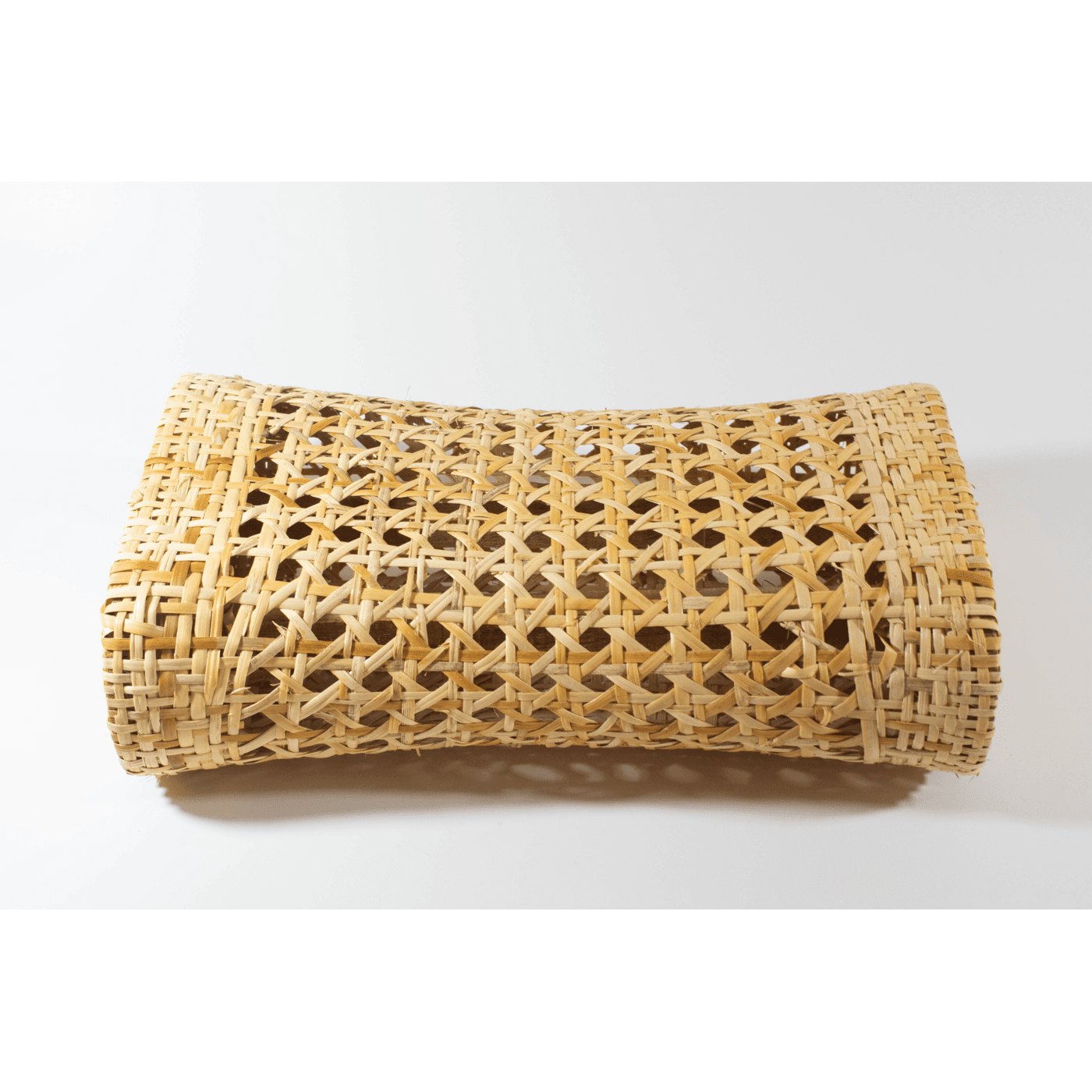
The rattan pillow is woven open; the Tai Dam pillow is sewn from cotton stuffed with kapok, shaped like a brick.
3
3
Read from the source
Read from the source
"Begin by sewing eight pieces of white cloth together lengthwise into tubes like a honeycomb, and stuff kapok tightly into all eight tubes, until from outside it looks like four ridges stacked in two layers." (Sirindhorn Anthropology Centre, author ธันวดี สุขประเสริฐ (Thanwadi Sukprasoet), CC BY 4.0)
4
4
Pillow body
Pillow body
Sew eight pieces of white cotton together lengthwise into honeycomb tubes, stuff all eight tightly with kapok to give four ridges in two layers, and sew a piece over each end. This gives a brick-shaped pillow 18 cm wide, 30 cm long and 12 cm high.
Materials for this step:
 Cotton Cloth1 piece
 Sewing Thread1 piece
Tools needed:
 Sewing Needle
 Fabric Scissors
5
5
Eight-petal flowers
Eight-petal flowers
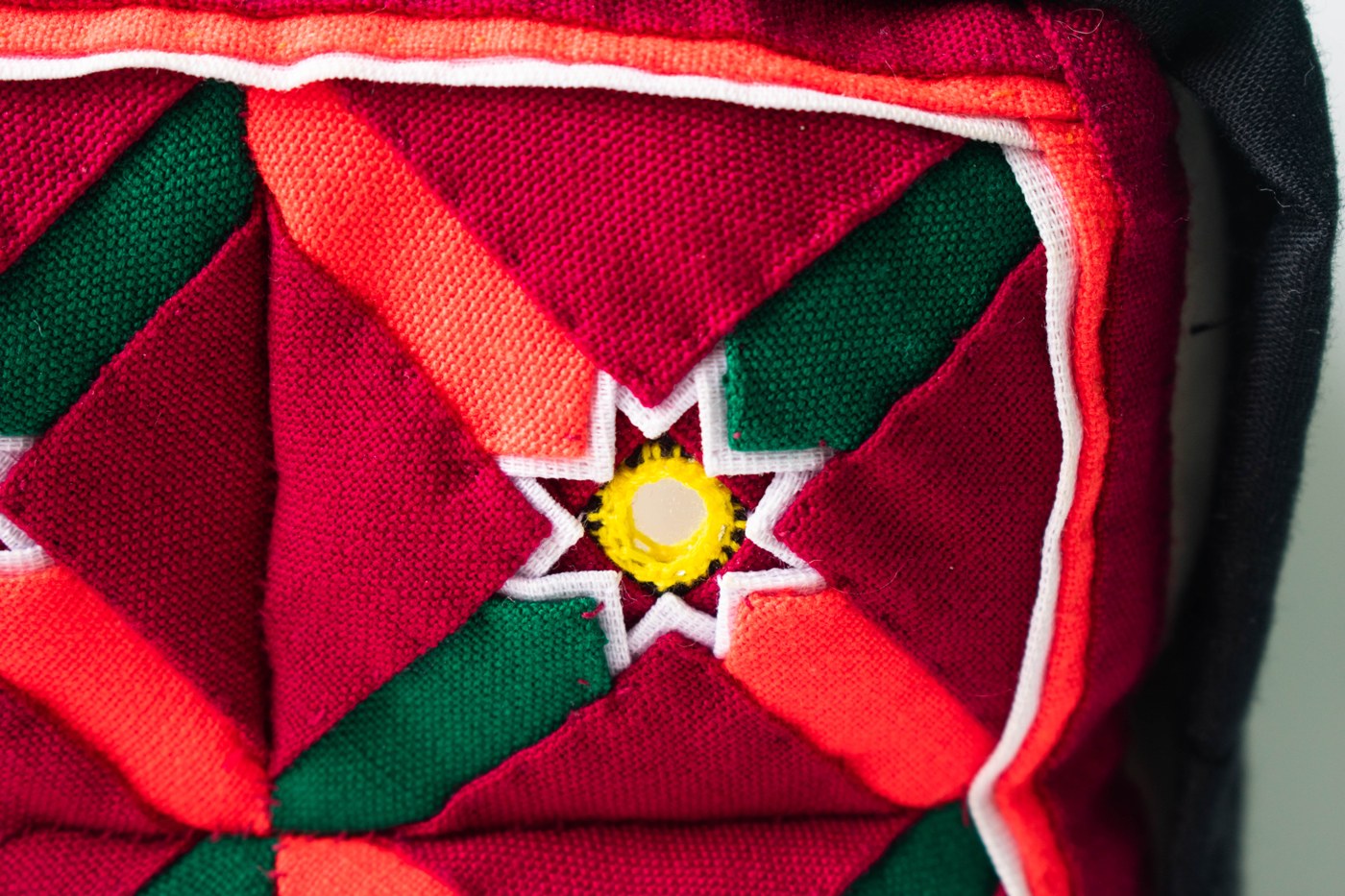
Fold prepared coloured cloth, such as orange, yellow, green and white, into petals: 12 flowers of eight petals each (lai dok paet). Use small mirror pieces or silver sequins as the flower centres. Sew six flowers onto each end of the pillow.
6
6
Pillow case
Pillow case
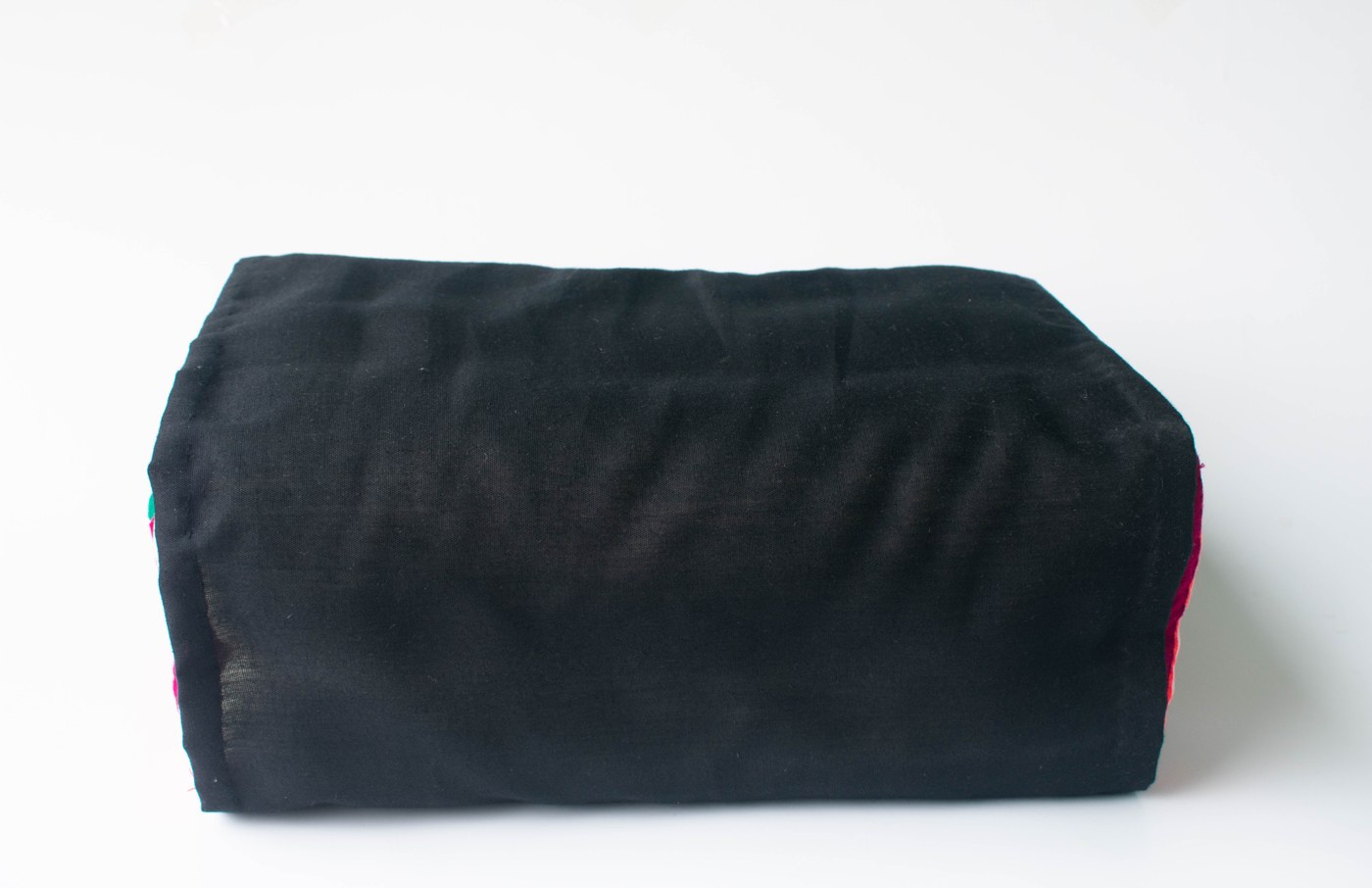
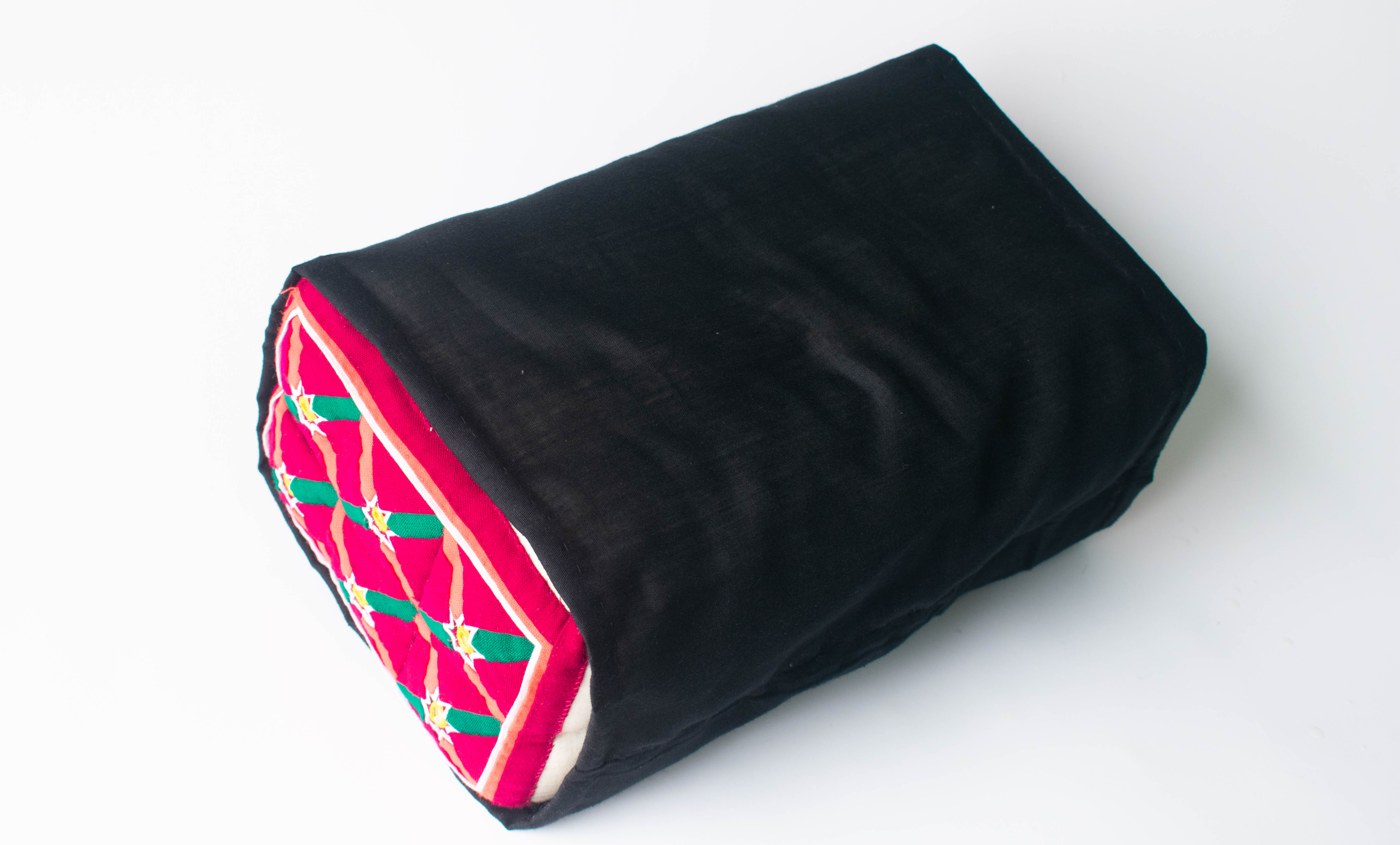
Sew a side-opening case of plain black cotton and slip it over the pillow so it does not hide the end patterns.
7
7
Real photos
Real photos
Photos of a real Tai Dam pillow (Sirindhorn Anthropology Centre, author ธันวดี สุขประเสริฐ (Thanwadi Sukprasoet), CC BY 4.0).
8
8
How it is used
How it is used
Use it as a head rest at home. Tai Dam women made them ready as part of their household goods for after marriage.
9
9
Troubleshooting
Troubleshooting
Troubleshooting the Tai Dam pillow.
Flow
Loading...
10
10
History and limits
History and limits
Pillow-making was an important craft of Tai Dam women, handed down from mother to daughter. The eight-petal pattern comes from the belief in eight Thaen deities who protect whoever wears it. Other favourite patterns are lotus petals and the chan flower. Take care with needle and scissors.
Source: Sirindhorn Anthropology Centre, Traditional Objects of Everyday Use database, "หมอนไทดำ", author ธันวดี สุขประเสริฐ (Thanwadi Sukprasoet) (CC BY 4.0 licence).
**Limits** The source gives no petal size and no step-by-step petal folding, and there is no listing for kapok or mirror pieces, so they are named in the text.
Materials
2- 1 piecePlaceholder
- 1 piecePlaceholder
Tools Required
2- Placeholder
- Placeholder
Related Blueprints
These blueprints share knowledge with this one — techniques, materials, or principles that connect them in the learning graph.
CC0 Public Domain
This blueprint is released under CC0. You are free to copy, modify, distribute, and use this work for any purpose, without asking permission.
Support the Maker by purchasing products through their Blueprint where they earn a Maker Commission set by Vendors, or create a new iteration of this Blueprint and include it as a connection in your own Blueprint to share revenue.