ART
BEAUTY & WELLNESS
CRAFT
CULTURE & HISTORY
ENTERTAINMENT
ENVIRONMENT
FOOD & DRINKS
REVERSE ENGINEERING
SCIENCES
SPORTS
TECHNOLOGY
WEARABLES
English


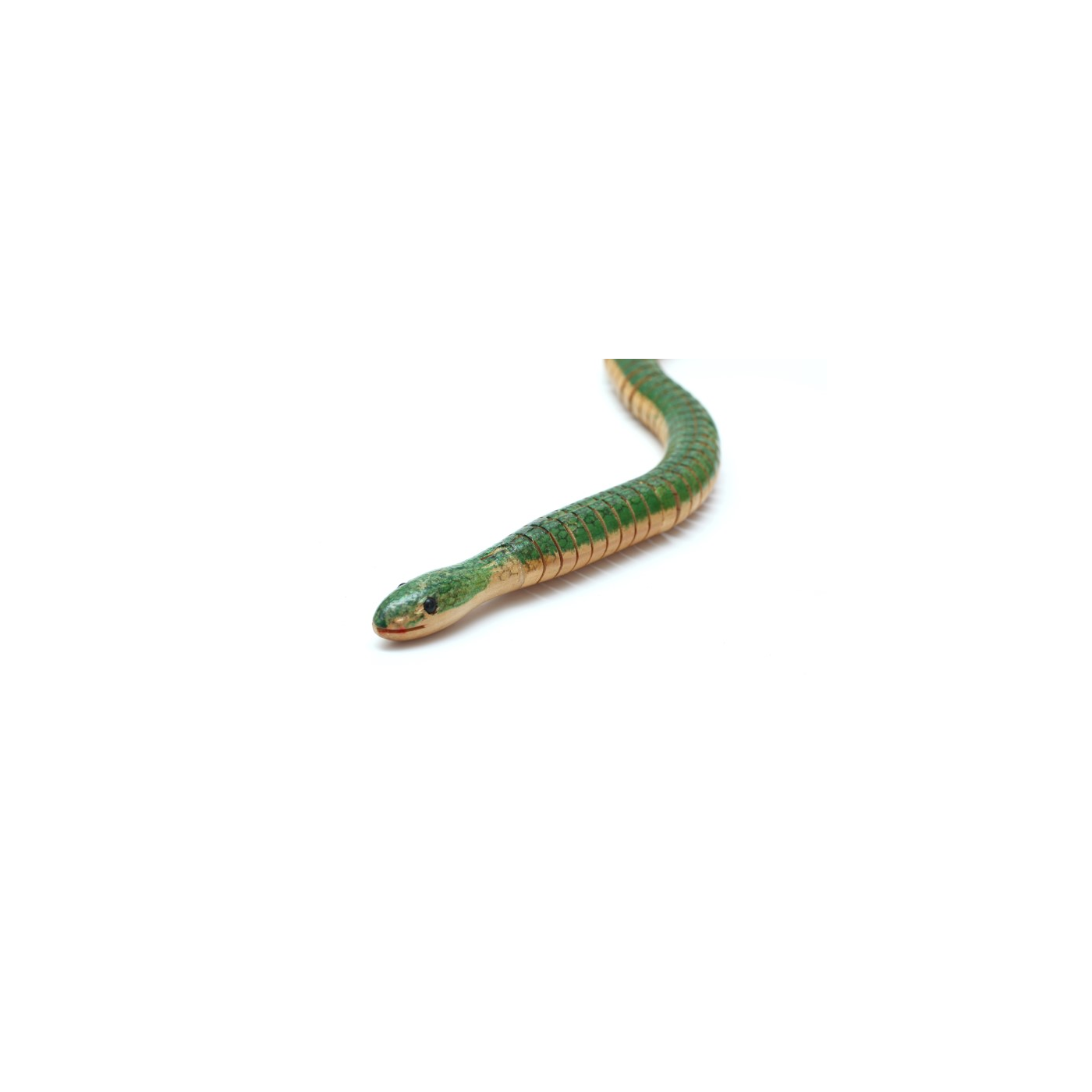
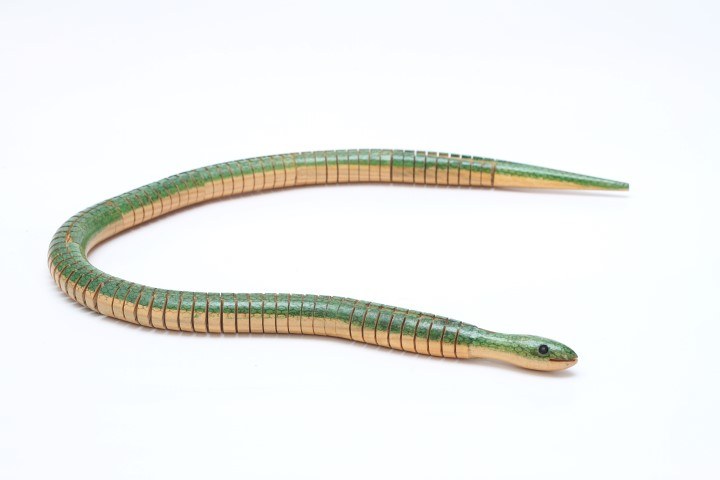
Ngu Mai Rakam (Rakam-Palm Jointed Snake) — a Tapered Rakam Stalk Split in Two over an Unbleached-Cotton Core, a Raised Head of Crate Wood, Kite Paper Skin Painted and Scored into Segments; Waggle the Tail and It Slithers
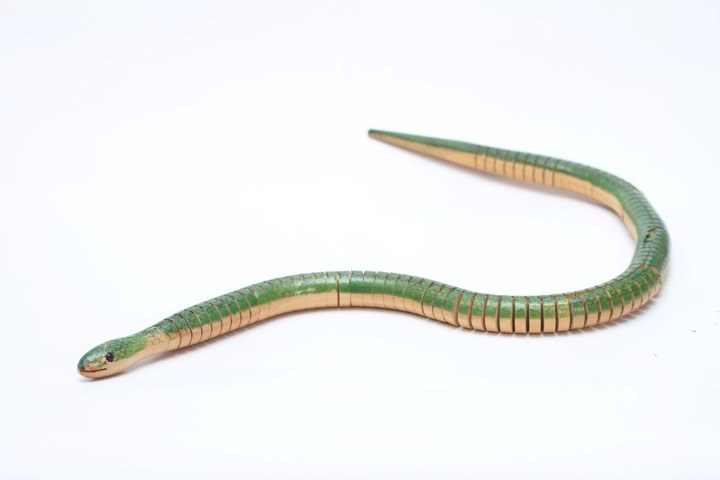
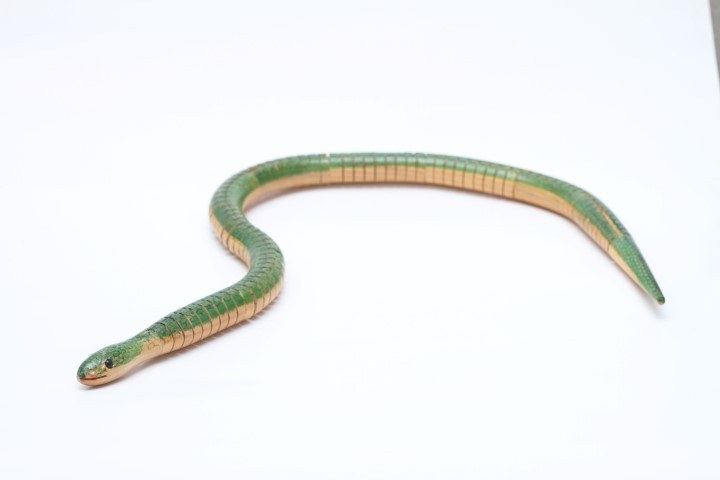
งูไม้ระกำ (ngu mai rakam) is a model-animal toy made from rakam (salak palm) stalk, often made as animals that were common in the past, such as snakes, squirrels and crocodiles; it helps children learn about nature. The body is scored into segments, so waggling the tail makes it slither like a real snake.
This blueprint makes a real ngu mai rakam following the steps in the source.
Intermediate
About 1 day, including glue drying
Instructions
1
1
Parts
Parts
Loading Jupyter Notebook...
2
2
Model-animal toys, before it
Model-animal toys, before it
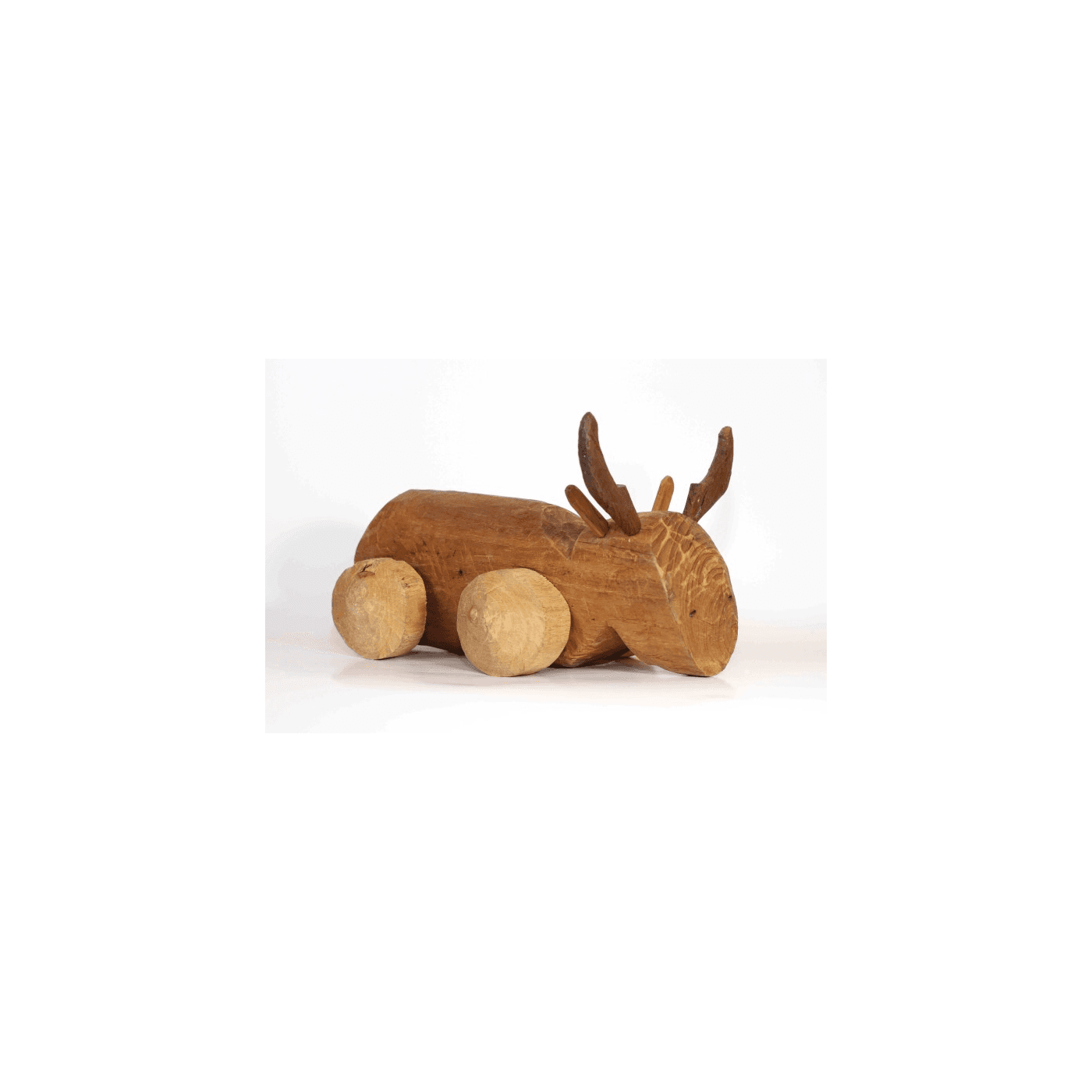
The sat lo moves on wheels; the ngu mai rakam slithers because its segmented body rides on a cloth core.
3
3
Read from the source
Read from the source
"Score the snake's body into segments with a knife so it moves like a slithering snake." (Sirindhorn Anthropology Centre, author not named, CC BY 4.0)
4
4
Body and cloth core
Body and cloth core
Cut rakam stalk to the length you want, shave it into a snake that tapers at the tail, and split it into 2 equal halves along its whole length. Cut unbleached cotton as tall as the body and as long as the snake, glue both faces, and press the two rakam halves onto it, one each side, leaving the cloth edge standing a little above the wood along the top. Let it dry; the cloth becomes the body's core.
Materials for this step:
 Fabric1 piece
 Glue1 piece
Tools needed:
 Knife
Knife Scissors
5
5
Head
Head
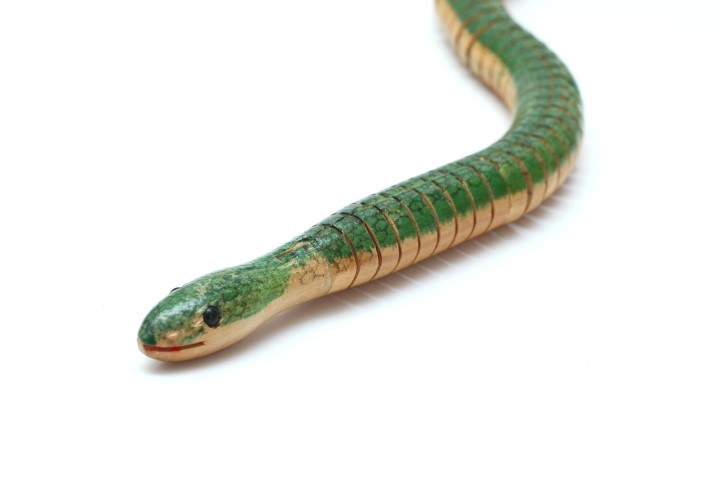
Shave crate wood or plywood into a snake's head raised off the ground, sized to fit the body, and glue it on.
Tools needed:
 Hand Saw
6
6
Skin and segments
Skin and segments
Glue kite paper round the head and body so it lies flat against the wood all along, and let it dry. Paint snake markings on the paper, then score the body into segments with a knife.
Materials for this step:
 Paper1 piece
7
7
Real photos
Real photos
Photos of a real ngu mai rakam (Sirindhorn Anthropology Centre, author not named, CC BY 4.0)
8
8
How to play
How to play
Hold the snake's tail and waggle it left and right; the body slithers like a real snake. Older children who understand snakes use it to tease each other; small children should not play with it, because if they meet a real snake they may try to pick it up. It is also hung in fruit trees to keep birds from pecking the fruit, or under the eaves to keep sparrows from nesting.
9
9
Troubleshooting
Troubleshooting
Troubleshooting the ngu mai rakam.
Flow
Loading...
10
10
History and limits
History and limits
Rakam toys were made as animals common in the past, such as snakes, squirrels and crocodiles. Small children should not play with it, as they may then handle a real snake. Take care with the knife and saw.
Source: Sirindhorn Anthropology Centre, Traditional Objects of Everyday Use database, "งูไม้ระกำ", author not named (CC BY 4.0 licence).
**Limits** The source gives no snake length or segment spacing. There are no product lines for rakam stalk, plywood or general paint.
Related Blueprints
These blueprints share knowledge with this one — techniques, materials, or principles that connect them in the learning graph.
CC0 Public Domain
This blueprint is released under CC0. You are free to copy, modify, distribute, and use this work for any purpose, without asking permission.
Support the Maker by purchasing products through their Blueprint where they earn a Maker Commission set by Vendors, or create a new iteration of this Blueprint and include it as a connection in your own Blueprint to share revenue.