ART
BEAUTY & WELLNESS
CRAFT
CULTURE & HISTORY
ENTERTAINMENT
ENVIRONMENT
FOOD & DRINKS
REVERSE ENGINEERING
SCIENCES
SPORTS
TECHNOLOGY
WEARABLES
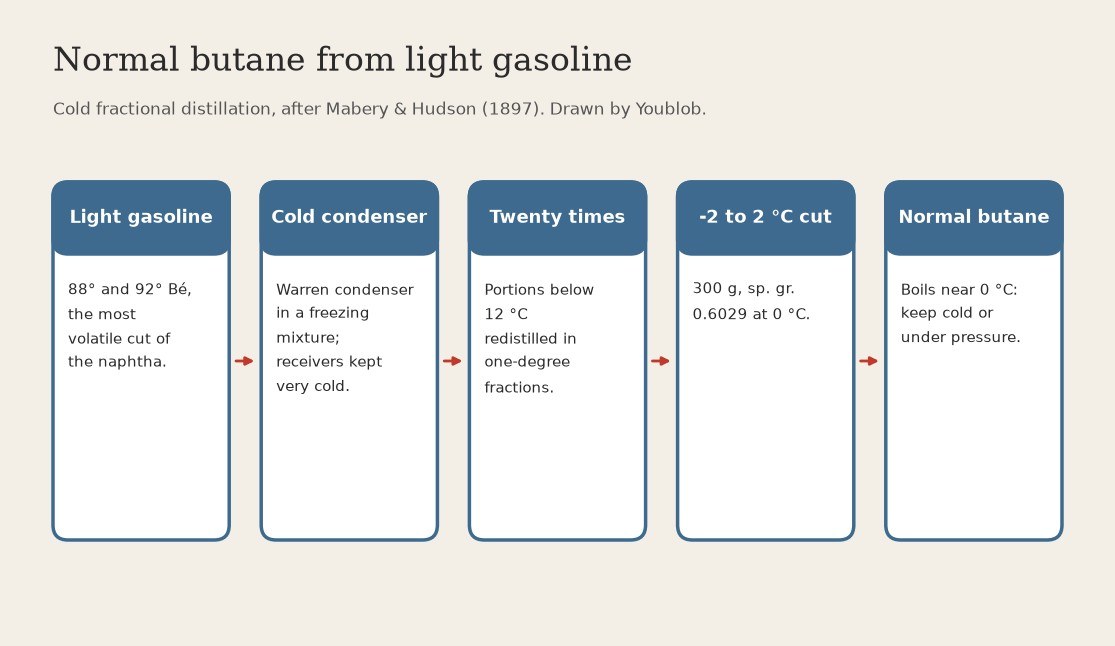


Normal Butane: the 0 °C Cut of the Lightest Gasoline, Distilled Twenty Times in the Cold (Mabery & Hudson 1897)
The lightest gasoline still holds butane, a gas that boils at about 0 °C. Distil it again and again through a condenser packed in a freezing mixture, and the butane gathers as a cut between -2 and 2 °C.
Result: 300 grams within -2 to 2 °C, specific gravity 0.6029 at 0 °C, vapour density 2.07 (2.01 calculated for butane). Very little came over below -10 °C.
Note: Mabery & Hudson named this cut isobutane. By the boiling points in Ipatieff & Pines, US 2,318,226 (normal butane +0.5 °C, isobutane -10.5 °C), a cut at 0 °C is normal butane, and it is built here as such.
Source: Mabery & Hudson, Proc. Amer. Acad. 32 (1897), pp. 101-111. Not given: the freezing mixture, how the butane was stored. Extremely flammable: no flame near. Picture drawn by Youblob.
Expert
3 months
Instructions
1
1
Take the lightest gasoline
Take the lightest gasoline
Start from the most volatile gasoline you can get. Mabery & Hudson used 88° and 92° Baumé gasoline, the second distillate of Pennsylvania and Ohio naphtha, collected at the refinery in lots of 45 litres while the air was below 0 °F. 250 litres were worked in all.
Materials for this step:
 Gasoline250 liters
Tools needed:
 Glass Distillation Flask
2
2
Distil through a condenser in a freezing mixture
Distil through a condenser in a freezing mixture
Distil from a flask through a Warren condenser filled with a freezing mixture, and keep every receiver very cold to avoid loss. The paper does not give the mixture. Ours: crushed ice and salt.
Tools needed:
Glass Distillation Flask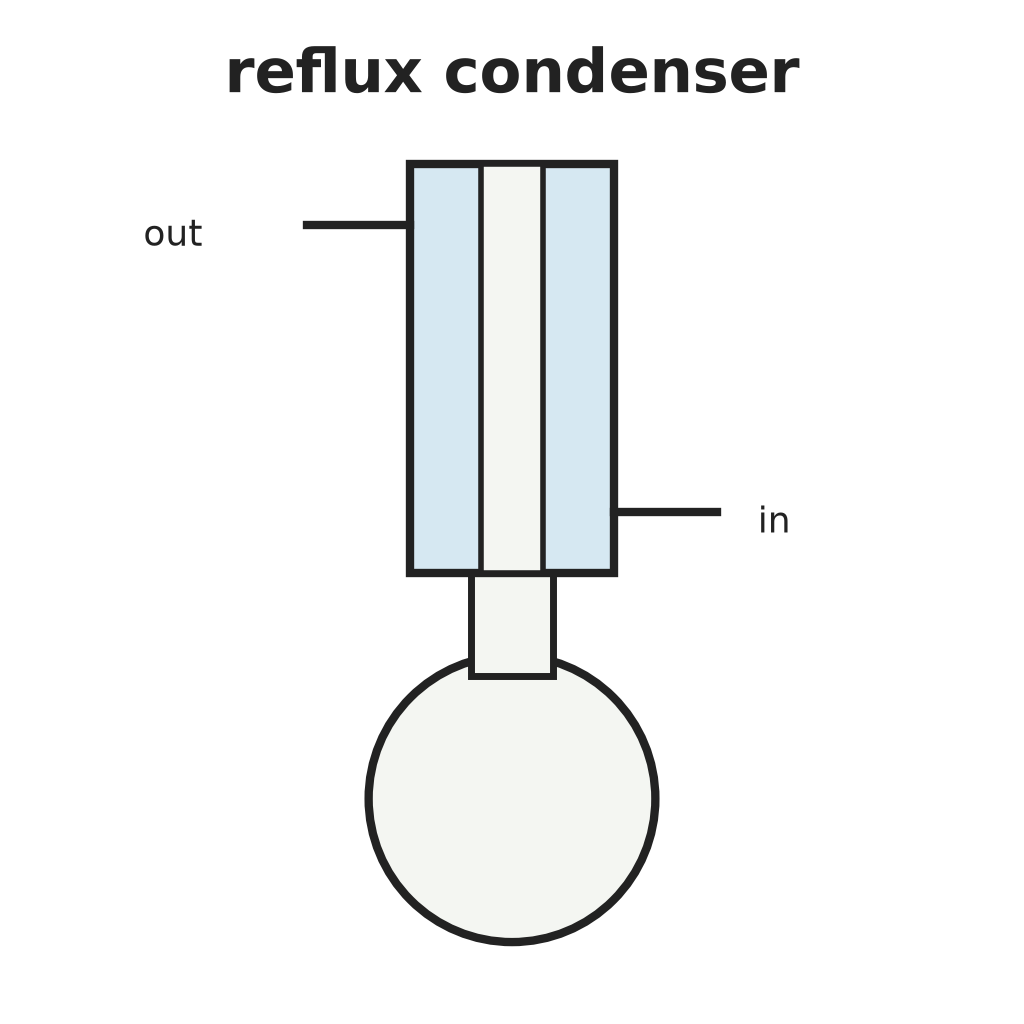 Reflux Condenser
 Crushed Ice
 Salt
 Thermometer - Lab
3
3
Let the lightest portions boil from room heat
Let the lightest portions boil from room heat
The portions from -20 to -10 °C boil from the heat of the surrounding air alone. Regulate them by cooling the still, not by heating it.
Tools needed:
Glass Distillation FlaskCrushed IceSaltThermometer - Lab4
4
Redistil everything below 12 °C twenty times
Redistil everything below 12 °C twenty times
Collect in single-degree fractions and distil the portions below 12 °C again, twenty times over. By the twentieth run almost nothing stays between 5 and 20 °C, and the butane gathers between -2 and 2 °C.
Tools needed:
Glass Distillation FlaskReflux CondenserCrushed IceSaltThermometer - Lab5
5
Keep the -2 to 2 °C cut
Keep the -2 to 2 °C cut
This is the butane: 300 grams in Mabery & Hudson's run, specific gravity 0.6029 at 0 °C. It boils at about 0 °C, so it must be kept cold or under pressure. Ours: condense it into a pressure gas cylinder.
Tools needed:
 Pressure Gas CylinderThermometer - Lab
This blueprint makes
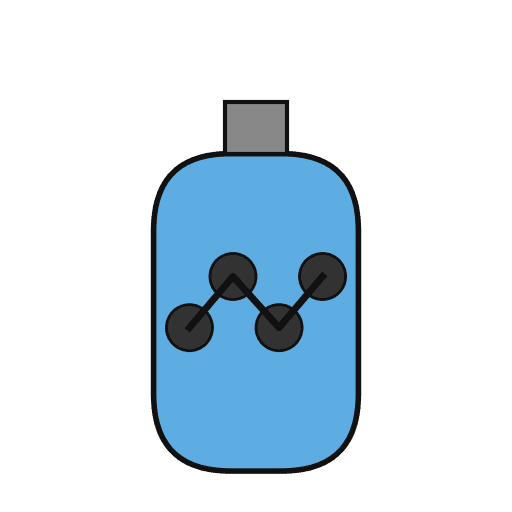
Related Blueprints
These blueprints share knowledge with this one — techniques, materials, or principles that connect them in the learning graph.
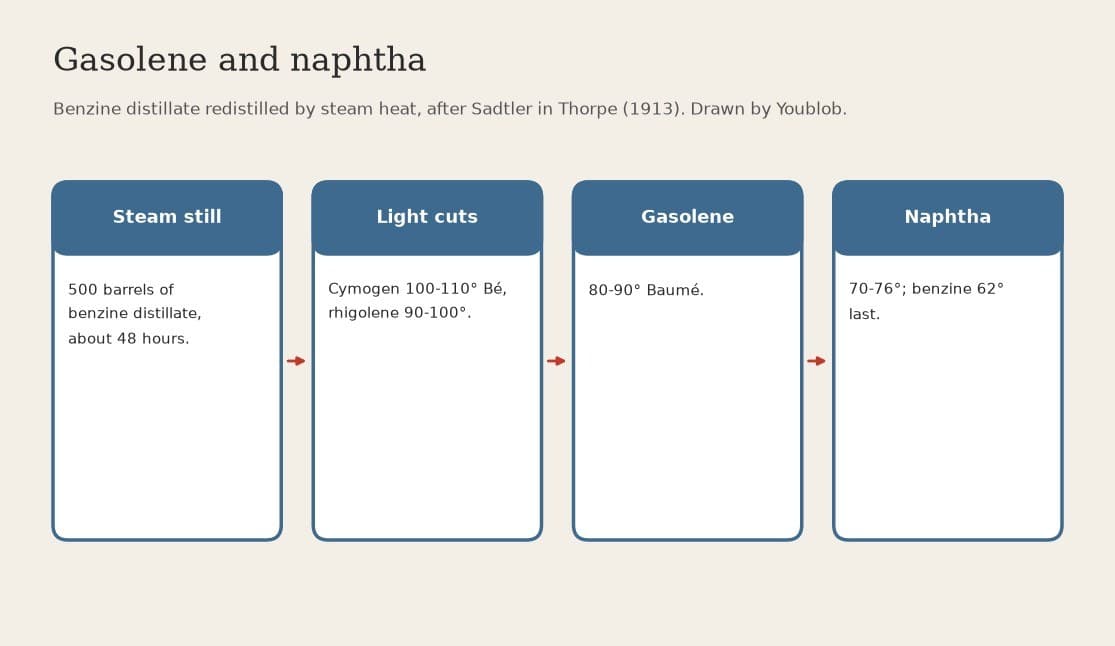
CC0 Public Domain
This blueprint is released under CC0. You are free to copy, modify, distribute, and use this work for any purpose, without asking permission.
Support the Maker by purchasing products through their Blueprint where they earn a Maker Commission set by Vendors, or create a new iteration of this Blueprint and include it as a connection in your own Blueprint to share revenue.