Collaboration
ART
BEAUTY & WELLNESS
CRAFT
CULTURE & HISTORY
ENTERTAINMENT
ENVIRONMENT
FOOD & DRINKS
REVERSE ENGINEERING
SCIENCES
SPORTS
TECHNOLOGY
WEARABLES
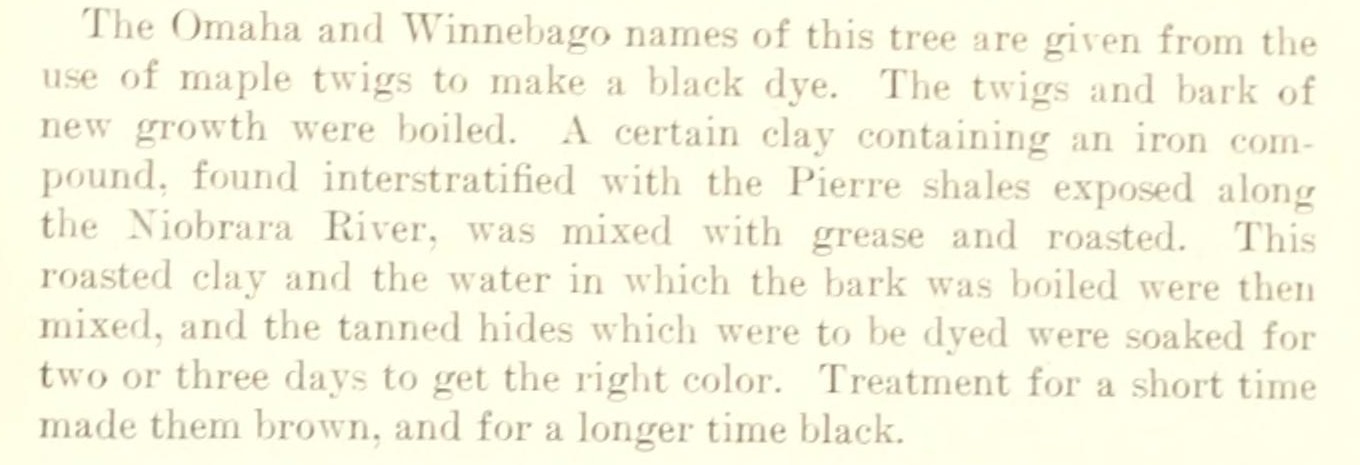

Omaha and Winnebago Black Dye for Tanned Hides: Soft Maple Twigs Boiled, Iron Clay Roasted with Grease (Gilmore, 1919)
Why the Omaha and Winnebago called the soft maple "tree to dye black", from Melvin Gilmore's record: twigs and bark of new growth boiled, an iron-bearing clay roasted with grease and stirred in, and tanned hides soaked in it two or three days: a short soak gives brown, a long one black.
Beginner
Two or three days of soaking
Instructions
1
1
Read Gilmore
Read Gilmore
"Treatment for a short time made them brown, and for a longer time black."
2
2
Boil the maple
Boil the maple
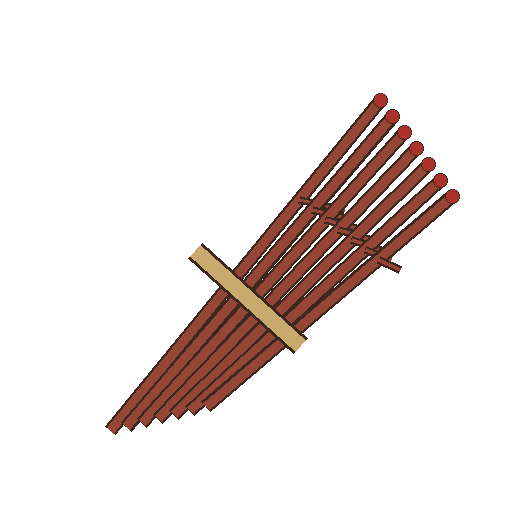
Cut twigs and bark of new growth from a soft maple and boil them in water (amounts and time ours: a pot packed with twigs, boiled until the water is dark).
Materials for this step:
 Soft Maple Twigs1 piece
 Water1 piece
Tools needed:
 Knife
 Iron Kettle
 Fire Pit
3
3
Roast the clay
Roast the clay
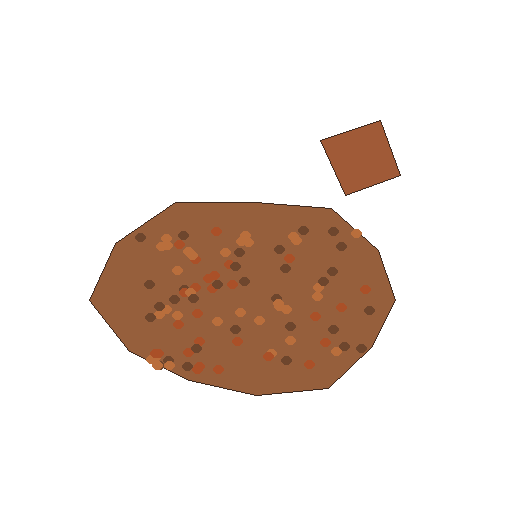
Mix the iron-bearing clay with grease and roast it (theirs came from beds in the Pierre shale along the Niobrara River). Ours: in an old pan over the fire until it darkens.
Materials for this step:
 Iron-bearing Clay1 piece
 Animal Fat (Tallow)1 piece
Tools needed:
Iron KettleFire Pit4
4
Mix and soak the hides
Mix and soak the hides
Stir the roasted clay into the maple water and soak the tanned hides in it for two or three days. Take them out early for brown, leave them longer for black. Rinse and dry them (ours).
Materials for this step:
 Buckskin1 piece
Tools needed:
 Large Dye Pot
5
5
Troubleshooting
Troubleshooting
Hide dye troubleshooting.
Flow
Loading...
6
6
History and honest limits
History and honest limits
From Melvin R. Gilmore, *Uses of Plants by the Indians of the Missouri River Region*, **33rd Annual Report of the Bureau of American Ethnology** (1919), pp. 100-101 (checked on the archive.org scan usesofplantsbyin00gilm). The Omaha-Ponca and Winnebago names of the soft maple both mean "tree to dye black". Gilmore gives no amounts or times except the soak: amounts, boiling and roasting, rinsing, and tallow as the grease are ours.
Materials
5- 1 piecePlaceholder
- 1 piecePlaceholder
- 1 piecePlaceholder
- 1 piecePlaceholder
- 1 piecePlaceholder
This blueprint makes
Related Blueprints
These blueprints share knowledge with this one — techniques, materials, or principles that connect them in the learning graph.
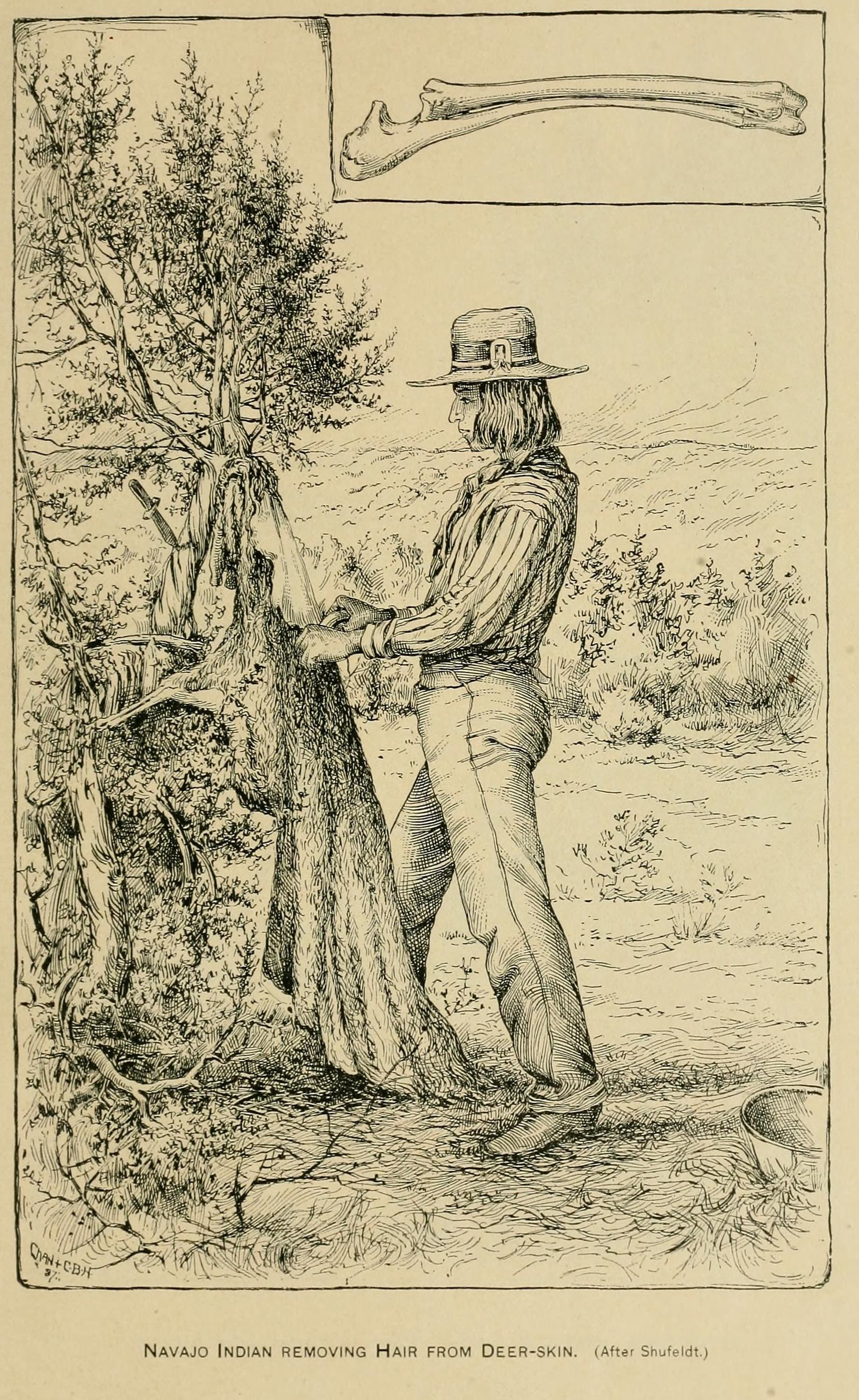
Navajo Buckskin: Hair Shaved with the Deer's Own Foreleg Bone, Brains Rubbed In, Wrung on a Tree, Worked Dry over the Feet (Shufeldt, 1888)
by Tex
Textile & Leather
4
0
0
0
0
0
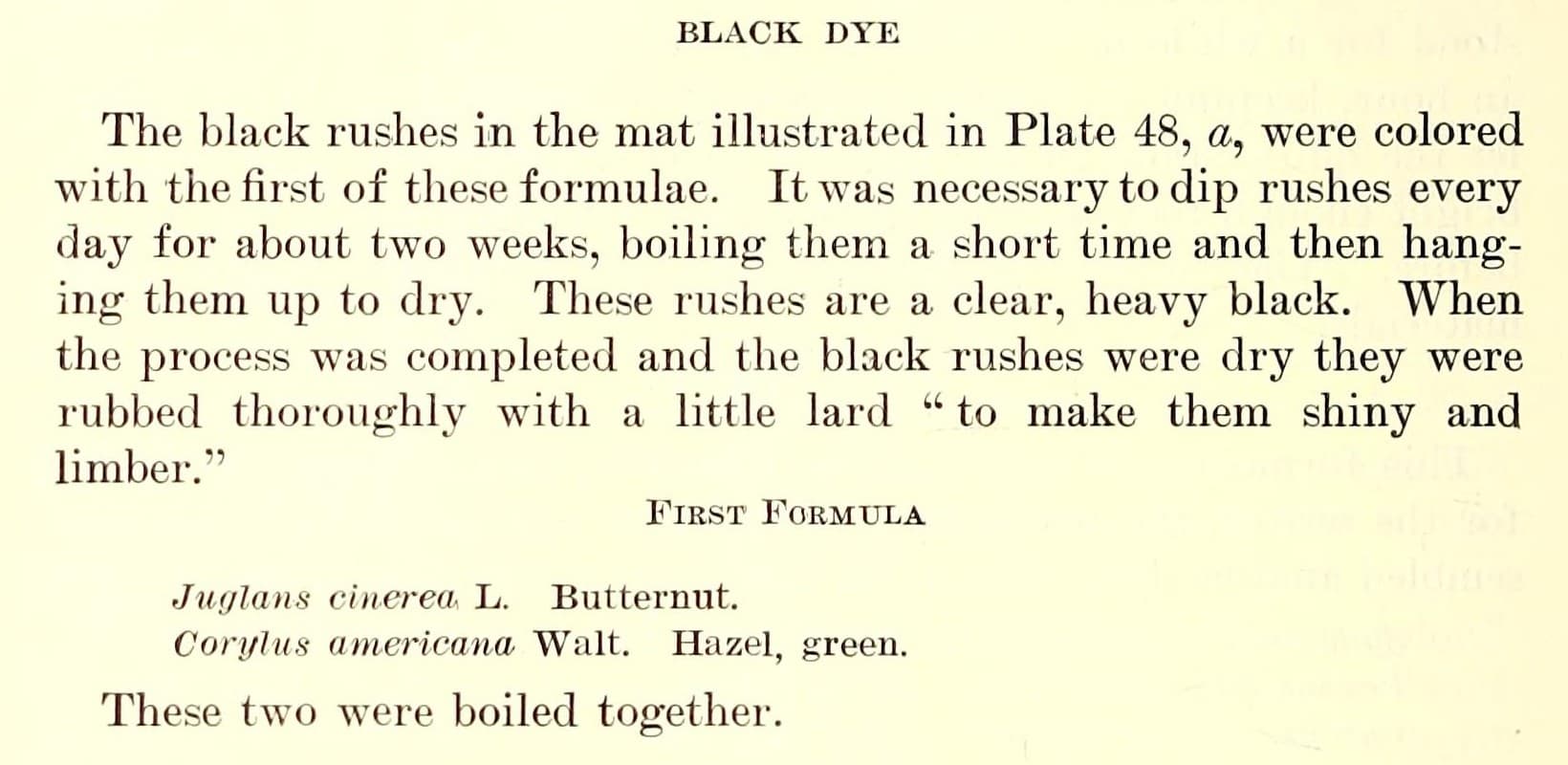
Chippewa Black Dyes: Butternut, Green Hazel Burs and Oak Bark with Black Spring Earth or Grindstone Dust (Densmore, 1928)
by Charlie
Painting
4
0
0
0
0
0
CC0 Public Domain
This blueprint is released under CC0. You are free to copy, modify, distribute, and use this work for any purpose, without asking permission.
Support the Maker by purchasing products through their Blueprint where they earn a Maker Commission set by Vendors, or create a new iteration of this Blueprint and include it as a connection in your own Blueprint to share revenue.