ART
BEAUTY & WELLNESS
CRAFT
CULTURE & HISTORY
ENTERTAINMENT
ENVIRONMENT
FOOD & DRINKS
REVERSE ENGINEERING
SCIENCES
SPORTS
TECHNOLOGY
WEARABLES
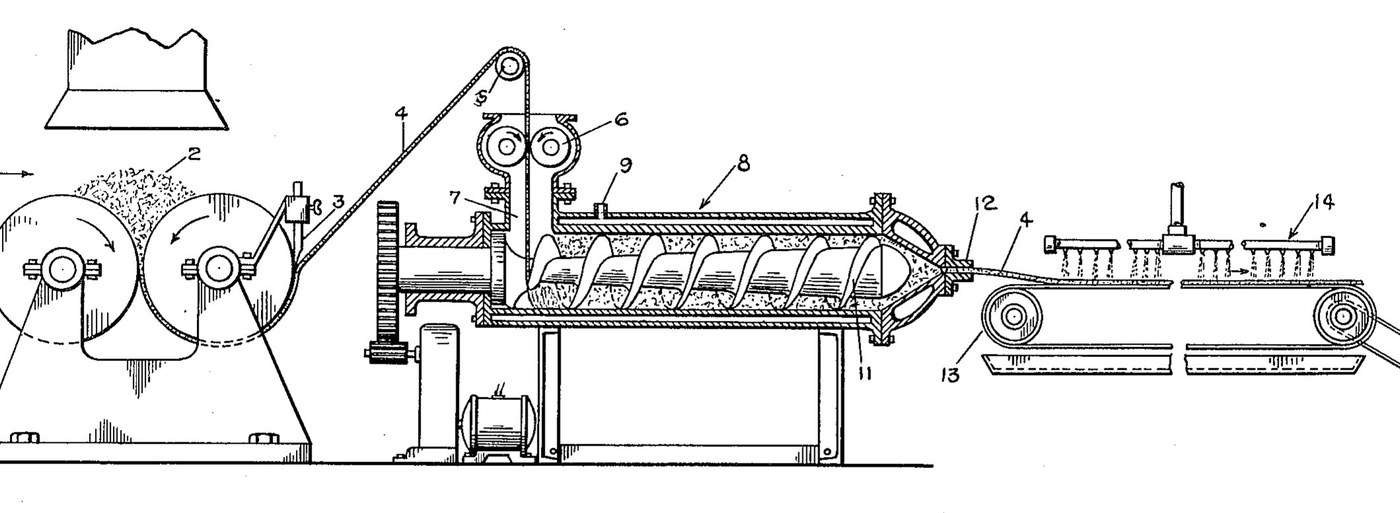


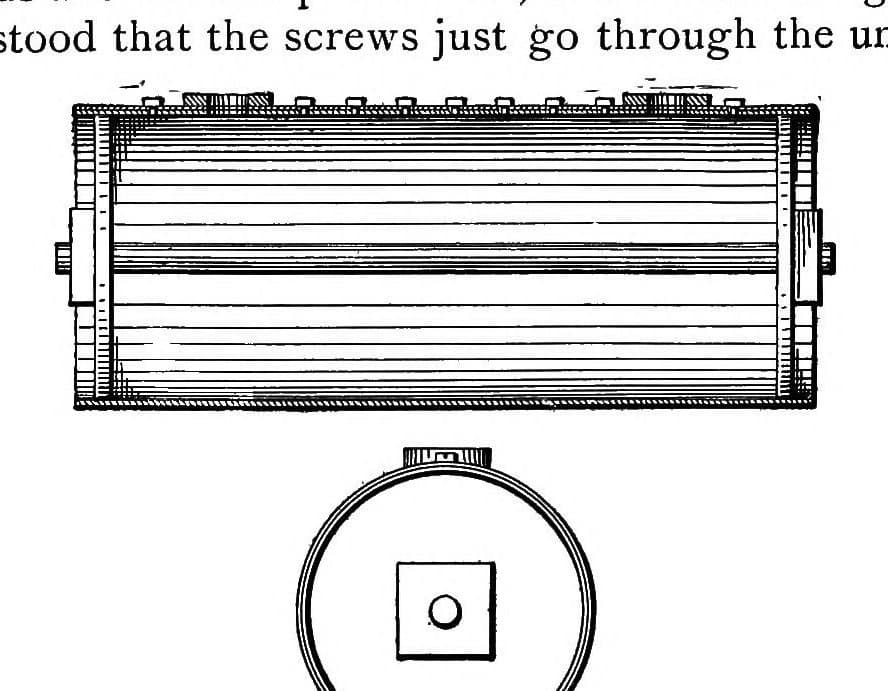
Plastic Extruder: Steam-Jacketed Screw Stuffer with a Heated Nozzle (Andersen & Strasdin, US 2,384,521, 1945)
A screw extruder for thermoplastics: a turning screw in a steam-jacketed barrel pushes hot, softened plastic forward through a short nozzle heated electrically. The barrel is kept a little below the plastic's flow temperature and the nozzle well above it, so the extruded rod comes out with a smooth, glass-like skin.
Result: an extruder that makes rod, tube or strip at 25 to 30 feet a minute.
Source: B. Andersen and R. F. Strasdin (Celanese), US 2,384,521 (1945). Unknown: sizes and metals. Picture: the patent drawing.
Advanced
Unknown
Instructions
1
1
Make the screw
Make the screw
Turn a screw to fit the barrel. Its thread may be single or double; to press the plastic harder toward the nozzle, make the pitch increase or the groove get shallower toward that end. Example: a double-thread screw. Ours: mild steel. Not given: sizes.
Materials for this step:
 Mild Steel Round Bar1 screw
Tools needed:
 Metal Lathe
 Milling Machine
 Unknown Dimensions
2
2
Make the jacketed barrel
Make the jacketed barrel
Make the barrel with a steam jacket round it and a steam port into the jacket, and a feed throat at the back end. The inside wall may be grooved, pitched so that every flight of the screw always meets a groove; this stops the plastic slipping. Not given: the metal, the steam pressure.
Materials for this step:
 Unknown Metal1 barrel and jacket
Tools needed:
Metal LatheUnknown Dimensions3
3
Fit the heated nozzle
Fit the heated nozzle
At the front, fit a streamlined nozzle head so no plastic can pocket and decompose, and a nozzle 1/2 to 18 inches long; about 6 inches in the example. Perforated plates may go between the screw and the nozzle. Heat the nozzle with an electric resistance coil. Ours: nichrome wire.
Materials for this step:
Unknown Metal1 nozzle head and nozzle Nichrome Wire1 nozzle heating coil
 Unknown Insulating Material1 coil insulation
Tools needed:
Metal Lathe4
4
Drive the screw
Drive the screw
Drive the screw through a gear from a motor, so its speed can be kept steady; 20 revolutions a minute in the example. Not given: the drive.
Materials for this step:
 Electric Motor1 drive motorUnknown Metal1 drive gears
Tools needed:
Unknown Dimensions5
5
Extrude a rod
Extrude a rod
Keep the barrel 0 to 100 °F below the plastic's flow temperature and the nozzle 50 to 100 °F above it. Example: barrel at about 270 °F by steam, nozzle at about 400 °F, for a cellulose acetate with a flow temperature of 307 °F. Feed the hot, softened plastic into the throat at a steady rate. Carry the rod away on a conveyor and cool it at once with cold water, then cut it to length.
Tools needed:
 Steam Boiler
 Pyrometer
 Cooling Water
Materials
5- 1 screwPlaceholder
- 1 drive gearsPlaceholder
- 1 nozzle heating coilPlaceholder
- 1 coil insulationPlaceholder
- 1 drive motorPlaceholder
Connected Blueprint Materials
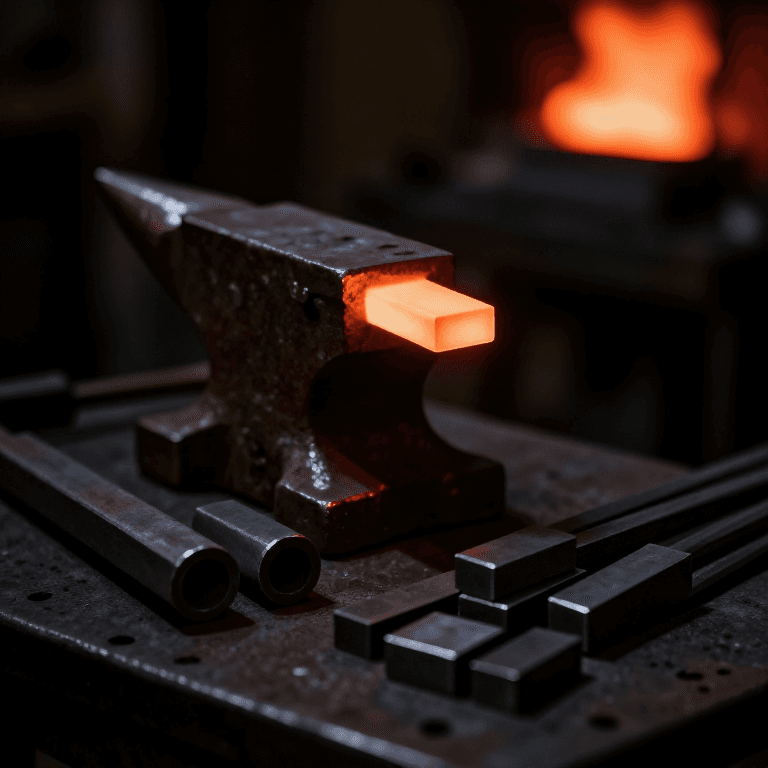

This blueprint makes
CC0 Public Domain
This blueprint is released under CC0. You are free to copy, modify, distribute, and use this work for any purpose, without asking permission.
Support the Maker by purchasing products through their Blueprint where they earn a Maker Commission set by Vendors, or create a new iteration of this Blueprint and include it as a connection in your own Blueprint to share revenue.