ART
BEAUTY & WELLNESS
CRAFT
CULTURE & HISTORY
ENTERTAINMENT
ENVIRONMENT
FOOD & DRINKS
REVERSE ENGINEERING
SCIENCES
SPORTS
TECHNOLOGY
WEARABLES
English

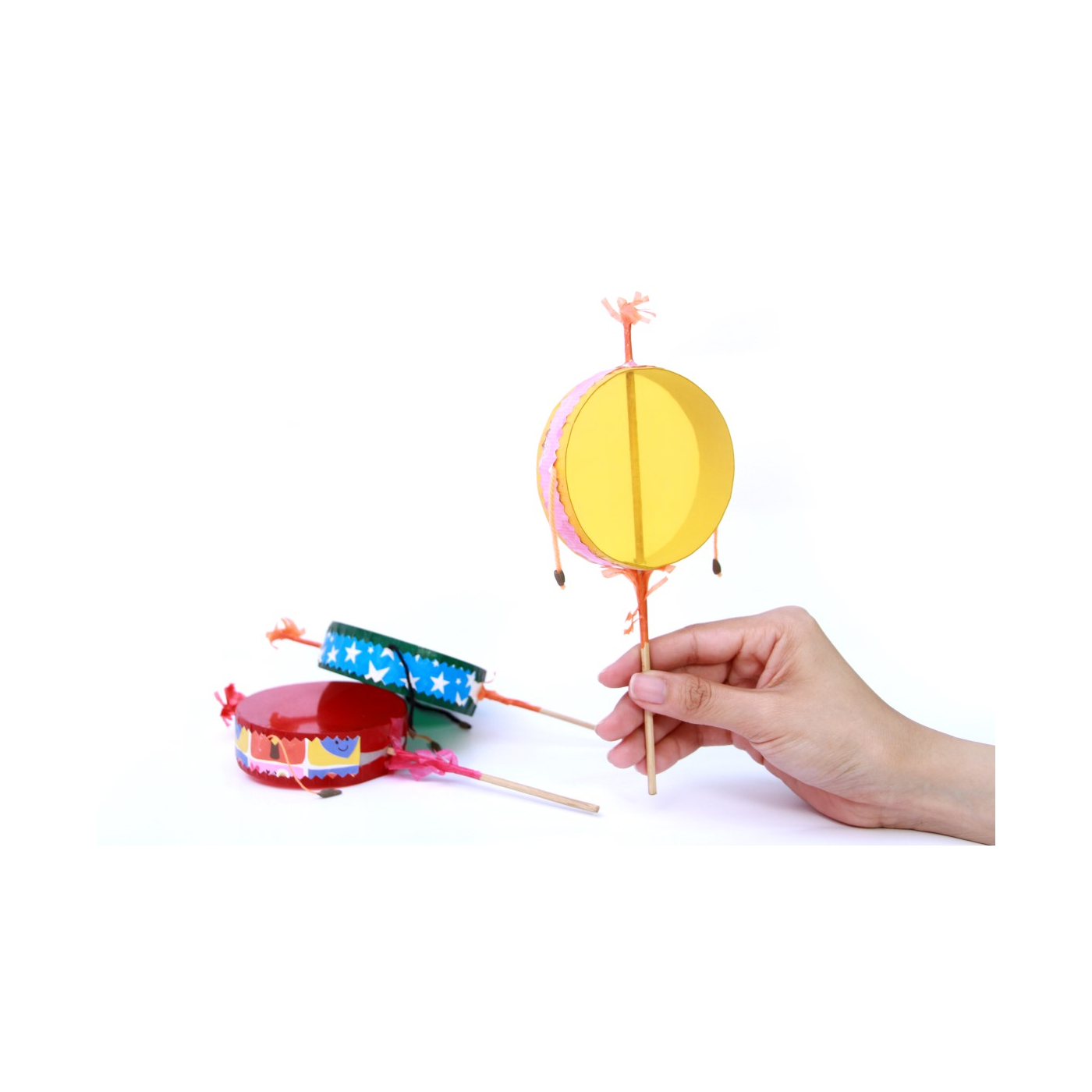
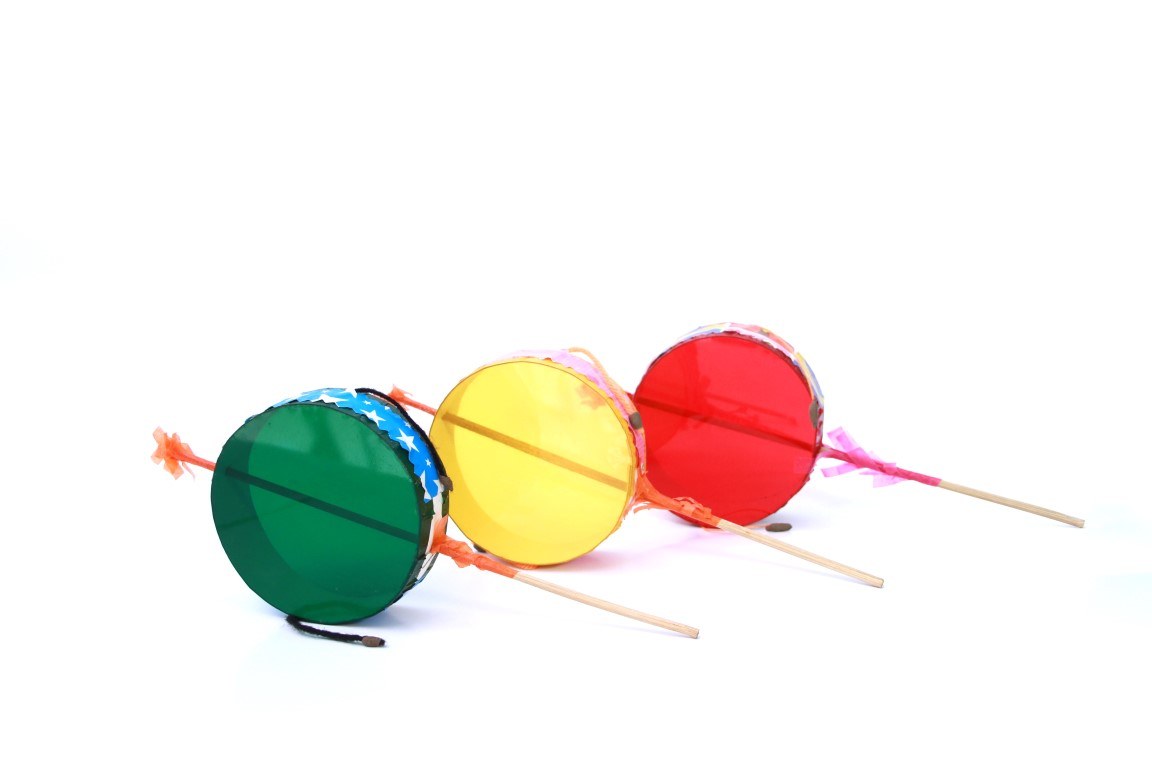
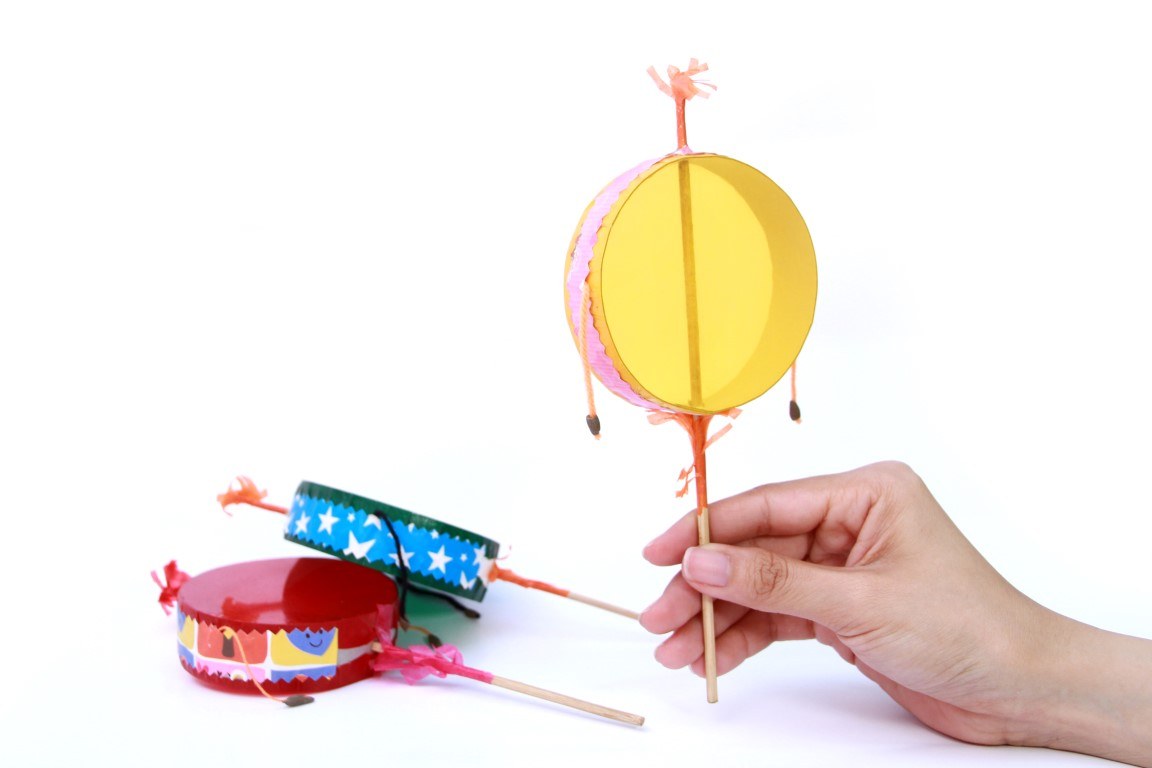
Pong Paeng (Pellet Drum) — a 1-2 Inch Ring Covered with Cellophane on Both Faces, a Bead on a 5 cm String Each Side, and a Bamboo Handle Through the Ring; Twirl It So the Beads Strike the Drumheads
ป๋องแป๋ง (pong paeng) is named after its sound and is thought to have come to Thailand with the Chinese. It was the sign of the Chinese cloth dyers who carried dye tins from house to house, swinging this drum to announce that the dyer had come. Children loved it, so adults made copies for them to play with.
This blueprint makes a real pong paeng to the sizes in the source.
Beginner
About 1-2 hours
Instructions
1
1
Real sizes
Real sizes
Loading Jupyter Notebook...
2
2
Spun noisemakers, before it
Spun noisemakers, before it
The jakjan sounds from string rubbing on resin; the pong paeng sounds from beads striking cellophane drumheads.
3
3
Read from the source
Read from the source
"Twirl it back and forth so the beads strung at the sides swing and strike the cellophane, making a loud pong-paeng." (Sirindhorn Anthropology Centre, author not named, CC BY 4.0)
4
4
Ring and drumheads
Ring and drumheads
Use scrap tin, card, or thinly shaved bamboo about 1-2 inches wide, bent into a ring about 1-2 inches across. Cut 2 circles of cellophane or plastic bag slightly larger than the ring and glue them over the top and bottom with glue or flour paste. Coloured paper can be pasted round the ring to decorate it.
Materials for this step:
 Bamboo Poles1 piece
 Glue1 piece
 Paper1 piece
Tools needed:
 Knife
Knife5
5
Strikers
Strikers
Pierce a small hole on each side of the ring, opposite each other. Tie a small string about 5 cm long to a small scrap of wood and pass it in through the hole. On the other end thread a bead, or a small lump of wax or lead; do the same on both sides.
Materials for this step:
 Thread1 piece
6
6
Handle
Handle
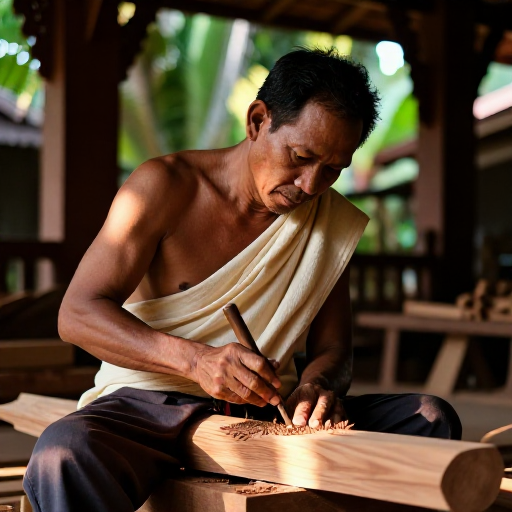
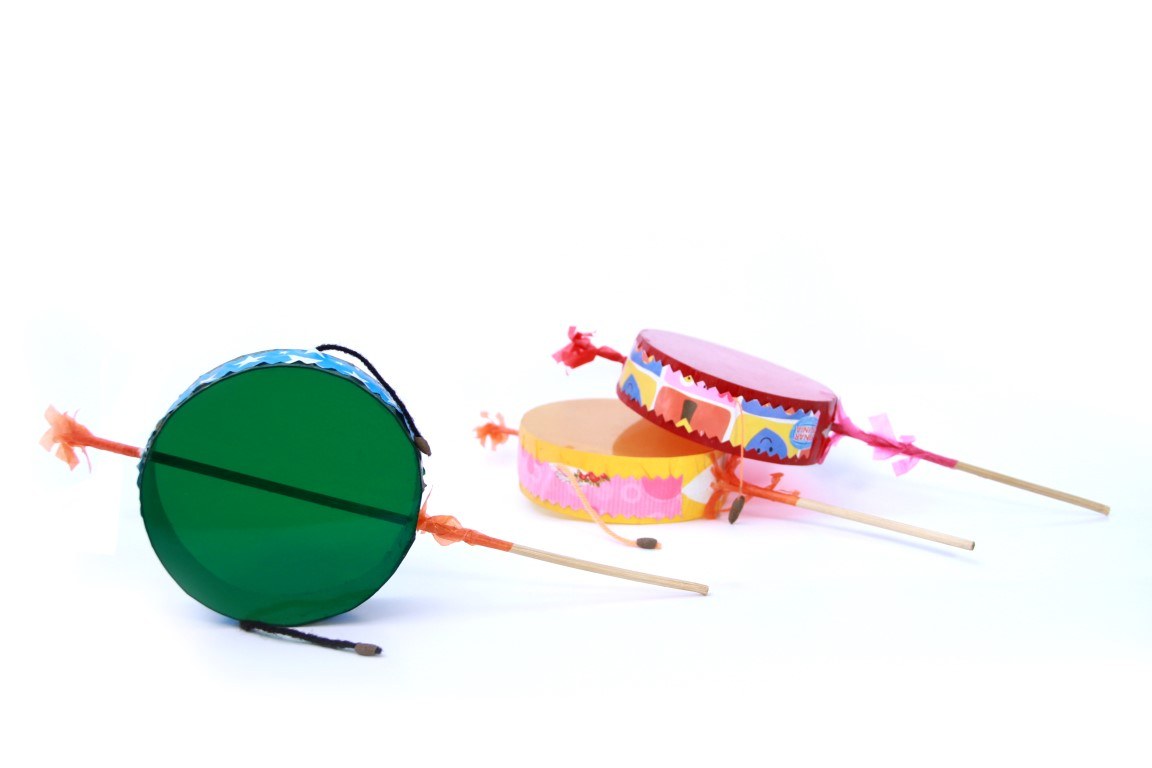
Shave bamboo into a small stick of a convenient length. Pierce a hole in the ring midway between the two strings, right through to the other side, and push the stick through so it fits tight. One end pokes out a little; the other is left long as a handle.
7
7
Real photos
Real photos
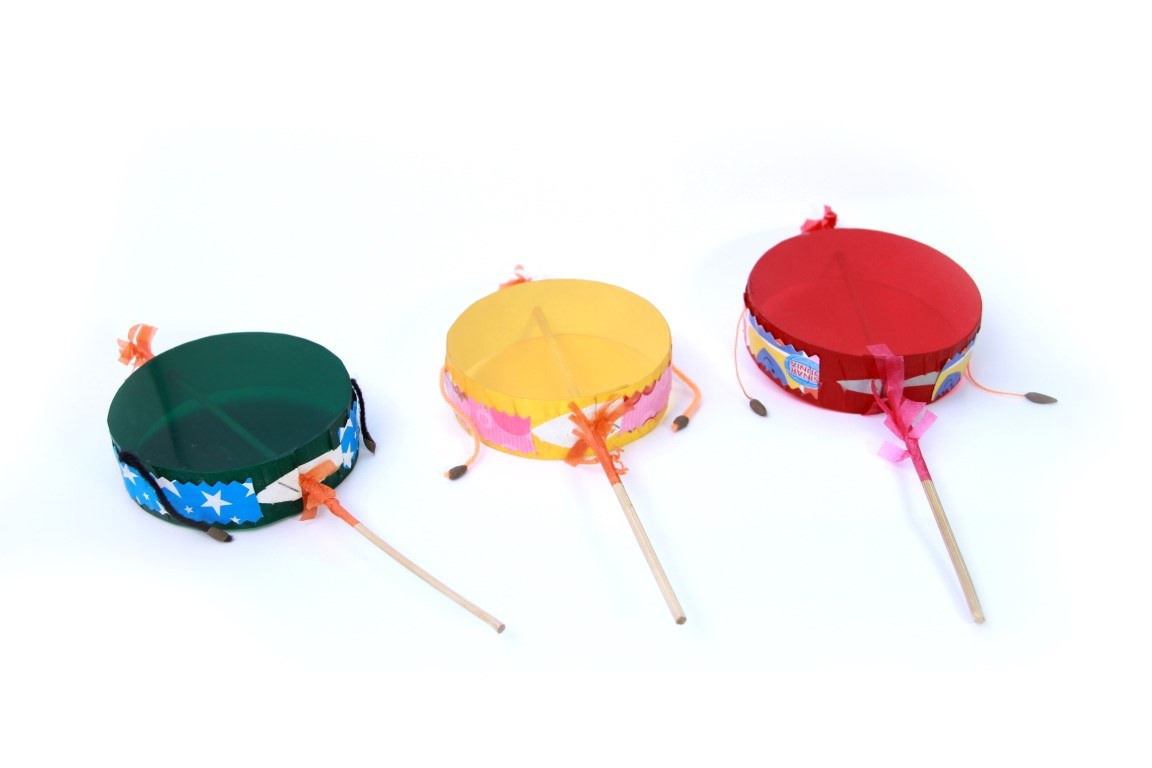
Photos of real pong paeng (Sirindhorn Anthropology Centre, author not named, CC BY 4.0)
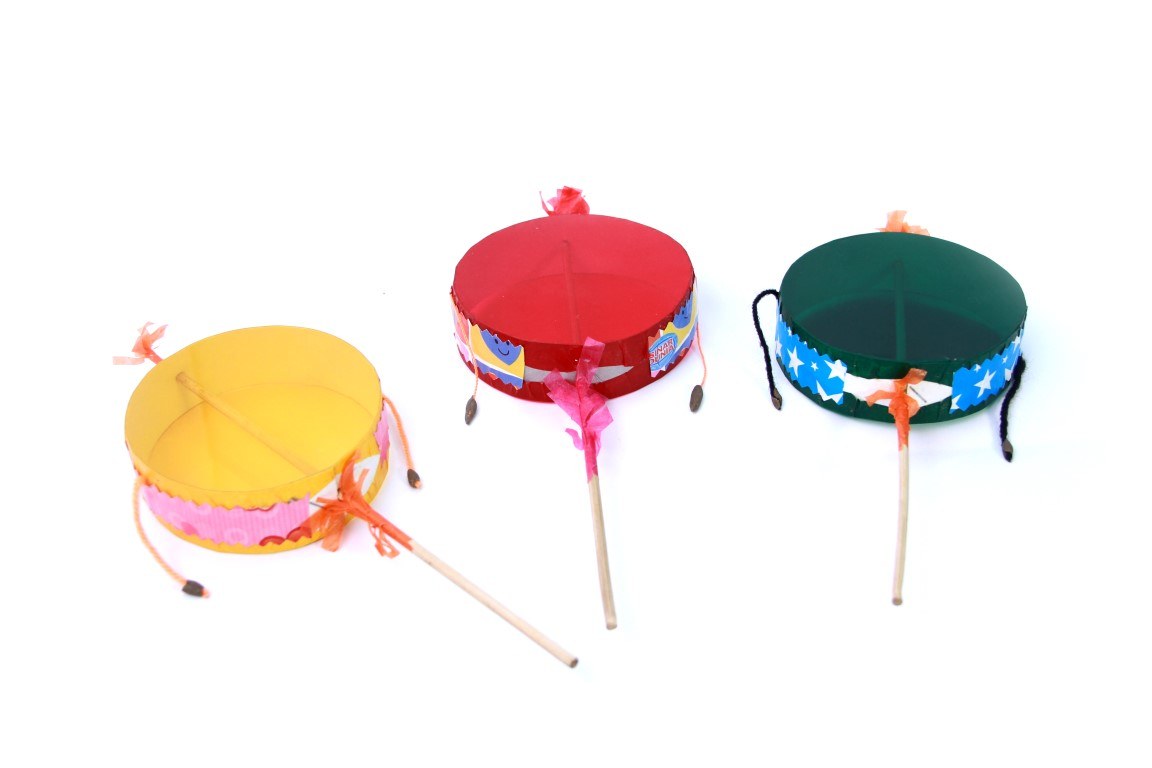
8
8
How to play
How to play
Hold the handle and twirl it back and forth; the beads swing and strike the cellophane, sounding pong-paeng.
9
9
Troubleshooting
Troubleshooting
Troubleshooting the pong paeng.
Flow
Loading...
10
10
History and limits
History and limits
Children used to crowd round the Chinese dyers' drums, so adults made copies for them. The source gives lead as one option for the strikers; lead is a toxic metal, so a children's toy should use beads or wax.
Source: Sirindhorn Anthropology Centre, Traditional Objects of Everyday Use database, "ป๋องแป๋ง", author not named (CC BY 4.0 licence).
**Limits** The source gives no handle length. There are no product lines for cellophane, card or general beads.
Materials
4- 1 piecePlaceholder
- 1 piecePlaceholder
- 1 piecePlaceholder
- 1 piecePlaceholder
Related Blueprints
These blueprints share knowledge with this one — techniques, materials, or principles that connect them in the learning graph.
CC0 Public Domain
This blueprint is released under CC0. You are free to copy, modify, distribute, and use this work for any purpose, without asking permission.
Support the Maker by purchasing products through their Blueprint where they earn a Maker Commission set by Vendors, or create a new iteration of this Blueprint and include it as a connection in your own Blueprint to share revenue.