ART
BEAUTY & WELLNESS
CRAFT
CULTURE & HISTORY
ENTERTAINMENT
ENVIRONMENT
FOOD & DRINKS
REVERSE ENGINEERING
SCIENCES
SPORTS
TECHNOLOGY
WEARABLES
English

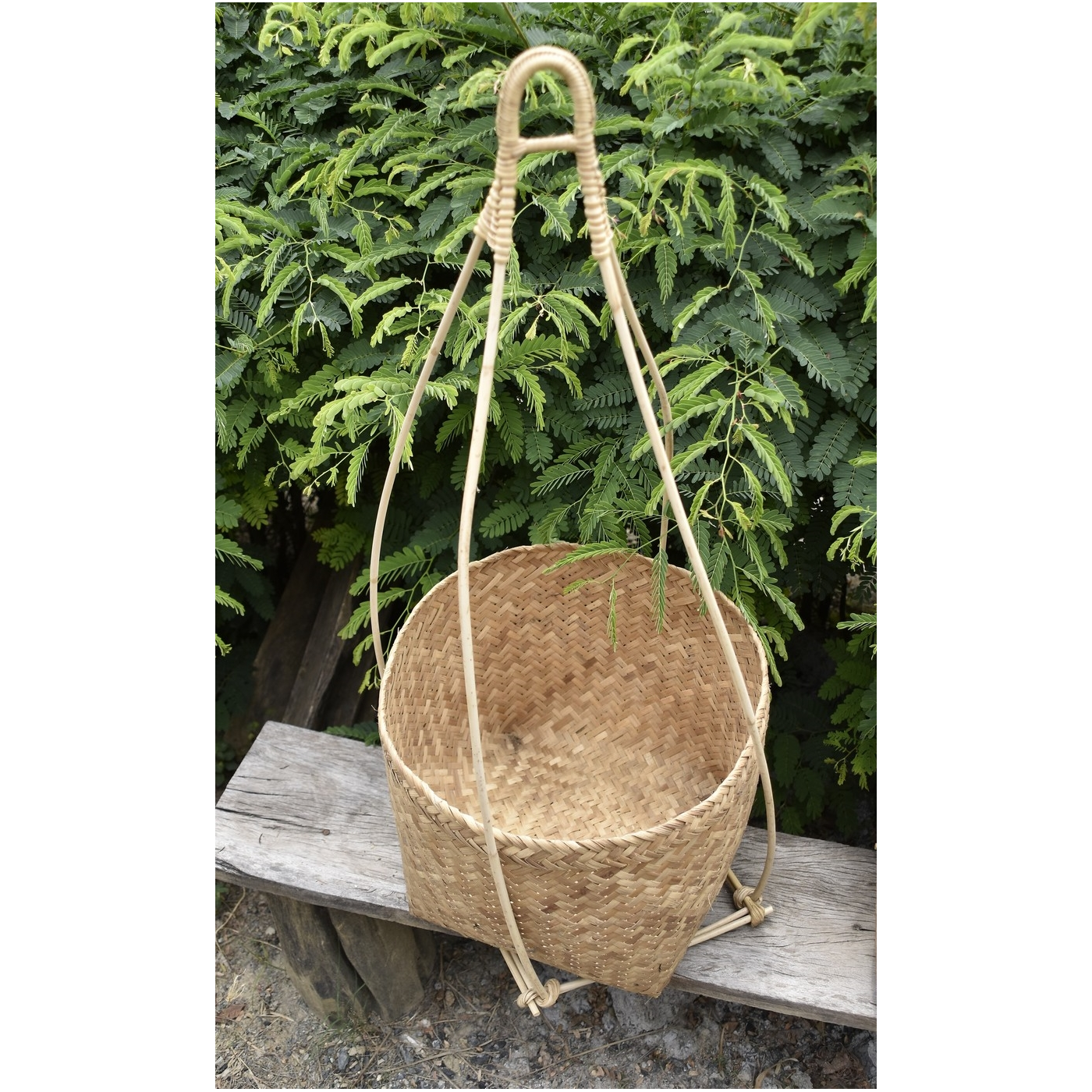
Sa Laek (Rattan Carrying Sling) — a Paired-Rattan Square Base, Four 1 m Rattan Strands, One per Corner, Gathered into a Loop for the Carrying Pole; Carries a Basket with No Holes Drilled
สาแหรก (sa laek) is a cradle for carrying baskets, trays and other containers on a shoulder pole. No holes need to be drilled in the container for a rope: the container is simply set in the sling and carried away.
This blueprint makes a real rattan sa laek following a Tai Dam source.
Beginner
About half a day
Instructions
1
1
Real sizes
Real sizes
Loading Jupyter Notebook...
2
2
The container it carries
The container it carries
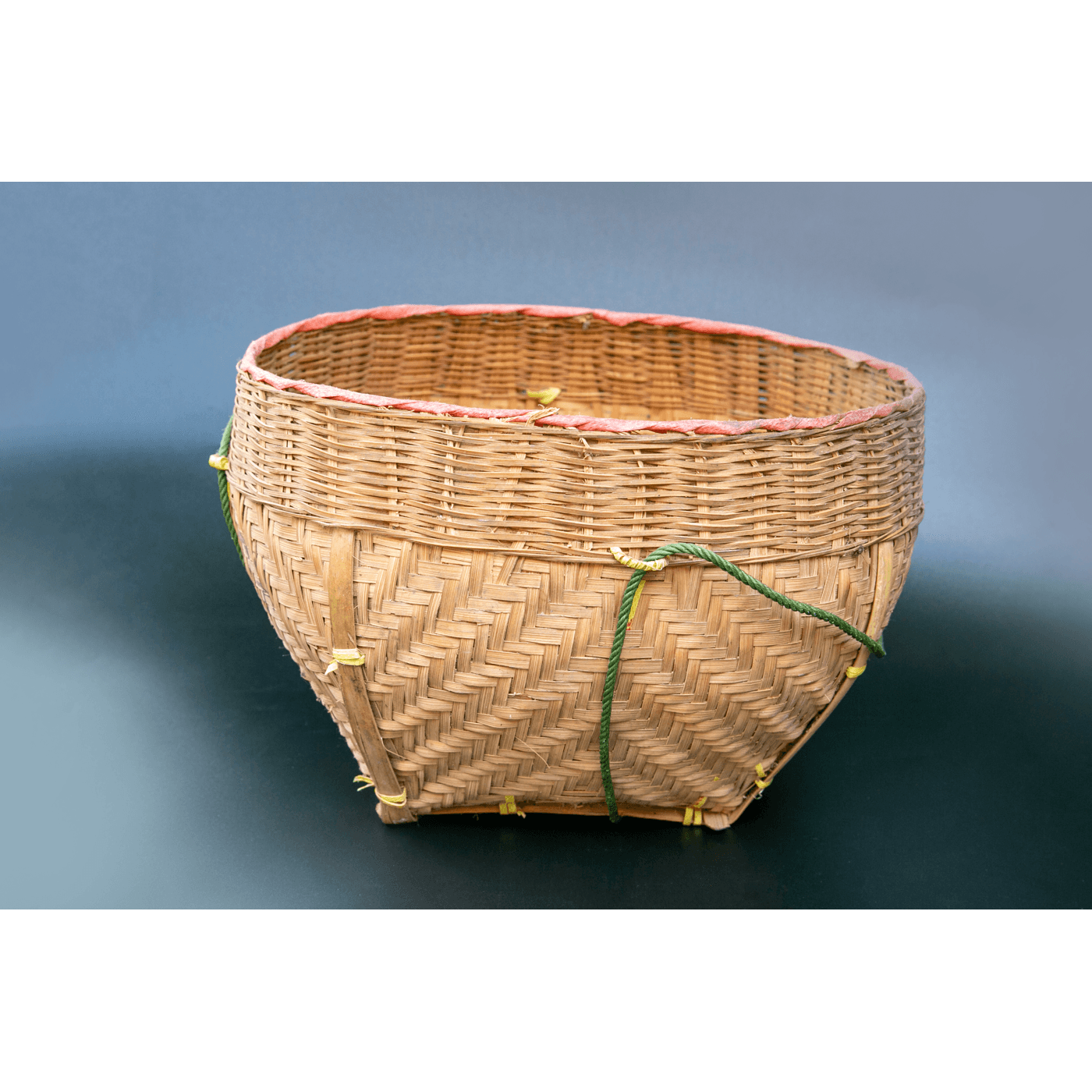
Krabung baskets are carried in pairs; the sa laek is the cradle that holds a krabung so it can be hung from a carrying pole.
3
3
Read from the source
Read from the source
"There is no need to drill holes in the containers to thread a rope; just set the container in the sa laek and it is ready to be carried anywhere." (Sirindhorn Anthropology Centre, author พิชชา ทองขลิบ (Phitcha Thongkhlip), CC BY 4.0)
4
4
Base
Base
Tie two rattan strands together as a pair and join them into a square for strength.
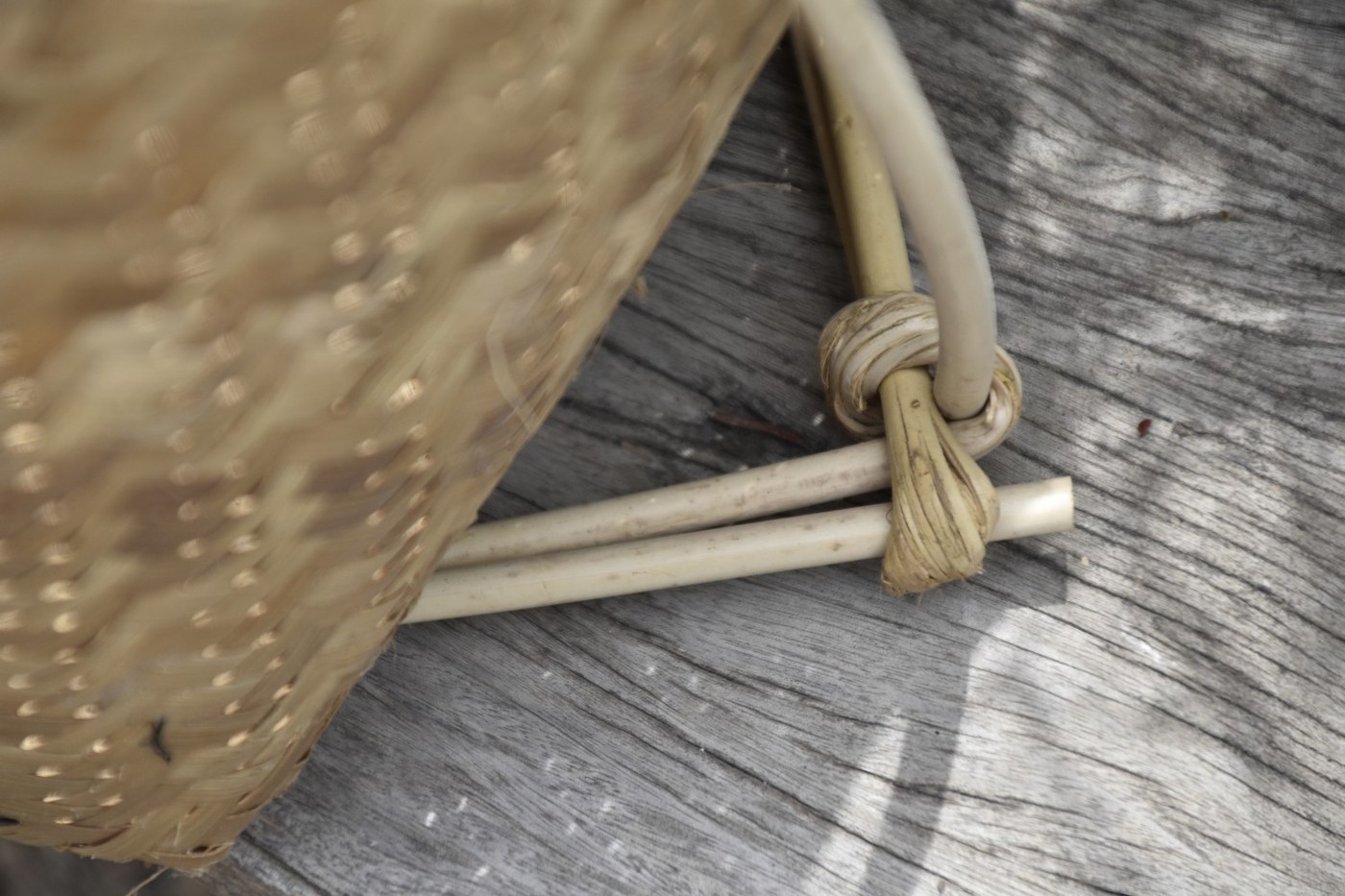
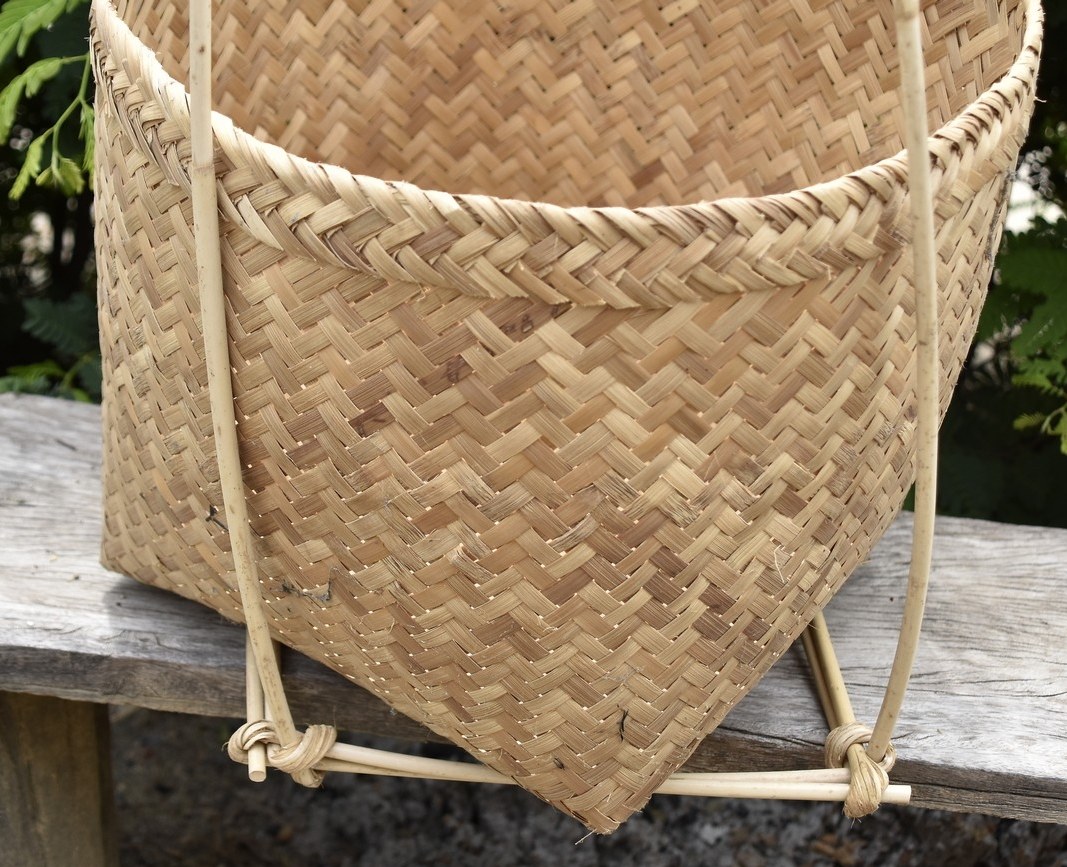
Materials for this step:
 Rattan1 piece
5
5
Strands
Strands
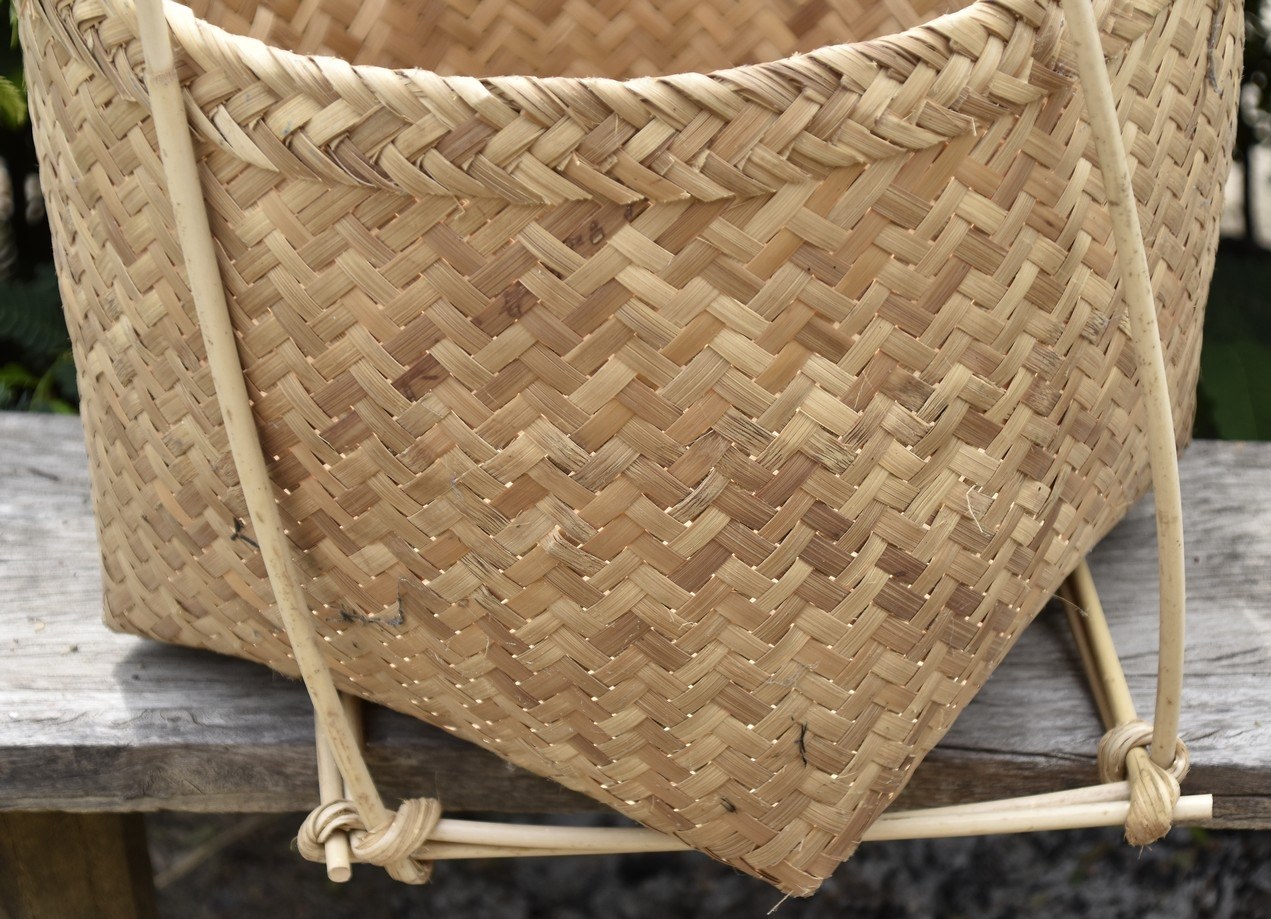
Take four rattan strands, each about one metre long, tie one to each corner of the square, and bring them together at the head of the sling.
6
6
Head
Head
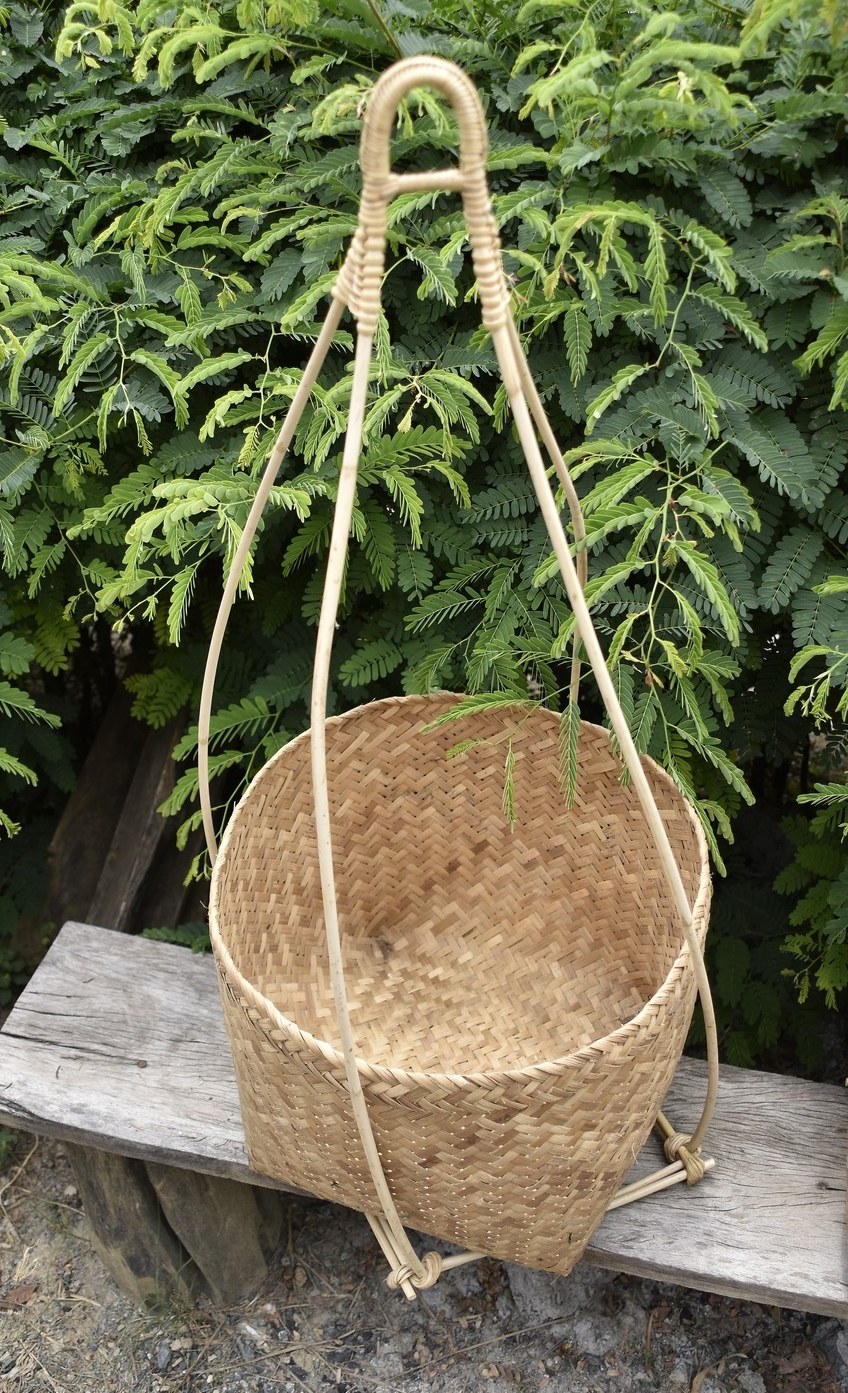
Bind the strands together with thin rattan into a loop for the carrying pole, then bend the sling into shape.
7
7
Real photos
Real photos
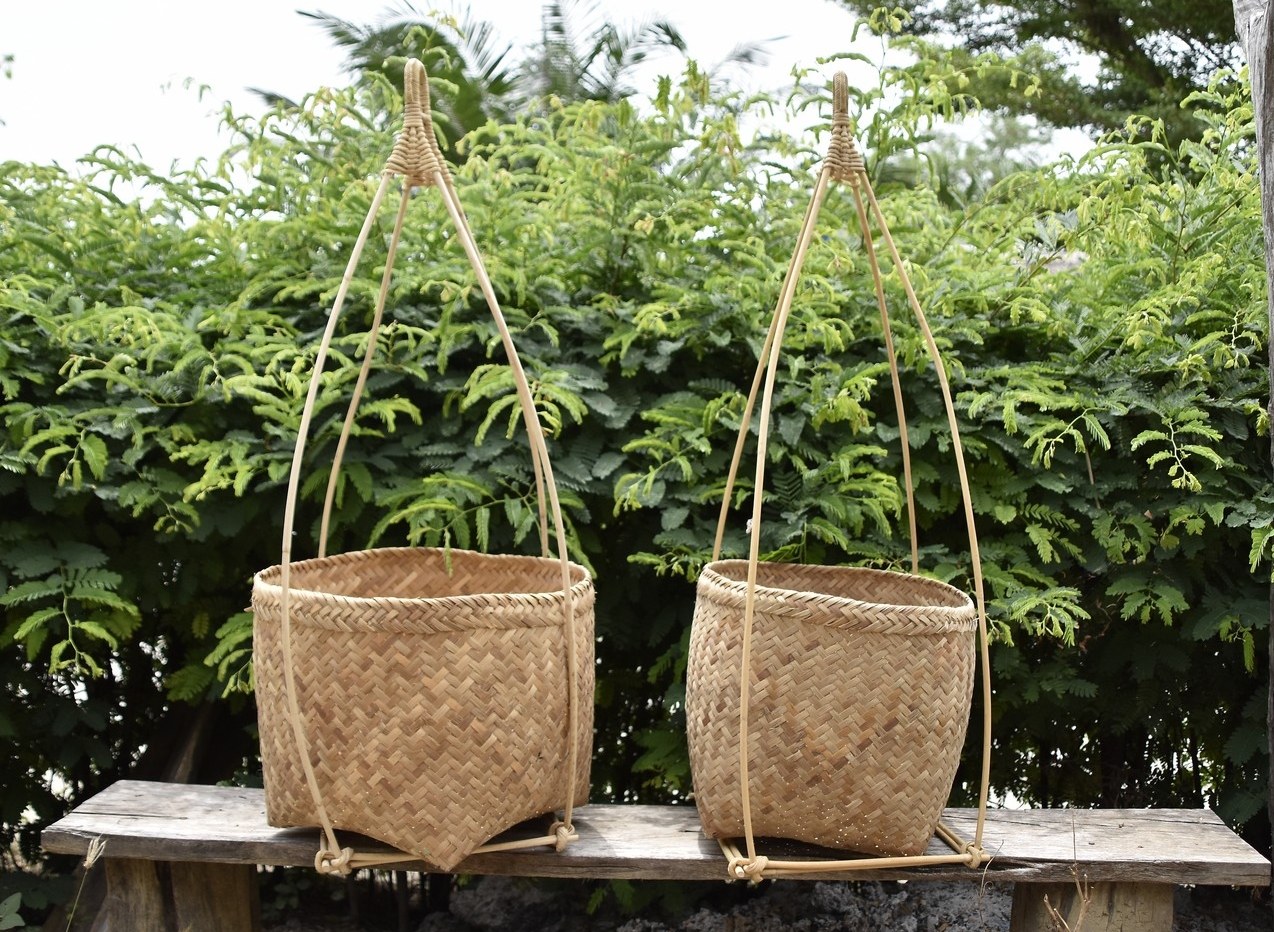
Photos of real sa laek from the Ancient Tai Dam Cultural Revival Centre (Sirindhorn Anthropology Centre, author พิชชา ทองขลิบ (Phitcha Thongkhlip), CC BY 4.0)
8
8
How it is used
How it is used
Set a krabung or other container holding paddy, seed or household goods in the sling, slide the carrying pole through the head, check that the weight is balanced on both sides, and lift and carry.
9
9
Troubleshooting
Troubleshooting
Troubleshooting the sa laek.
Flow
Loading...
10
10
History and limits
History and limits
The sa laek in the source comes from the Tai Dam, who use it to carry baskets or containers in pairs on a carrying pole.
Source: Sirindhorn Anthropology Centre, Traditional Objects of Everyday Use database, "สาแหรก", author พิชชา ทองขลิบ (Phitcha Thongkhlip), Ancient Tai Dam Cultural Revival Centre, U Thong, Suphan Buri (CC BY 4.0 licence).
**Limits** The source gives no size for the square base and names no tools. It says a sa laek may have 4 or 6 strands but describes only the four-strand method.
Related Blueprints
These blueprints share knowledge with this one — techniques, materials, or principles that connect them in the learning graph.
CC0 Public Domain
This blueprint is released under CC0. You are free to copy, modify, distribute, and use this work for any purpose, without asking permission.
Support the Maker by purchasing products through their Blueprint where they earn a Maker Commission set by Vendors, or create a new iteration of this Blueprint and include it as a connection in your own Blueprint to share revenue.