ART
BEAUTY & WELLNESS
CRAFT
CULTURE & HISTORY
ENTERTAINMENT
ENVIRONMENT
FOOD & DRINKS
REVERSE ENGINEERING
SCIENCES
SPORTS
TECHNOLOGY
WEARABLES
Translated

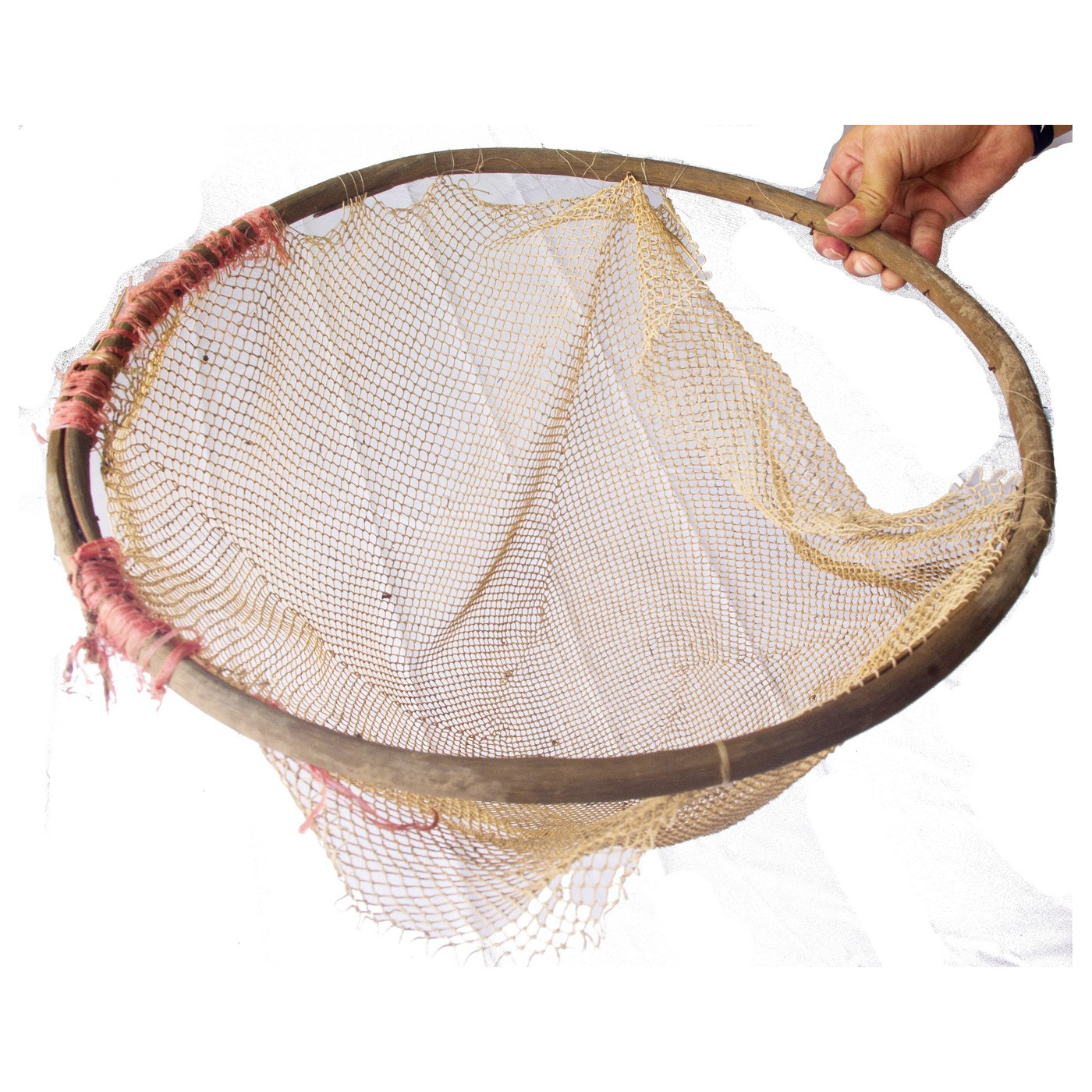
Sa-wing (Thai Hand Dip-Net) — a Fine-Mesh Knotted Bag on a Hoop of Khoi Wood, for Scooping Shrimp and Small Fish in Shallow Water
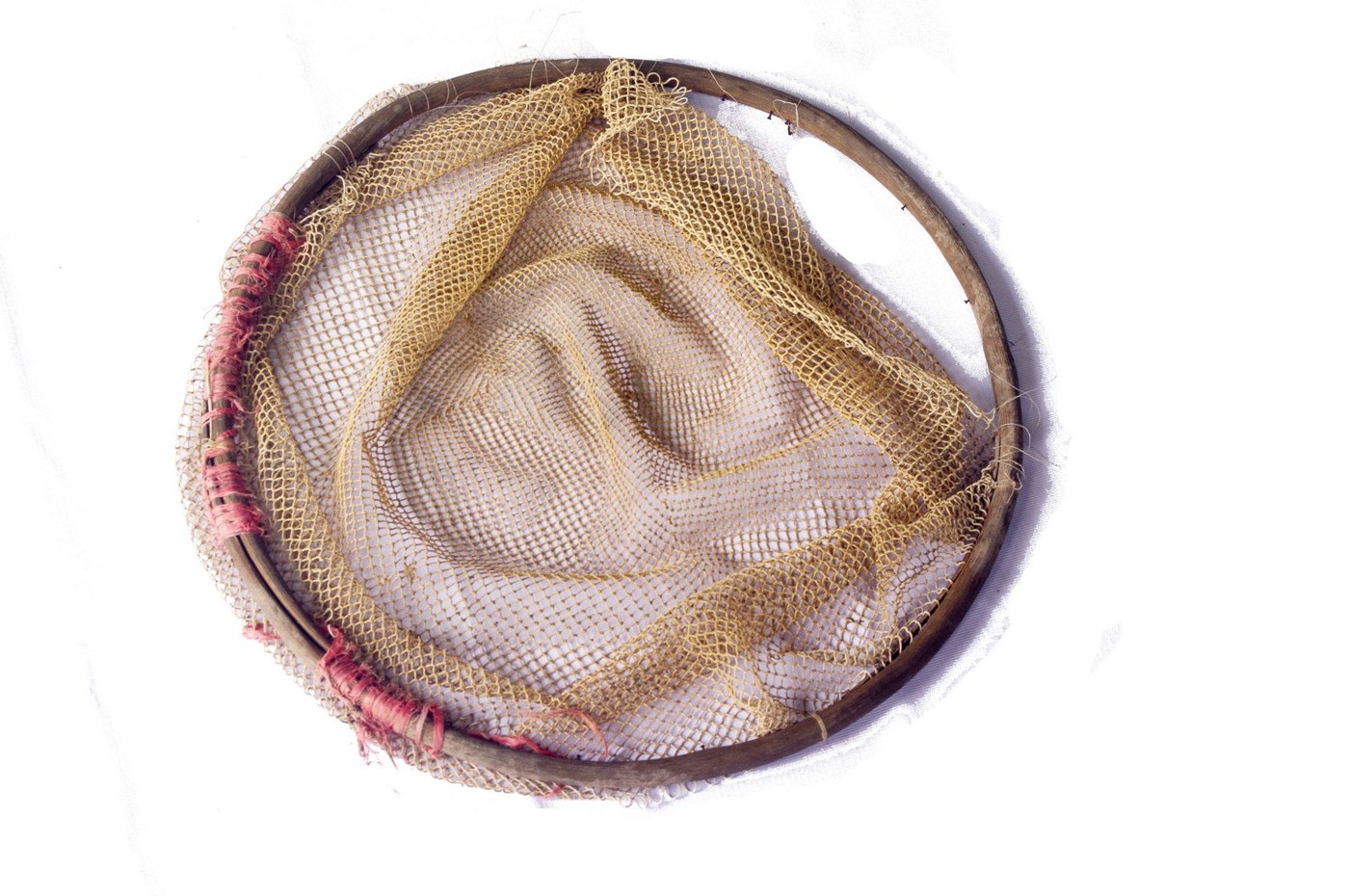
สวิง (sa-wing) is a tool for catching water animals: a mesh bag with a round wooden hoop at its mouth, used to scoop shrimp, small fish, tadpoles, froglets, water insects and other small fish in shallow water.
This blueprint knots a real sa-wing by the method in the source.
Intermediate
About 2 days (knotting the mesh)
Instructions
1
1
Real sizes
Real sizes
Loading Jupyter Notebook...
2
2
Netting, before it
Netting, before it
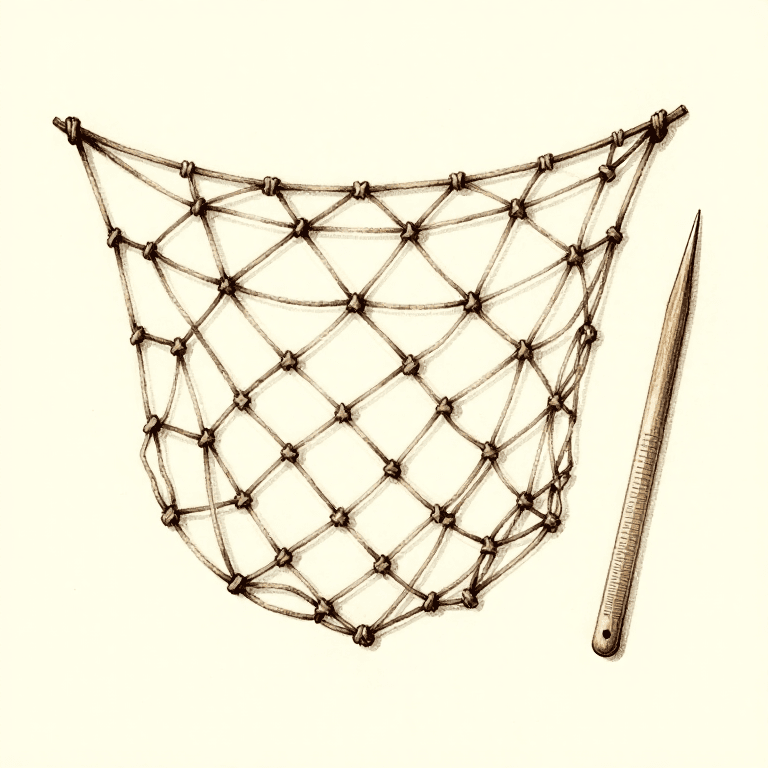
Netting is knotted from cord in the same way; the sa-wing is knotted as a bag and tied to a wooden hoop.
3
3
Read from the source
Read from the source
"Whittle bamboo into a round rod with rounded ends about 30 centimetres long and wind the cord round the middle of the rod; let out the cord and first tie the centre, like a short cast-net crown, then tie outward to the edge." (Sirindhorn Anthropology Centre, author ทำนุ วรธงไชย (Thamnu Worathongchai), CC BY 4.0)
4
4
Netting needle
Netting needle
Whittle bamboo into a round rod with rounded ends about 30 cm long and wind the cord round its middle.
Materials for this step:
 Bamboo Rod1 piece
 Cotton Twine1 piece
Tools needed:
 Knife
Knife5
5
Knot the mesh bag
Knot the mesh bag
Let out the cord and tie the centre first, like a short cast-net crown, then tie outward. Use the tip of the rod to lever and pull each knot into a fine mesh, widening round after round; enlarge the meshes gradually while keeping them fine, and shape the work into a bag until it is wide and deep enough.
6
6
Hoop and rim
Hoop and rim
Strip the bark from a branch of khoi (Thai: ข่อย) and bend it into a hoop 40-50 cm across. Thread a flattened bamboo strip through the edge meshes all round, tie its ends together, lay it against the inside of the hoop and nail it on with small nails every 3 cm all round.
Materials for this step:
 Small Nails1 piece
Tools needed:
 Hammer
7
7
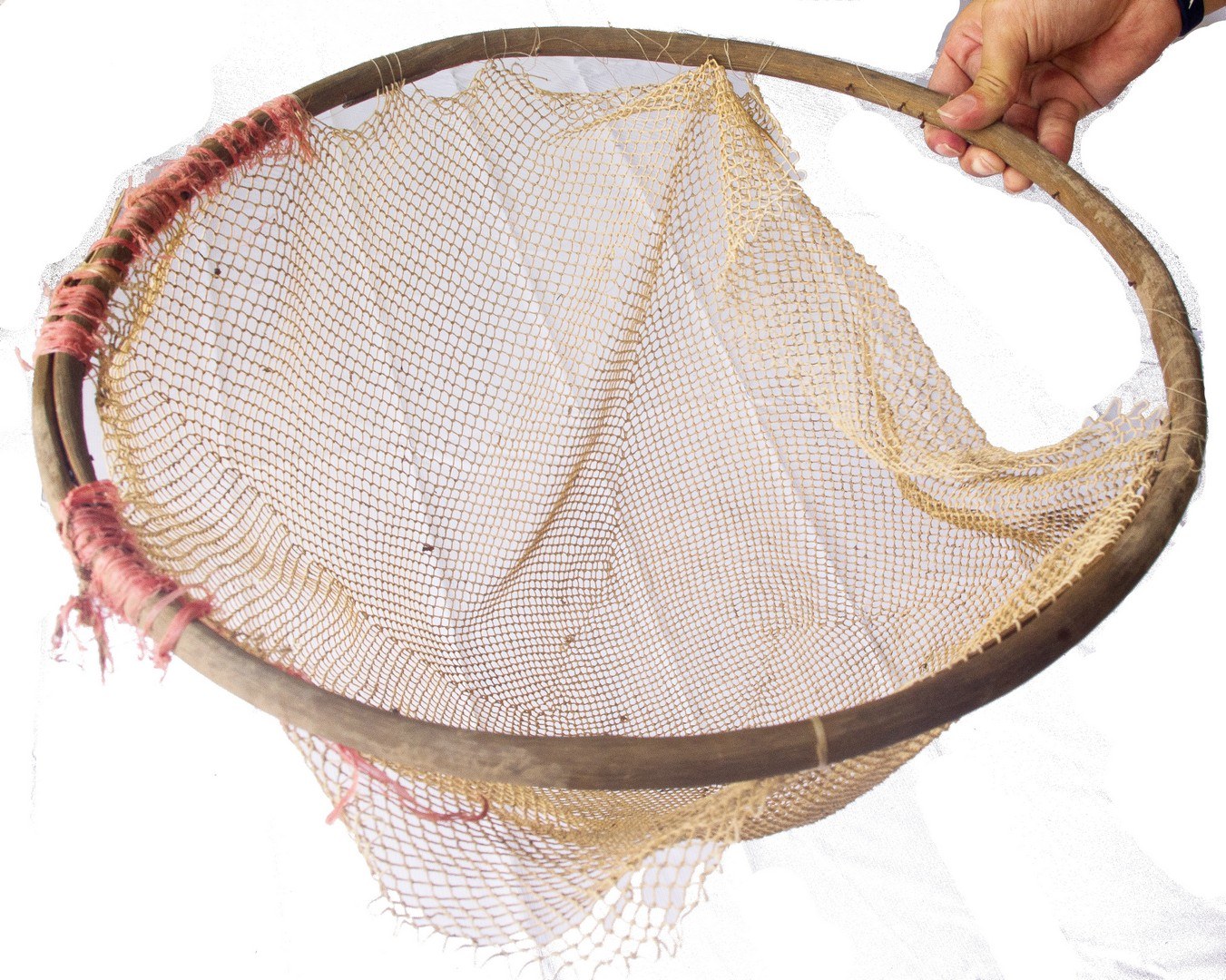
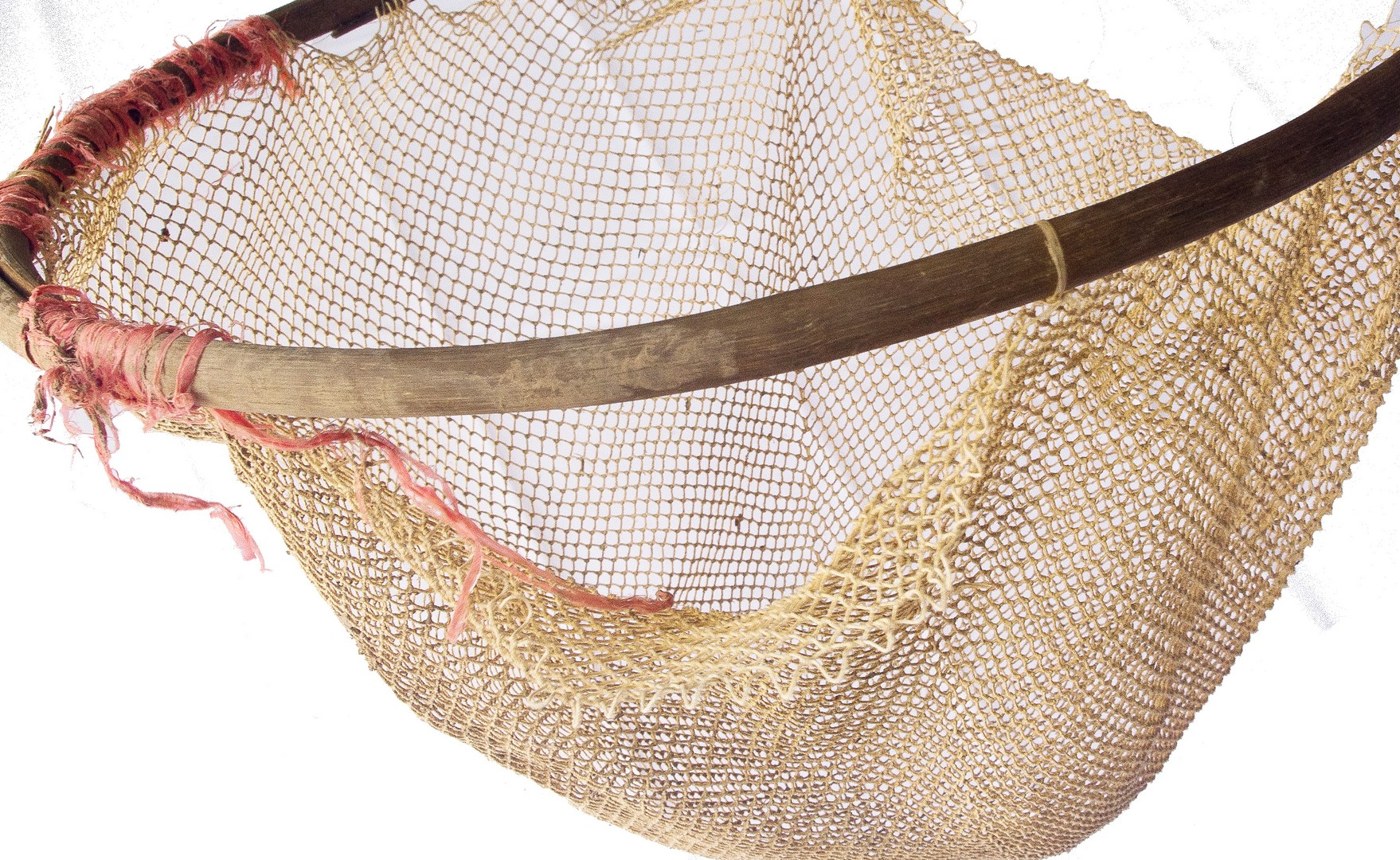
Real photos
Real photos
Photos of a real sa-wing from the Nong Bua Khok Folk Museum (Sirindhorn Anthropology Centre, author ทำนุ วรธงไชย (Thamnu Worathongchai), CC BY 4.0).
8
8
How it is used
How it is used
Take the sa-wing and a fish basket to shallow water. In the rainy season, when the water in the paddies starts to dry, scoop small fish, shrimp, tadpoles, froglets and small frogs; in the hot dry season scoop shrimp, gourami, small minnows, climbing perch and other small fish. A fine-mesh sa-wing can also be used to catch red-ant eggs from nests in trees.
9
9
Troubleshooting
Troubleshooting
Troubleshooting the sa-wing.
Flow
Loading...
10
10
History and limits
History and limits
The sa-wing was in use in almost every rural household; housewives knotted them in their spare time to replace worn ones.
Source: Sirindhorn Anthropology Centre, Traditional Objects of Everyday Use database, "สวิง", author ทำนุ วรธงไชย (Thamnu Worathongchai), Nong Bua Khok Folk Museum, Buriram (CC BY 4.0 licence).
**Limits** The source gives no mesh size or type of cord.
Materials
3- 1 piecePlaceholder
- 1 piecePlaceholder
- 1 piecePlaceholder
Related Blueprints
These blueprints share knowledge with this one — techniques, materials, or principles that connect them in the learning graph.

CC0 Public Domain
This blueprint is released under CC0. You are free to copy, modify, distribute, and use this work for any purpose, without asking permission.
Support the Maker by purchasing products through their Blueprint where they earn a Maker Commission set by Vendors, or create a new iteration of this Blueprint and include it as a connection in your own Blueprint to share revenue.