ART
BEAUTY & WELLNESS
CRAFT
CULTURE & HISTORY
ENTERTAINMENT
ENVIRONMENT
FOOD & DRINKS
REVERSE ENGINEERING
SCIENCES
SPORTS
TECHNOLOGY
WEARABLES
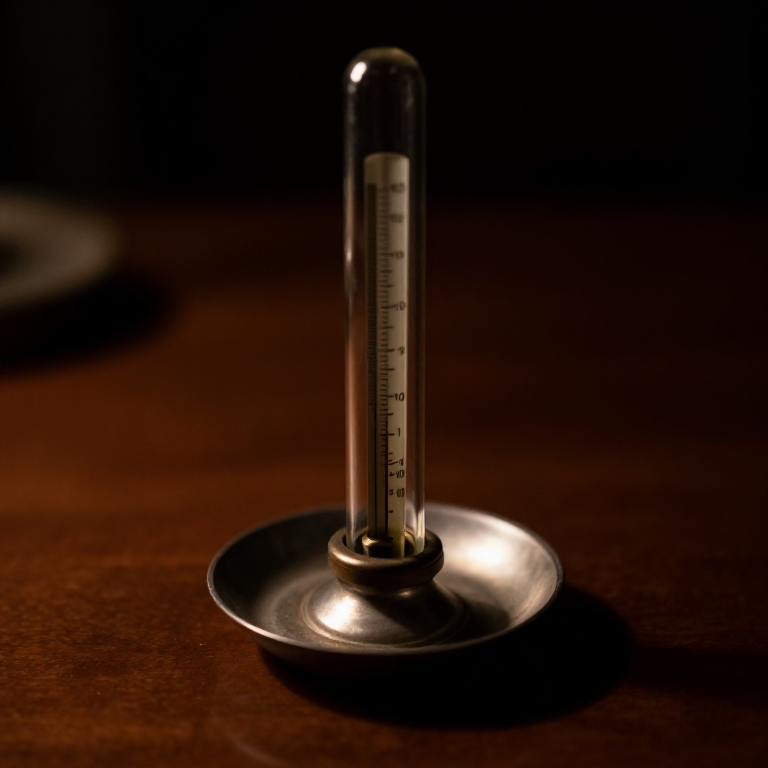

Air Has Weight — The Upside-Down Glass and Torricelli's Barometer
A hands-on school project: hold a card over a full glass of water, turn it upside down, and watch air pressure hold the water in. From this simple trick you meet Torricelli's 1643 barometer and the discovery that we live under a sea of air with real weight. A Python cell shows why a water barometer would be 10 metres tall, and a compendium reaches from vacuums to weather forecasting.
Beginner
30 minutes
Instructions
1
1
A sea of air
A sea of air
We live at the bottom of kilometres of air, and that air has weight, pressing on everything. In 1643 Galileo's student Evangelista Torricelli proved it with a tube of mercury. You will prove it with a glass of water and a piece of card.
2
2
The upside-down glass
The upside-down glass
Fill a glass right to the brim with water. Lay a stiff piece of card flat over the top so it seals the whole rim. Holding the card in place, turn the glass completely upside down over a sink (the first tries can be wet!). Now let go of the card.
Materials for this step:
 Water1 liter
 Clean Glass Jars with Lids1 piece
 Cardstock Assorted Pack (50 sheets)1 piece
3
3
Watch the air hold it up
Watch the air hold it up
The card stays put and the water does not fall out. The weight of the whole atmosphere pushing UP on the card is far greater than the weight of the little bit of water pushing DOWN, so the water is held in. Try it with more and less water, and with different-sized glasses, to convince yourself it is the air doing the work, not the card.
4
4
How tall could the air hold water?
How tall could the air hold water?
Loading Jupyter Notebook...
Tools needed:
 Desktop Computer
 Calculator
5
5
Compendium: weighing the atmosphere
Compendium: weighing the atmosphere
What the trick teaches. (1) Air pressure at sea level is about 101 kilopascals, the same as a 10-metre column of water or a 760-millimetre column of mercury — that is why Torricelli's mercury tube stands 76 cm tall. (2) His tube also made the first sustained VACUUM in the empty space above the mercury, overturning the ancient belief that 'nature abhors a vacuum'. (3) Because the mercury height rises and falls with the weather, the barometer became the first weather instrument: falling pressure warns of storms, rising pressure brings fair skies. (4) The same idea gives us the altimeters that keep aircraft safe (pressure drops with height) and explains why a suction pump can never lift water from a well deeper than about ten metres.
Materials
4- 1 literPlaceholder
- 1 piecePlaceholder
- 1 piecePlaceholder
- 1 sheetPlaceholder
Tools Required
3- Placeholder
- Placeholder
- Placeholder
Related Blueprints
These blueprints share knowledge with this one — techniques, materials, or principles that connect them in the learning graph.

CC0 Public Domain
This blueprint is released under CC0. You are free to copy, modify, distribute, and use this work for any purpose, without asking permission.
Support the Maker by purchasing products through their Blueprint where they earn a Maker Commission set by Vendors, or create a new iteration of this Blueprint and include it as a connection in your own Blueprint to share revenue.