ART
BEAUTY & WELLNESS
CRAFT
CULTURE & HISTORY
ENTERTAINMENT
ENVIRONMENT
FOOD & DRINKS
REVERSE ENGINEERING
SCIENCES
SPORTS
TECHNOLOGY
WEARABLES
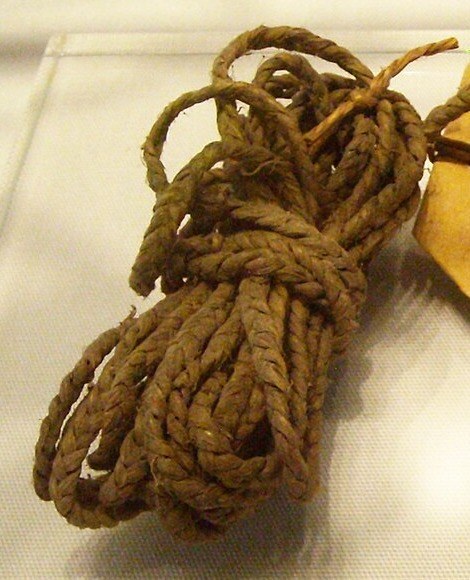


Sinew Cord: Two Plies of Sinew Reverse-Wrapped
Sinew is extremely strong, holds its own natural glue and shrinks as it dries. Circumpolar peoples used it as their only cordage. Twist wetted sinew threads into two plies and wrap them round each other the opposite way, so the twists lock into a cord.
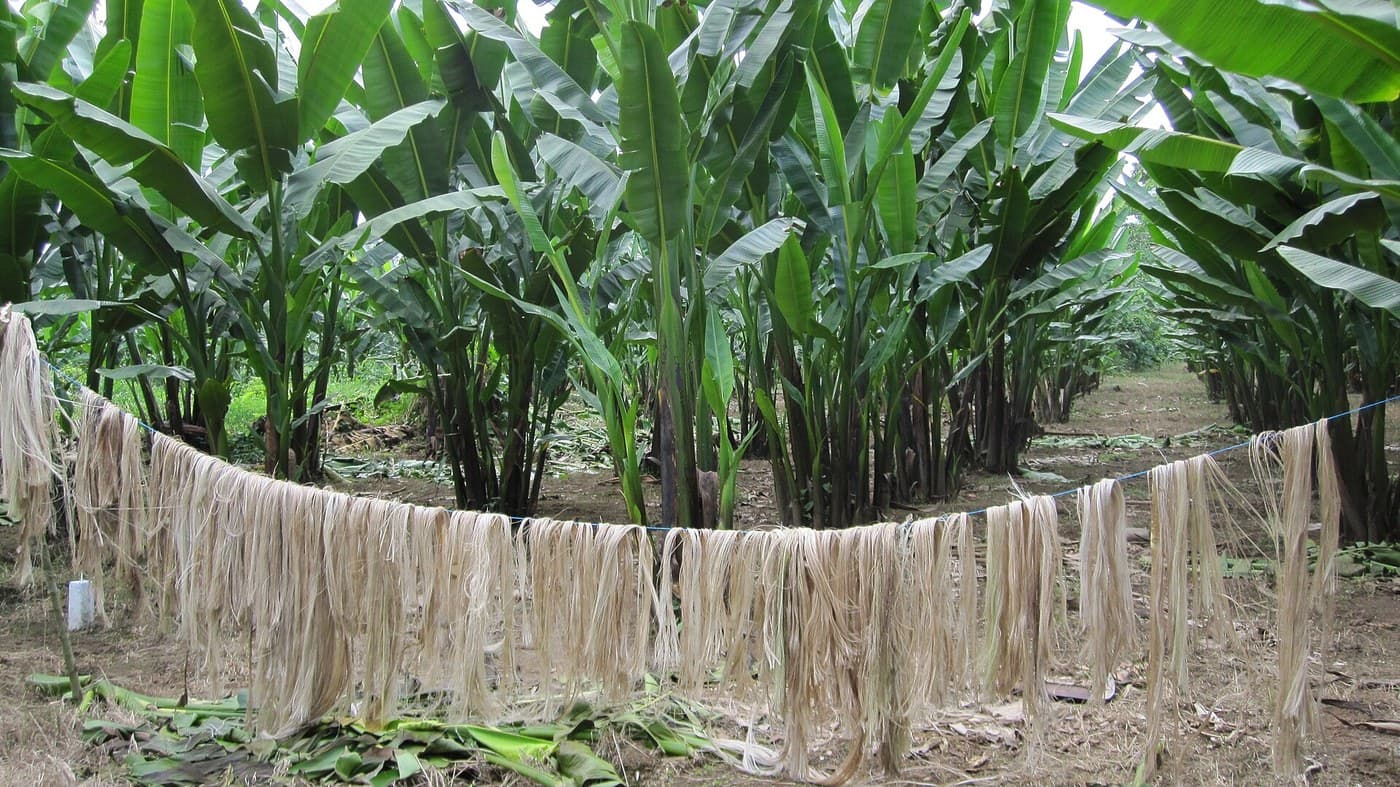
The picture: string made from whale sinew in Tierra del Fuego, collected in the late 19th century.
Beginner
Two hours
Instructions
1
1
Wet the sinew
Wet the sinew
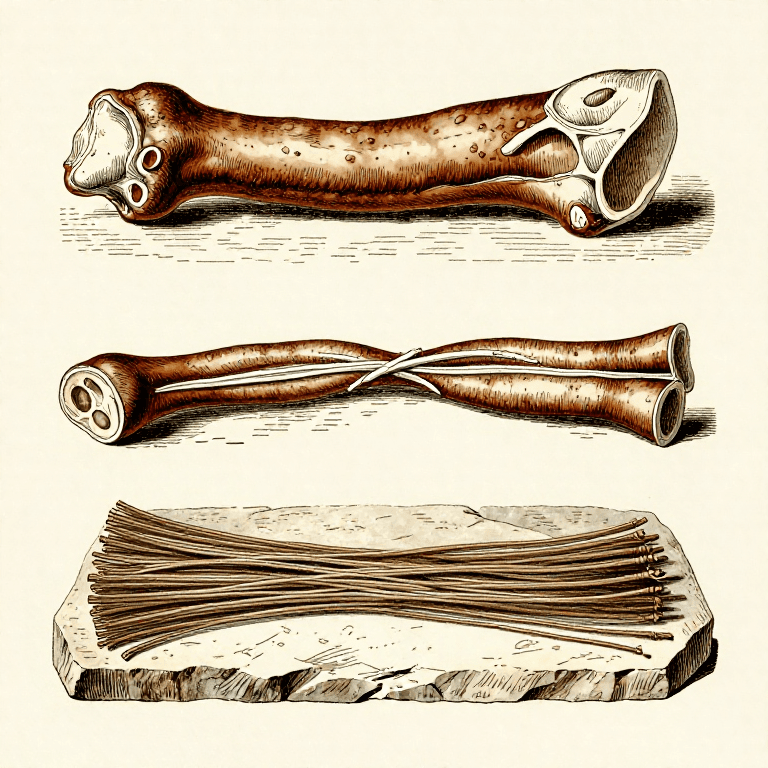
Soak the sinew threads in water for a few minutes until soft. Split them into two equal bundles, staggering the ends so the joins do not line up.
Materials for this step:
 Sinew Thread6 m
 Water0.25 liter
Tools needed:
 Glass Jar
 Ruler
Ruler2
2
Reverse-wrap
Reverse-wrap
Hold the two bundles together at one end. Twist the far bundle away from you, then lay it over the near one toward you. Repeat, so each ply is twisted one way and the pair wraps the other way.
Tools needed:
Ruler3
3
Splice in
Splice in
When a ply runs short, lay a new wet thread along its end and keep twisting; the sinew's own glue holds it as it dries.
Tools needed:
Glass Jar4
4
Dry and trim
Dry and trim
Stretch the cord gently and let it dry; it shrinks and tightens. Trim the loose ends.
Tools needed:
 Flint Knife
5
5
Thread needed
Thread needed
Loading Jupyter Notebook...
This blueprint makes

Related Blueprints
These blueprints share knowledge with this one — techniques, materials, or principles that connect them in the learning graph.

CC0 Public Domain
This blueprint is released under CC0. You are free to copy, modify, distribute, and use this work for any purpose, without asking permission.
Support the Maker by purchasing products through their Blueprint where they earn a Maker Commission set by Vendors, or create a new iteration of this Blueprint and include it as a connection in your own Blueprint to share revenue.