ART
BEAUTY & WELLNESS
CRAFT
CULTURE & HISTORY
ENTERTAINMENT
ENVIRONMENT
FOOD & DRINKS
REVERSE ENGINEERING
SCIENCES
SPORTS
TECHNOLOGY
WEARABLES
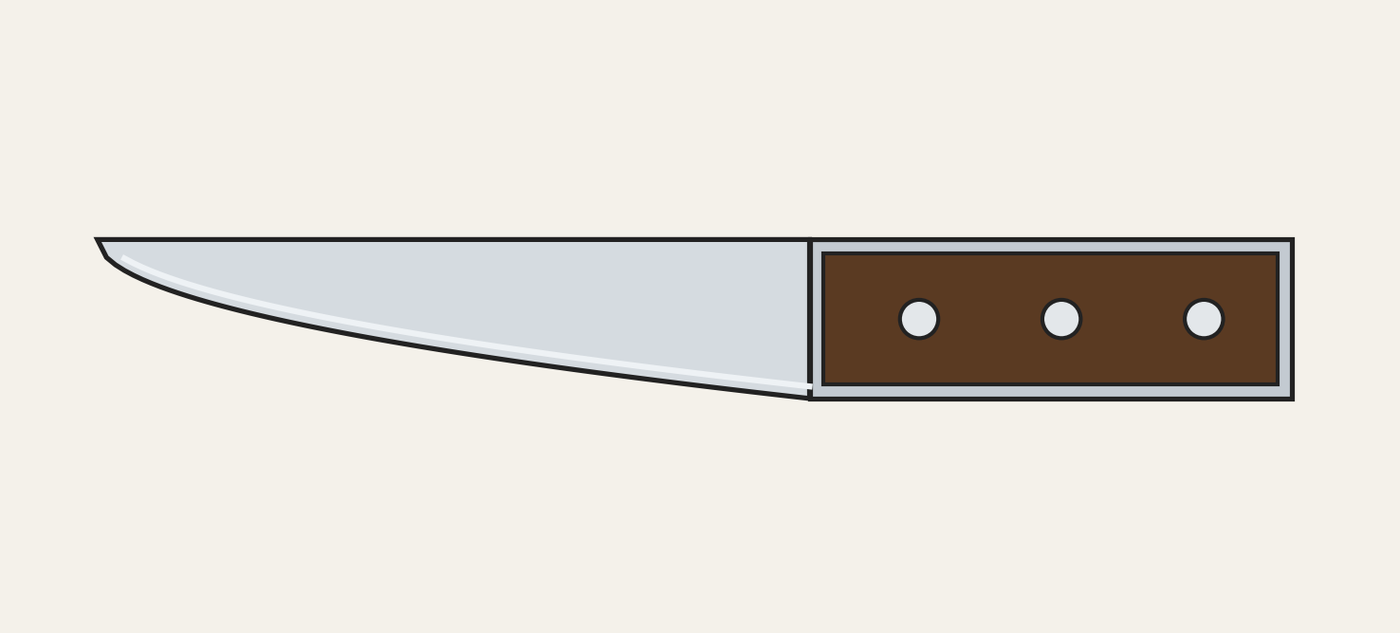


Stamped Kitchen Knife: Blade, Tang and Riveted Scales
Kitchen knife blades are either forged or stamped. A stamped blade is cut to shape straight from cold-rolled steel, then heat-treated for strength, ground, polished and sharpened; it can often be recognised by having no bolster. Typical stainless kitchen knives are 420 stainless, an alloy of iron with about 10–15% chromium and little carbon, which resists rust far better than carbon steel. In the traditional Western knife the tang, the part of the blade inside the handle, carries two scales of wood, plastic or composite, one each side, held by metal rivets, usually three.
Advanced
Factory process
Instructions
1
1
Stamp the blank
Stamp the blank
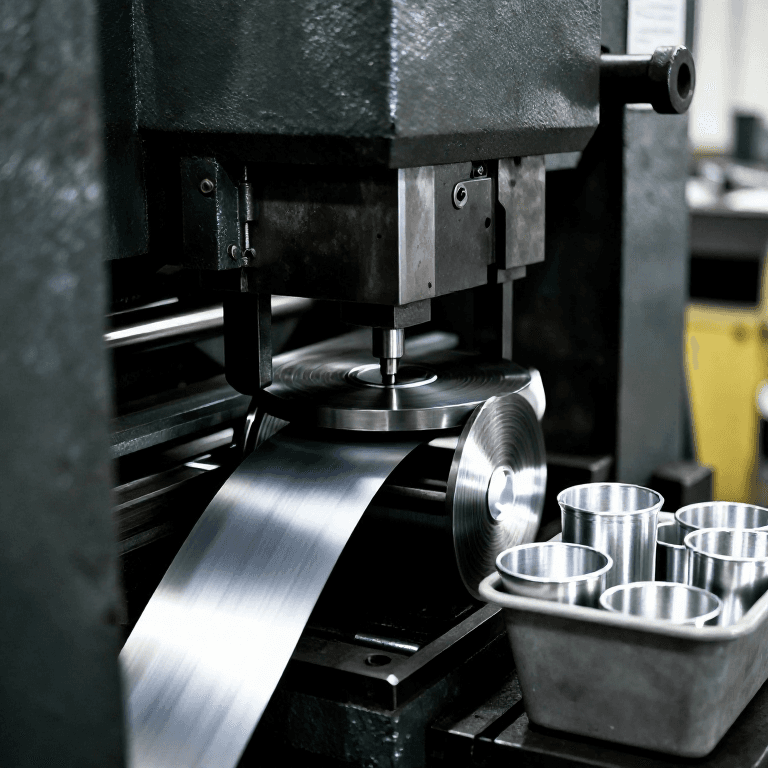
Cut the blade with its tang straight from cold-rolled stainless steel in the press.
Materials for this step:
 Cold-Rolled Stainless Steel Strip (420)1 as required
Tools needed:
 Stamping Press
2
2
Heat treat
Heat treat
Heat-treat the blank for strength.
Tools needed:
 Heat Treating Oven
3
3
Grind, polish and sharpen
Grind, polish and sharpen
Grind the blade, polish it and sharpen the edge.
Tools needed:
 Belt Grinder
 Polishing Wheel
 Sharpening Stone
4
4
Rivet the scales
Rivet the scales
Fit a scale to each side of the tang and fix them with the rivets, usually three.
Materials for this step:
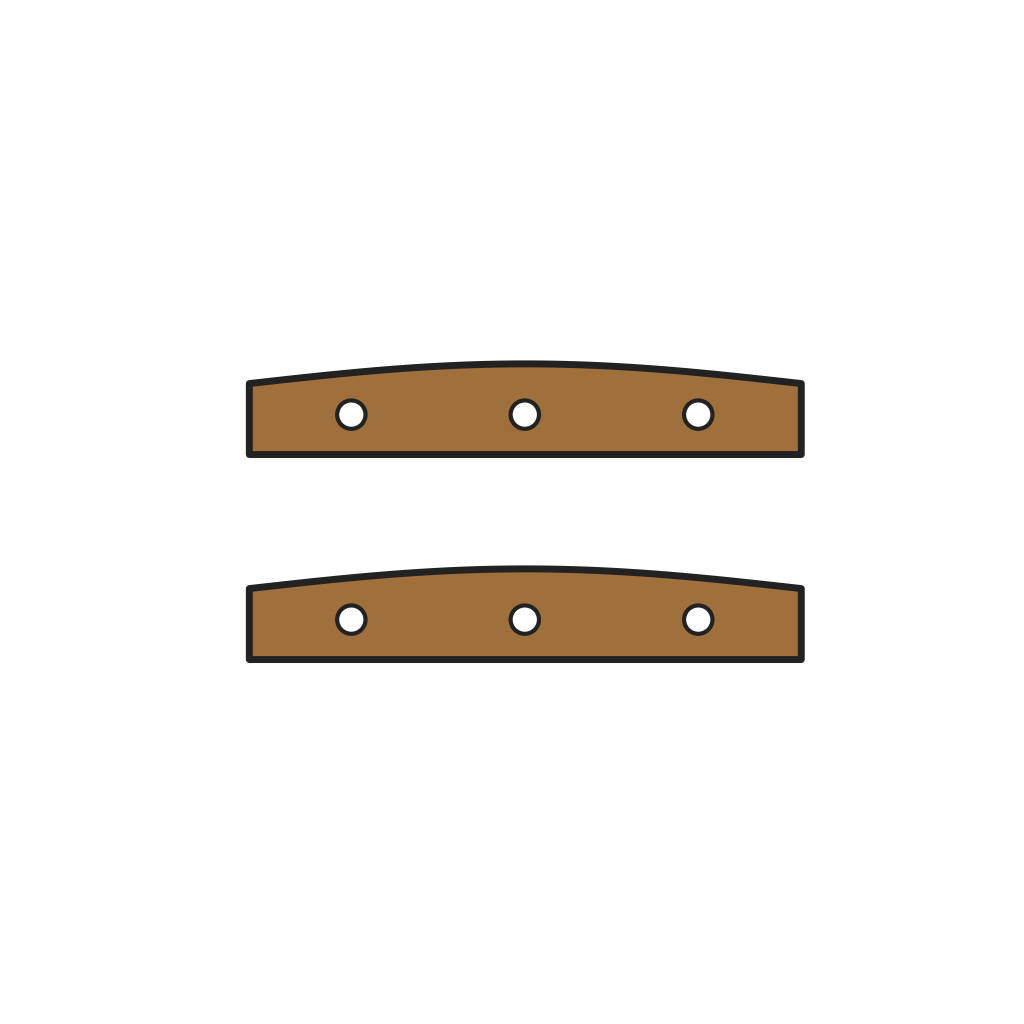 Knife Handle Scales2 pieces
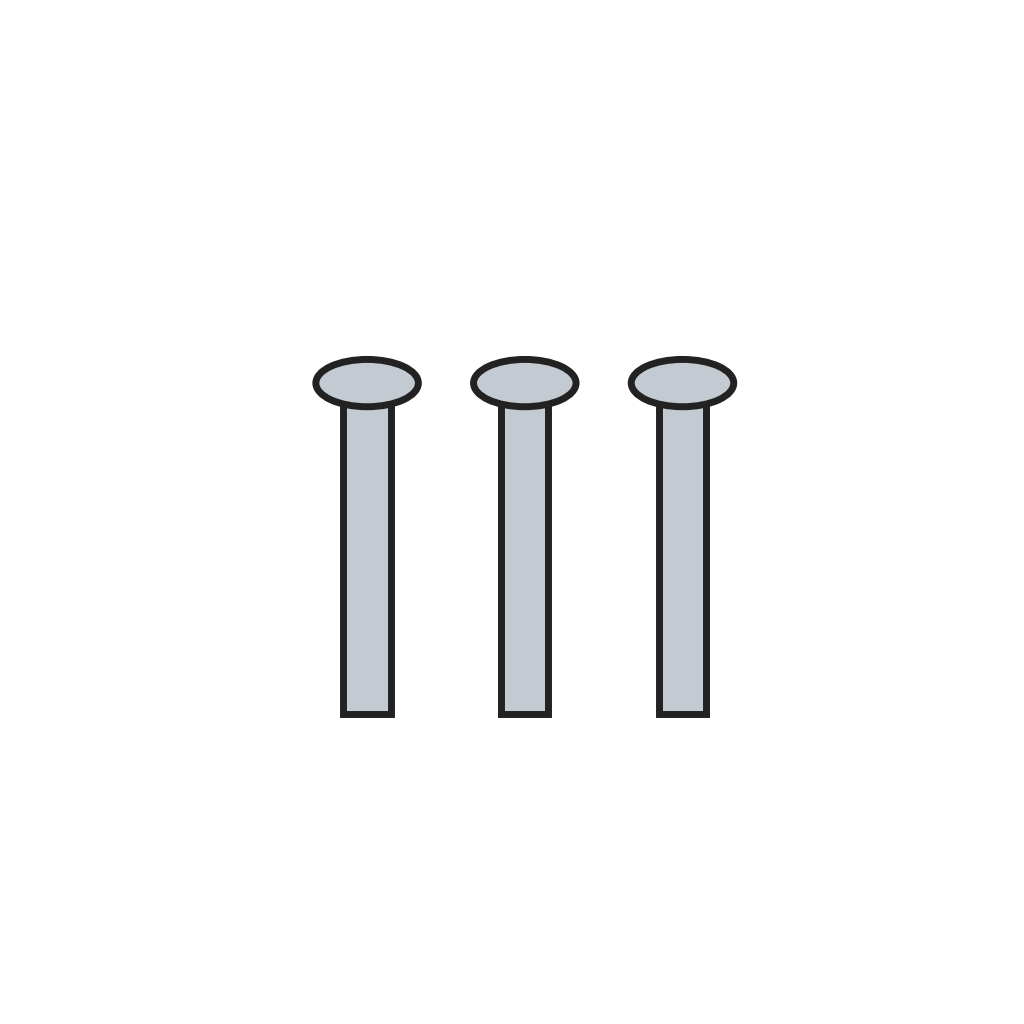 Knife Handle Rivets3 pieces
Materials
3- 1 as requiredPlaceholder
- 2 piecesPlaceholder
- 3 piecesPlaceholder
Tools Required
5- Placeholder
- Placeholder
- Placeholder
- Placeholder
- Placeholder
Related Blueprints
These blueprints share knowledge with this one — techniques, materials, or principles that connect them in the learning graph.



CC0 Public Domain
This blueprint is released under CC0. You are free to copy, modify, distribute, and use this work for any purpose, without asking permission.
Support the Maker by purchasing products through their Blueprint where they earn a Maker Commission set by Vendors, or create a new iteration of this Blueprint and include it as a connection in your own Blueprint to share revenue.