ART
BEAUTY & WELLNESS
CRAFT
CULTURE & HISTORY
ENTERTAINMENT
ENVIRONMENT
FOOD & DRINKS
REVERSE ENGINEERING
SCIENCES
SPORTS
TECHNOLOGY
WEARABLES

The Apple Parer: A Crank, a Fork and a Knife on a Spring
Paring a bushel of apples with a knife takes hours. A parer clamped to the table does it with a crank: gearing spins the apple on a fork while a knife on a spring-arm swings across it and takes the peel off in one strip.
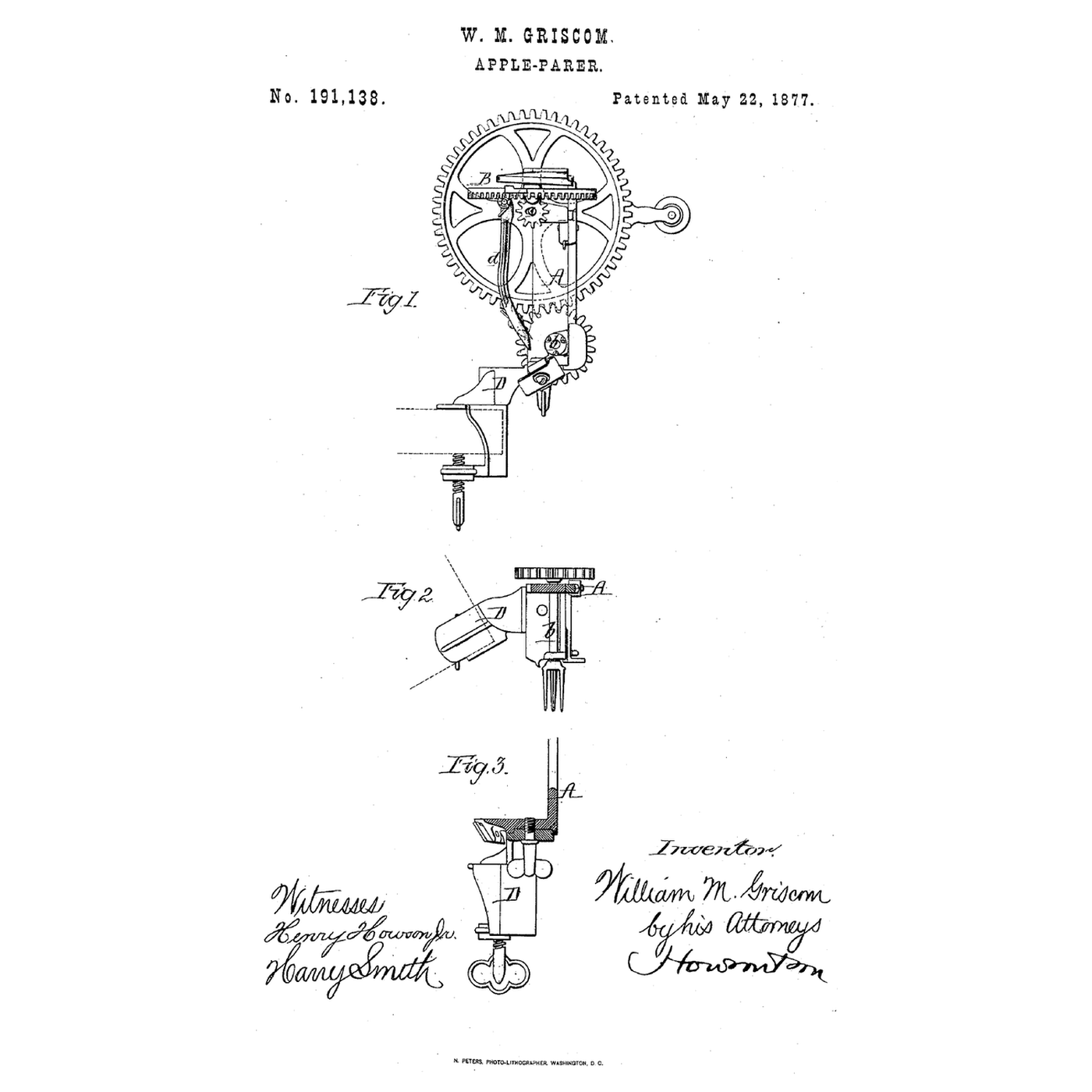
William M. Griscom of Reading, Pennsylvania, received US 191,138, dated 22 May 1877 (filed 4 April 1877). The machine proper, he wrote, "is precisely the same as those in common use": the turntable parer, whose rotating table swings the knife. His improvement moved the table clamp to the fork end, so "the parings from the latter do not come in contact with said gearing" and the apple is held firmly while it is pushed onto the fork.
This rung works out how wide the strip is, how much apple a thick peel wastes and why the knife is on a spring. Then it pares apples by crank and by hand and weighs the difference.
Beginner
About 1 hour
Instructions
1
1
Strip width, peel thickness and the spring
Strip width, peel thickness and the spring
Loading Jupyter Notebook...
2
2
The gearing between crank and fork
The gearing between crank and fork
The crank drives the fork through a gear train that multiplies its speed. The embedded blueprint shows how ratios are chosen.
3
3
Read US 191,138
Read US 191,138
"My invention relates to certain improvements in that class of apple-paring machines in which the frame is so arranged that the parings from the apple fall clear of the gearing, as illustrated in the machine for which Letters Patent were granted to my assignees February 22, 1876, No. 173,942".
"The machine proper is precisely the same as those in common use" — the turntable type — and "consists of a frame, A, carrying the driving-shaft a, fork-shaft b, and their gearing, and the rotating table B, which carries the spring-arm d and its paring-knife."
The clamping-frame D "is not secured to that portion of the frame A adjacent to the operating-shaft a, as usual, but to the opposite end of the frame, adjacent to the fork-shaft b." So "the end of the machine which carries the apple is directly adjacent to the clamp, and is thus held more firmly than usual, all shaking of the apple, or displacement of the machine when putting the apple on the fork, being prevented."
4
4
The paring cycle
The paring cycle
Blockly Workspace
Loading Blockly workspace...
5
5
Pare by crank, pare by hand, weigh both
Pare by crank, pare by hand, weigh both
Clamp an apple parer to a sturdy table edge. Weigh six apples of about the same size one by one and note each weight.
Pare three on the parer and time each from fork to finished. Pare the other three with a vegetable peeler and time them too. Weigh every pared apple and the peel from it.
Work out the fraction of each apple that went into the peel, and the average time for each method. Measure a few peel strips with a caliper for width and thickness and compare them with the notebook. Keep the fingers clear of the fork and blade while the crank turns.
Materials for this step:
 Apple6 pieces
Tools needed:
 Apple Parer
 Vegetable Peeler
 Digital Scale
 Stopwatch
 Digital Caliper 6-Inch
6
6
A parer that tears or skips
A parer that tears or skips
Apple parer troubleshooting.
Flow
Loading...
7
7
History and honest limits
History and honest limits
**William M. Griscom** of Reading, Pennsylvania, filed US 191,138 on 4 April 1877; it is dated 22 May 1877. It improves the machine patented to his assignees on 22 February 1876, No. 173,942, and describes the parer itself as the common turntable type.
**Honest limits.** The patent gives no gear ratios, speeds or sizes. The apple radius, turn counts and lumpy shape in the notebook are examples. Your own weighings are the result.
Tools Required
5- Placeholder
- Vegetable Peeler10% commissionPlaceholder
- Placeholder
- Placeholder
- Placeholder
This blueprint makes
Related Blueprints
These blueprints share knowledge with this one — techniques, materials, or principles that connect them in the learning graph.
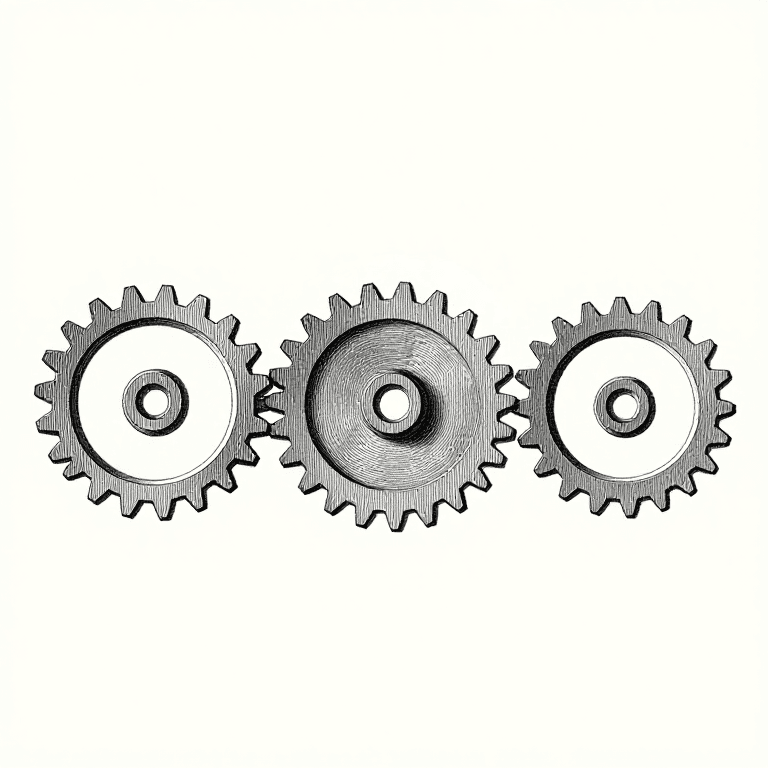
Gear Trains: Idlers, Compounding and Hitting a Given Ratio
by Martin
Mechanics
46
0
0
0
0
0
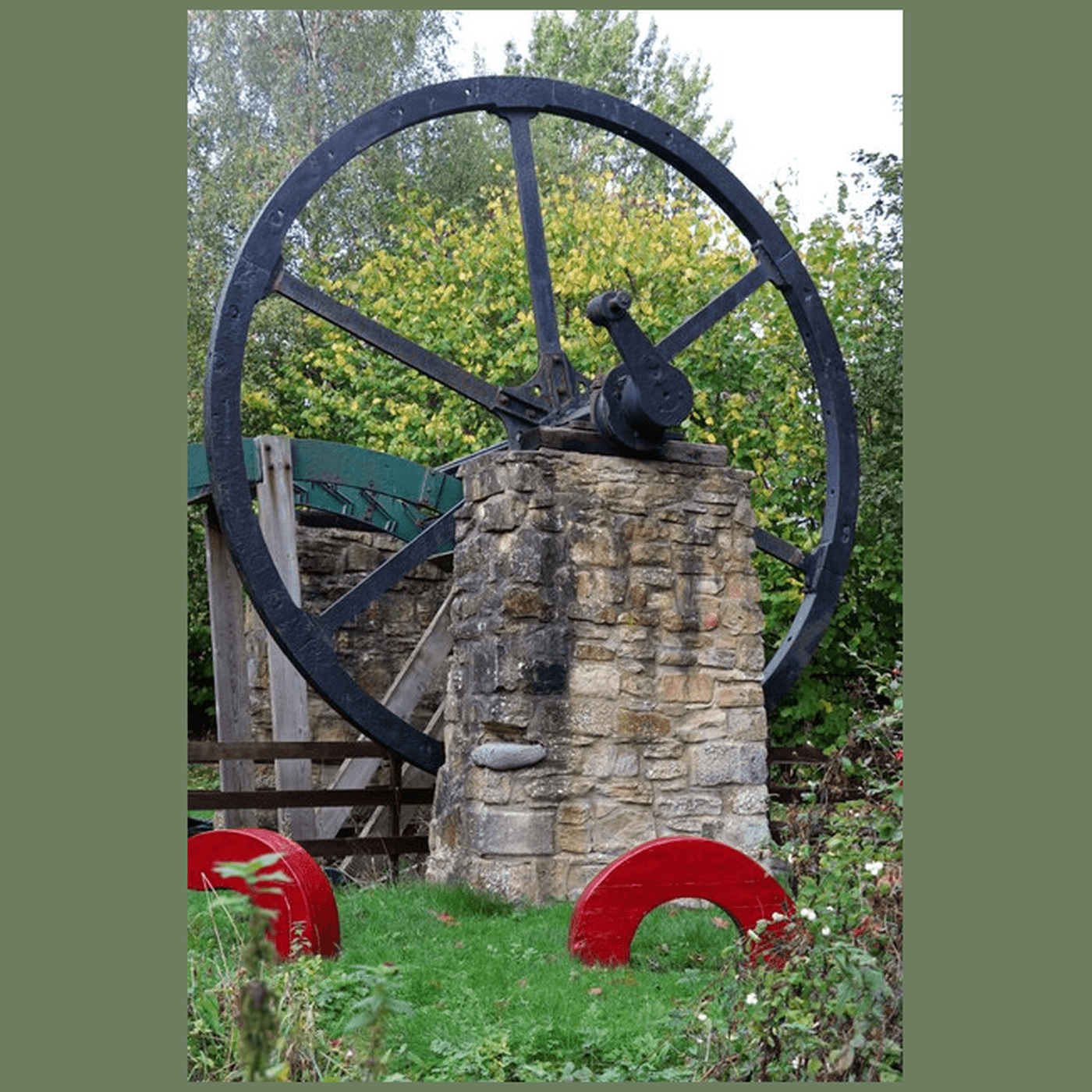
The Crank and the Flywheel: Smoothing One Bang in Two Turns
by Martin
Mechanics
36
0
0
0
0
0
A Knife Does the Work: The Grip, the Claw, and Why the Blunt One Cuts You
by TheChef
FOOD & DRINKS
33
0
0
0
0
0
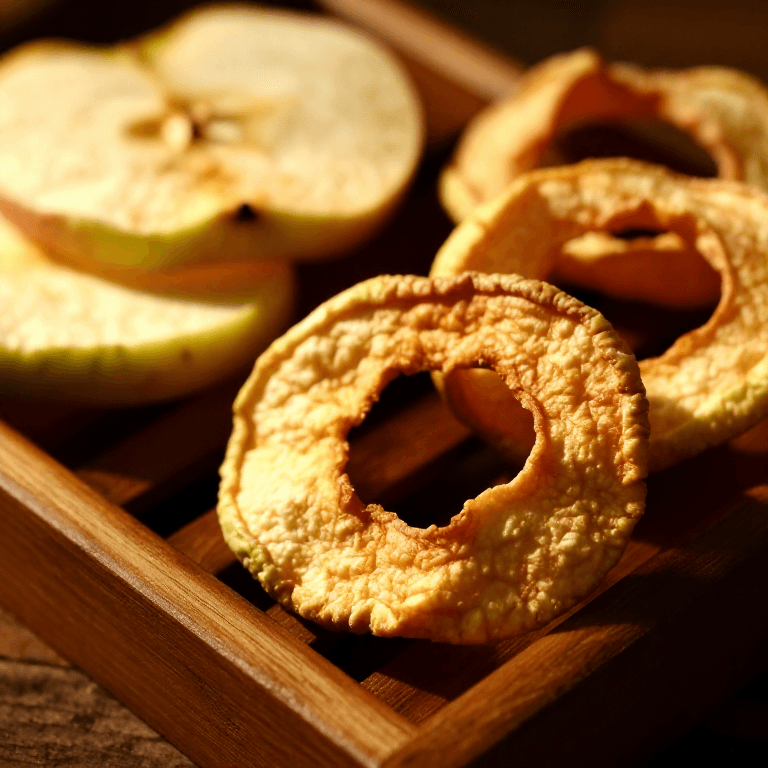
Dried Apple Rings
by Bob
Food
43
0
0
0
0
0
CC0 Public Domain
This blueprint is released under CC0. You are free to copy, modify, distribute, and use this work for any purpose, without asking permission.
Support the Maker by purchasing products through their Blueprint where they earn a Maker Commission set by Vendors, or create a new iteration of this Blueprint and include it as a connection in your own Blueprint to share revenue.