ART
BEAUTY & WELLNESS
CRAFT
CULTURE & HISTORY
ENTERTAINMENT
ENVIRONMENT
FOOD & DRINKS
REVERSE ENGINEERING
SCIENCES
SPORTS
TECHNOLOGY
WEARABLES
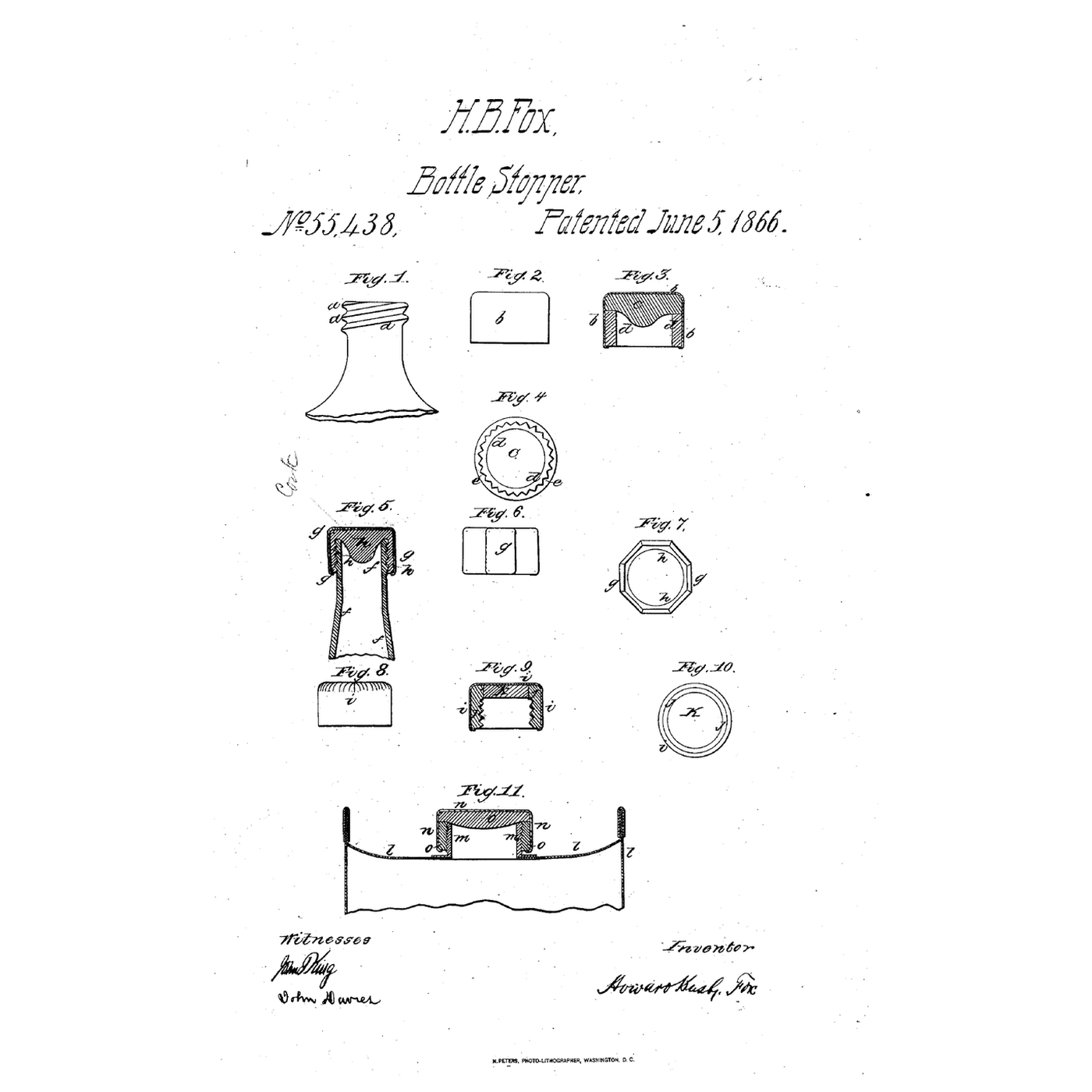


The Cork-Lined Screw Cap: A Rigid Cap Whose Lining Takes the Shape of the Thread
A cork forced into a bottle's neck breaks bottles, needs a corkscrew to draw it, and is used only once.
Howard Busby Fox of Oxton, England, received US 55,438, dated 5 June 1866, for closing bottles and vessels that have a screw thread on the outside of their necks with "a cap, made of metal, wood, or other rigid material, lined with cork, india-rubber, or other flexible substance". "The flexible lining, when a few turns are given to a cap over the neck of a bottle or vessel, yields and accommodates itself to the form thereof", and the cap fits tight along the threads as well as at the rim. A notched edge on a metal cap, folded in over the lining, holds the lining in and stops it turning in the cap.
This rung works out how hard the lining presses, then makes a cork-lined cap from a tin can's end and cork sheet for a threaded bottle and tests its seal.
Beginner
About 3 hours
Instructions
1
1
The lining's press
The lining's press
Loading Jupyter Notebook...
2
2
A thread in the glass before it
A thread in the glass before it
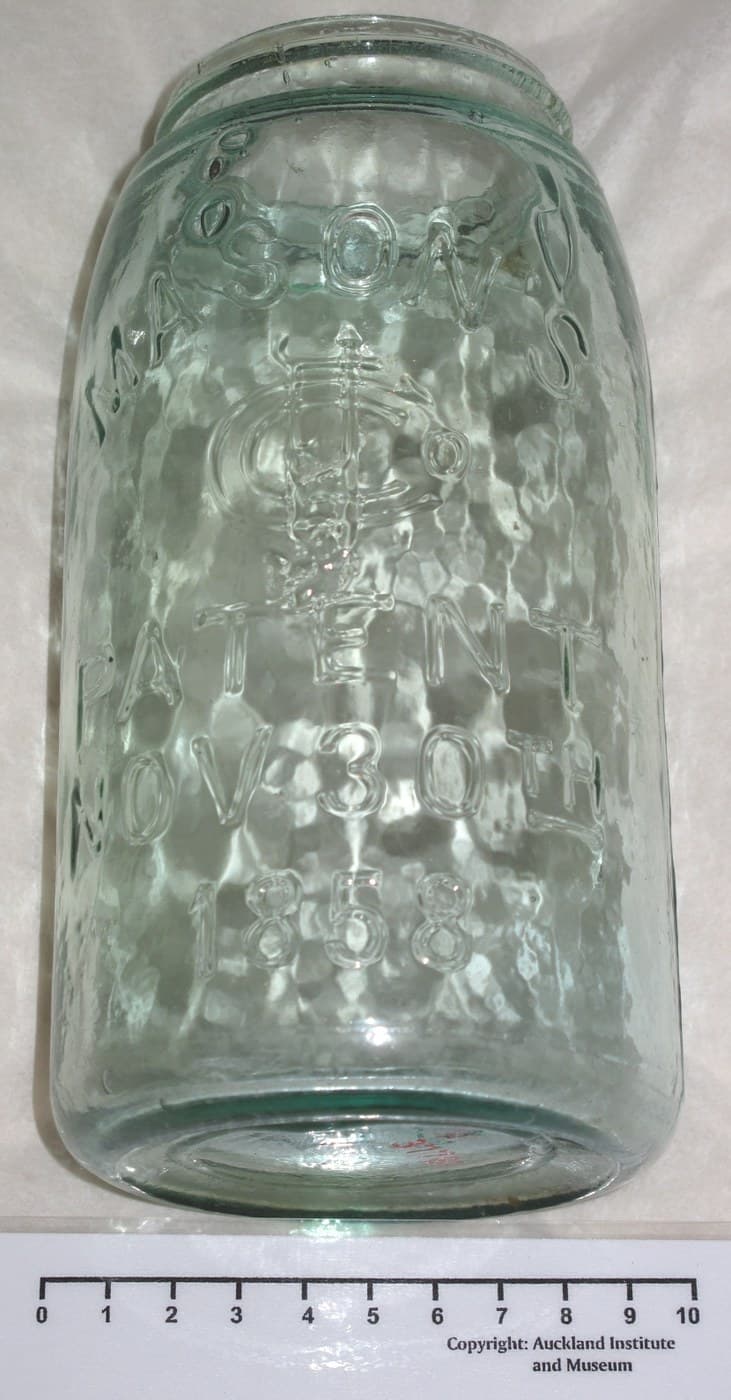
The embedded blueprint puts a screw thread into the glass of a jar. Fox closes such a thread with a rigid cap whose cork lining takes the thread's shape.
3
3
Read US 55,438
Read US 55,438
"For closing the mouth of a bottle or vessel of the kind above described I employ a cap, made of metal, wood, or other rigid material, lined with cork, india-rubber, or other flexible substance or material of a character suitable for the liquid to be placed in the bottle or vessel. The flexible lining, when a few turns are given to a cap over the neck of a bottle or vessel, yields and accommodates itself to the form thereof, and provides the following (among other) advantages: Perfect and permanent closing of the bottle or vessel, with less breakage than under the present system of forcing corks into bottles, convenience in opening the said bottles or vessels without a corkscrew, a tight fit of the cap to the bottle or vessel along the threads as well as at the edge or rim of the neck, and economy, for the same cap and its elastic lining may be used many times."
4
4
Make a lined cap and test its seal
Make a lined cap and test its seal
**Cap.** Cut the end from a clean tin can a little wider than the bottle's threaded neck, leaving a 15 mm side wall so it forms a cup. File the cut edge smooth, then snip notches round it 5 mm deep and 5 mm apart.
**Lining.** Cut a disc of cork sheet for the cup's bottom and a strip for its side wall, long enough to go round and thick enough that the bottle's thread will just start in it. Glue them in with shellac, then fold the notched tabs in over the strip's top edge, as Fox's overfolded edge.
**Test.** Discard the bottle's own cap. Screw the lined cap onto the neck with a few firm turns: the cork takes the thread's shape. Fill the bottle with water, cap it, and hold it upside down for a minute. Then fill it with chilled carbonated water, cap it, and see whether it keeps its fizz for a day. Take the cap off and on ten times and test again.
Materials for this step:
 Tin Can1 piece
 Cork Sheet1 piece
 Shellac1 piece
 Water1 liter
 Carbonated Water (Sealed Bottle)1 piece
Tools needed:
 Tin Snips
 Files (Hand File)
 Flat-Nose Pliers
 Kitchen Knife
 Digital Caliper 6-Inch
 Leather Work Gloves
 Glass Bottles with Caps
5
5
A cap that leaks, slips or will not screw on
A cap that leaks, slips or will not screw on
Cork-lined screw cap troubleshooting.
Flow
Loading...
6
6
History and honest limits
History and honest limits
**Howard Busby Fox** of Oxton, Chester, England, received US 55,438, dated 5 June 1866. He described bottles with about two turns of thread for wine or ale, a hexagonal cap lined with solid cork on a thread of increasing pitch, a milled cap with a threaded cork lining, and a lined cap for the screwed filling opening of a metal drum; shellac could bond cap and lining. His claims cover the soft-lined cap for mouths with an outside thread, and the notched edge that folds in over the lining.
**Honest limits.** A tin-can end and cork sheet stand in for his made-up caps, and a bought threaded bottle for his. The notebook treats the lining as simply elastic; its modulus, thickness, squeeze and pressures are examples. Your sealed bottle is the result.
Materials
5- 1 piecePlaceholder
- 1 piecePlaceholder
- 1 piecePlaceholder
- 1 literPlaceholder
- Placeholder
Tools Required
7- Placeholder
- Placeholder
- Placeholder
- Placeholder
- Placeholder
- Placeholder
- Placeholder
Related Blueprints
These blueprints share knowledge with this one — techniques, materials, or principles that connect them in the learning graph.


CC0 Public Domain
This blueprint is released under CC0. You are free to copy, modify, distribute, and use this work for any purpose, without asking permission.
Support the Maker by purchasing products through their Blueprint where they earn a Maker Commission set by Vendors, or create a new iteration of this Blueprint and include it as a connection in your own Blueprint to share revenue.