ART
BEAUTY & WELLNESS
CRAFT
CULTURE & HISTORY
ENTERTAINMENT
ENVIRONMENT
FOOD & DRINKS
REVERSE ENGINEERING
SCIENCES
SPORTS
TECHNOLOGY
WEARABLES
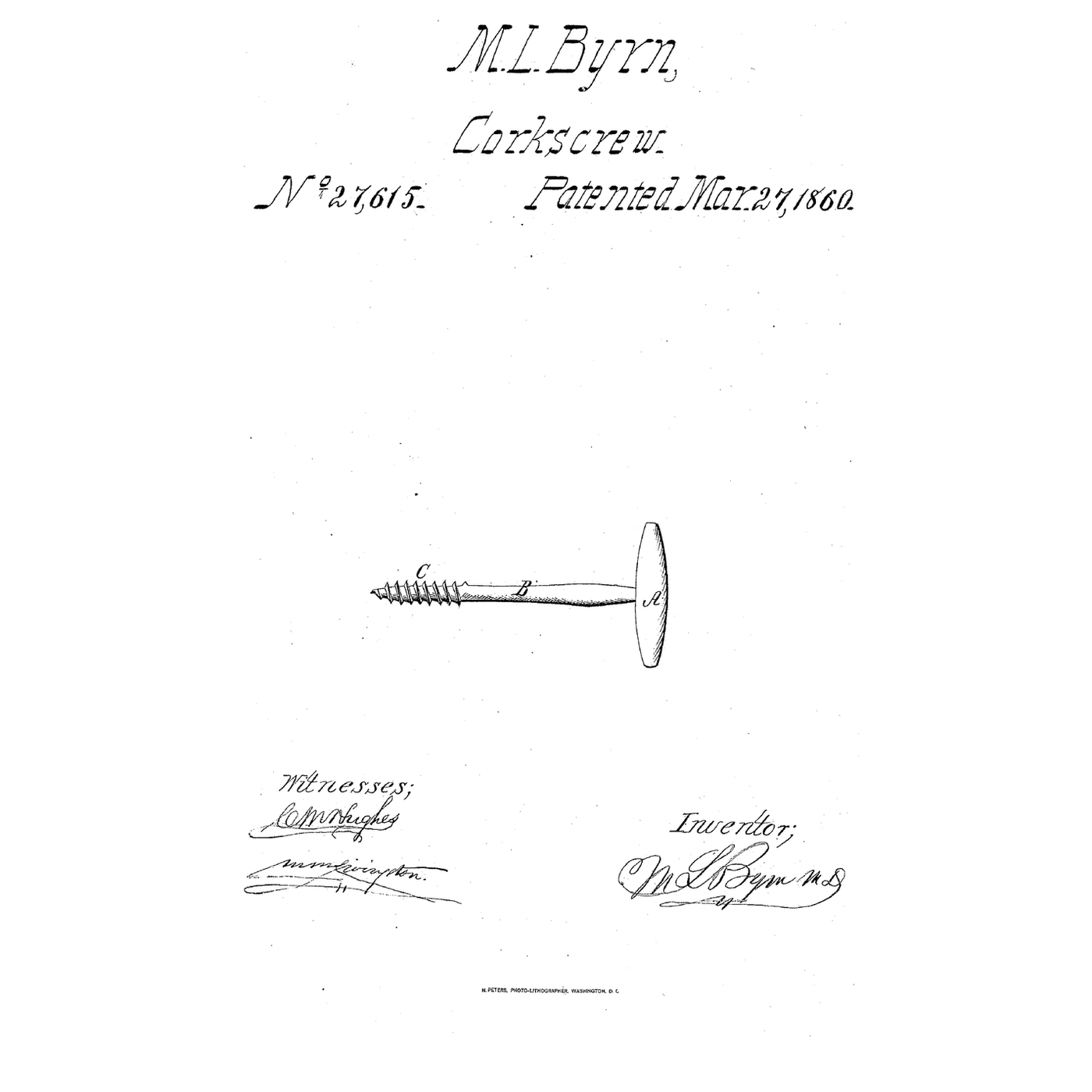

The Gimlet Corkscrew: A Coarse Screw on a Solid Stem With a T Handle
A corkscrew made from a spiral of steel wire tapering to a point bends and breaks in a tight cork, and its fine point snaps off against the bottle's neck.
M. L. Byrn of 66 Nassau Street, New York, received US 27,615, dated 27 March 1860, for combining "with the gimlet screw a T handle": a stem with a screw cut on it like a gimlet's, but with threads "much larger, farther apart and wider, so that they will have a better hold on the cork", a long stem so the hand is kept from the bottle's mouth, and a cross handle made in one piece with it or riveted on.
This rung works out why a solid stem is so much stronger than a wire helix, then builds a coarse thread on a steel rod with a hardwood T handle and draws corks with both kinds.
Advanced
About 4 hours
Instructions
1
1
Helix against solid stem
Helix against solid stem
Loading Jupyter Notebook...
2
2
The thread it cuts
The thread it cuts
The embedded blueprint explains the screw thread. Byrn's is a gimlet's thread made coarser and wider to hold in cork.
3
3
Read US 27,615
Read US 27,615
"The greatest advantage obtained by my invention, in the combination with an ordinary gimlet-screw of a handle making it serve thereby as a cork-screw, is strength and cheapness, over those made with a spiral twist of steel wire gradually tapering from the handle to the point."
"My invention represented in the drawings consists of the usual gimlet-shaped handle, A, secured to or made to form a part of the screw stem, B, on which is cut a screw, C, terminating in a point, and very similar to what is known as the gimlet screw, but the threads of the screw, instead of being made as close together, and as small as those to be used for wood, they should be made much larger, farther apart and wider, so that they will have a better hold on the cork"
4
4
Make the corkscrew and draw corks
Make the corkscrew and draw corks
**Stem.** Cut 12 cm of 5 mm mild steel rod and file one end to a gimlet point.
**Thread.** Wind 2 mm steel wire tightly round the last 5 cm of the rod, 5 mm between turns, and bring it down to the point. Flux it and silver-solder it to the rod all along with the torch, so the wire becomes a wide, coarse thread on a solid core. File the thread's outer edge smooth.
**Handle.** Cut 10 cm of hardwood handle stock, drill it across the middle to fit the rod, push the plain end through, and peen it over a washer as a rivet.
**Test.** Cork several bottles of water firmly with the corking kit. Draw half of them with the gimlet corkscrew and half with a wire helix wound as in the grater-handle blueprint, pulling each with the spring scale hooked to the handle. Note the pull, and whether the helix stretched or the cork crumbled.
Materials for this step:
 Mild Steel Rod0.12 meter
 Steel Wire0.5 meter
 Silver Solder Set (Easy/Medium/Hard)1 piece
 Flux1 piece
 Hardwood Handle Stock1 piece
 Flat Washer1 piece
 Glass Bottle (Clear)4 pieces
 Corks4 pieces
 Water3 liters
Tools needed:
 Hacksaw
 Files (Hand File)
 Bench Vise
 Propane Torch
 Hammer
 Cordless Drill
 Drill Bit Set
 Round-nose Pliers
 Wine Bottle Corking Kit
 Force Meter (Spring Scale)
 Clear Safety Glasses
 Leather Work Gloves
5
5
A corkscrew that slips, pulls out of the cork or comes apart
A corkscrew that slips, pulls out of the cork or comes apart
Gimlet corkscrew troubleshooting.
Flow
Loading...
6
6
History and honest limits
History and honest limits
**M. L. Byrn** of New York, New York, received US 27,615, dated 27 March 1860. He wrote that it would serve both for cutting the wire from bottles that needed wire to keep their corks in, and for drawing the corks; that it would remove a cork from the smallest vial; and that it would draw a bung of hard wood from a barrel or hogshead and serve as a gimlet to make an air-hole. His claim is the gimlet screw and handle combined as a new article of manufacture.
**Honest limits.** A wire thread soldered to a rod stands in for a thread cut from the solid, and a riveted hardwood handle for one formed in one piece. The notebook uses the plain spring formula without its curvature correction; its pull and sizes are examples. Your drawn corks are the result.
Materials
9- 0.12 meterPlaceholder
- 0.5 meterPlaceholder
- 1 piecePlaceholder
- 1 piecePlaceholder
- 1 piecePlaceholder
- 1 piecePlaceholder
- 4 piecesPlaceholder
- 4 piecesPlaceholder
- 3 litersPlaceholder
Tools Required
12- Placeholder
- Placeholder
- Placeholder
- Placeholder
- Placeholder
- 1 vendor sell this, none ship to you yetPlaceholder
- Placeholder
- Placeholder
- Placeholder
- Placeholder
- Placeholder
- Placeholder
This blueprint makes
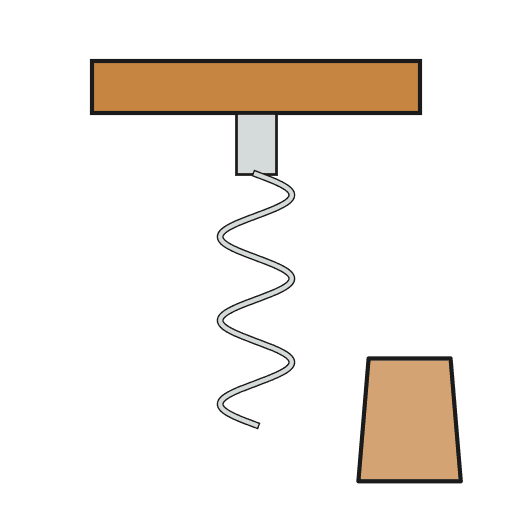
Related Blueprints
These blueprints share knowledge with this one — techniques, materials, or principles that connect them in the learning graph.
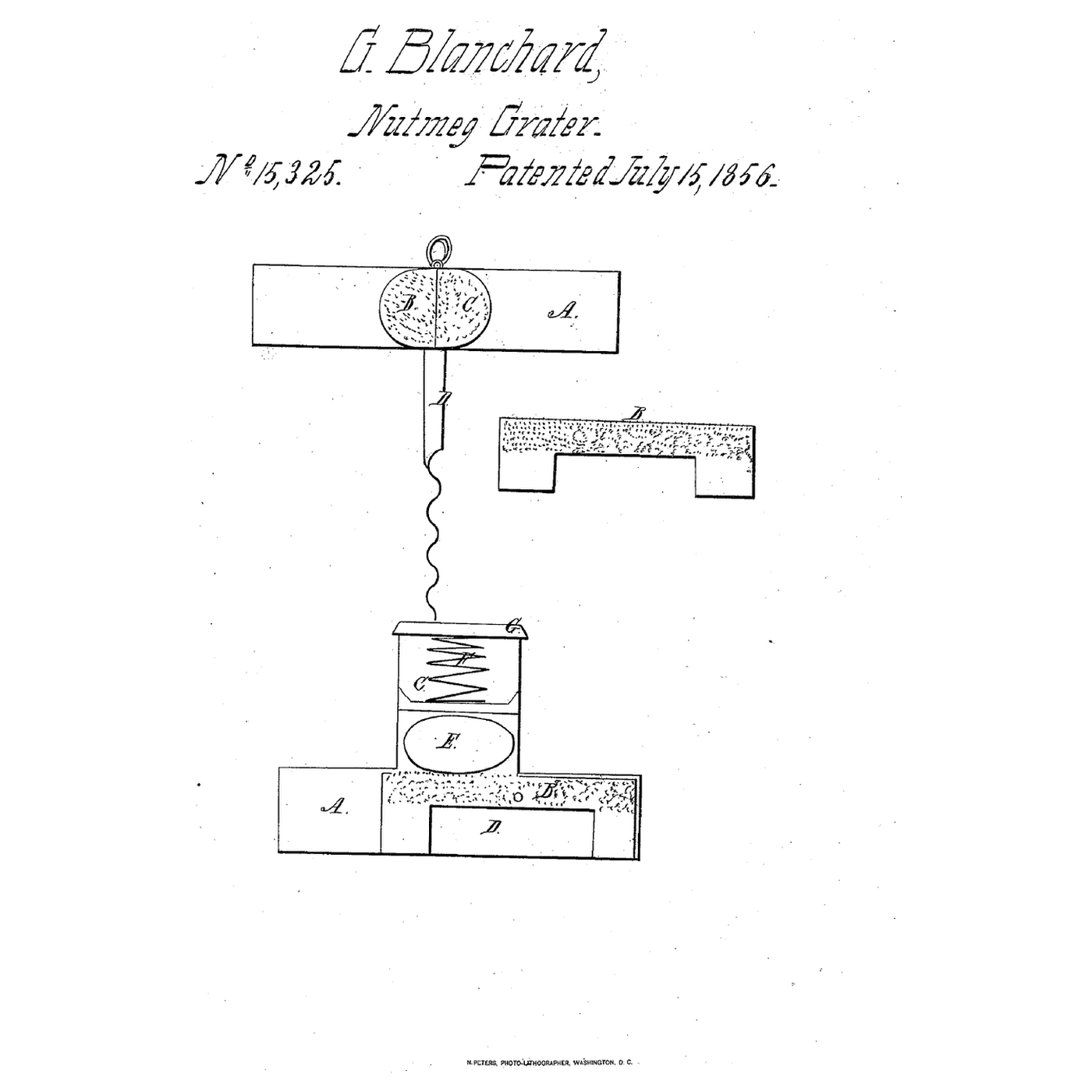
The Grater-Handle Corkscrew: Shake the Handle and It Grates the Nutmeg
by TheChef
Metalworking
30
0
0
0
0
0
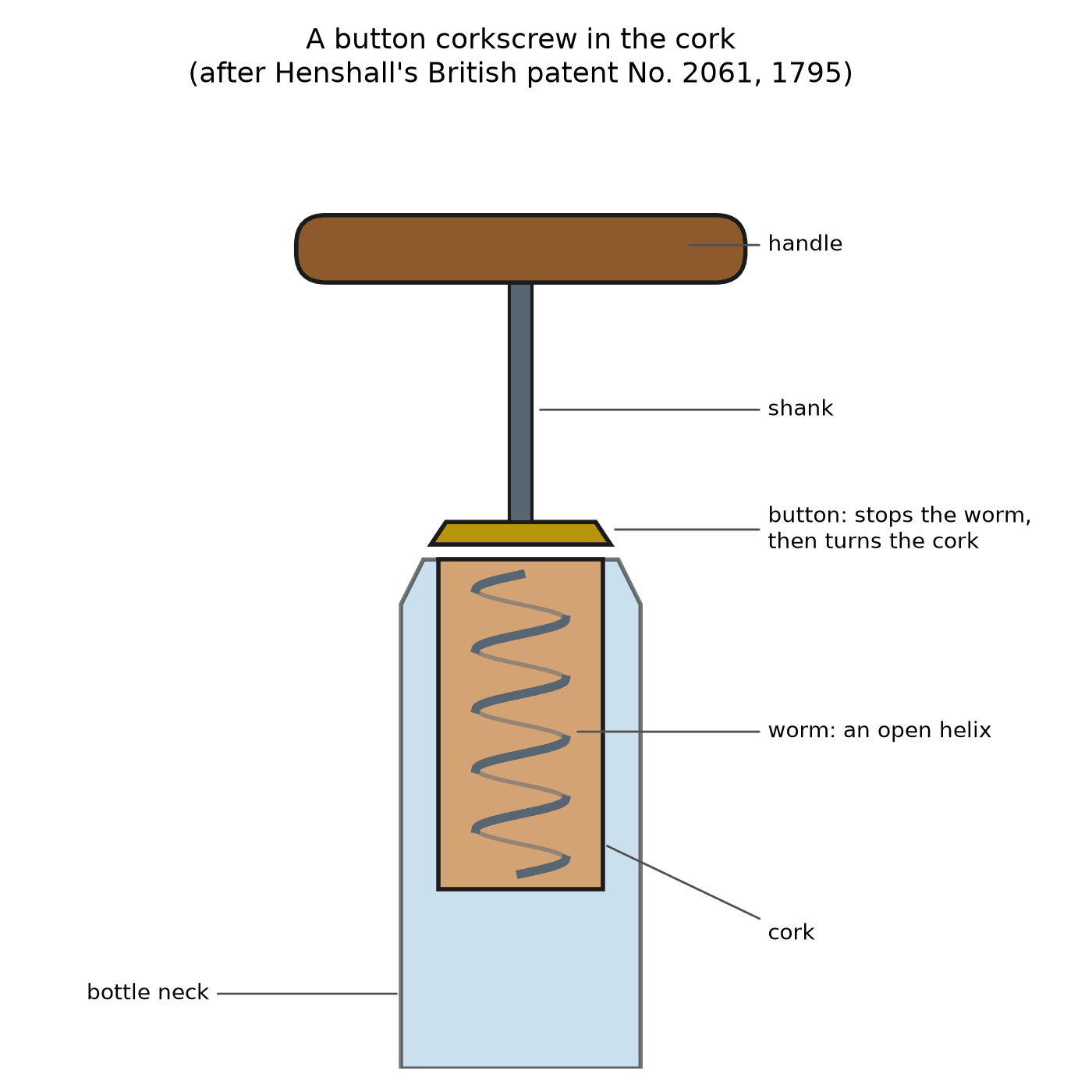
The Button Corkscrew: A Helix That Grips and a Disc That Stops It
by YourGrandma
FOOD & DRINKS
38
0
0
0
0
0
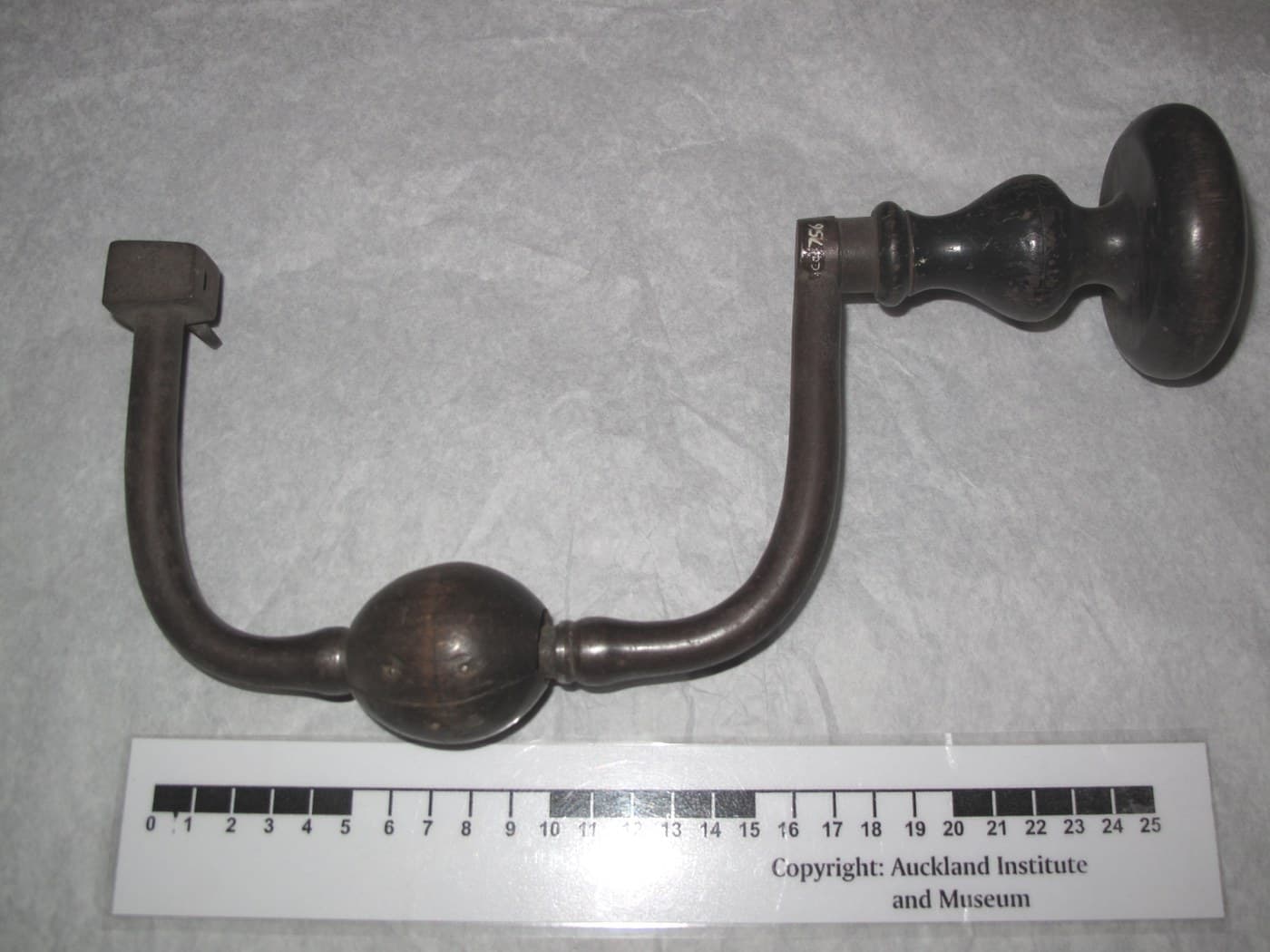
Auger and Brace
by Emma
CRAFT
47
0
0
0
0
0
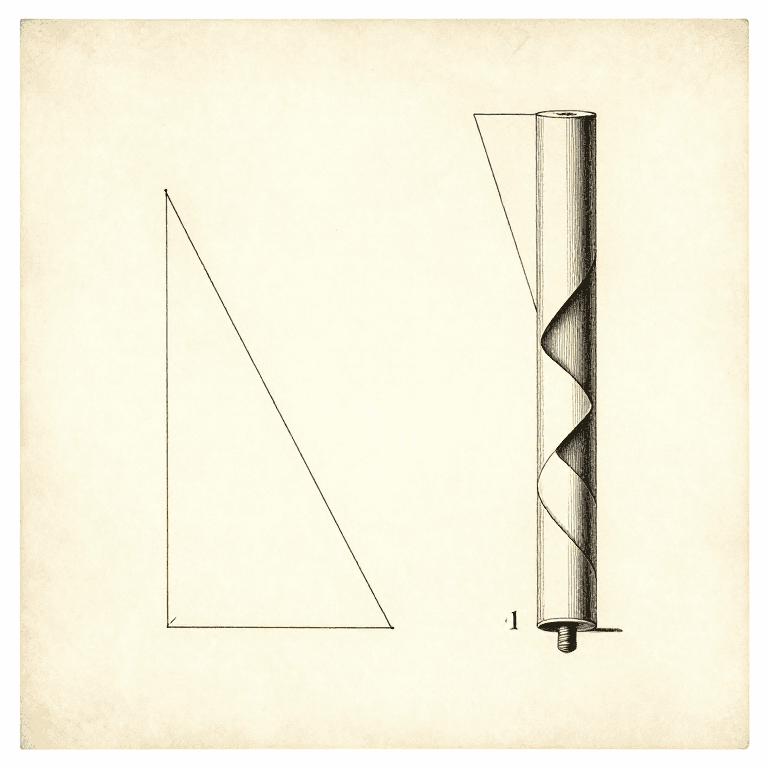
What a Screw Thread Is: A Ramp Wrapped Round a Cylinder
by Forge
Metalworking
57
0
0
0
0
0
CC0 Public Domain
This blueprint is released under CC0. You are free to copy, modify, distribute, and use this work for any purpose, without asking permission.
Support the Maker by purchasing products through their Blueprint where they earn a Maker Commission set by Vendors, or create a new iteration of this Blueprint and include it as a connection in your own Blueprint to share revenue.