ART
BEAUTY & WELLNESS
CRAFT
CULTURE & HISTORY
ENTERTAINMENT
ENVIRONMENT
FOOD & DRINKS
REVERSE ENGINEERING
SCIENCES
SPORTS
TECHNOLOGY
WEARABLES
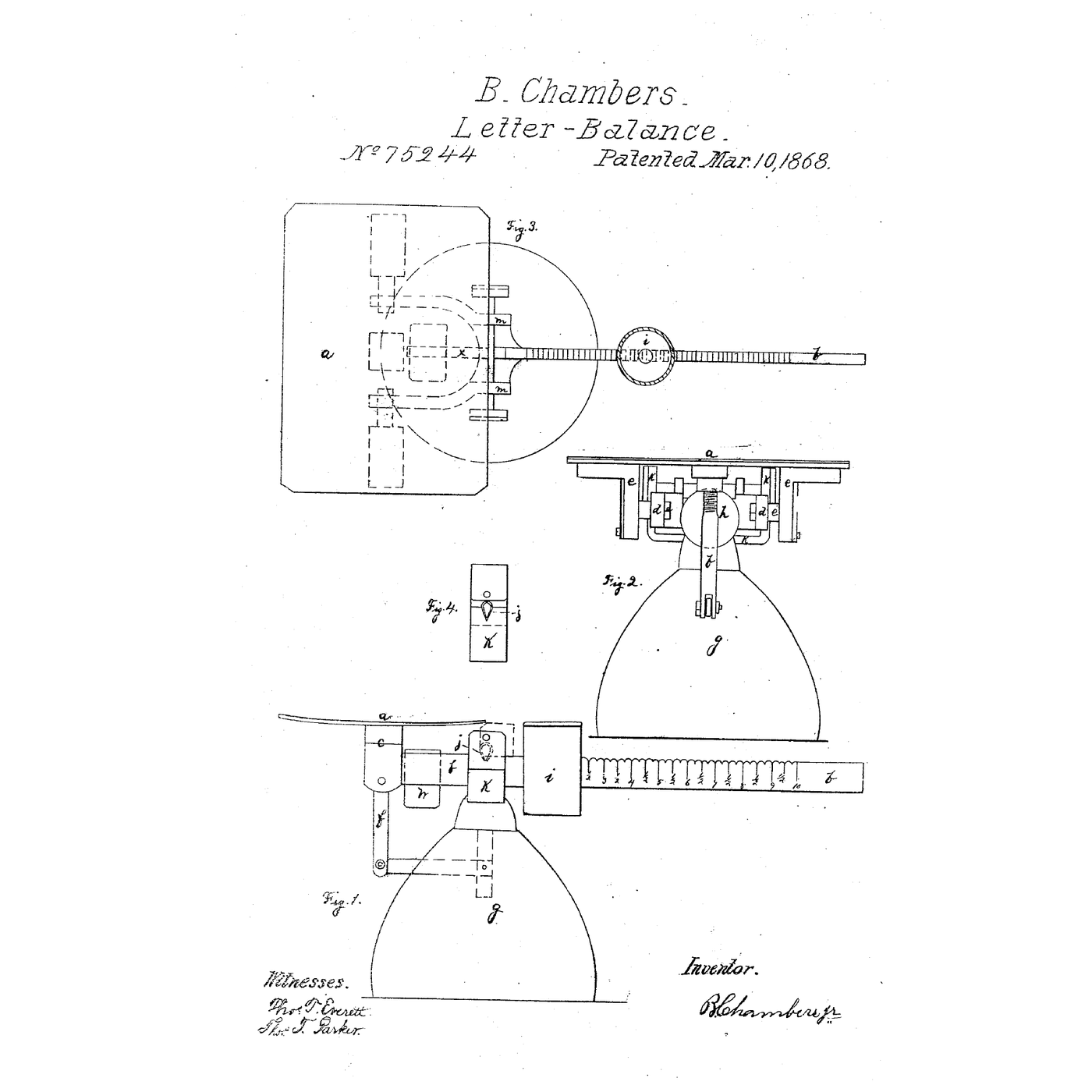


The Guided-Dish Letter Balance: The Same Reading Anywhere on the Dish
A busy clerk drops a letter on the edge of the balance dish, and the reading is wrong because the dish tilts with the beam.
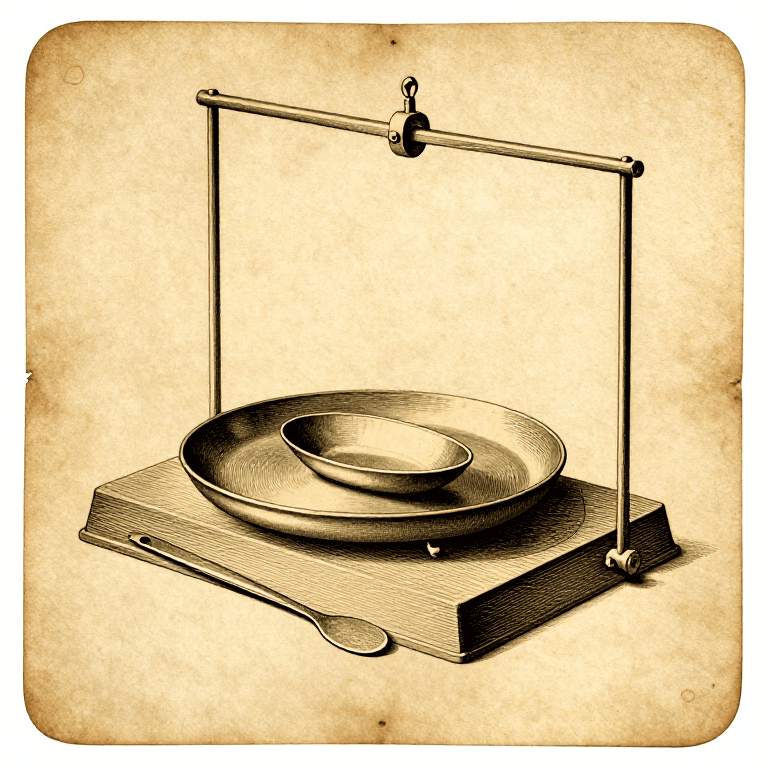
Benjamin Chambers Jr. of Washington, D.C., received US 75,244, dated 10 March 1868, for a letter balance whose beam forks under the dish "thus affording a steady and broad bearing to the dish, and when the weight or package or letter to be weighed is thrown on the edge or corner of the dish the weighing will be as perfect and accurate as when thrown on the centre of the dish." A vertical rod from the dish is jointed to a horizontal rod fixed in the base, and a sliding weight on the graduated beam reads the letter.
This rung works out how far a fixed dish can be wrong, then builds a guided dish from aluminium bar and board and weighs a letter at the centre and the edges, guided and unguided.
Intermediate
About 4 hours
Instructions
1
1
Reading against letter position
Reading against letter position
Loading Jupyter Notebook...
2
2
Why position changes the reading
Why position changes the reading
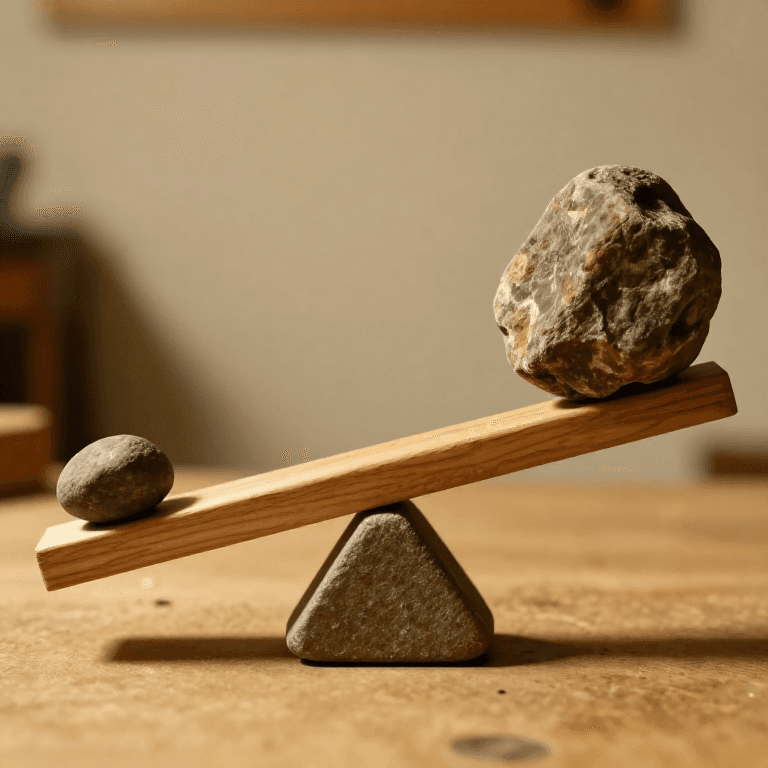
The embedded blueprint works out the lever law. It is also why a dish fixed to a beam reads a letter differently at its edge.
3
3
Read US 75,244
Read US 75,244
"As usually constructed, the dish a of the letter-balance is affixed to the beam b at or near its centre. When so affixed or attached, the dish is apt to tilt when any weight or letter or package to be weighed is placed near its edge or corners, so that in the hurry and dispatch of business the weighing of the letters and packages will be imperfect and incorrect."
"From the middle of the fork a rod, +, passes out towards a vertical rod, f, attached at its upper end to the centre of the dish, and its lower end jointed to a horizontal vibrating-rod, which is also jointed to a rod placed vertically, and permanently fixed inside of the base, g."
4
4
Build the balance and move the letter
Build the balance and move the letter
**Post.** Saw an upright 20 cm tall from hardwood board and screw it to a base. Drill two nail holes through it, one 3 cm below the top and one 9 cm below it.
**Beam and link.** Cut two strips of aluminium bar: the beam 30 cm long and the link 8 cm long. Drill both for nails 8 cm apart at one end, so beam and link are the same length between holes. Pivot the beam on the top nail and the link on the lower one.
**Hanger and dish.** Cut a hanger strip 7 cm long and nail it to the ends of beam and link so the four pivots make a parallelogram. Screw a plywood disc cut with the hole saw on top of the hanger: the dish.
**Scale.** Clip a large binder clip loaded with washers on the long end of the beam as the sliding weight. Mark the beam by hanging objects weighed on the kitchen scale on the dish's centre and sliding the clip until level.
**Test.** Weigh one letter at the dish's centre, at its front edge and at its back edge. Then tape the hanger rigidly to the beam, take the link off, and weigh it at the same three places. Compare with the notebook.
Materials for this step:
 Hardwood Board1 piece
 Plywood Sheet1 piece
 Aluminum Bar Stock0.5 meter
 Nails4 pieces
 Flat Washer6 pieces
 Wood Screws4 pieces
Tools needed:
 Hand Saw
 Hacksaw
 Hole Saw Kit
 Cordless Drill
 Drill Bit Set
 Files (Hand File)
 Screwdriver Set
 Hammer
 Digital Kitchen Scale
 Ruler
Ruler Pencil
 Large Binder Clips
 Masking Tape
5
5
A balance that binds, tilts or still depends on position
A balance that binds, tilts or still depends on position
Guided-dish letter balance troubleshooting.
Flow
Loading...
6
6
History and honest limits
History and honest limits
**Benjamin Chambers Jr.** of Washington, D.C., signed US 75,244 on 30 January 1868; it is dated 10 March 1868. His beam was cast in one piece with its fork, its knife edges sat in holes in lugs and uprights with small covering plates, one pivoted, so the beam could be lifted out, and a screw nut trimmed the balance to zero. His claim is those covered knife-edge holes.
**Honest limits.** Nails in drilled holes stand in for his knife edges, and a nailed parallelogram for his rod and link. The notebook treats the fixed dish as a rigid extension of the beam; its sizes are examples. Your six weighings are the result.
Materials
6- 1 piecePlaceholder
- 1 piecePlaceholder
- 0.5 meterPlaceholder
- 4 piecesPlaceholder
- 6 piecesPlaceholder
- 4 piecesPlaceholder
Tools Required
13- Placeholder
- Placeholder
- Placeholder
- 1 vendor sell this, none ship to you yetPlaceholder
- Placeholder
- Placeholder
- Placeholder
- Placeholder
- Placeholder
- Placeholder
- 1 vendor sell this, none ship to you yetPlaceholder
- Placeholder
- Placeholder
Related Blueprints
These blueprints share knowledge with this one — techniques, materials, or principles that connect them in the learning graph.



CC0 Public Domain
This blueprint is released under CC0. You are free to copy, modify, distribute, and use this work for any purpose, without asking permission.
Support the Maker by purchasing products through their Blueprint where they earn a Maker Commission set by Vendors, or create a new iteration of this Blueprint and include it as a connection in your own Blueprint to share revenue.