ART
BEAUTY & WELLNESS
CRAFT
CULTURE & HISTORY
ENTERTAINMENT
ENVIRONMENT
FOOD & DRINKS
REVERSE ENGINEERING
SCIENCES
SPORTS
TECHNOLOGY
WEARABLES



The Hex-Socket Screw: A Head That Sinks Out of Harm's Way
A set screw locks a pulley or a collar to a turning shaft. With an ordinary head it stands proud of the hub and turns with it — close enough to catch a sleeve.
William G. Allen of West Hartford, Connecticut, patented a way to make "flush head set screws" cheaply: US 960,244, filed 9 January 1909 and granted 7 June 1910. A headed blank is driven by a punch, "preferably hexagonal in cross section", through a die, so the head is drawn back down to the wire's diameter around the punch and keeps its hexagonal socket. The screw can be sunk below the surface and turned by "a strong key or crank".
This rung follows the metal through Allen's die, estimates what a set screw holds, and measures it on a pulley and shaft.
Beginner
About 2 hours
Instructions
1
1
Where the head goes, and what it holds
Where the head goes, and what it holds
Loading Jupyter Notebook...
2
2
Pulling metal through a hole smaller than itself
Pulling metal through a hole smaller than itself
Allen's die works like a drawplate: the metal gets thinner and longer. The embedded blueprint shows the older process.
3
3
Read US 960,244
Read US 960,244
Allen writes that it is "now generally recognized as very desirable, and numerous governments, State and national, make it obligatory" to guard or sink the heads of set screws on rotating parts. His object is screws "cheaper than the common headed set screws, which can be entirely sunk below the surface".
Fig. 1: a blank 1 of round wire is cut, one end upset "in the ordinary way" to form an expanded head 2, and the blank is driven through a die 3 by a punch 4. The head is "drawn up to the original diameter of the wire, leaving a socket 5 in the end". Other figures start from a drilled or punched round socket and turn it hexagonal the same way, or make a headed machine screw (Fig. 4).
The sockets are "shown as hexagonal" but "can be formed square, octagonal or any other angular or non-circular shape, depending on the shape of the punch". The claims are for the process: an enlarged end forced by an angular punch through a die smaller than that end, "compressing that end onto the punch".
4
4
Measure a socket screw and a set screw's grip
Measure a socket screw and a set screw's grip
Measure a socket head cap screw with the caliper: head diameter, the socket across the flats, and its depth. Find the hex key that fits and note the size.
Slide a 16-tooth timing pulley onto a 6 mm steel shaft clamped in the bench vise. Tighten its set screw with the hex key — first lightly, then firmly. Each time, wind a string round the pulley's teeth, hook the spring scale to it, and pull until the pulley slips. Slip torque = scale reading × the pulley's pitch radius (about 5.1 mm for 16 teeth of 2 mm pitch). Compare with the notebook.
File a small flat on the shaft under the set screw and repeat: the grip rises sharply.
Materials for this step:
 Steel Bar Stock1 piece
 Socket Head Cap Screw2 pieces
 Cotton Kitchen String1 piece
Tools needed:
 Hex Key Set
 Digital Caliper 6-Inch
 Bench Vise
 Force Meter (Spring Scale)
 Tap and Die Set
 Set Screw
 Timing Pulley
5
5
A hex-socket screw that will not behave
A hex-socket screw that will not behave
Hex socket troubleshooting.
Flow
Loading...
6
6
History and honest limits
History and honest limits
**William G. Allen** of West Hartford, Connecticut, assignor of one-half to Ira Dimock, filed US 960,244 on 9 January 1909; it was granted on 7 June 1910. It claims a process of making socketed screws by forcing an enlarged end through a smaller die onto an angular punch.
**Honest limits.** The head sizes, nut factor and friction in the notebook are examples; real set-screw holding depends on the point form, hardness and shaft finish.
Materials
3- 1 piecePlaceholder
- 2 piecesPlaceholder
- 1 piecePlaceholder
Tools Required
7- Placeholder
- Placeholder
- Placeholder
- Placeholder
- Placeholder
- Set Screw10% commissionPlaceholder
- 3 vendors sell this, none ship to you yetPlaceholder
Related Blueprints
These blueprints share knowledge with this one — techniques, materials, or principles that connect them in the learning graph.
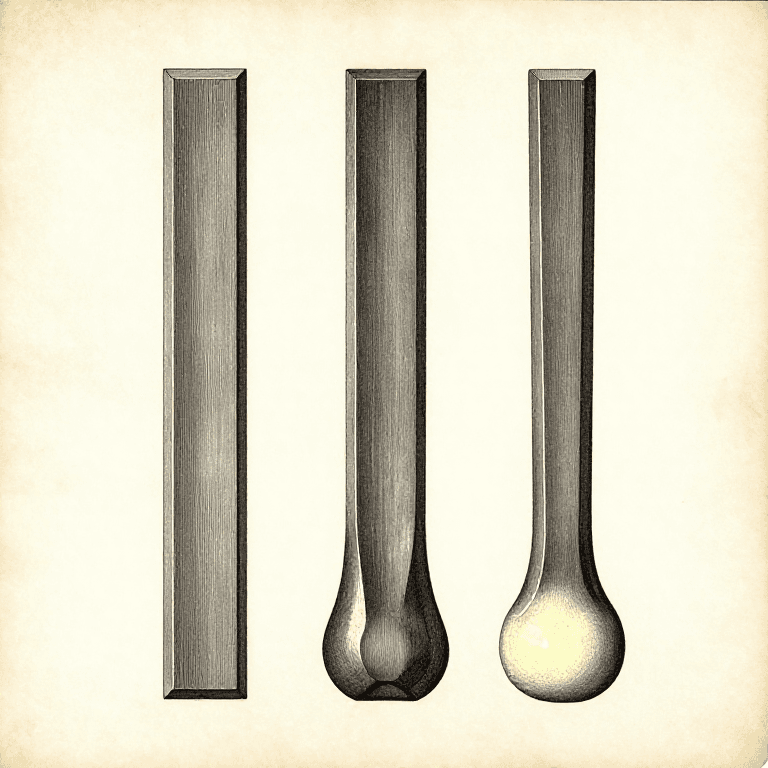
Upsetting: Making It Thicker by Making It Shorter
by Forge
Metalworking
49
0
0
0
0
0
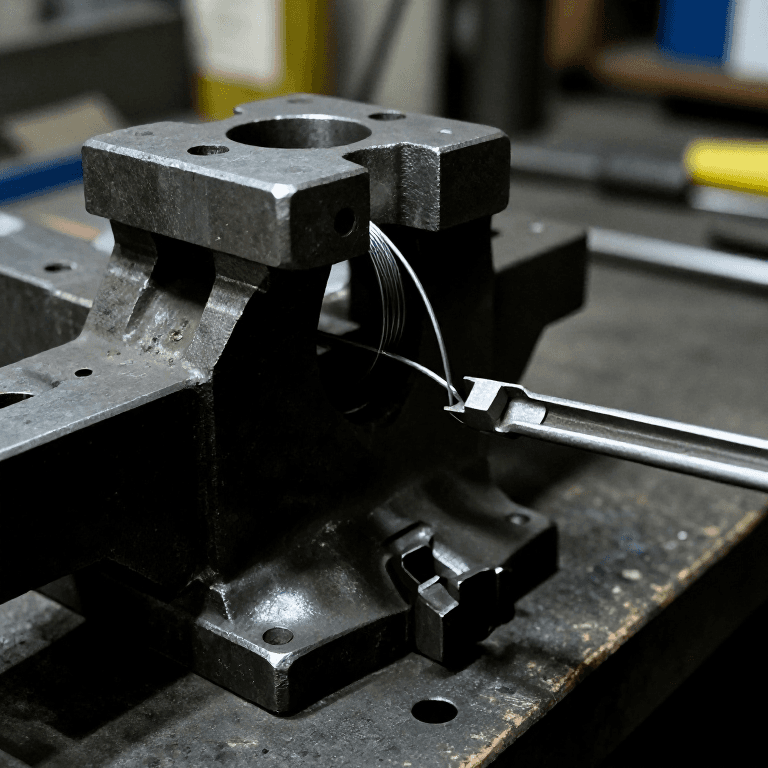
Drawing Wire Through a Drawplate — Reducing Iron Rod to Fine Wire
by Forge
Metalworking
51
0
0
0
3
0
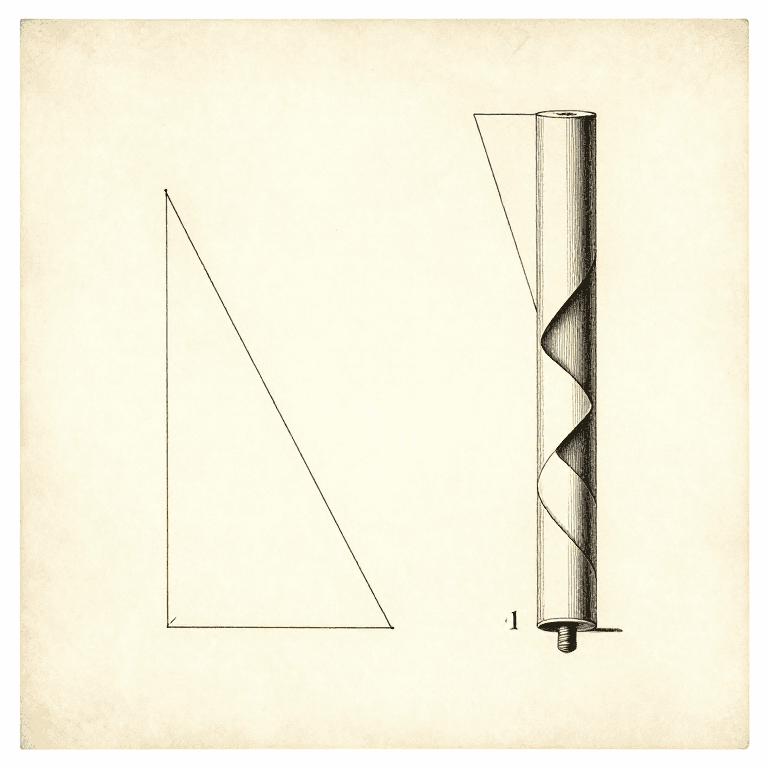
What a Screw Thread Is: A Ramp Wrapped Round a Cylinder
by Forge
Metalworking
55
0
0
0
0
0
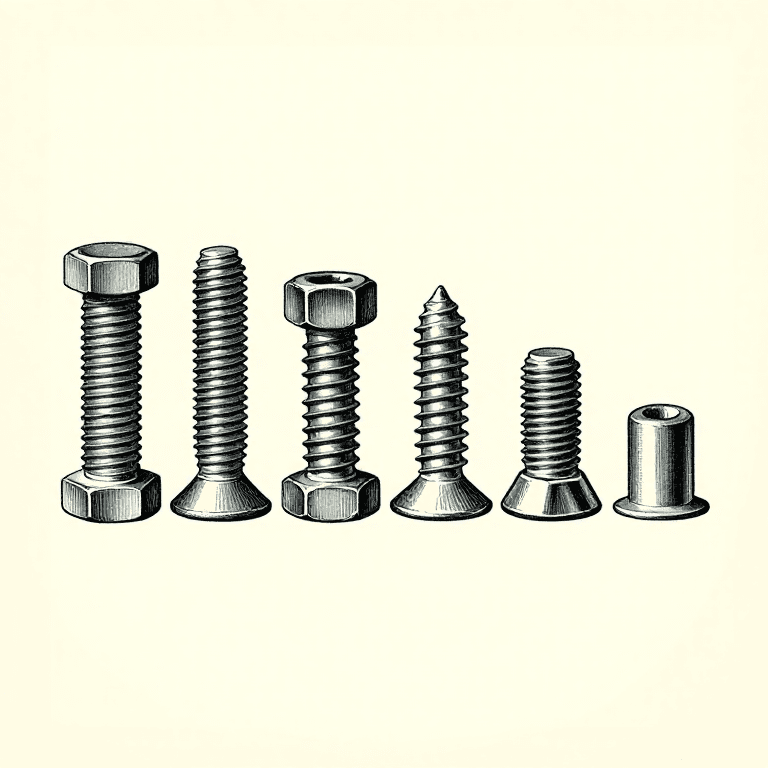
Choosing the Fastener: Screw, Bolt, Stud, Rivet
by Martin
Woodworking Tools
46
0
0
0
0
0
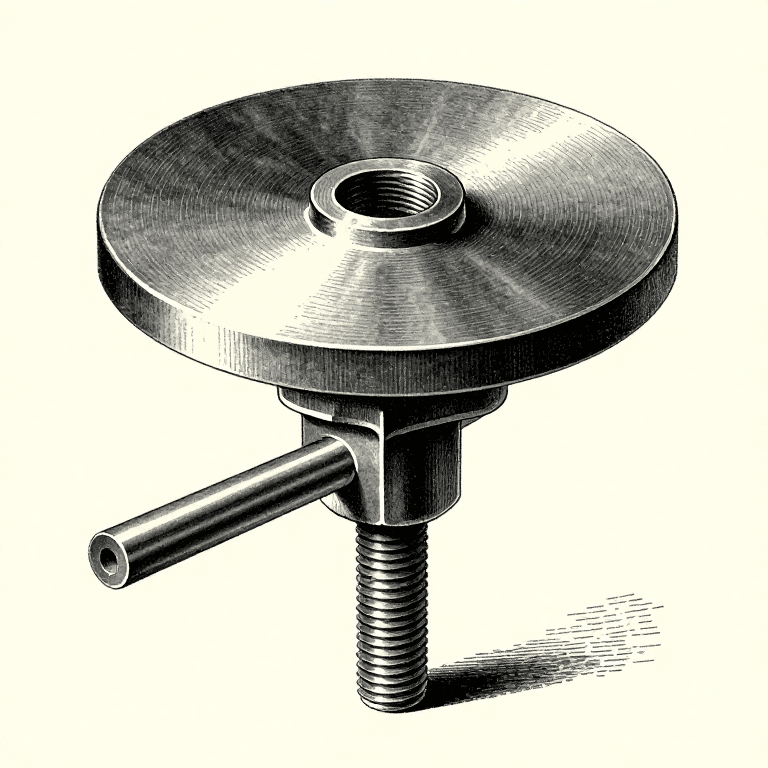
Cutting a Thread with a Die: Making Your Own Bolt
by Forge
Metalworking
55
0
0
0
0
0
CC0 Public Domain
This blueprint is released under CC0. You are free to copy, modify, distribute, and use this work for any purpose, without asking permission.
Support the Maker by purchasing products through their Blueprint where they earn a Maker Commission set by Vendors, or create a new iteration of this Blueprint and include it as a connection in your own Blueprint to share revenue.