
The Hooded Fountain Paint Brush: A Dome Shares the Paint Between Both Sides
Instructions
Paint the brush needs
Paint the brush needs
A turned perforated tube before it
A turned perforated tube before it
Read US 842,644
Read US 842,644
Fold the tank
Fold the tank
Materials for this step:
 Aluminium Sheet1 piece
 Pop Rivets1 piece
 Silicone Sealant1 piece
Tools needed:
 Tin Snips
 Flat-Nose Pliers
 Bench Vise
 Pop Rivet Gun Kit
 Cordless Drill
 Drill Bit Set
 Hole Saw Kit
 Leather Work Gloves
Drill the floor
Drill the floor
Tools needed:
Cordless DrillDrill Bit Set Permanent Marker
 Ruler
RulerMake the turning valve
Make the turning valve
Materials for this step:
 Copper Tube 10mm1 piece
Tools needed:
 HacksawCordless DrillDrill Bit Set
 Files (Hand File)Bench Vise
Fold the hood
Fold the hood
Materials for this step:
Aluminium Sheet1 piecePop Rivets1 pieceTools needed:
Bench VisePop Rivet Gun KitClamp on the brush
Clamp on the brush
Materials for this step:
 Paintbrush Set1 piece
 Hex Bolt Assortment1 piece
 Hex Nut1 piece
 Flat Washer1 piecePop Rivets1 piece
Tools needed:
Cordless DrillDrill Bit Set Adjustable Spanner
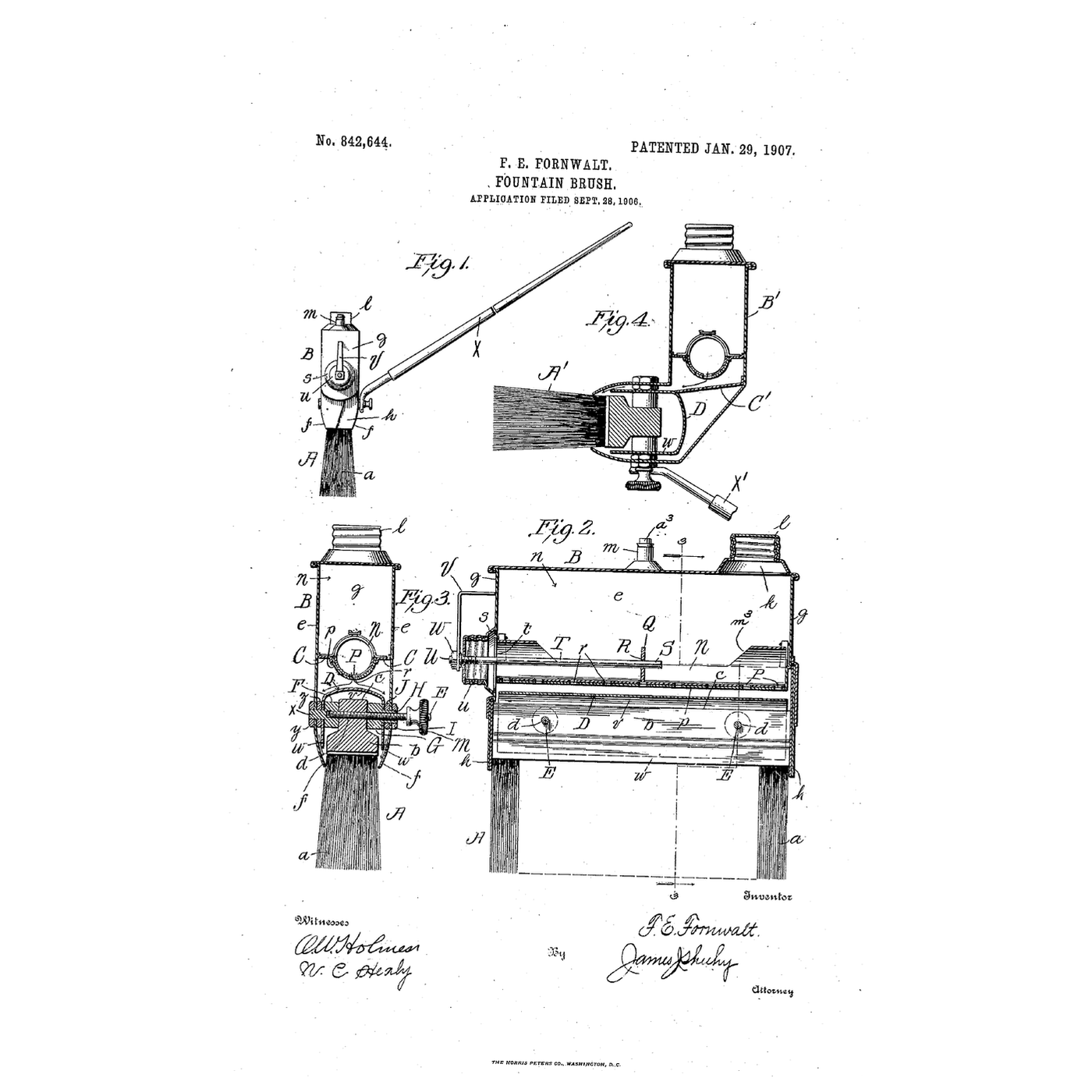
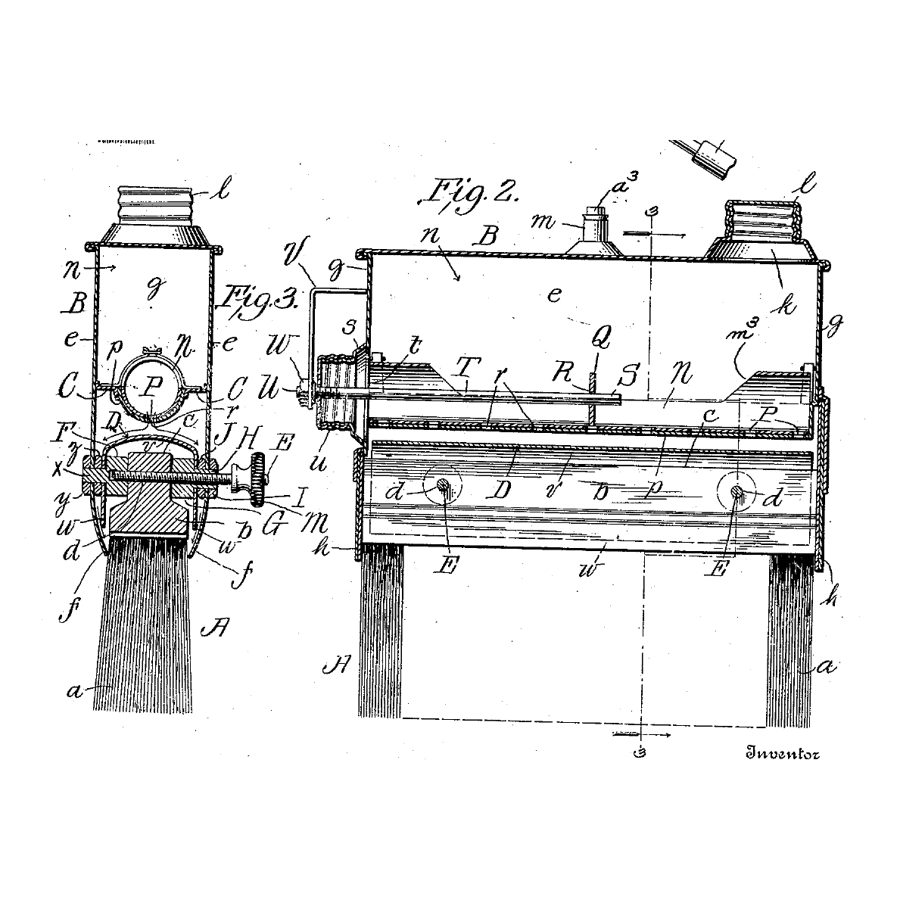
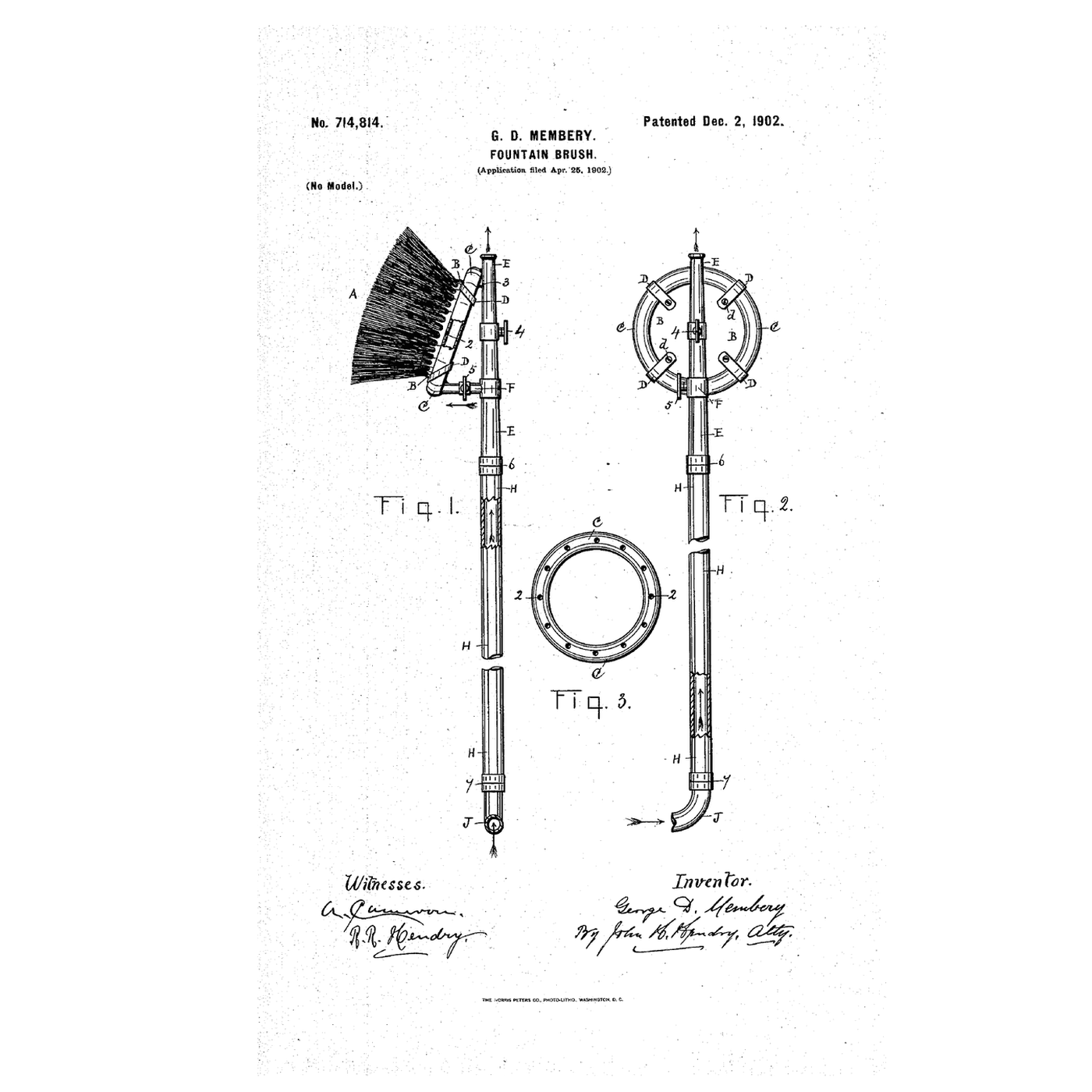
The patent drawing
The patent drawing
Paint and weigh
Paint and weigh
Materials for this step:
 Acrylic Paint Set1 piece
 Water1 piece
 Plywood Sheet1 piece
Tools needed:
 Digital Kitchen Scale
 Tape Measure
 Stopwatch
A brush that clogs, floods or paints one side
A brush that clogs, floods or paints one side
Flow
History and honest limits
History and honest limits
Materials
11- 1 piecePlaceholder
- 3 piecesPlaceholder
- 1 piecePlaceholder
- 1 piecePlaceholder
- 1 piecePlaceholder
- 1 piecePlaceholder
- 1 piecePlaceholder
- 1 piecePlaceholder
- 1 piecePlaceholder
- 1 piecePlaceholder
- 1 piecePlaceholder
Tools Required
16- Placeholder
- Placeholder
- Placeholder
- Placeholder
- 1 vendor sell this, none ship to you yetPlaceholder
- Placeholder
- Placeholder
- Placeholder
- Placeholder
- Placeholder
- Placeholder
- Placeholder
- Placeholder
- Placeholder
- 1 vendor sell this, none ship to you yetPlaceholder
- Placeholder
Related Blueprints
These blueprints share knowledge with this one — techniques, materials, or principles that connect them in the learning graph.
The Tube-in-the-Back Fountain Brush: Turn the Tube and the Jets Become a Soak
by YourGrandma
Mechanics
Making Hide Glue Distemper — The Traditional Ceiling and Wall Paint of Europe
by Charlie
ART
The Long-Handled Fountain Brush: A Ring of Holes Wets the Bristles From the Ground
by Martin
Mechanics
CC0 Public Domain
This blueprint is released under CC0. You are free to copy, modify, distribute, and use this work for any purpose, without asking permission.
Support the Maker by purchasing products through their Blueprint where they earn a Maker Commission set by Vendors, or create a new iteration of this Blueprint and include it as a connection in your own Blueprint to share revenue.