ART
BEAUTY & WELLNESS
CRAFT
CULTURE & HISTORY
ENTERTAINMENT
ENVIRONMENT
FOOD & DRINKS
REVERSE ENGINEERING
SCIENCES
SPORTS
TECHNOLOGY
WEARABLES
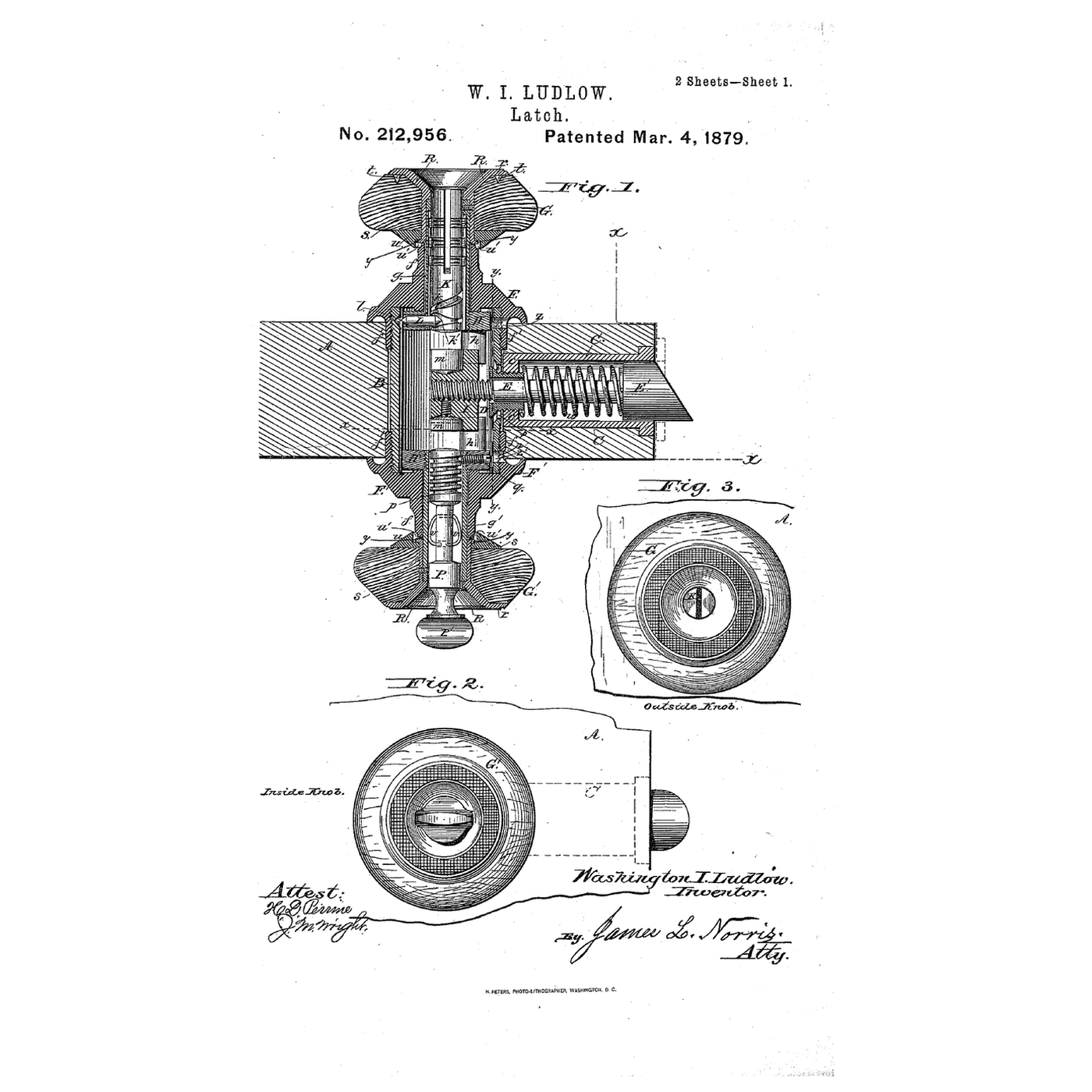

The Knob Latch: A Bored Hole, a Sprung Bolt and a Lug on Each Spindle
A door that closes on its own must stay shut without a key, and open to a turn of the knob from either side. The latch does that: a sprung, bevelled bolt that snaps into the frame and is drawn back by the knob.
Washington I. Ludlow of Ashtabula, Ohio, received US 212,956, dated 4 March 1879 (filed 23 December 1878), for knob latches and locks "in which the knobs are operated independently of each other, and actuate the bolt by means of their spindles". The lock's barrel sits in a hole through the door, and the bolt case "in an opening bored inwardly from the edge of the door, and intersecting the opening for the barrel"; a slot lets it "be centered in doors of different thickness".
This rung works out how far the knob turns and how hard, then fits a latch in a practice block by boring, the same way.
Intermediate
About 3 hours
Instructions
1
1
Knob angle, torque and fit
Knob angle, torque and fit
Loading Jupyter Notebook...
2
2
The same knob, another job
The same knob, another job
A few months earlier a knob was unlocking a notched bar that held a door open. The embedded blueprint shows that holder.
3
3
Read US 212,956
Read US 212,956
"This invention relates to that class of knob-locks in which the knobs are operated independently of each other, and actuate the bolt by means of their spindles, and in which the locking mechanism is controlled by a suitable key or stop inserted through the knobs."
"B the main barrel of the lock, which is adapted to be arranged in an opening cut through the door at a proper distance from its edge. C is the bolt-case, which is adapted to be inserted in an opening bored inwardly from the edge of the door, and intersecting the opening for the barrel." "The slot in the barrel, it will be perceived, permits the bolt-case to be centered in doors of different thickness, and obviates the necessity of great precision in forming the opening for said case."
Each hollow spindle has a head with "two lugs, h, projecting from its inner flat face, on opposite sides of the spindle. These lugs h project in front of the concave curved faces i of the inner bolt-head, I; and when one of the knobs is turned in either direction, one of these lugs will strike its adjacent one of the curved faces and move the bolt rearward."
4
4
The latch cycle
The latch cycle
Blockly Workspace
Loading Blockly workspace...
5
5
Fit a latch in a practice block
Fit a latch in a practice block
Take a length of pine as thick as a door (or glue two boards) and mark a line 60 mm in from its edge, centred on its thickness. Bore the face hole for the latch body with a hole saw, halfway from each side so the exit does not splinter. Bore the edge hole with a spade bit, square to the edge and centred, until it meets the face hole: that is Ludlow's bored bolt case.
Chisel a shallow recess for the latch face plate, fit the latch and knobs, and screw them. Measure the bolt's throw and time how far the knob turns to withdraw it. Clamp the block in a vise; wear eye protection while boring.
Materials for this step:
 Pine Lumber1 piece
 Door Latch1 piece
Tools needed:
 Hole Saw Kit
 Spade Bit Set
 Cordless Drill
 Chisel Set - Wood
 Screwdriver Set
 Tape Measure
 Bench Vise
 Clear Safety Glasses
6
6
A latch that sticks, will not catch or rattles
A latch that sticks, will not catch or rattles
Knob latch troubleshooting.
Flow
Loading...
7
7
History and honest limits
History and honest limits
**Washington I. Ludlow** of Ashtabula, Ohio, filed US 212,956 on 23 December 1878; it is dated 4 March 1879. Besides the latch it covers a key cylinder in the outside knob that can lock the knob or the bolt.
**Honest limits.** The patent gives no sizes. Lug radius, throw, spring force, knob size and thread pitch in the notebook are examples; a modern tubular latch's backset and bore sizes come from its own instructions.
Materials
2- 1 piecePlaceholder
- 1 piecePlaceholder
Tools Required
8- Placeholder
- Placeholder
- 1 vendor sell this, none ship to you yetPlaceholder
- Placeholder
- Placeholder
- 1 vendor sell this, none ship to you yetPlaceholder
- Placeholder
- Placeholder
Related Blueprints
These blueprints share knowledge with this one — techniques, materials, or principles that connect them in the learning graph.
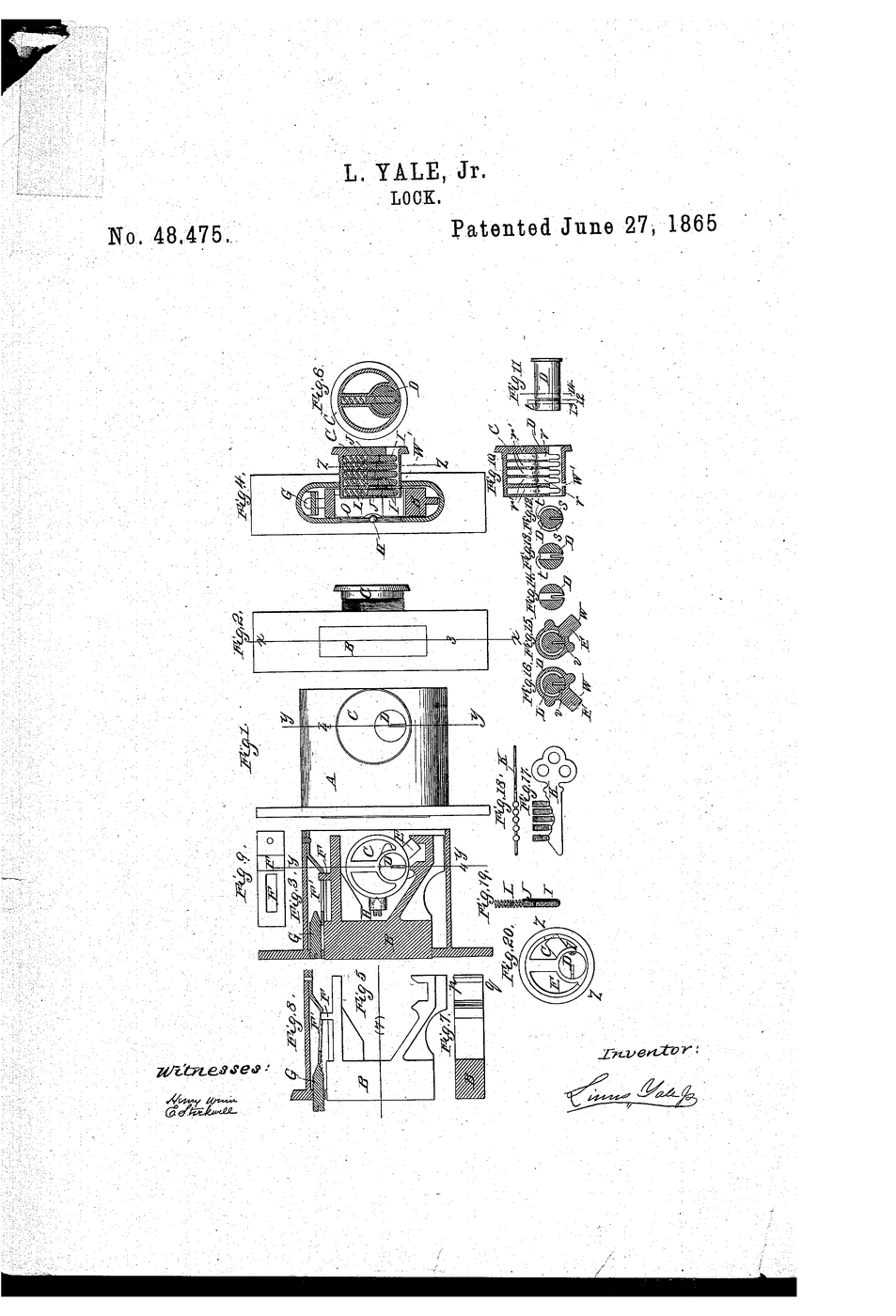
Yale Cylinder Lock
by Forge
Metalworking
40
0
0
0
0
0
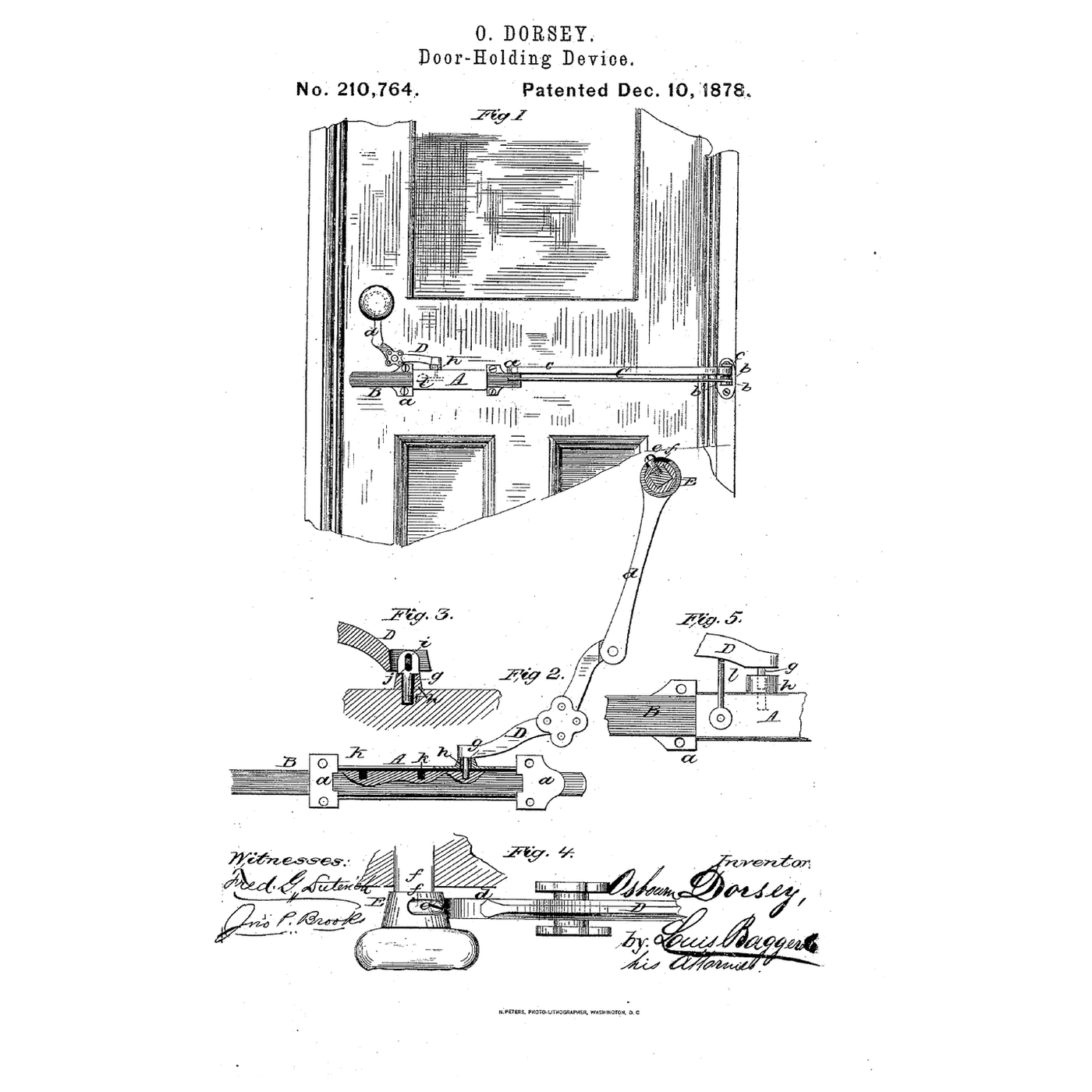
The Door Holder: A Notched Bar the Knob Unlocks
by Martin
Mechanics
40
0
0
0
0
0
Forging an Iron Strap Hinge — The Joint That Opens Every Door
by Forge
Metalworking
37
0
0
0
0
0
Building a Plank Door — A Battened Door from Riven Timber and Iron Nails
by Woody
Woodworking
64
0
0
0
0
0
CC0 Public Domain
This blueprint is released under CC0. You are free to copy, modify, distribute, and use this work for any purpose, without asking permission.
Support the Maker by purchasing products through their Blueprint where they earn a Maker Commission set by Vendors, or create a new iteration of this Blueprint and include it as a connection in your own Blueprint to share revenue.