ART
BEAUTY & WELLNESS
CRAFT
CULTURE & HISTORY
ENTERTAINMENT
ENVIRONMENT
FOOD & DRINKS
REVERSE ENGINEERING
SCIENCES
SPORTS
TECHNOLOGY
WEARABLES
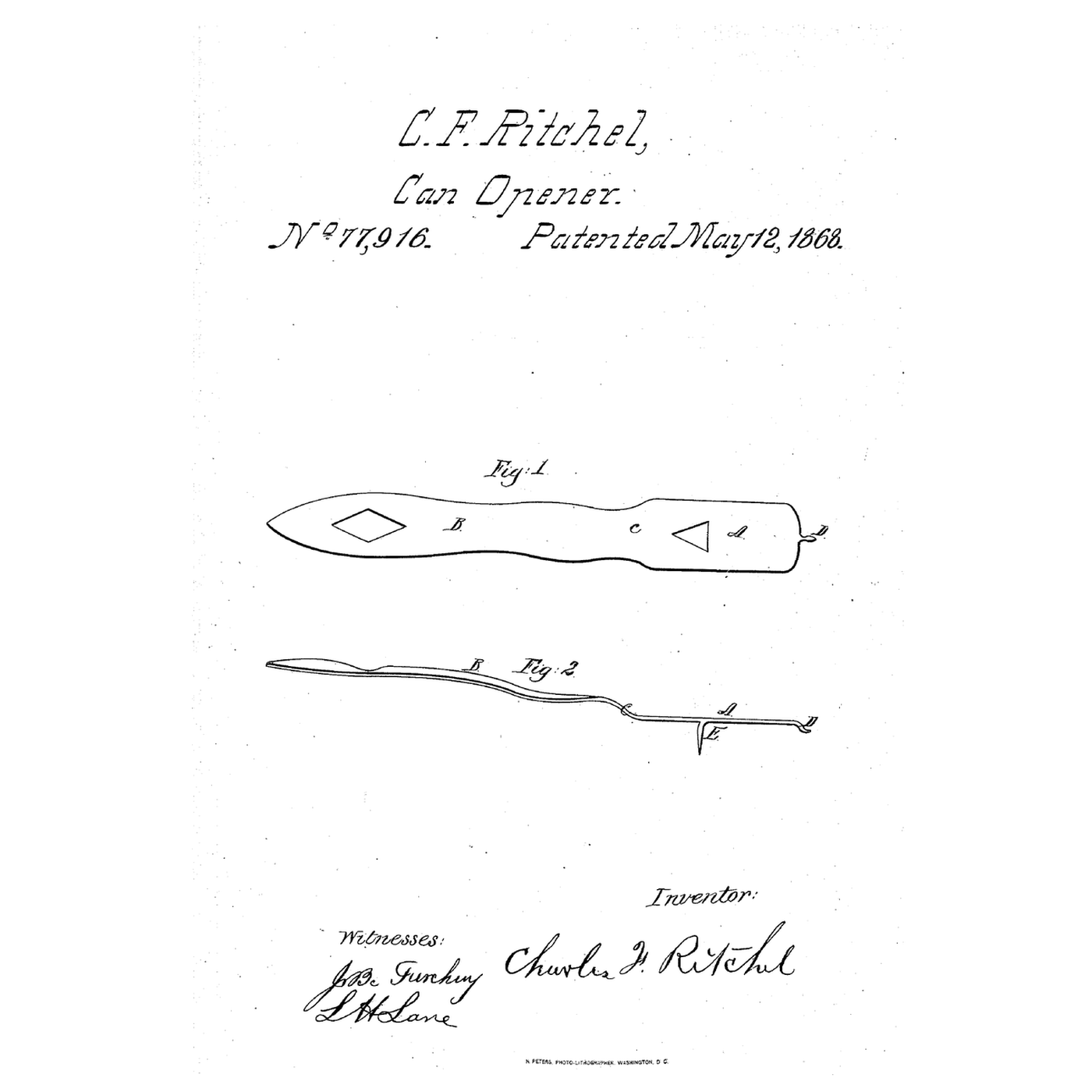


The One-Piece Sheet Can Opener: Point and Blade Struck From the Blank
Can openers with several parts cost more to make and can get out of order.
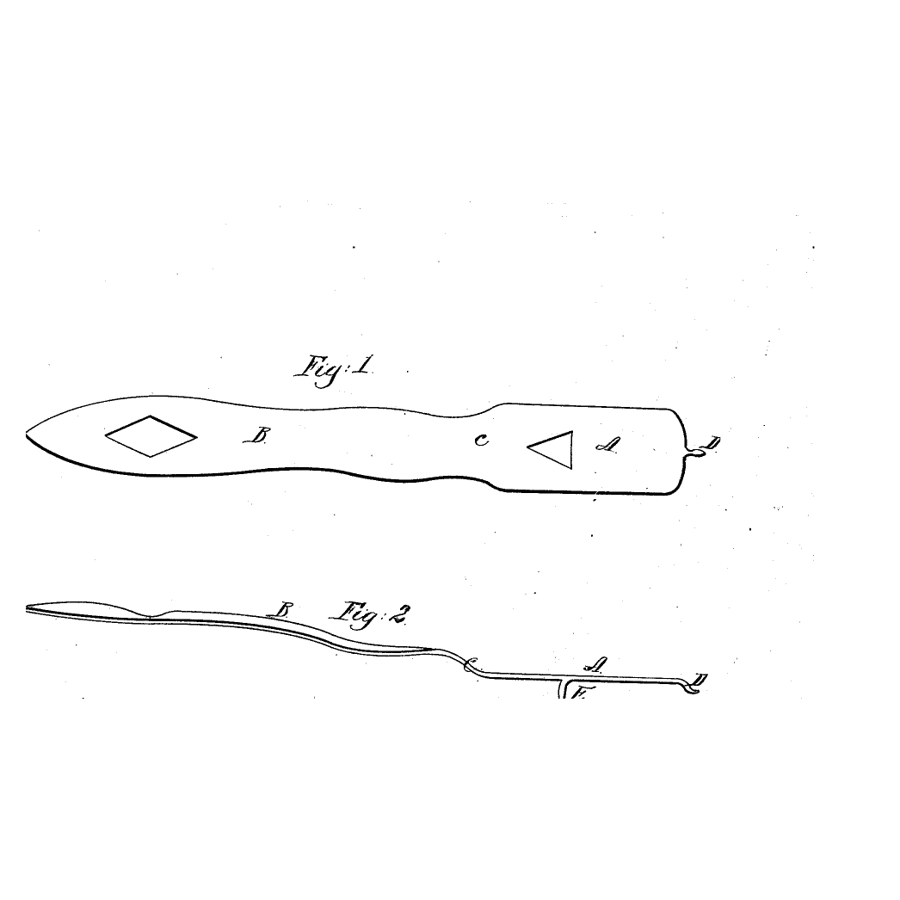
Charles F. Ritchel of Chicago received US 77,916, dated 12 May 1868, for "a cheap and substantial can-opener, not liable to get out of order": one piece of sheet metal, struck out by a die, with a point driven into the can as the fulcrum and a triangular blade, both turned off the blank, and the handle's edges bent down for grip and strength.
This rung works out how many come from one sheet, then cuts and bends one from mild steel sheet and opens a can with it.
Beginner
About 2 hours
Instructions
1
1
Openers per sheet
Openers per sheet
Loading Jupyter Notebook...
2
2
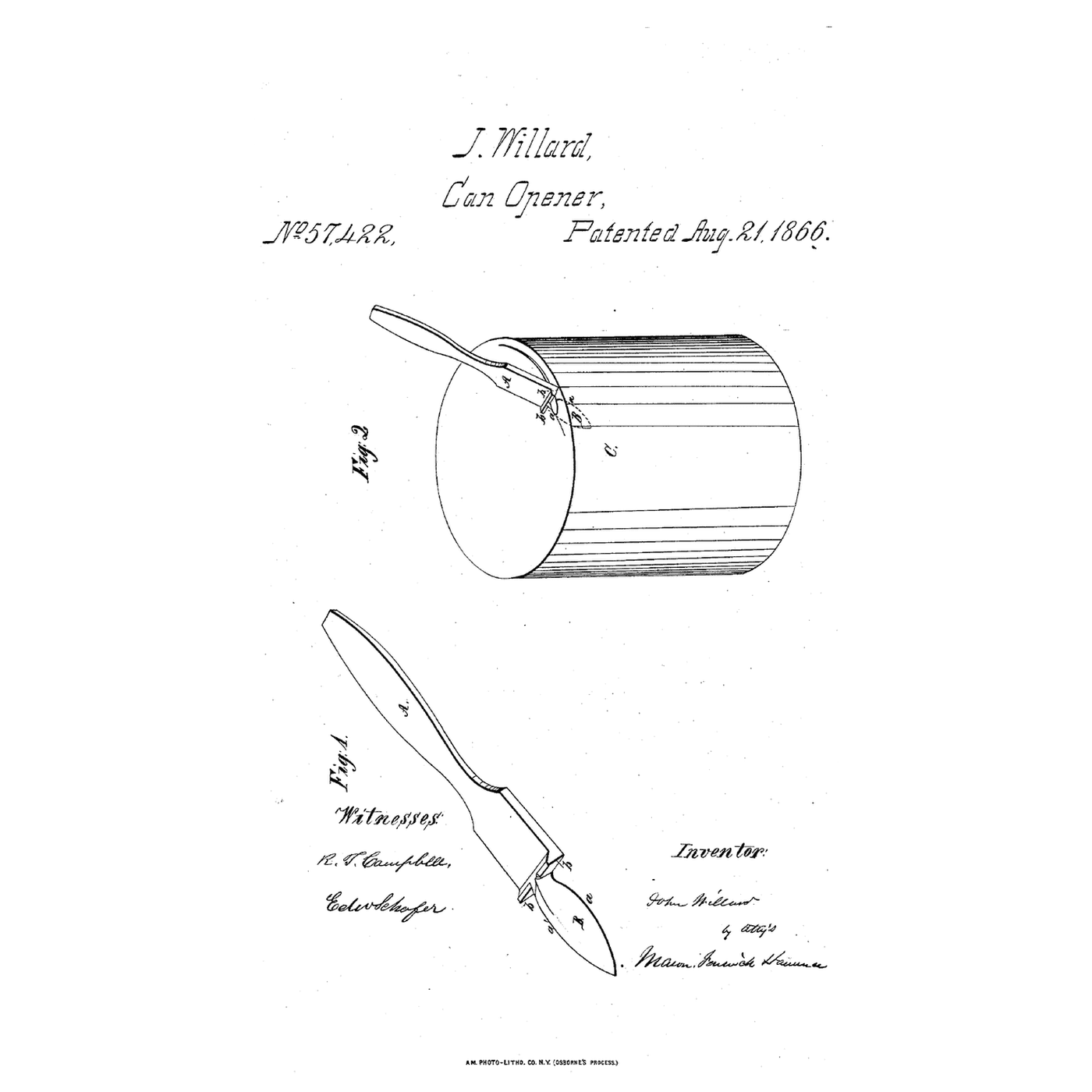
A one-piece opener before it
A one-piece opener before it
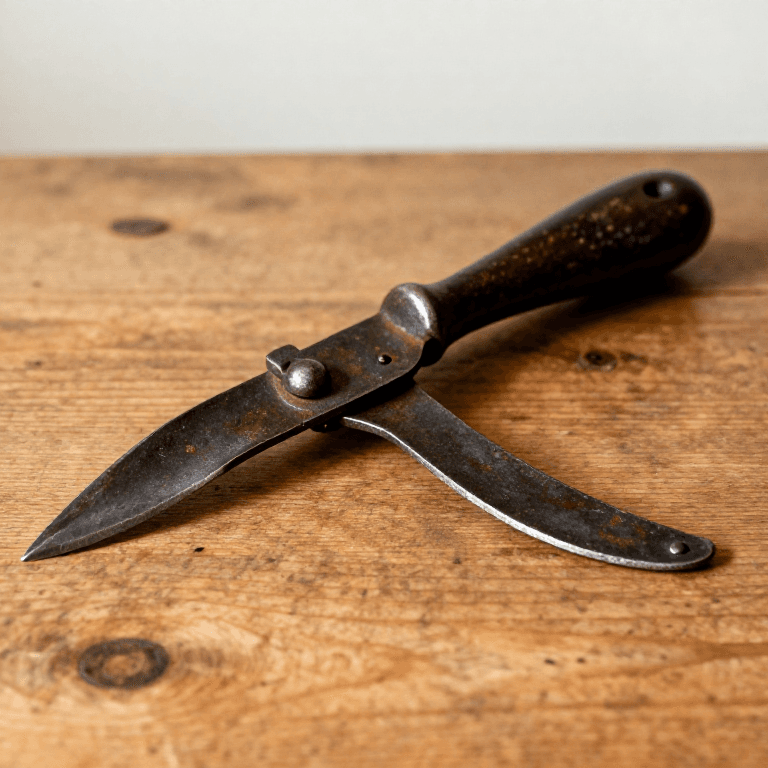
The embedded blueprint makes blade, fulcrum and handle in one piece of bar. Ritchel strikes a point and a blade out of one flat sheet blank.
3
3
Read US 77,916
Read US 77,916
"The operation of the opener consists in this, that the tool, being held in a vertical position, the point D is forced into the can, and the handle A is brought down, and the fulcrum for the operation of the handle being thus obtained, the blade E is forced into the can also, and the handle B is turned around with one hand, while the can is firmly held with the other hand, the blade E thus cutting a round opening in the can."
4
4
Cut the blank
Cut the blank
Mark a blank 160 mm long on 1 mm mild steel sheet: a 24 mm handle, narrowing to 16 mm for the head. Inside the head mark a 6 mm tab at the end for the point and a 14 mm triangle 20 mm behind it for the blade. Cut with snips.
Materials for this step:
 Mild Steel Sheet1 piece
Tools needed:
 Tin Snips
 Permanent Marker
 Ruler
Ruler Leather Work Gloves
5
5
Turn off the point and blade
Turn off the point and blade
Snip the triangle free on two sides. Bend the tab and the triangle down at right angles with the pliers.
Tools needed:
Tin Snips Flat-Nose Pliers
6
6
Edge and stiffen
Edge and stiffen
File the point sharp and the blade's leading edge to a bevel. Bend the handle's edges down 5 mm in the vice.
Tools needed:
 Files (Hand File)
 Whetstone
 Bench Vise
 Hammer
 Clear Safety Glasses
7
7
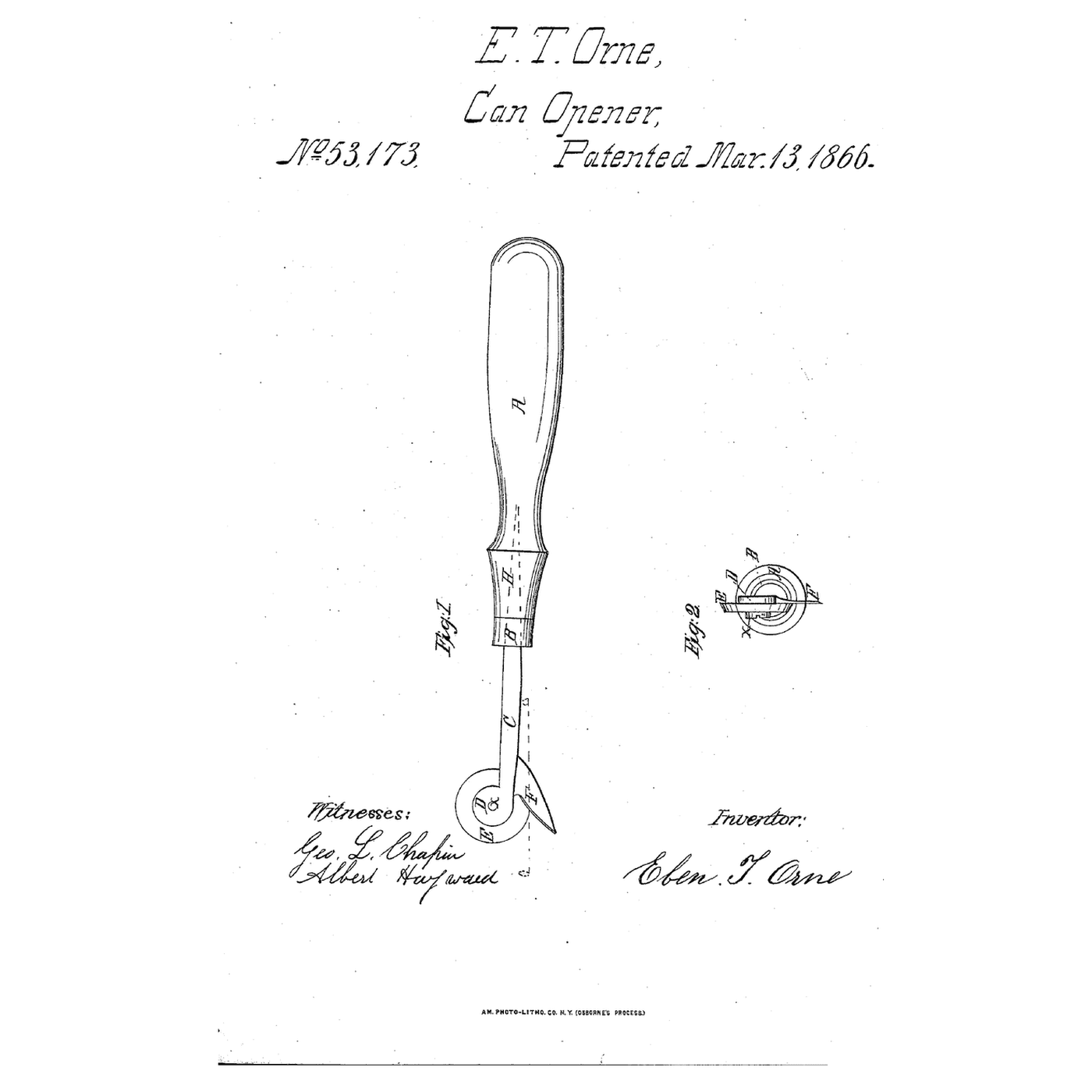
The patent drawing
The patent drawing
US 77,916 drawing sheet, public domain (expired patent).
8
8
Open a can
Open a can
Stand a sealed can on the kitchen scale. Drive the point in, bring the handle down so the blade enters, and turn it round; read the peak load and time a full circle.
Materials for this step:
 Tin Can1 piece
Tools needed:
 Digital Kitchen Scale
 StopwatchLeather Work Gloves
9
9
An opener that folds, slips or tears
An opener that folds, slips or tears
One-piece sheet can opener troubleshooting.
Flow
Loading...
10
10
History and honest limits
History and honest limits
**Charles F. Ritchel** of Chicago received US 77,916, dated 12 May 1868. Opener and handle are joined by a slight curve for easier handling; the point is bent down or slightly curved to the front; point and blade are struck out by a die, turned off and trimmed, and steel-hardened if desirable, so the price becomes very low. His claim covers the one-piece opener with point and blade.
**Honest limits.** Snips and pliers stand in for his die, and the sheet is not hardened. Your loads and times are the result.
Tools Required
12- Placeholder
- Placeholder
- Placeholder
- Placeholder
- Placeholder
- Placeholder
- Placeholder
- Placeholder
- Placeholder
- Placeholder
- Placeholder
- Placeholder
Related Blueprints
These blueprints share knowledge with this one — techniques, materials, or principles that connect them in the learning graph.

CC0 Public Domain
This blueprint is released under CC0. You are free to copy, modify, distribute, and use this work for any purpose, without asking permission.
Support the Maker by purchasing products through their Blueprint where they earn a Maker Commission set by Vendors, or create a new iteration of this Blueprint and include it as a connection in your own Blueprint to share revenue.