ART
BEAUTY & WELLNESS
CRAFT
CULTURE & HISTORY
ENTERTAINMENT
ENVIRONMENT
FOOD & DRINKS
REVERSE ENGINEERING
SCIENCES
SPORTS
TECHNOLOGY
WEARABLES


The Pedal Kickstand: A Brace That Folds Under the Pedal
A safety bicycle cannot stand on its own. Leaned against a wall it slides and scratches; laid down it bends its pedal and bars.
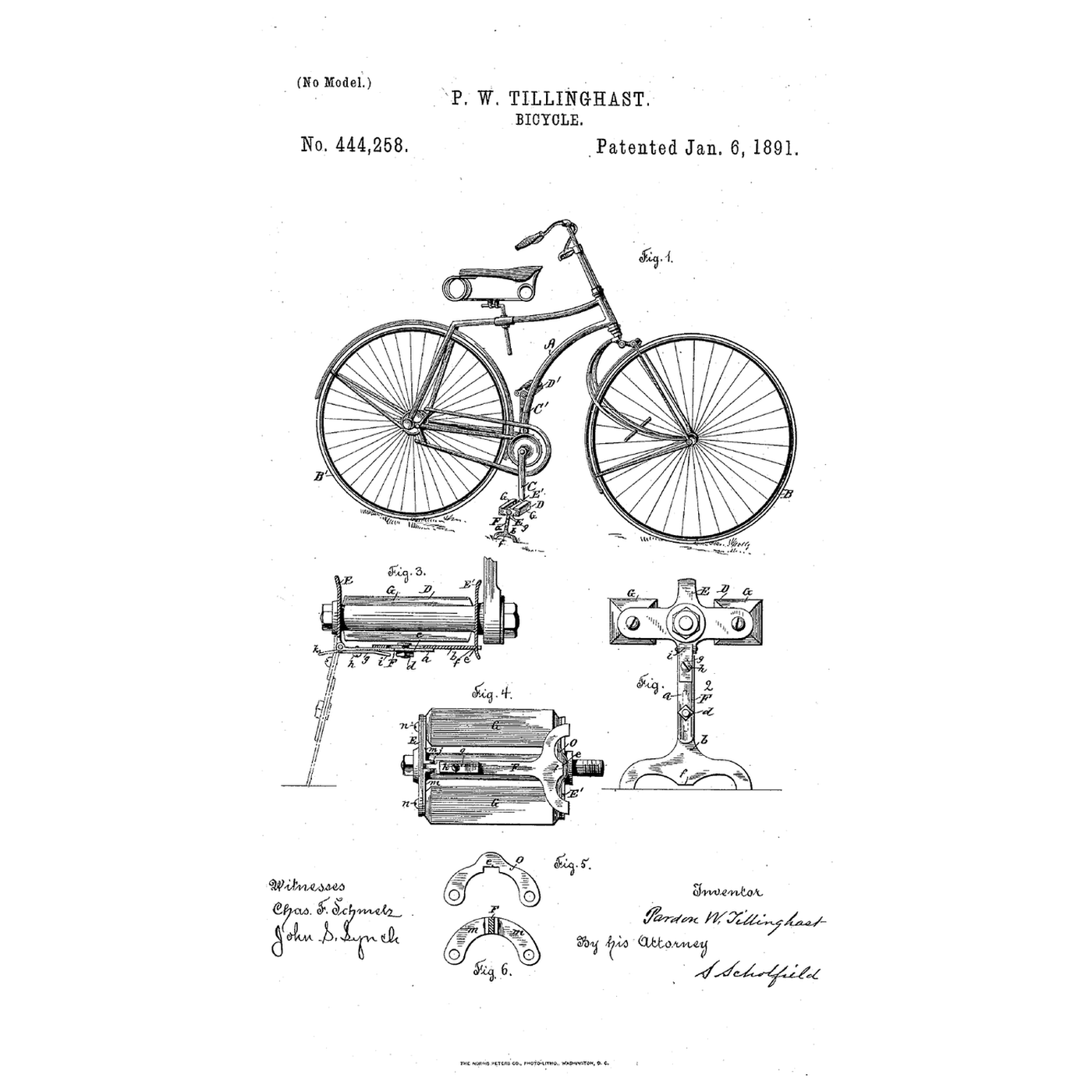
Pardon W. Tillinghast of Providence, Rhode Island, filed US 444,258 on 24 September 1890; it is dated 6 January 1891. His object was "to provide the bicycle with a convenient brace or support, whereby the bicycle can be held to rest in an upright position when not in use": a supporting-brace pivoted under one pedal, forked at its foot, which folds flat into a notch parallel with the pedal's axis when riding.
This rung works out when a leaning bicycle stays up and makes a pedal stand for a model.
Beginner
About 2 hours
Instructions
1
1
The support triangle
The support triangle
Loading Jupyter Notebook...
2
2
The machine that needed a stand
The machine that needed a stand
The chain-driven safety bicycle was the machine this stand was made for. The embedded blueprint builds one.
3
3
Read US 444,258
Read US 444,258
"The object of my invention is to provide the bicycle with a convenient brace or support, whereby the bicycle can be held to rest in an upright position when not in use; and my invention consists in a supporting-brace pivoted to the pedal".
The brace F is pivoted to the under edge of the pedal plate E, "either made in one piece ... or be made in two pieces, so as to be extensible". A button g forms a stop, and a spring-plate O with a notch e takes the brace's end when it is swung "to a position parallel with the axis of the pedal" for riding. "The lower end of the pivoted brace is made spreading or forked in order to provide an extended bearing upon the ground, and thus preventing the pedal from turning upon the crank-pin when the weight of the bicycle is brought upon the brace." A modification (Fig. 4) fits pedals of bicycles already built.
4
4
Measure a real stand's lean
Measure a real stand's lean
Stand a bicycle on its kickstand on level ground. Measure its lean with the protractor against a plumb line hung from the saddle, and the foot's distance out from the line between the tyres. Hang a bag from the handlebar on the side away from the stand until it starts to tip upright, and compare with the notebook's margin.
Then make Tillinghast's version on a model or an old pedal: hinge a short forked strip of aluminium under the pedal with a screw, and a spring clip to hold it folded flat.
Materials for this step:
 Aluminum Bar Stock1 piece
 Machine Screws2 pieces
 Spring Steel Strip1 piece
Tools needed:
 Protractor
 Tape Measure
 Hacksaw
 Cordless Drill
 Drill Bit Set
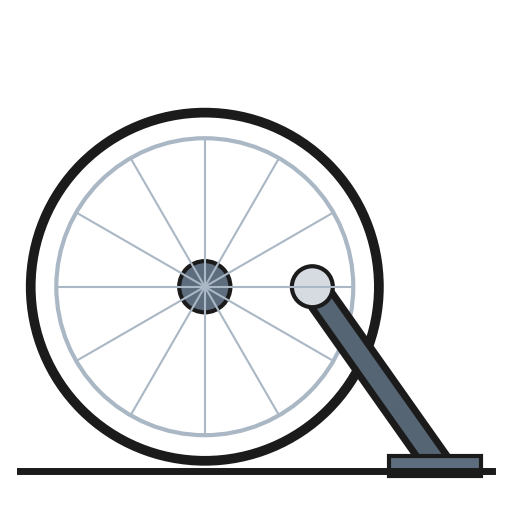 Kickstand
5
5
A bicycle that falls off its stand
A bicycle that falls off its stand
Kickstand troubleshooting.
Flow
Loading...
6
6
History and honest limits
History and honest limits
**Pardon W. Tillinghast** of Providence, Rhode Island, filed US 444,258 on 24 September 1890; it is dated 6 January 1891. He claims the supporting-brace pivoted to the pedal and its folding and stop arrangements.
**Honest limits.** Heights and distances in the notebook are examples; a real bicycle's steering can also turn and shift the balance.
Materials
3- 1 piecePlaceholder
- 2 piecesPlaceholder
- 1 piecePlaceholder
Tools Required
6- Placeholder
- 1 vendor sell this, none ship to you yetPlaceholder
- Placeholder
- 1 vendor sell this, none ship to you yetPlaceholder
- Placeholder
- Placeholder
Related Blueprints
These blueprints share knowledge with this one — techniques, materials, or principles that connect them in the learning graph.



CC0 Public Domain
This blueprint is released under CC0. You are free to copy, modify, distribute, and use this work for any purpose, without asking permission.
Support the Maker by purchasing products through their Blueprint where they earn a Maker Commission set by Vendors, or create a new iteration of this Blueprint and include it as a connection in your own Blueprint to share revenue.