ART
BEAUTY & WELLNESS
CRAFT
CULTURE & HISTORY
ENTERTAINMENT
ENVIRONMENT
FOOD & DRINKS
REVERSE ENGINEERING
SCIENCES
SPORTS
TECHNOLOGY
WEARABLES
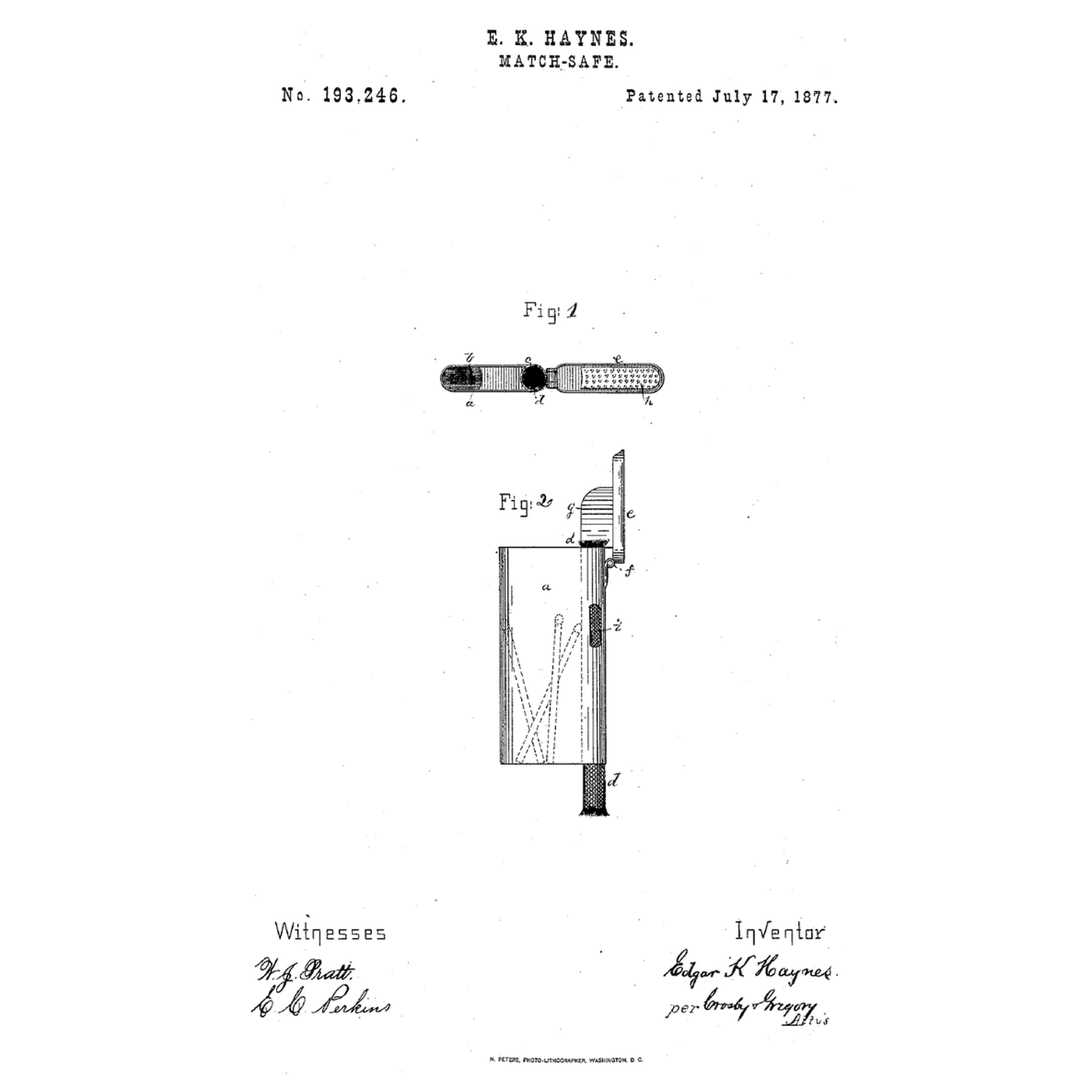


The Pocket Match-Safe: A Wick, a Striker and a Wind Guard
Striking a common wooden match outdoors, the wind blows it out before it is used, and matches carried loose in a pocket get damp or strike by accident.
Edgar K. Haynes of Boston received US 193,246, dated 17 July 1877 (filed 20 June 1877), for a pocket match-safe "provided with a wick, and the cover which is hinged to the body of the safe is provided with a guard to shield the match and wick from wind". The inside of the lid is roughened for striking, and closing the lid puts out the wick.
This rung counts the matches the wick and guard save, then makes a two-compartment tin match-safe.
Beginner
About 2 hours
Instructions
1
1
Matches saved by the wick and guard
Matches saved by the wick and guard
Loading Jupyter Notebook...
2
2
What goes in the box
What goes in the box
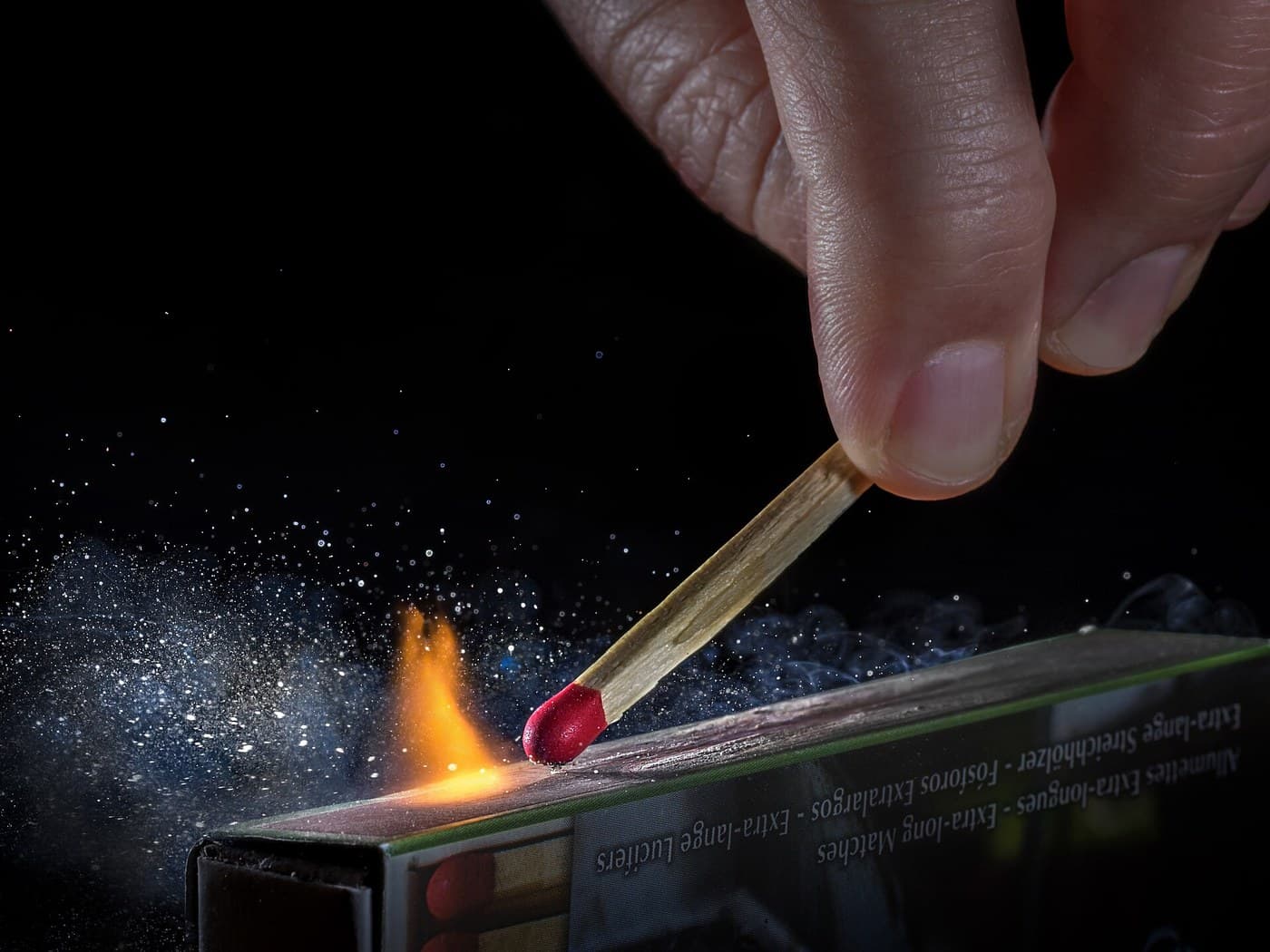
The embedded blueprint makes the safety match, lit only on its striking strip. Haynes's lid carries its own rough striking surface.
3
3
Read US 193,246
Read US 193,246
"The invention relates to an improvement in pocket match-safe for cigar-lighting purposes. The match-safe is provided with a wick, and the cover which is hinged to the body of the safe is provided with a guard to shield the match and wick from wind."
"By means of the guard to protect the match flame, I am enabled to use the common wood match under all ordinary circumstances, whereas, if it were not for such guard, I should have to supply and use the parlor or wax matches."
"The cover, when closed, extinguishes the wick."
4
4
Make a two-compartment match-safe
Make a two-compartment match-safe
Cut a small box and a hinged lid from aluminium sheet with the tin snips, and rivet in a divider to make two compartments. Cut a slot in the top of one for the wick. Glue a strip of fine emery cloth inside the lid as the striker, and bend up a small tab on the lid as the wind guard beside the wick.
Outdoors, on a calm day and then a breezy one, count how many bare matches it takes to get a flame, and how many with the guard. Keep water to hand. Compare with the notebook.
Materials for this step:
 Aluminium Sheet1 piece
 Steel Rivets4 pieces
 Wood Glue1 piece
 Cotton Wick1 piece
 Matches1 piece
Tools needed:
 Match Safe
 Tin Snips
 Metal File
 Cordless Drill
 Bucket
 Emery Cloth
 Rivet Set
 Riveting Hammer
5
5
A match-safe that won't strike, blows out or lights in the pocket
A match-safe that won't strike, blows out or lights in the pocket
Match-safe troubleshooting.
Flow
Loading...
6
6
History and honest limits
History and honest limits
**Edgar K. Haynes** of Boston, Suffolk County, Massachusetts, filed US 193,246 on 20 June 1877; it is dated 17 July 1877. He does not claim a match-box with a wick in general, only this arrangement.
**Honest limits.** The notebook is simple counting with example rates; wind, match quality and the wick decide the real numbers. Your counted matches are the measurement.
Materials
5- 1 piecePlaceholder
- 4 piecesPlaceholder
- 1 piecePlaceholder
- 1 piecePlaceholder
- 1 piecePlaceholder
Tools Required
8- Placeholder
- Placeholder
- Placeholder
- 1 vendor sell this, none ship to you yetPlaceholder
- Placeholder
- Placeholder
- Placeholder
- Placeholder
Related Blueprints
These blueprints share knowledge with this one — techniques, materials, or principles that connect them in the learning graph.




CC0 Public Domain
This blueprint is released under CC0. You are free to copy, modify, distribute, and use this work for any purpose, without asking permission.
Support the Maker by purchasing products through their Blueprint where they earn a Maker Commission set by Vendors, or create a new iteration of this Blueprint and include it as a connection in your own Blueprint to share revenue.