ART
BEAUTY & WELLNESS
CRAFT
CULTURE & HISTORY
ENTERTAINMENT
ENVIRONMENT
FOOD & DRINKS
REVERSE ENGINEERING
SCIENCES
SPORTS
TECHNOLOGY
WEARABLES


The Pound-Marked Butter Mould: Weight by Volume
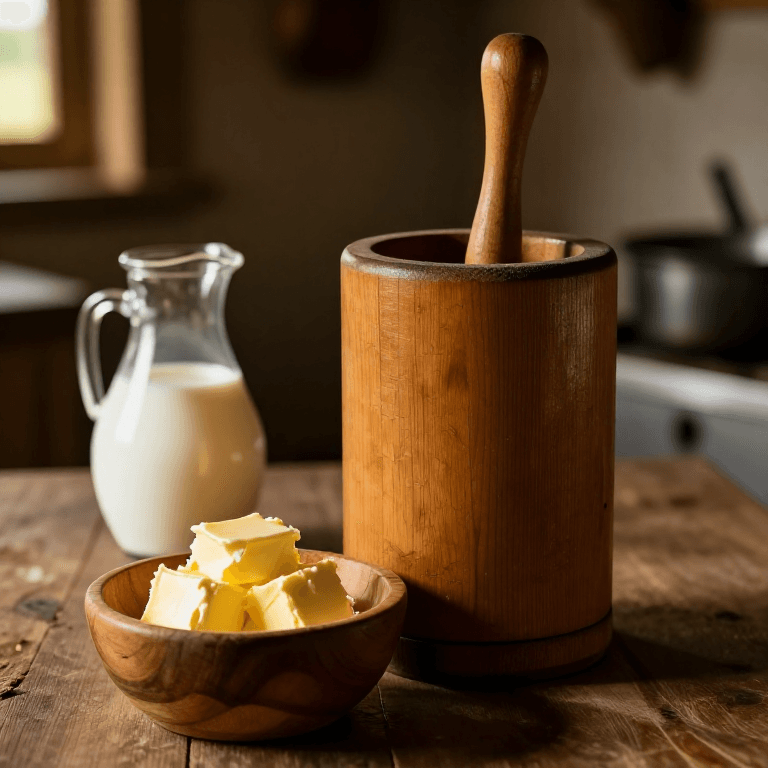
Selling butter by the pound meant cutting, weighing and patching every piece, and a mould that held the butter tight would not let it go.
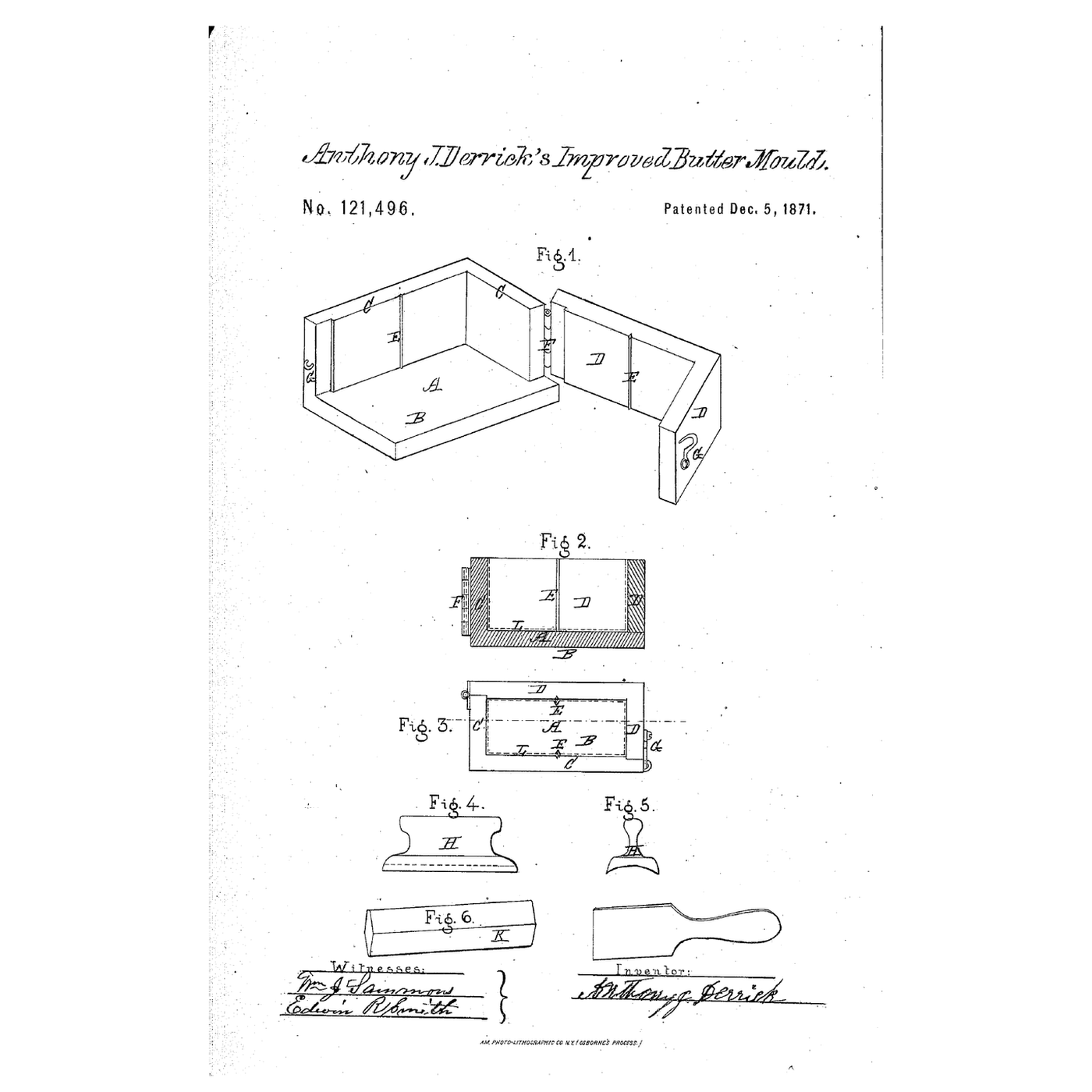
Anthony J. Derrick of Sheridan, Nevada, received US 121,496, dated 5 December 1871 (antedated 18 November 1871), for "a butter-mold, oblong in form, with movable sides, and containing a division in the interior for marking off the pounds' weight of butter".
This rung works out how long a two-pound roll is at a given cross-section and density, and how much trapped air takes off the weight. You then build a small hinged mould and check its mark on the scale.
Beginner
About 2 hours
Instructions
1
1
Roll length for a pound, and the cost of air
Roll length for a pound, and the cost of air
Loading Jupyter Notebook...
2
2
Weight and volume are tied by density
Weight and volume are tied by density
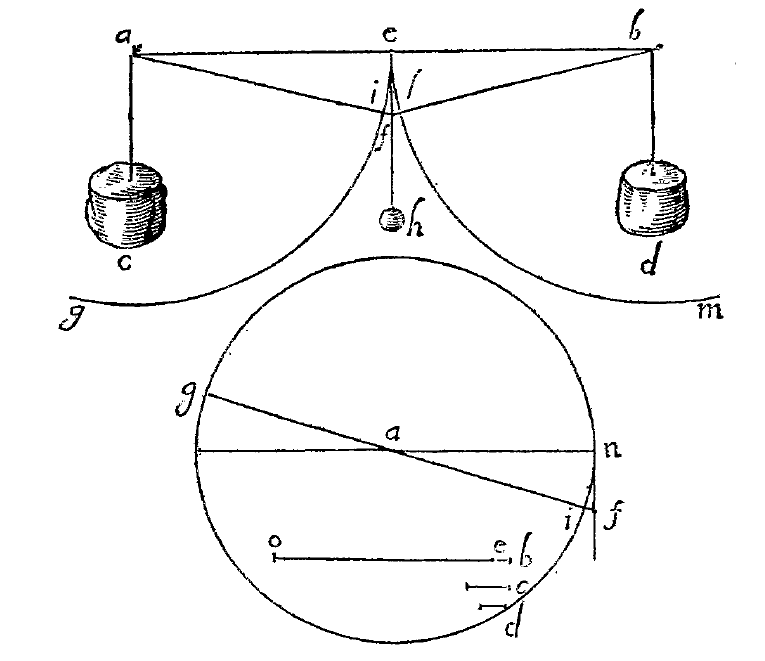
The embedded blueprint finds what an object is made of from its weight in air and in water. A pound mark on a mould only works for a known density.
3
3
Read US 121,496
Read US 121,496
"Having had occasion as a farmer to send butter to market constantly, I have found much difficulty and loss of time in weighing and forming the butter of the desired form and of positive weight in small quantities to suit customers". When the butter was "put in a mold to give form to the quantity required it usually stuck to the sides of the mold, making it difficult to remove, and deranging the form and weight of the butter."
In use "a thin cloth, L, for holding the butter intact after removal, placed in the bottom and against the sides of the box" goes in first. The butter is then "packed in the box with the presser H, the pound-marks impressing the sides of the butter".
"This mold is made to contain two pounds' weight of butter, the side marks dividing the roll into one pound each, but may be enlarged so as to contain several pounds."
4
4
Build a hinged mould and check its mark
Build a hinged mould and check its mark
Weigh a level measuring jug of firmly packed butter to find your own density. Use the notebook to size a mould for one pound, with a half-pound mark.
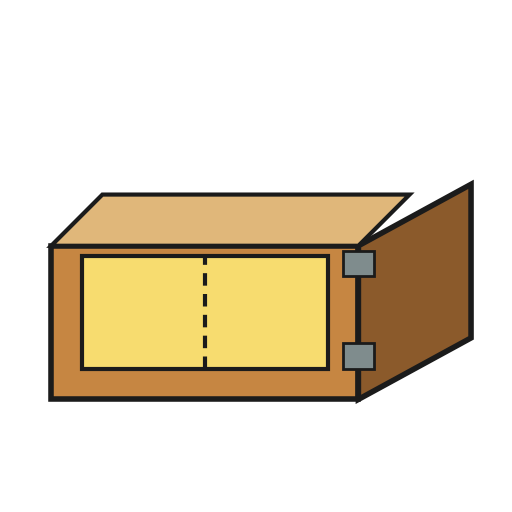
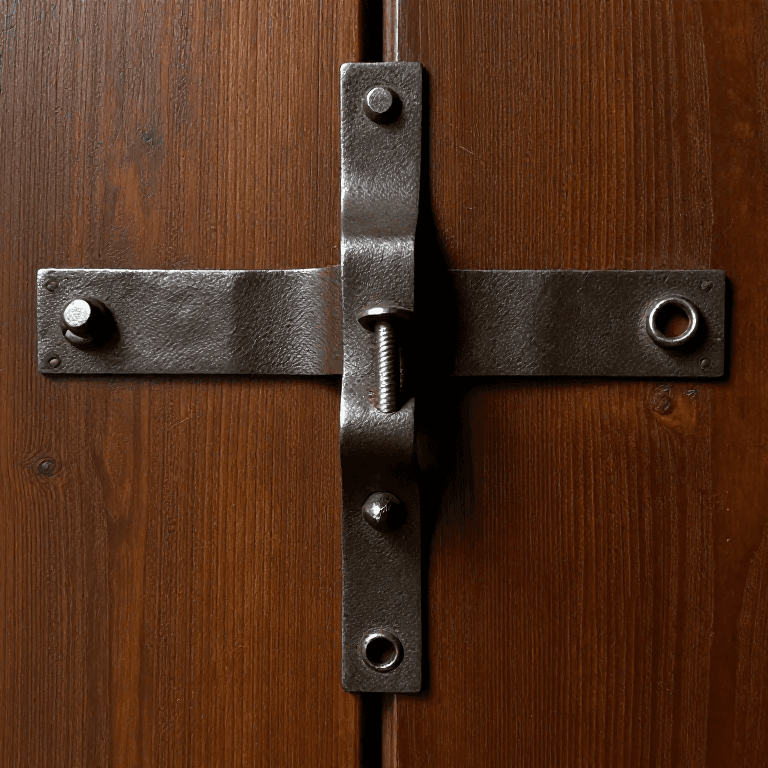
Cut a hardwood base and two fixed walls. Hang the two movable walls on hinges and close them with a hook and eye. Cut a shallow groove across the inside of the walls at the half-pound mark.
Line the closed mould with damp muslin. Pack the butter in with the spoon, pressing out the air, then scrape the top level with the bench scraper. Open the walls, lift the roll out in its cloth and weigh it. Cut at the mark and weigh each half.
Materials for this step:
 Hardwood Board1 piece
 Butt Hinge2 pieces
 Hook and Eye1 piece
 Wood Screws12 pieces
 Butter Muslin Cheesecloth1 piece
 Butter500 g
 Ice Cubes500 g
Tools needed:
 Butter Mould
 Hand Saw
 Cordless Drill
 Digital Kitchen Scale
 Measuring Jug
 Bench Scraper
 Wooden Spoon Set
 Steel Ruler
5
5
A roll that comes out light, torn or stuck
A roll that comes out light, torn or stuck
Butter-mould troubleshooting.
Flow
Loading...
6
6
History and honest limits
History and honest limits
**Anthony J. Derrick** of Sheridan, Douglas County, Nevada, signed his specification on 4 April 1871. US 121,496 is dated 5 December 1871 and antedated 18 November 1871. He shows a hand-press for packing and a scraper for the top.
**Honest limits.** Butter's density changes with temperature, water content and how it is packed. The densities in the notebook are examples, and the stick figure is a sales convention, not a measurement. Your own packed-jug weighing is the measurement.
Materials
7- 1 piecePlaceholder
- 2 piecesPlaceholder
- 1 piecePlaceholder
- 12 piecesPlaceholder
- 1 piecePlaceholder
- 500 gPlaceholder
- 500 gPlaceholder
Tools Required
8- Placeholder
- Placeholder
- 1 vendor sell this, none ship to you yetPlaceholder
- Placeholder
- Placeholder
- Placeholder
- Placeholder
- Placeholder
This blueprint makes
Related Blueprints
These blueprints share knowledge with this one — techniques, materials, or principles that connect them in the learning graph.



CC0 Public Domain
This blueprint is released under CC0. You are free to copy, modify, distribute, and use this work for any purpose, without asking permission.
Support the Maker by purchasing products through their Blueprint where they earn a Maker Commission set by Vendors, or create a new iteration of this Blueprint and include it as a connection in your own Blueprint to share revenue.