ART
BEAUTY & WELLNESS
CRAFT
CULTURE & HISTORY
ENTERTAINMENT
ENVIRONMENT
FOOD & DRINKS
REVERSE ENGINEERING
SCIENCES
SPORTS
TECHNOLOGY
WEARABLES


The Pressure-Fed Fountain Paint Brush: Air Pushes the Paint, a Finger Stops It
Painting from a pot means stopping every few strokes to reload the brush.
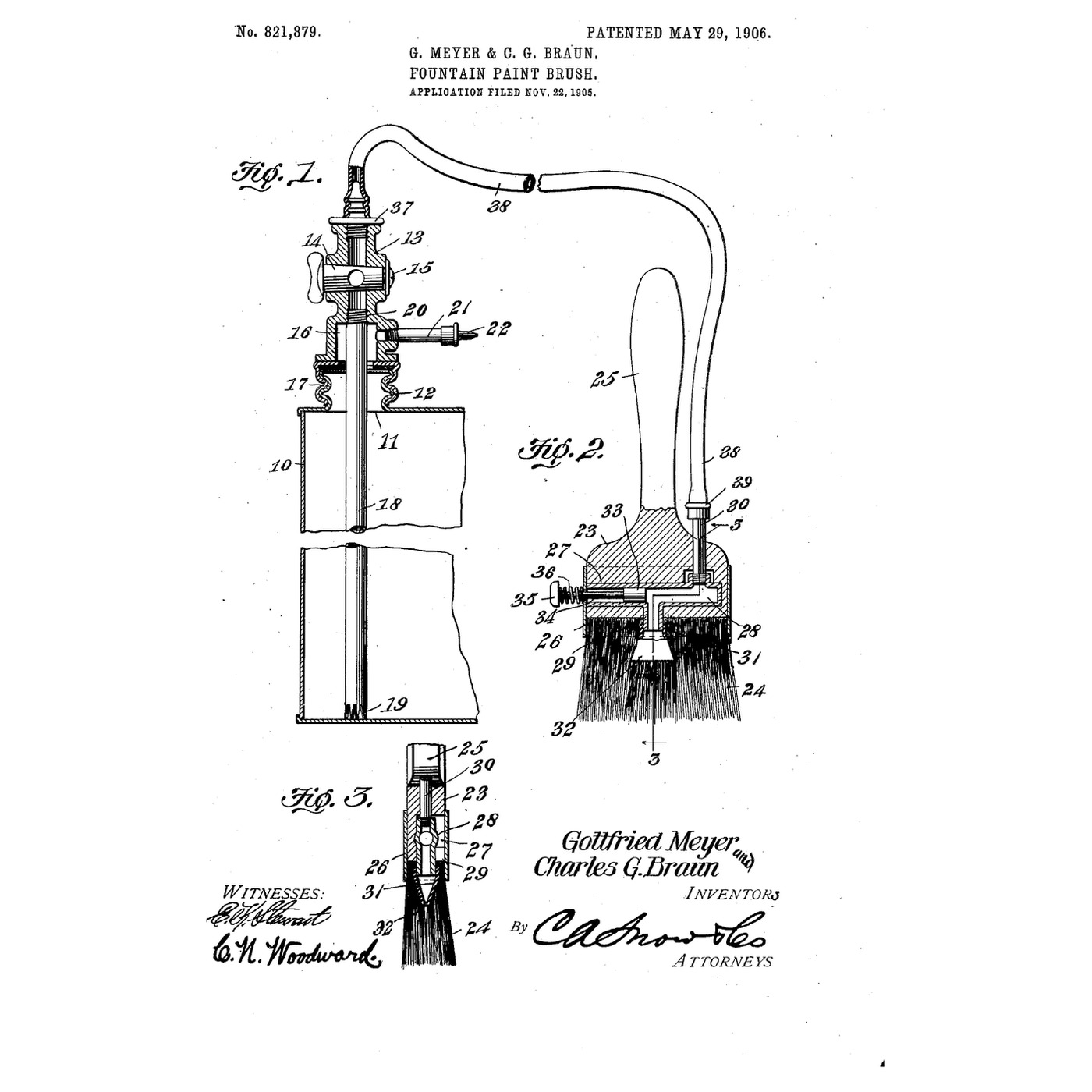
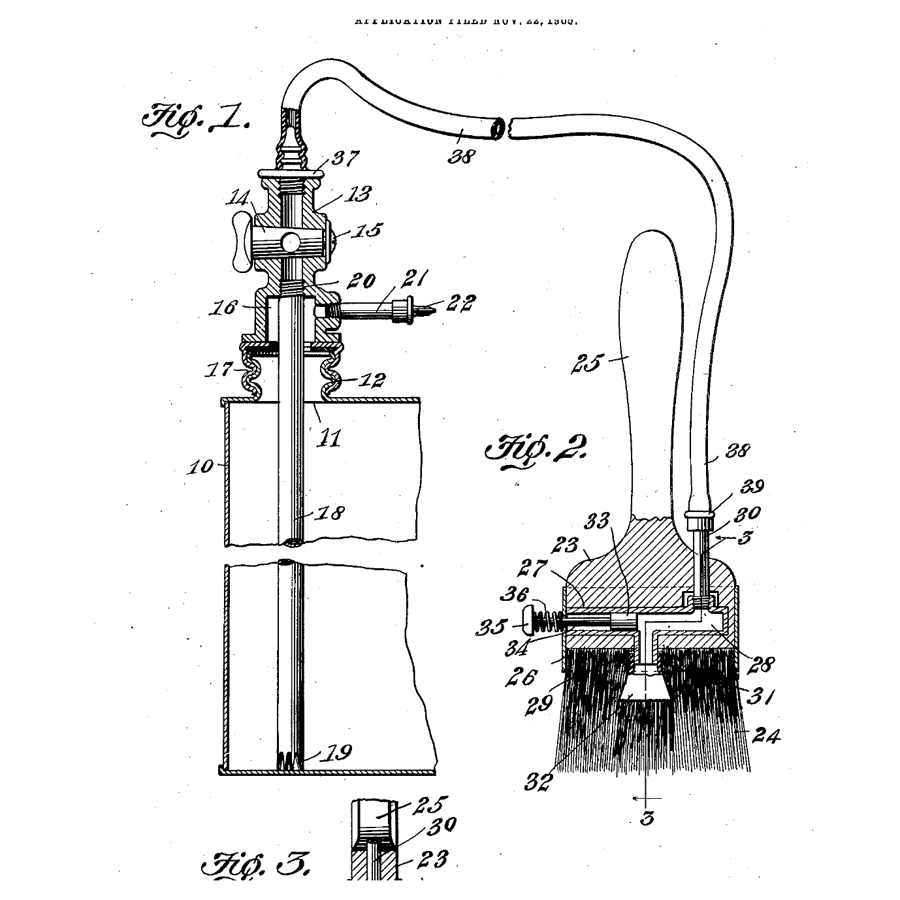
Gottfried Meyer and Charles G. Braun of Philadelphia received US 821,879, patented 29 May 1906, for a fountain paint brush: a reservoir pressurised through an air pipe with a check valve sends paint along a hose to a tube in a recess of the brush head and out through a flattened flexible web among the bristles; a spring holds a plunger open, and the forefinger pushes its knob to cut the paint off.
This rung works out how paint thickness and pressure set the flow, then builds the tank from a bottle and a tyre valve, feeds a brush, and measures the flow.
Intermediate
About 3 hours
Instructions
1
1
Flow through the hose
Flow through the hose
Loading Jupyter Notebook...
2
2
A one-way valve before it
A one-way valve before it
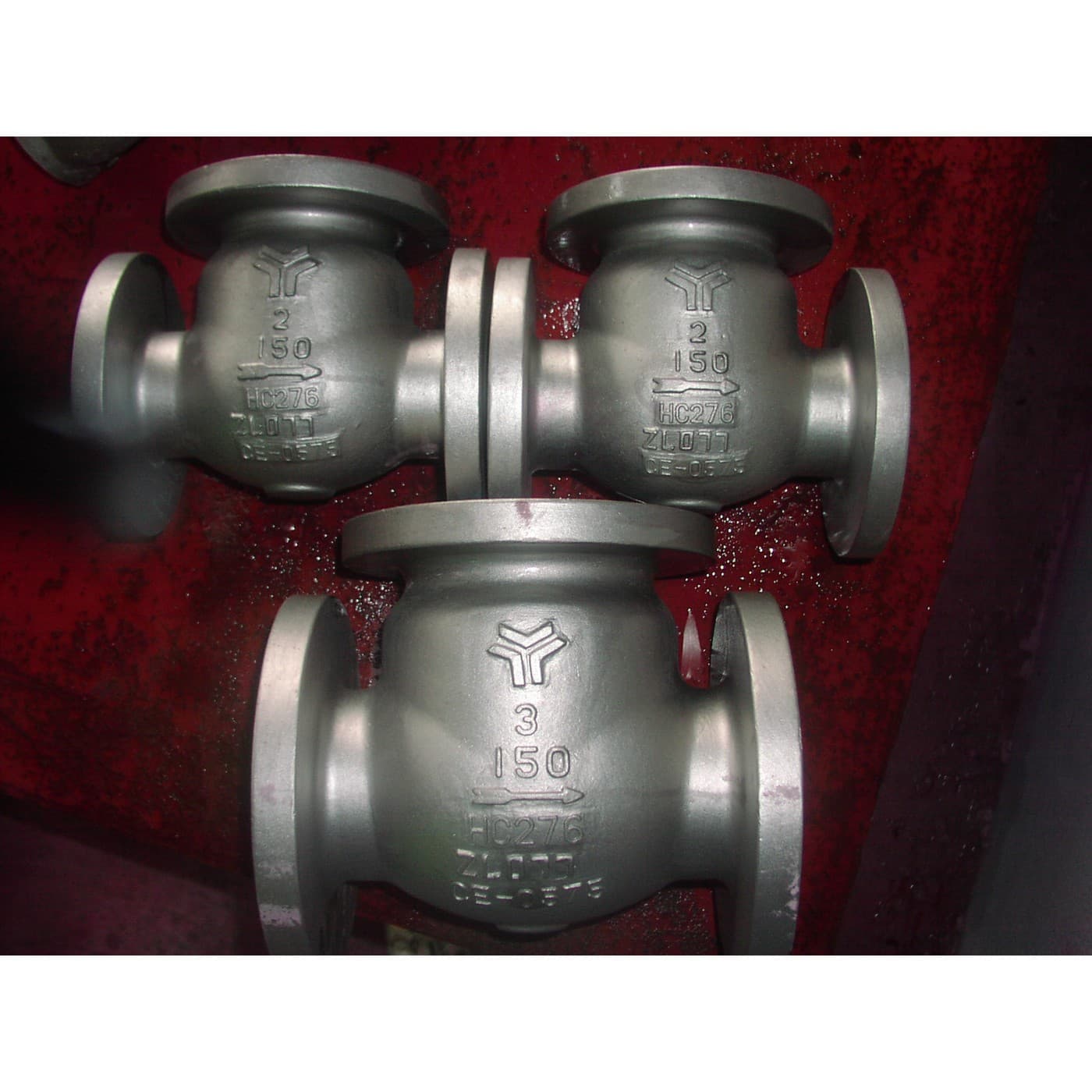
The embedded blueprint lets flow pass one way only. Meyer and Braun put one on the air pipe so the pumped air stays in the paint tank.
3
3
Read US 821,879
Read US 821,879
"The knob 35 is disposed in convenient position for the fore or index finger of the hand which holds the brush, and the valve or plunger 33 can thus be easily maintained in its closed or inward position and the supply of paint cut off when not required."
"The air-pressure causes the paint to flow to the brush no matter in what position the latter may be held and the flow is under complete control of the operator, as above noted."
4
4
Fit the cap
Fit the cap
Drill a 1.5 L PET bottle's cap for a tyre valve and for vinyl tubing. Seat the valve, and push the tubing through until it touches the bottom. Seal both with epoxy.
Materials for this step:
 PET Bottle (Carbonated Drink)1 piece
 Tire Valve1 piece
 Clear Vinyl Tubing1 piece
 Two-Part Epoxy1 piece
Tools needed:
 Cordless Drill
 Drill Bit Set
 Craft Knife
5
5
Feed the brush
Feed the brush
Drill a 6 mm hole down through the stock of a 70 mm brush from the set, beside the handle. Push silicone tubing through it into the bristles and flatten its last 30 mm with a cable tie.
Materials for this step:
 Paintbrush Set1 piece
 Silicone Tubing1 piece
 Cable Ties1 piece
Tools needed:
 Bench ViseCordless DrillDrill Bit Set
6
6
Make the finger valve
Make the finger valve
Screw a hardwood block to the handle over the tubing. Fit an M5 screw through it with a spring under the head, so the screw rests off the tube and a press of the forefinger pinches it shut.
Materials for this step:
 Hardwood Dowels1 piece
 Machine Screws1 piece
 Compression Spring Set1 piece
Tools needed:
 HacksawCordless DrillDrill Bit Set
 Screwdriver Set
7
7
Join and pressurise
Join and pressurise
Join the bottle's tubing to the brush's with a 1.5 m length. Half fill the bottle with acrylic paint thinned with water, cap it, and pump to 0.2 bar on the gauge.
Materials for this step:
 Acrylic Paint Set1 piece
 Water1 piece
Tools needed:
 Bike Pump
 Pressure Gauge
8
8
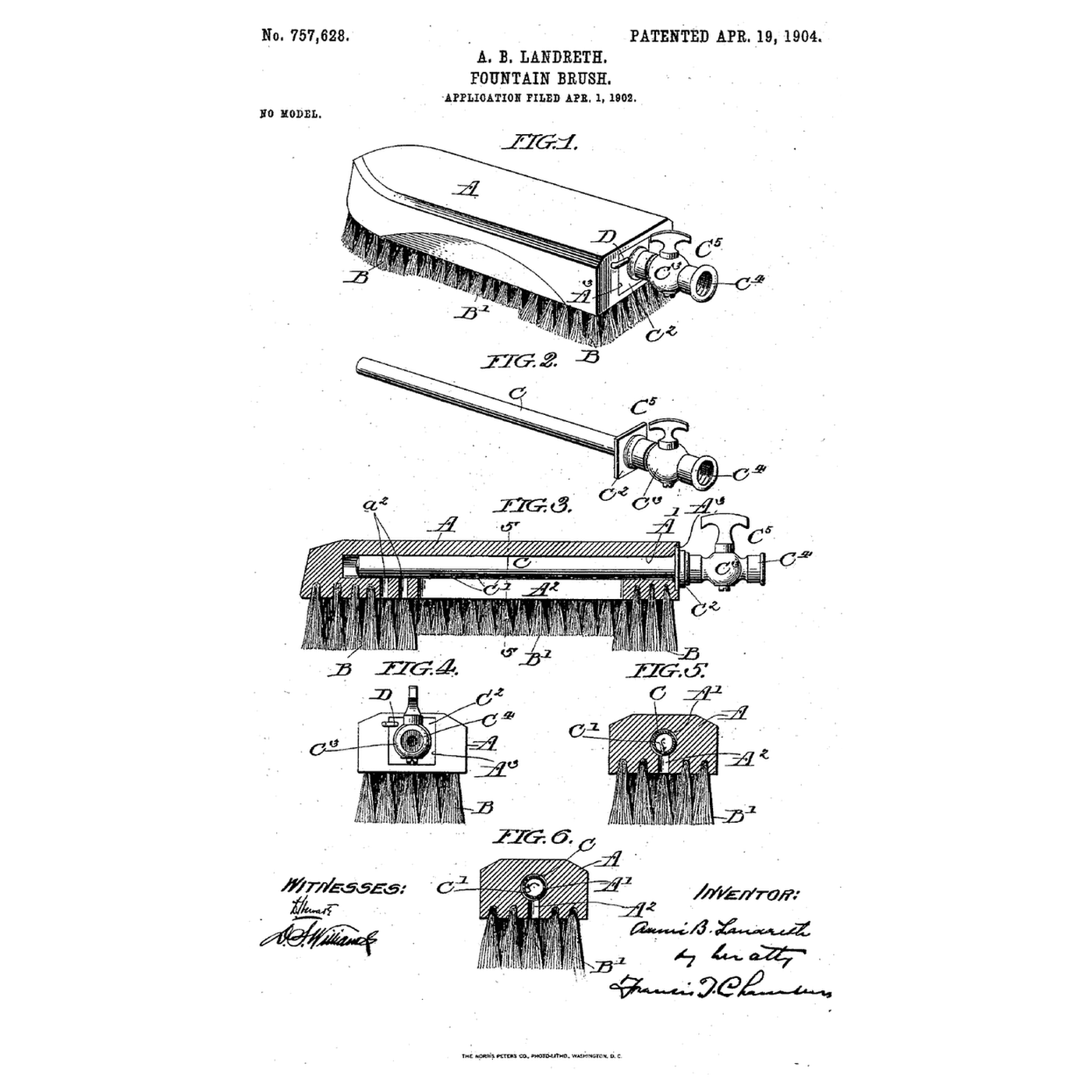
The patent drawing
The patent drawing
US 821,879 drawing sheet, public domain (expired patent).
9
9
Measure the flow
Measure the flow
Hold the brush over the measuring cylinder for 30 s and read the paint. Repeat at 0.4 bar, with the brush upside down, and with the button pressed.
Tools needed:
 Measuring Cylinder
 StopwatchPressure Gauge
10
10
A brush that floods, starves or will not stop
A brush that floods, starves or will not stop
Pressure-fed fountain paint brush troubleshooting.
Flow
Loading...
11
11
History and honest limits
History and honest limits
**Gottfried Meyer** and **Charles G. Braun** of Philadelphia filed US 821,879 on 22 November 1905; it was patented 29 May 1906. Their reservoir has a valve casing with a detachable plug valve; a pipe reaches the bottom with lateral apertures; a sheet-metal band closes the recess in the brush head; all parts detach for cleaning when the colour is changed.
**Honest limits.** A pinch on silicone tubing stands in for their plunger in a tube, and a PET bottle at low pressure for their reservoir. The notebook treats paint as a simple liquid. Your flows are the result.
Materials
12- Placeholder
- 1 piecePlaceholder
- 1 piecePlaceholder
- 1 piecePlaceholder
- 1 piecePlaceholder
- 1 piecePlaceholder
- 1 piecePlaceholder
- 1 piecePlaceholder
- 1 piecePlaceholder
- 1 piecePlaceholder
- 1 piecePlaceholder
- 1 piecePlaceholder
Tools Required
10- 1 vendor sell this, none ship to you yetPlaceholder
- Placeholder
- Placeholder
- Placeholder
- Placeholder
- Placeholder
- Placeholder
- Placeholder
- Placeholder
- Placeholder
Related Blueprints
These blueprints share knowledge with this one — techniques, materials, or principles that connect them in the learning graph.


CC0 Public Domain
This blueprint is released under CC0. You are free to copy, modify, distribute, and use this work for any purpose, without asking permission.
Support the Maker by purchasing products through their Blueprint where they earn a Maker Commission set by Vendors, or create a new iteration of this Blueprint and include it as a connection in your own Blueprint to share revenue.