ART
BEAUTY & WELLNESS
CRAFT
CULTURE & HISTORY
ENTERTAINMENT
ENVIRONMENT
FOOD & DRINKS
REVERSE ENGINEERING
SCIENCES
SPORTS
TECHNOLOGY
WEARABLES
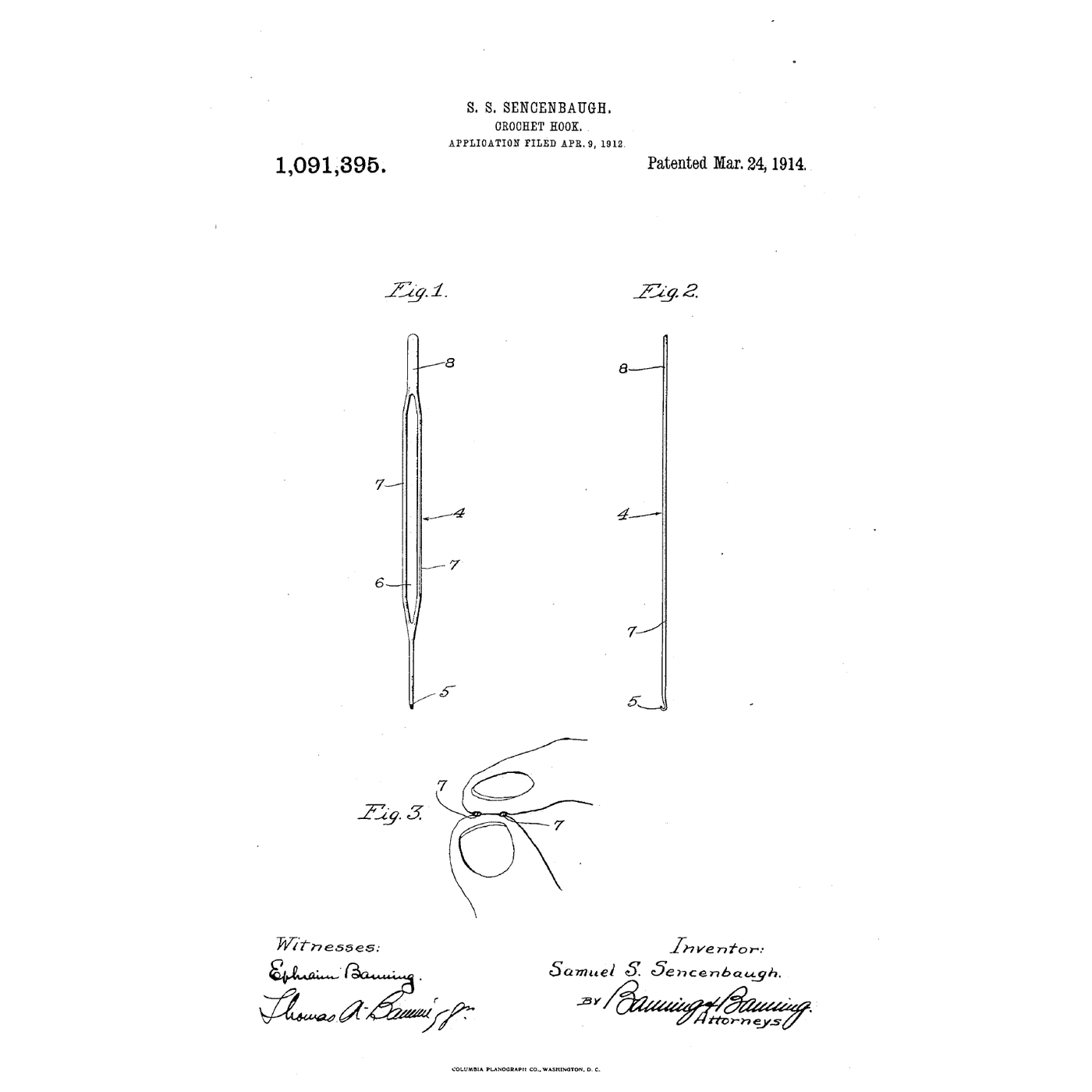


The Slotted-Handle Crochet Hook: Fingers That Lock Into the Handle
A round crochet hook rolls between the fingers, and a hook with a flat grip is right for one hold and wrong for the next.
Samuel S. Sencenbaugh of Aurora, Illinois, assignor to T. Buettner & Co. of Chicago, received US 1,091,395, dated 24 March 1914, for a one-piece crochet hook whose handle is split by a long slot into two arms: "the fleshy portions of the hand which engage therewith will be protruded into the slot, and tend thereby to resist any lateral or swinging movement of the crochet hook between the fingers."
This rung works out how hard a round handle must be pinched, then flattens, slots and files a hook from one aluminium rod and measures the pull that turns it in the fingers.
Intermediate
About 3 hours
Instructions
1
1
Pinch needed on a round handle
Pinch needed on a round handle
Loading Jupyter Notebook...
2
2
Work to test it on
Work to test it on
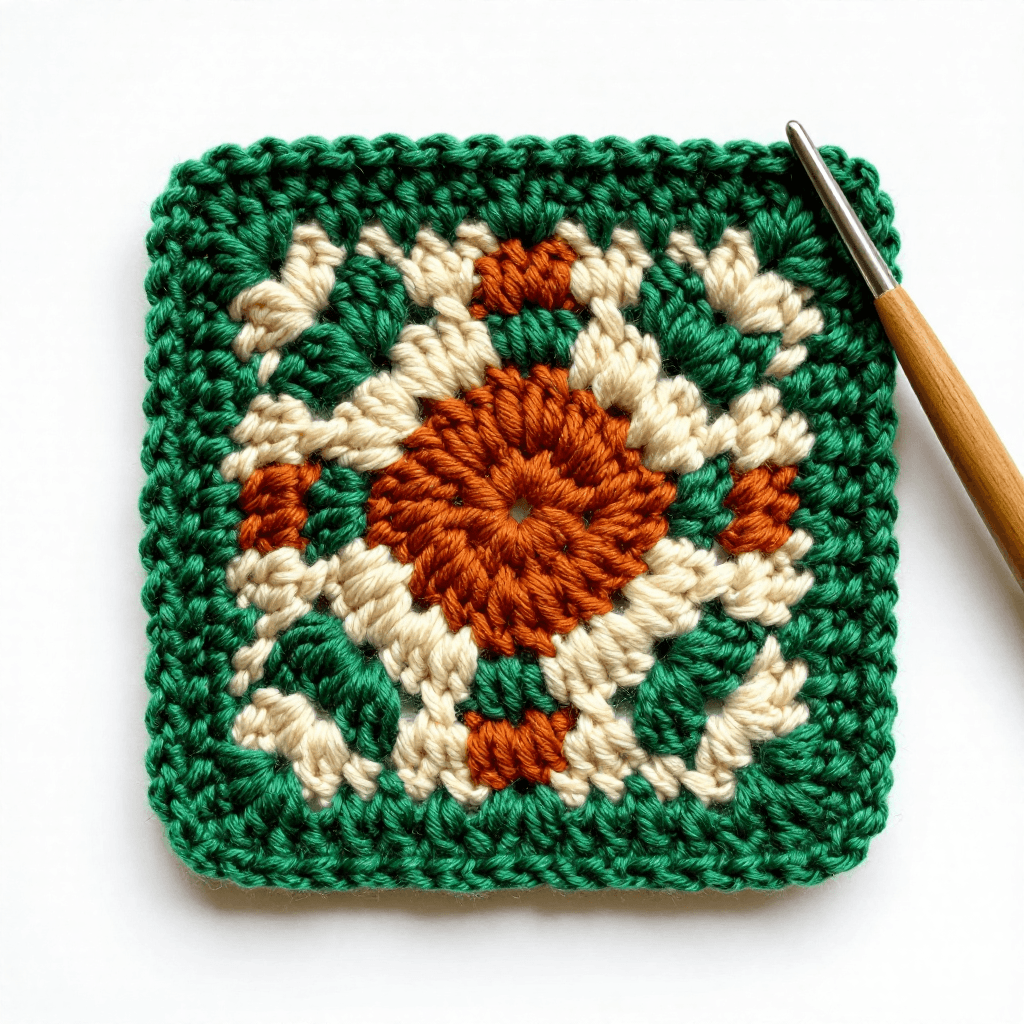
The embedded blueprint works a granny square in rounds. Turning the work round and round is where a hook that rolls in the fingers slows you down.
3
3
Read US 1,091,395
Read US 1,091,395
"If the handle is of a round or cylindrical character, it is impossible to keep the hook end thereof properly pointed with respect to the yarn or thread which is being used unless the attention of the eyes be constantly directed to this end."
"In other words, the fingers so placed constitute for each other a cushion against which the holding and manipulating pressure is largely exerted."
4
4
Make the hook and measure its grip
Make the hook and measure its grip
**Blank.** Cut 16 cm of 5 mm aluminium rod. Hammer the middle 7 cm flat on the anvil to about 2.5 mm thick; it spreads to about 8 mm wide.
**Slot.** Drill a 3 mm hole near each end of the flat, 55 mm apart, and saw between them down the middle with the coping saw. File the slot to 3 mm wide, leaving two arms about 2.5 mm wide, and round every edge.
**Hook.** 3 cm from the flat, at one end, file a throat about 1.5 mm deep at 45°, copying a bought 5 mm hook. Round the tip and the throat with the needle files and emery cloth until yarn slides without catching. The other end is the head.
**Test.** Tie a thread round the hook just below the throat, hold the handle lightly as for crochet, and pull the thread sideways with the spring scale until the hook turns in your fingers; note the force. Do the same with a round bought hook. Then work 10 rows of single crochet with each and time them.
Materials for this step:
 Aluminium Rod0.16 meter
 Yarn1 piece
Tools needed:
 Hacksaw
 Anvil
Anvil Hammer
 Cordless Drill
 Drill Bit Set
 Coping Saw
 Bench Vise
 Needle File Set
 Digital Caliper 6-Inch
 Force Meter (Spring Scale)
 Crochet Hook Set
 Stopwatch
 Clear Safety Glasses
 Emery Cloth
5
5
A hook that twists, pinches or snags
A hook that twists, pinches or snags
Slotted-handle crochet hook troubleshooting.
Flow
Loading...
6
6
History and honest limits
History and honest limits
**Samuel S. Sencenbaugh** of Aurora, Kane County, Illinois, assignor to T. Buettner & Co. of Chicago, filed US 1,091,395 on 9 April 1912; it is dated 24 March 1914. (Machine-read copies of the patent spell him "Sengenbaugh"; the scan reads Sencenbaugh.) He made the hook and handle in one piece of metal, the slot running most of the handle's length so the fingers can hold it anywhere along it, and wanted the hook to point in the plane across the two arms.
**Honest limits.** Aluminium rod stands in for Sencenbaugh's unnamed metal, and the slot is sawn, not stamped. The notebook treats the round handle's grip as pure friction; its pull, offset and friction are examples. Your pull readings and row times are the result.
Tools Required
14- Placeholder
- Placeholder
- Placeholder
- 1 vendor sell this, none ship to you yetPlaceholder
- Placeholder
- Placeholder
- Placeholder
- Placeholder
- Placeholder
- Placeholder
- Placeholder
- Placeholder
- Placeholder
- Placeholder
Related Blueprints
These blueprints share knowledge with this one — techniques, materials, or principles that connect them in the learning graph.

CC0 Public Domain
This blueprint is released under CC0. You are free to copy, modify, distribute, and use this work for any purpose, without asking permission.
Support the Maker by purchasing products through their Blueprint where they earn a Maker Commission set by Vendors, or create a new iteration of this Blueprint and include it as a connection in your own Blueprint to share revenue.