ART
BEAUTY & WELLNESS
CRAFT
CULTURE & HISTORY
ENTERTAINMENT
ENVIRONMENT
FOOD & DRINKS
REVERSE ENGINEERING
SCIENCES
SPORTS
TECHNOLOGY
WEARABLES


The Twisted-Rod Push Corkscrew: Press the Handle and a Twisted Stem Spins the Screw In
Turning a corkscrew into the cork by the handle, turn after turn, is slow.
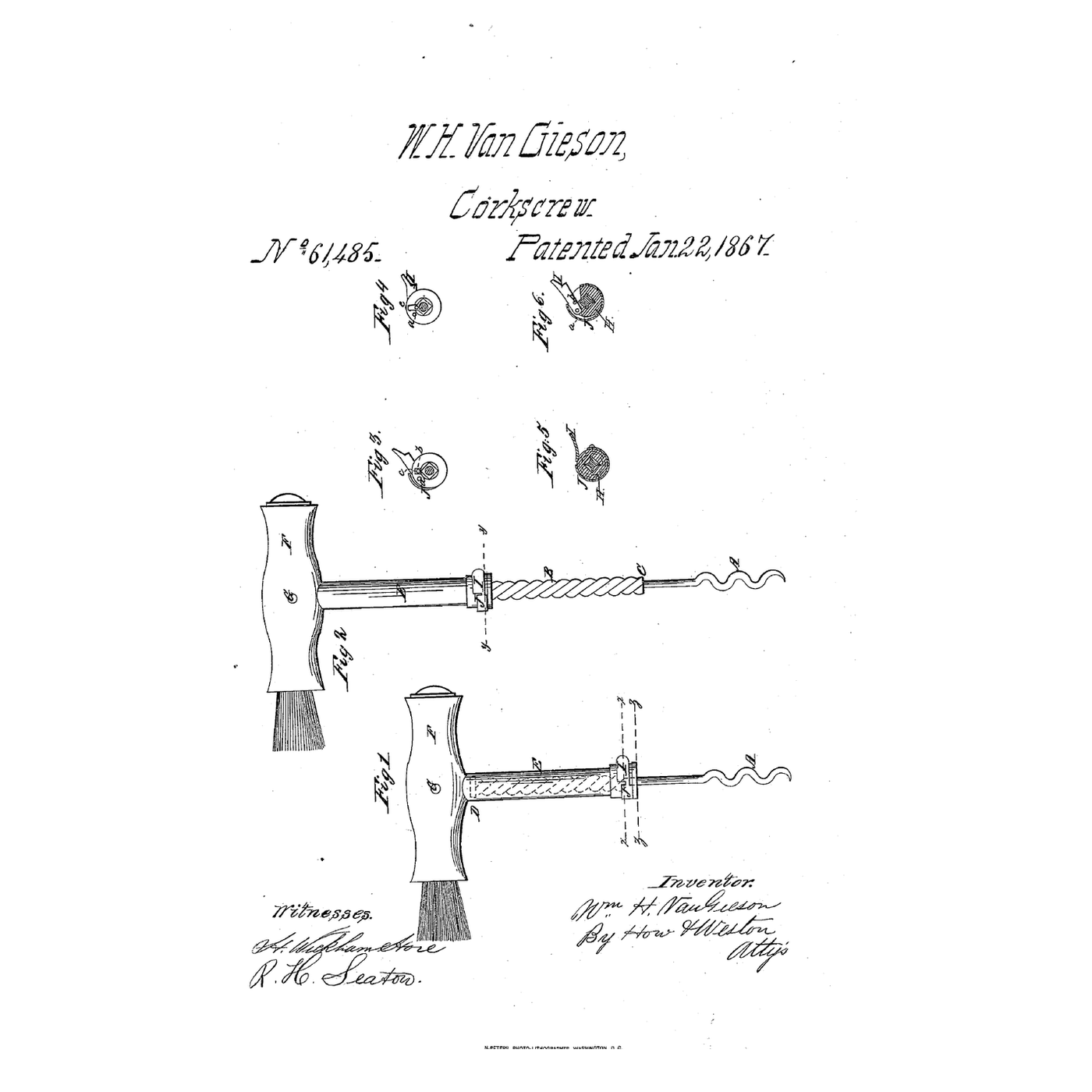
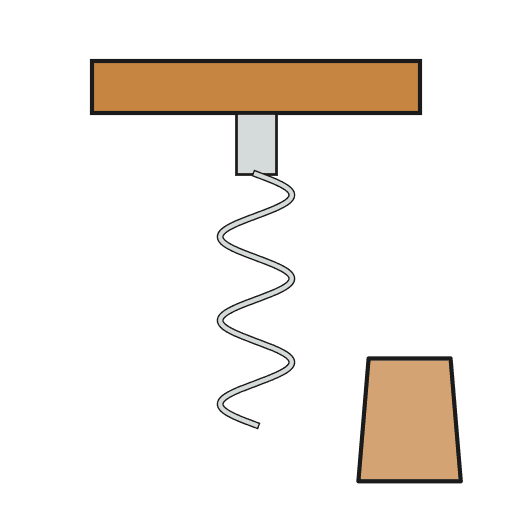
William H. Van Gieson of Passaic, New Jersey, received US 61,485, dated 22 January 1867, for a corkscrew "rapid and simple in its operation, as well as strong and durable, and not too bulky to be convenient in handling." The stem is twice its usual length: its upper part is a square rod twisted about one turn to the inch, the opposite way to the spiral, and it slides through a plate with a matching hole at the foot of a tube fixed in the handle. Pressing the handle drives the rod up the tube, turning it, and the spiral turns into the cork; a spring catch then hooks under a shoulder on the stem so the cork can be drawn.
This rung works out the torque a push gives, with a work check, then twists a square rod, files the plate, and presses corkscrews into corks.
Advanced
About 6 hours
Instructions
1
1
Push into torque
Push into torque
Loading Jupyter Notebook...
2
2
A push-driven corkscrew before it
A push-driven corkscrew before it
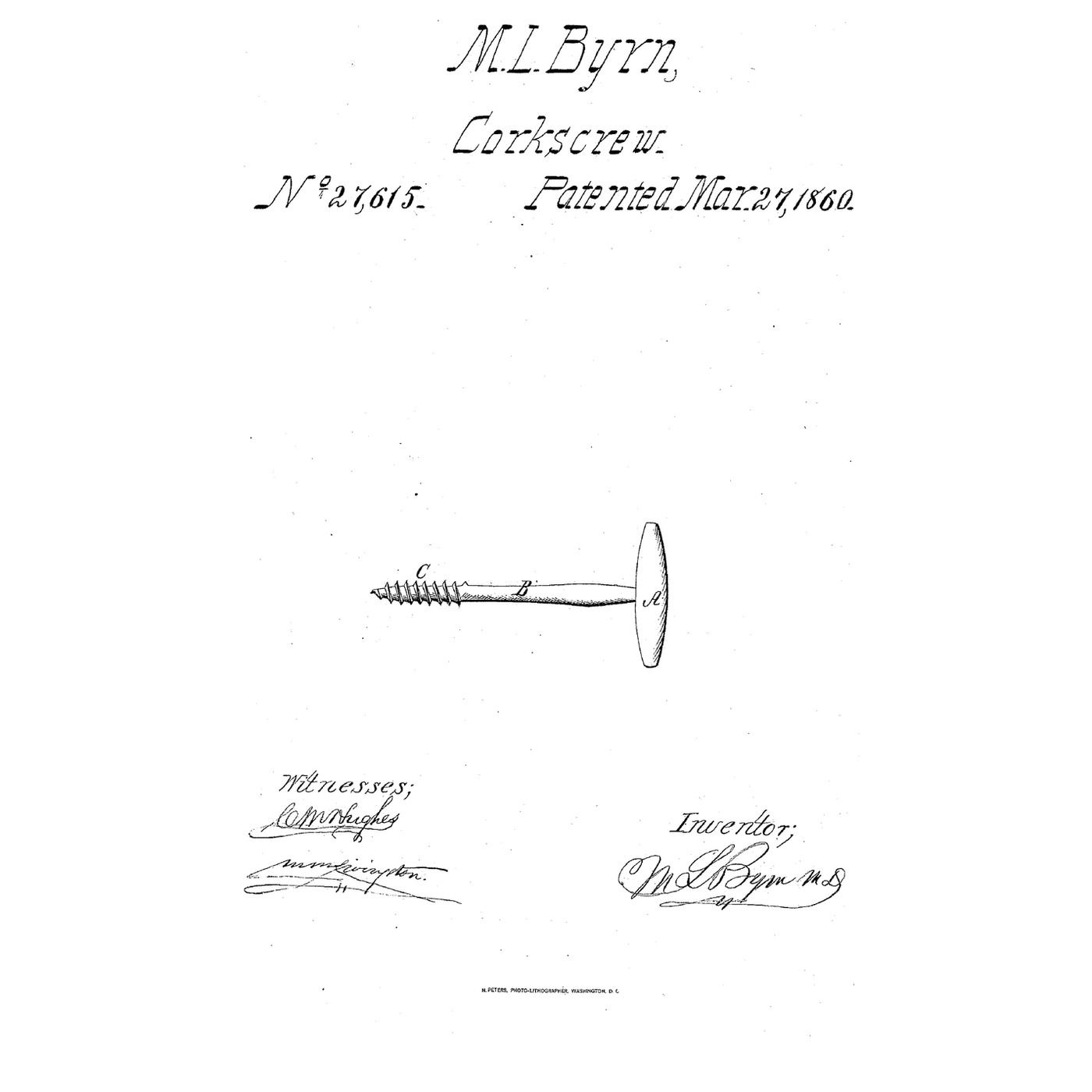
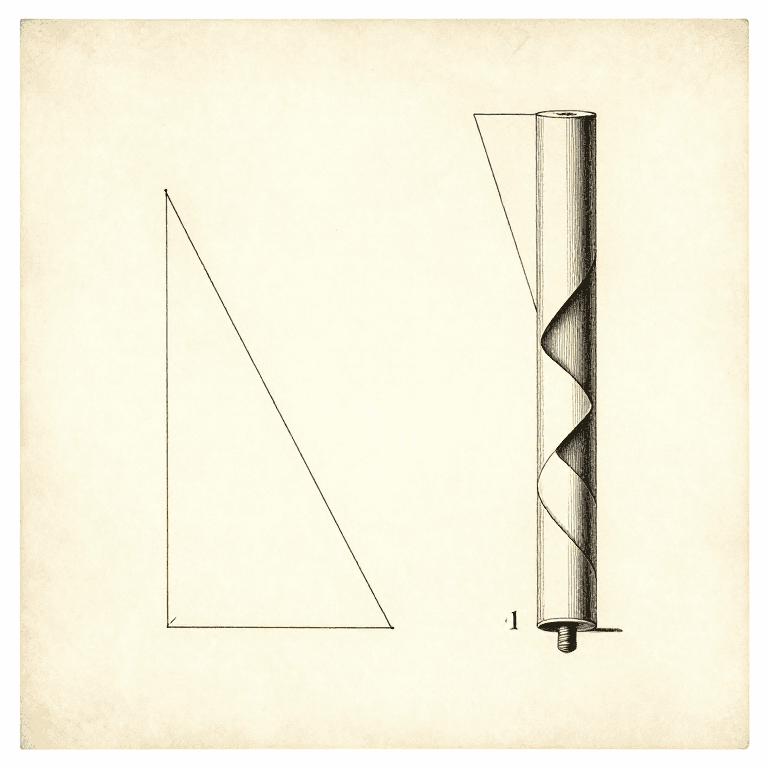
The embedded blueprint lets a steep screw turn itself in under a push. Van Gieson keeps an ordinary spiral and turns it with a twisted rod running through a plate in the handle.
3
3
Read US 61,485
Read US 61,485
"To accomplish this object, I attach to the middle of the handle a metallic tube, in the position usually occupied by the shank of the instrument, and extend the shank of the screw or spiral to about double its usual length, making the upper part in the form of a regularly twisted square, or other prism-shaped rod, having about one twist to the inch, and turned in the opposite direction from that of the screw or spiral itself, and make this twisted square portion to run up into the said tube through a plate at its lower extremity."
"In using my cork-screw, the stem is first thrown out, which can easily be done by pressing back the spring-catch I, and the point of the screw A being placed against the centre of the cork, the handle is pressed down, thereby turning the twisted part B and spiral A, and forcing the said spiral into the cork. So soon as the shoulder C passes above the spring-catch I, the said spring-catch hooks under the said shoulder, and gives a bearing against which the stem is supported while the cork is being pulled."
4
4
Make the corkscrew and press it into corks
Make the corkscrew and press it into corks
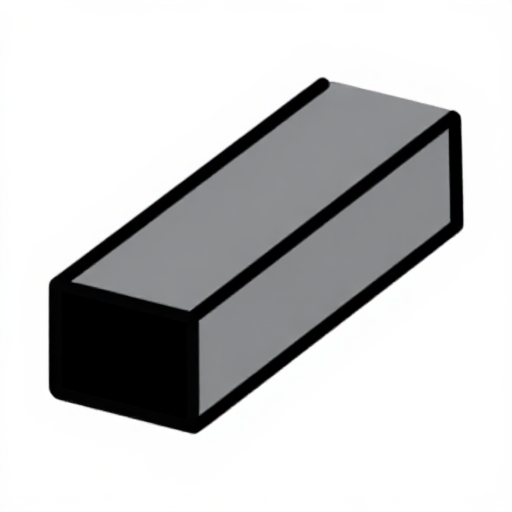
**Twisted rod.** Cut 18 cm of 6 mm mild steel square bar. Heat 10 cm of it red with the torch and, with one end in the vise, twist it with an adjustable wrench about four turns, so it has about one twist to the inch, the opposite way to the spiral you will wind.
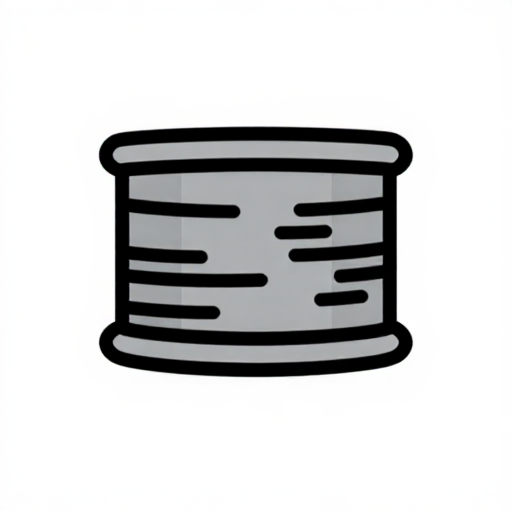
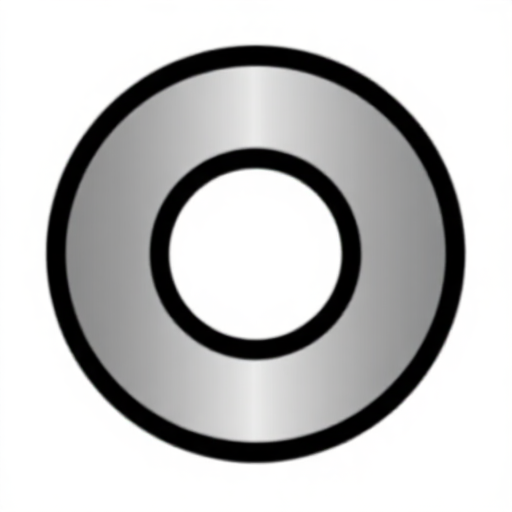
**Spiral and shoulder.** Wind 2 mm steel wire into an open helix round a 6 mm rod, file a point, and silver-solder it to the square bar's plain end. Silver-solder a washer round the bar where the twist ends, as the shoulder C.
**Plate and tube.** Drill and file a square hole in a small piece of mild steel plate so the twisted rod slides through it and turns as it goes. Silver-solder the plate across the end of a 12 cm length of tube that the rod turns freely in.
**Handle and catch.** Drill a hardwood handle across its middle and fix the tube's other end in it with a rivet. Rivet a strip of spring steel beside the plate so its bent end springs under the shoulder when the rod is pushed fully in.
**Test.** Cork several bottles of water with the corking kit. Press the spring catch back, draw the stem out, set the point on a cork's centre and press the handle down. When the catch clicks under the shoulder, draw the cork.
Materials for this step:
 Mild Steel Square Bar0.18 meter
 Steel Wire0.4 meter
 Flat Washer1 piece
 Silver Solder Set (Easy/Medium/Hard)1 piece
 Flux1 piece
 Mild Steel Plate1 piece
 Aluminium Tube0.12 meter
 Hardwood Handle Stock1 piece
 Steel Rivets3 pieces
 Spring Steel Strip0.08 meter
 Glass Bottle (Clear)3 pieces
 Corks3 pieces
 Water2 liters
Tools needed:
 Hacksaw
 Propane Torch
 Bench Vise
 Adjustable Wrench
 Files (Hand File)
 Needle File Set
 Cordless Drill
 Drill Bit Set
 Rivet Set
 Round-nose Pliers
 Wine Bottle Corking Kit
 Clear Safety Glasses
 Leather Work Gloves
 Riveting Hammer
5
5
A push corkscrew that jams, slips or will not hold
A push corkscrew that jams, slips or will not hold
Twisted-rod push corkscrew troubleshooting.
Flow
Loading...
6
6
History and honest limits
History and honest limits
**William H. Van Gieson** of Passaic, Passaic County, New Jersey, received US 61,485, dated 22 January 1867. A head or button D on the twisted part stopped it leaving the tube, the tube E was fixed in the handle F by a pin G, and the spring catch I was held by a circular spring J in a slot in the tube, with a pin b to limit its throw. His claims cover the stem's upper part twisted opposite to the spiral, and its combination with the tube, plate, catch and handle.
**Honest limits.** A twisted square bar, a filed plate and aluminium tube stand in for his parts; the head D and circular spring J are simplified. The notebook ignores friction; its forces, spiral lead and stroke are examples. Your pressed-in corks are the result.
Materials
13- 0.18 meterPlaceholder
- 0.4 meterPlaceholder
- 1 piecePlaceholder
- 1 piecePlaceholder
- 1 piecePlaceholder
- 1 piecePlaceholder
- 0.12 meterPlaceholder
- 1 piecePlaceholder
- 3 piecesPlaceholder
- 0.08 meterPlaceholder
- 3 piecesPlaceholder
- 3 piecesPlaceholder
- 2 litersPlaceholder
Tools Required
14- Placeholder
- Placeholder
- Placeholder
- Placeholder
- Placeholder
- Placeholder
- 1 vendor sell this, none ship to you yetPlaceholder
- Placeholder
- Placeholder
- Placeholder
- Placeholder
- Placeholder
- Placeholder
- Placeholder
This blueprint makes
Related Blueprints
These blueprints share knowledge with this one — techniques, materials, or principles that connect them in the learning graph.


CC0 Public Domain
This blueprint is released under CC0. You are free to copy, modify, distribute, and use this work for any purpose, without asking permission.
Support the Maker by purchasing products through their Blueprint where they earn a Maker Commission set by Vendors, or create a new iteration of this Blueprint and include it as a connection in your own Blueprint to share revenue.