Collaboration
ART
BEAUTY & WELLNESS
CRAFT
CULTURE & HISTORY
ENTERTAINMENT
ENVIRONMENT
FOOD & DRINKS
REVERSE ENGINEERING
SCIENCES
SPORTS
TECHNOLOGY
WEARABLES

Thompson (Nlaka'pamux) Smoked Buckskin: Scraped on a Leaning Poplar Log with a Deer Ulna, Soap-Soaked, Wrung, Pounded Soft, Smoked (Teit, 1900)
The Thompson (Nlaka'pamux) buckskin James Teit saw made around 1900: a soaked hide scraped on a peeled poplar log leaning against a tree with a deer's ulna or a horse rib used like a draw-knife, smoked over a small pit of smouldering rotten wood, soaked a day in soapy water, wrung with dry grass on a log and stick, pounded soft on a frame and smoked again.
Advanced
About a week
Instructions
1
1
Read Teit
Read Teit
"It is said that, after being smoked, the skin does not shrink so much when it gets wet as it otherwise would."
2
2
Soak and set up the log
Soak and set up the log
Soak the dry skin in water for several days. Peel a poplar log about 5 in. (13 cm) thick and 4 ft (1.2 m) long; stand one end on the ground and lean the other against a tree, in a notch cut in its bark.
Materials for this step:
 Raw Hide1 piece
 Water1 piece
 Green Wood Poles1 piece
Tools needed:
 Fleshing Beam
3
3
Scrape both sides
Scrape both sides
Lay the skin loosely over the log with some hanging over the top so the pressure holds it. Scrape the flesh side with a slightly sharpened deer ulna or horse rib held at both ends like a draw-knife, moving the skin as you go; then the hair side, taking the dark outer skin off with the hair. Bone cuts the skin less than iron.
Tools needed:
 Fleshing ToolFleshing Beam
4
4
Dry and smoke
Dry and smoke
Hang it over a pole to dry. Dig a hole about 1½ ft (45 cm) deep and a little over 1 ft (30 cm) across, light a smouldering fire of rotten fir wood (fir bark with dry pine cones is best; juniper for a very dark colour), set a frame of bent sticks over it, spread the skin on it and cover all with an old blanket. Turn it to smoke the other side.
Materials for this step:
 Rotten Wood1 piece
 Willow Withy1 piece
Tools needed:
 Shovel
 Fire Pit
 Canvas Fabric
 Wooden Pole
5
5
Soap, wring and pound
Soap, wring and pound
Soak it 24 hours or more in warm water with a strong soap solution. Roll it lengthwise with a little dry grass, tie one end to a log with a rope, fold the other round a short stout stick and turn until the water is wrung out. Stretch it on a frame and pound the inside until quite dry and soft (warm it by a fire in cold weather), then smoke it again.
Materials for this step:
 Soap1 pieceWater1 piece
 Hay1 piece
Tools needed:
 Large Dye Pot
 Rope
 Wooden PaddleWooden Pole
6
6
Troubleshooting
Troubleshooting
Smoked buckskin troubleshooting.
Flow
Loading...
7
7
History and honest limits
History and honest limits
From James Teit, *The Thompson Indians of British Columbia*, **Memoirs of the American Museum of Natural History, Jesup North Pacific Expedition** vol. I part IV (1900), pp. 185-186 and Figs. 127-129 (checked on the archive.org scan cihm_16242). Some said smoking came from the Okanagon; many held that a skin rubbed with brains needs no smoking (see the Navajo brain-tan blueprint). Corncob smoke gave a bright yellow. Frame size and hay for the dry grass are ours.
Materials
7- 1 piecePlaceholder
- 2 piecesPlaceholder
- 1 piecePlaceholder
- 1 piecePlaceholder
- 1 piecePlaceholder
- 1 piecePlaceholder
- 1 piecePlaceholder
This blueprint makes
Related Blueprints
These blueprints share knowledge with this one — techniques, materials, or principles that connect them in the learning graph.
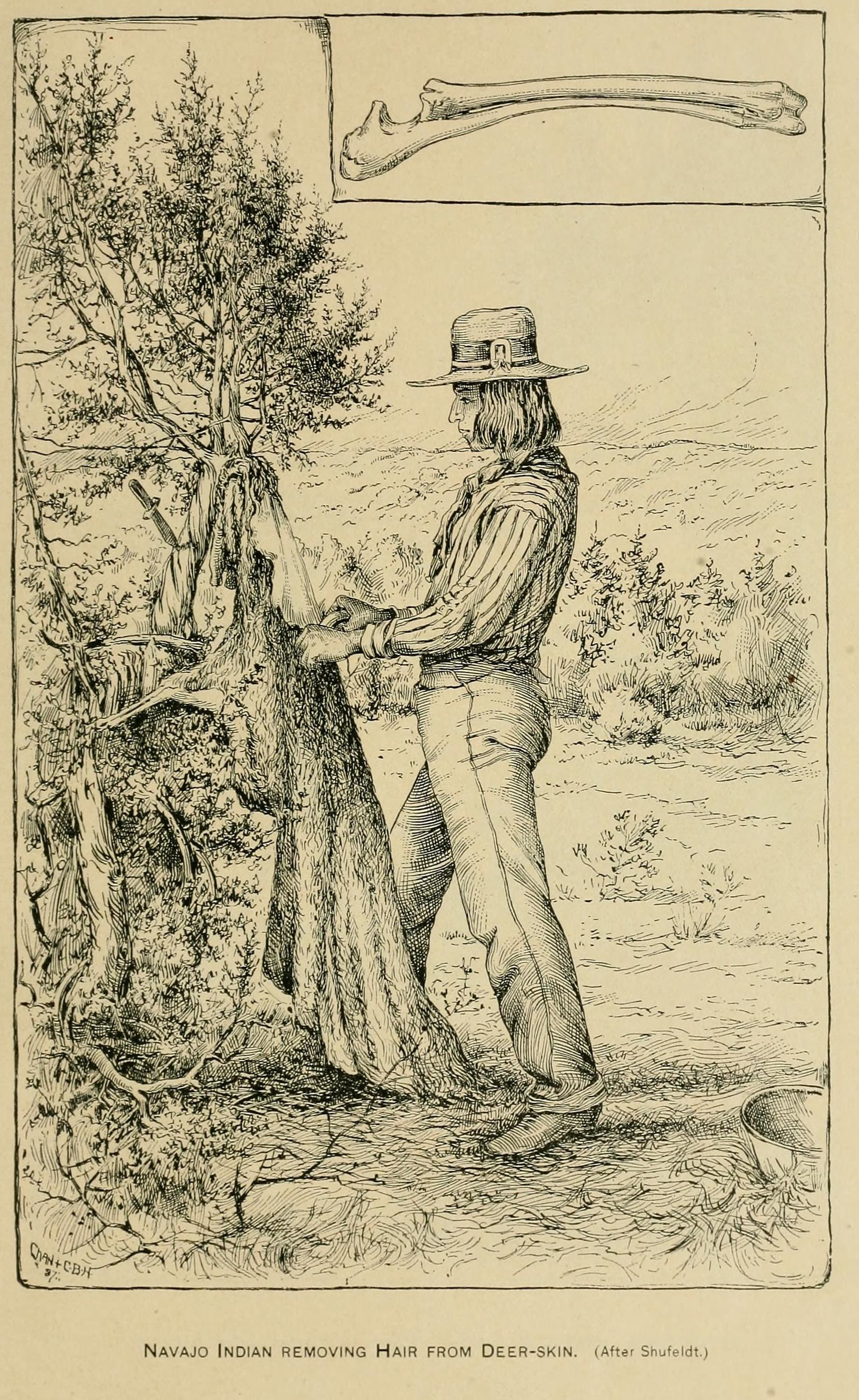
Navajo Buckskin: Hair Shaved with the Deer's Own Foreleg Bone, Brains Rubbed In, Wrung on a Tree, Worked Dry over the Feet (Shufeldt, 1888)
by Tex
Textile & Leather
4
0
0
0
0
0
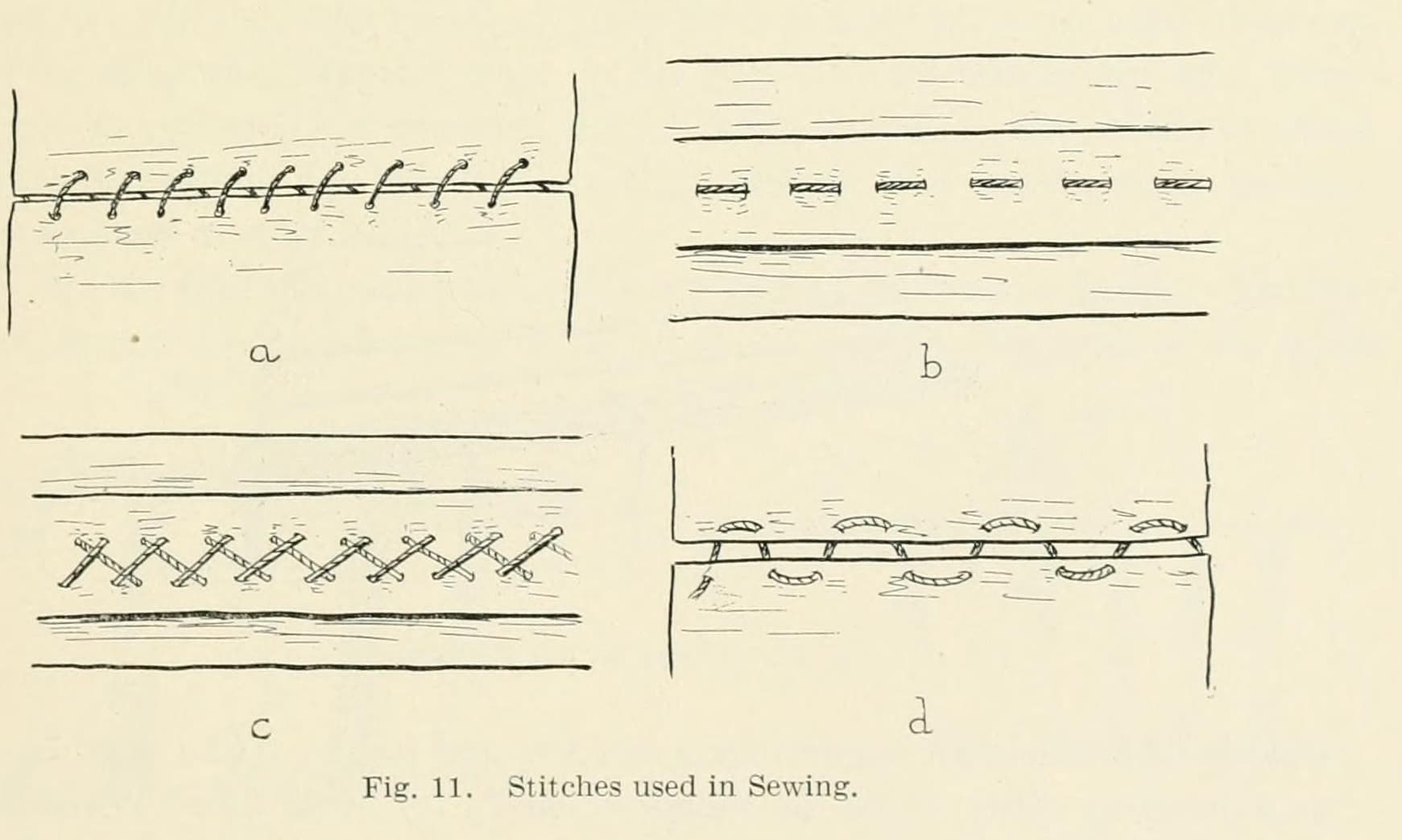
Blackfoot Sinew Thread: Dried Leg and Neck Sinew Shredded, Softened and Rolled Between the Palms (Wissler, 1910)
by Tex
Textile & Leather
4
0
0
0
0
0
CC0 Public Domain
This blueprint is released under CC0. You are free to copy, modify, distribute, and use this work for any purpose, without asking permission.
Support the Maker by purchasing products through their Blueprint where they earn a Maker Commission set by Vendors, or create a new iteration of this Blueprint and include it as a connection in your own Blueprint to share revenue.