Collaboration
ART
BEAUTY & WELLNESS
CRAFT
CULTURE & HISTORY
ENTERTAINMENT
ENVIRONMENT
FOOD & DRINKS
REVERSE ENGINEERING
SCIENCES
SPORTS
TECHNOLOGY
WEARABLES


Thompson (Nlaka'pamux) Snowshoes: One-Piece Maple or Yew Frames Steamed in Pairs, Netted with Twisted Raw Deer-Hide (Teit, 1900)
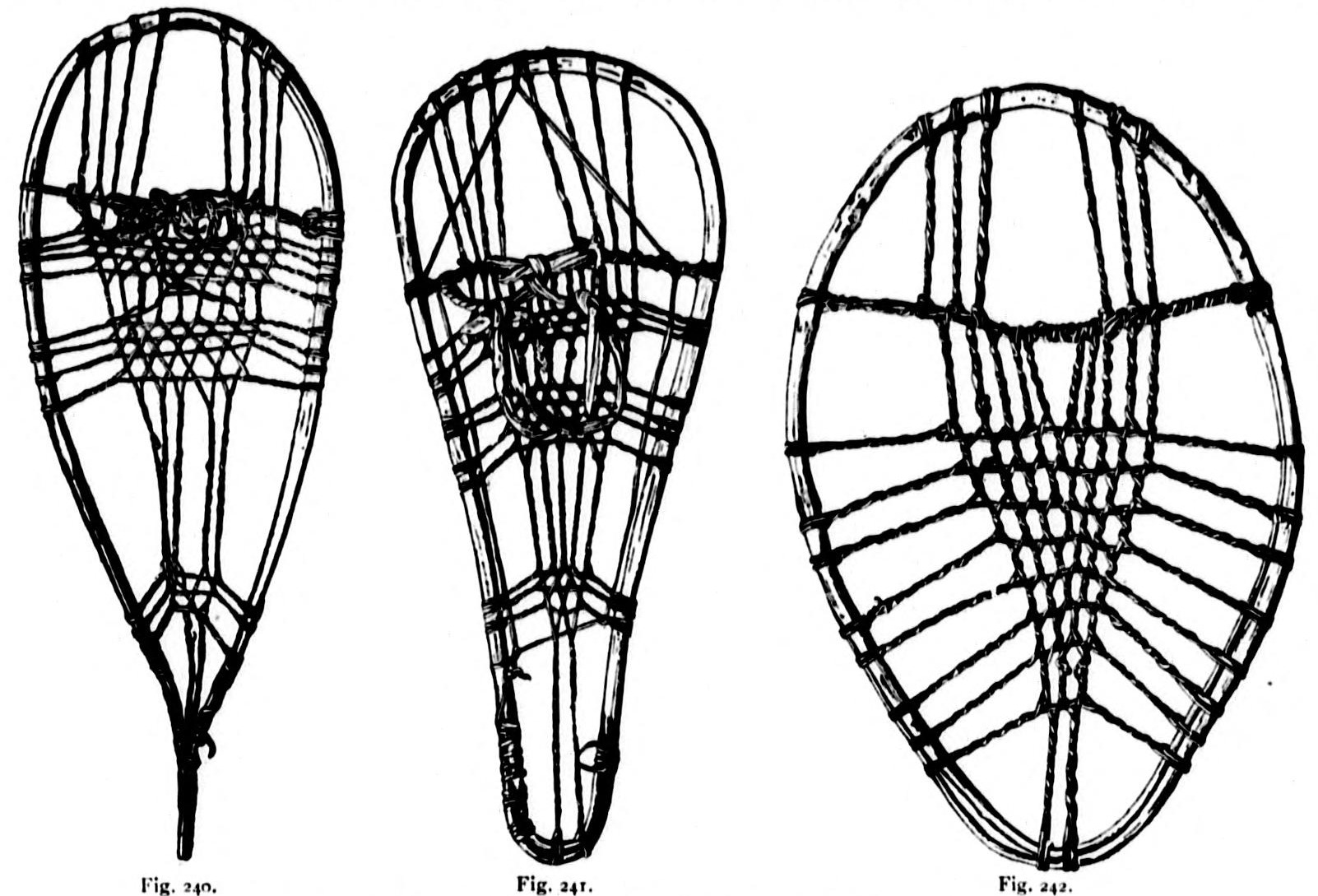
Snowshoes of the Thompson (Nlaka'pamux) people, from James Teit: each frame a single rod of mountain maple or yew, the two frames tied together and their points spread with a short stick so they steam into a matching pair with turned-up toes, then netted with fine, slightly twisted strings of raw deer-hide. Rounded, wide-meshed shoes for steep mountains and wet snow.
Intermediate
Two or three days
Instructions
1
1
Read Teit
Read Teit
"The frame is made of one piece of mountain-maple or yew wood, and the network is of raw deer-hide cut into fine strings and slightly twisted."
2
2
Shape two frame rods
Shape two frame rods
For each shoe take one rod of mountain maple or yew and shave it even (ours: about 2.5 m long and 2.5 cm thick for a rounded shoe of roughly 90 x 40 cm).
Materials for this step:
 Green Wood Poles1 piece
Tools needed:
 Knife
 Drawknife
3
3
Bend and steam as a pair
Bend and steam as a pair
Bend each rod into the frame shape, tie the two frames together and push a short stick between their points to spread them, so the toes turn up. Steam them in that position until they keep the shape. Ours: over a kettle of boiling water under a cover, then let them dry tied.
Materials for this step:
 Cordage1 piece
 Water1 piece
Tools needed:
 Iron Kettle
 Fire PitKnife
4
4
Cut and twist the netting
Cut and twist the netting
Cut raw deer-hide into fine strings and twist them slightly. Ours: soak them so they shrink tight as they dry.
Materials for this step:
 Rawhide Strips1 pieceWater1 piece
Tools needed:
Knife5
5
Net the shoe
Net the shoe
Lash in cross-bars and net the frame. The Lower Thompsons used rounded frames with rather wide meshes, good on steep slopes and in moist snow; the upper bands made them longer and netted them more closely. Ours: follow the ordinary snowshoe, Fig. 242.
Materials for this step:
Rawhide Strips1 pieceTools needed:
 AwlKnife
6
6
Troubleshooting
Troubleshooting
Snowshoe troubleshooting.
Flow
Loading...
7
7
History and honest limits
History and honest limits
From James Teit, *The Thompson Indians of British Columbia*, **Memoirs of the American Museum of Natural History, Jesup North Pacific Expedition** vol. I part IV (1900), pp. 256-257 and Figs. 239-242 (checked on the archive.org scan cihm_16242). He names six netting forms, among them the 'owl sole' and 'magpie sole', and a Shuswap type four to five feet long and pointed at both ends. Sizes, the steaming setup and the netting order are ours.
Materials
4- 1 piecePlaceholder
- 1 piecePlaceholder
- 2 piecesPlaceholder
- 1 piecePlaceholder
This blueprint makes
Related Blueprints
These blueprints share knowledge with this one — techniques, materials, or principles that connect them in the learning graph.
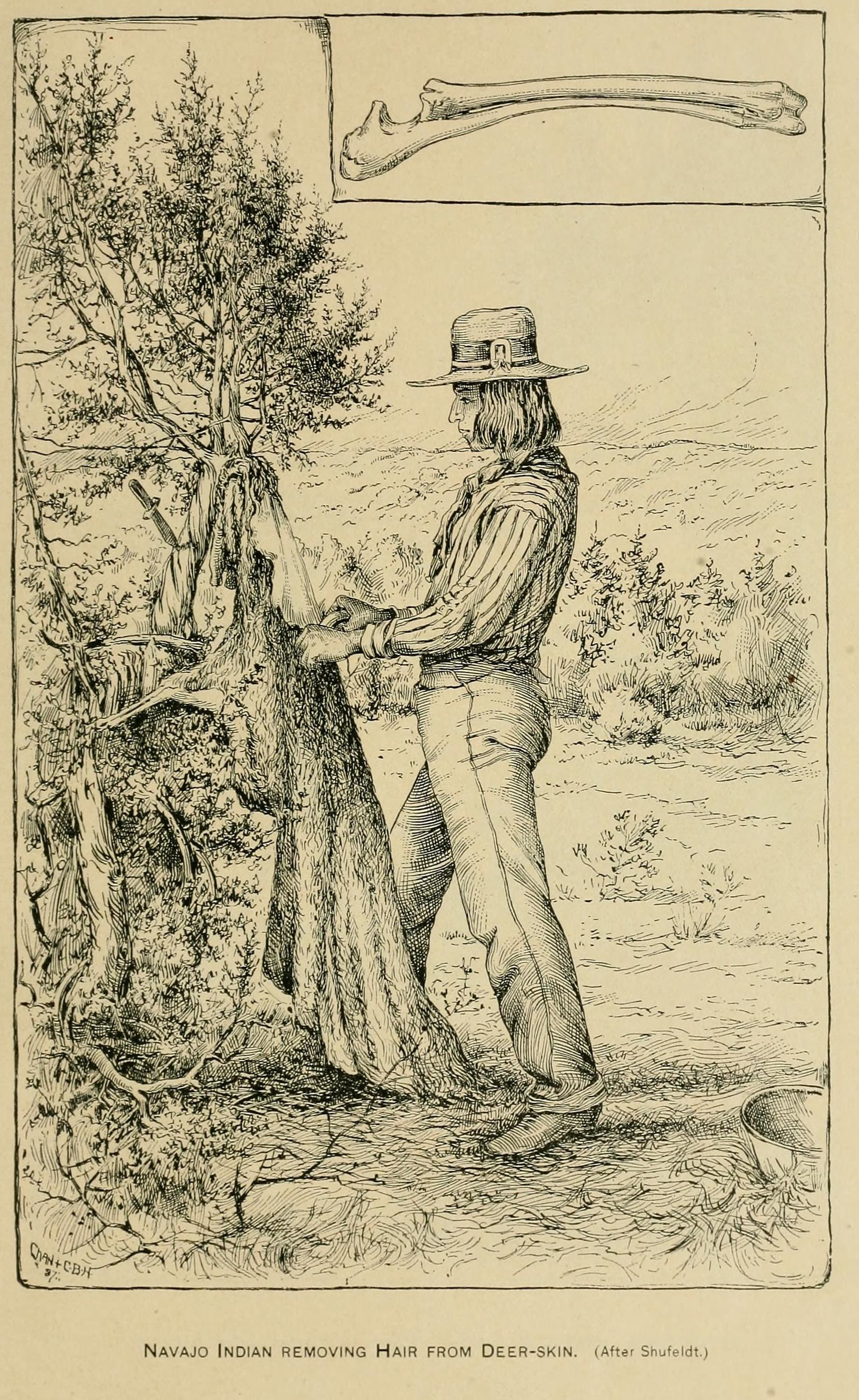
Navajo Buckskin: Hair Shaved with the Deer's Own Foreleg Bone, Brains Rubbed In, Wrung on a Tree, Worked Dry over the Feet (Shufeldt, 1888)
by Tex
Textile & Leather
4
0
0
0
0
0
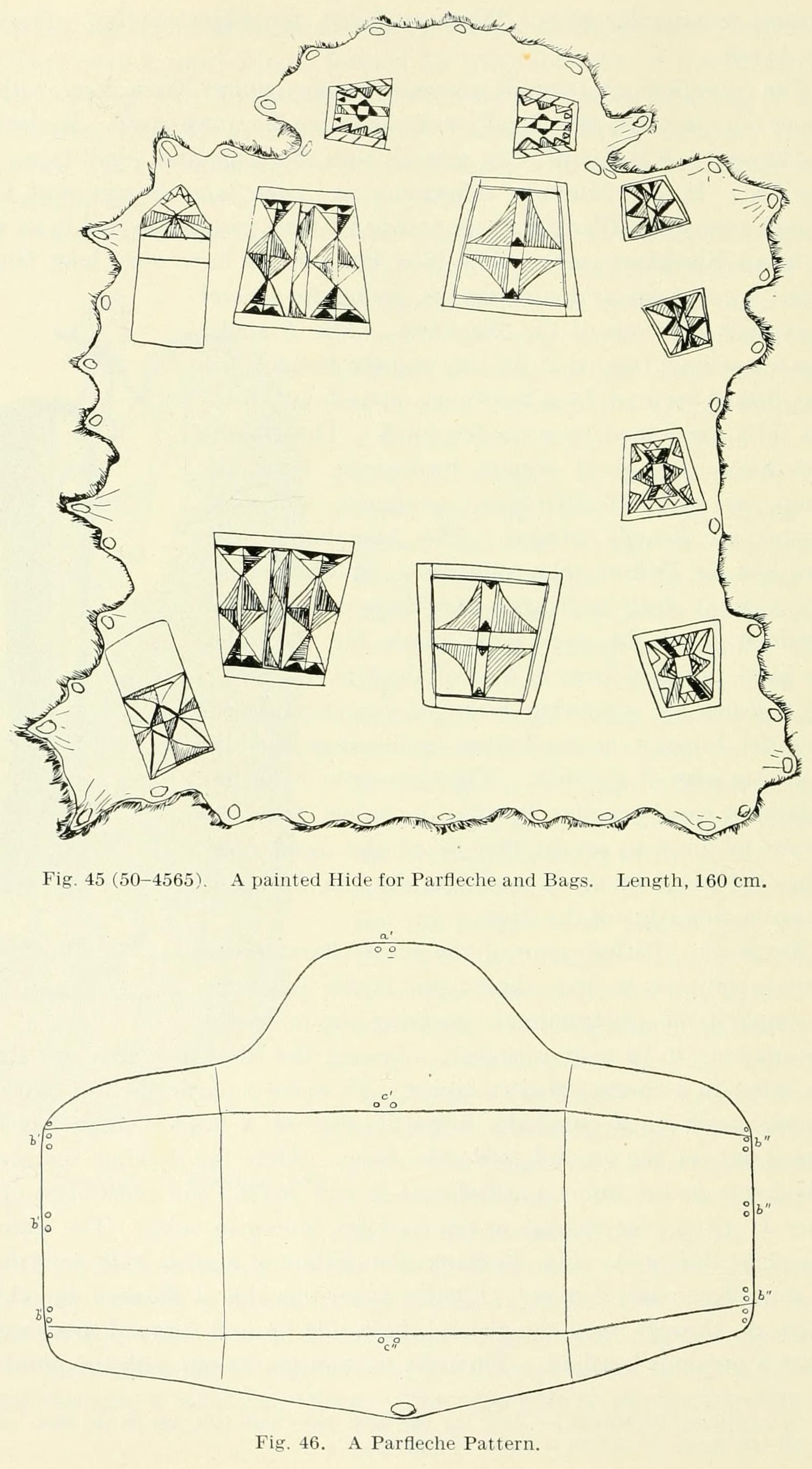
Blackfoot Parfleche: Rawhide Pegged Out, Fleshed, Painted While Staked, Scraped Even, Cut and Folded Like an Envelope (Wissler, 1910)
by Tex
Textile & Leather
2
0
0
0
0
0
CC0 Public Domain
This blueprint is released under CC0. You are free to copy, modify, distribute, and use this work for any purpose, without asking permission.
Support the Maker by purchasing products through their Blueprint where they earn a Maker Commission set by Vendors, or create a new iteration of this Blueprint and include it as a connection in your own Blueprint to share revenue.