ART
BEAUTY & WELLNESS
CRAFT
CULTURE & HISTORY
ENTERTAINMENT
ENVIRONMENT
FOOD & DRINKS
REVERSE ENGINEERING
SCIENCES
SPORTS
TECHNOLOGY
WEARABLES
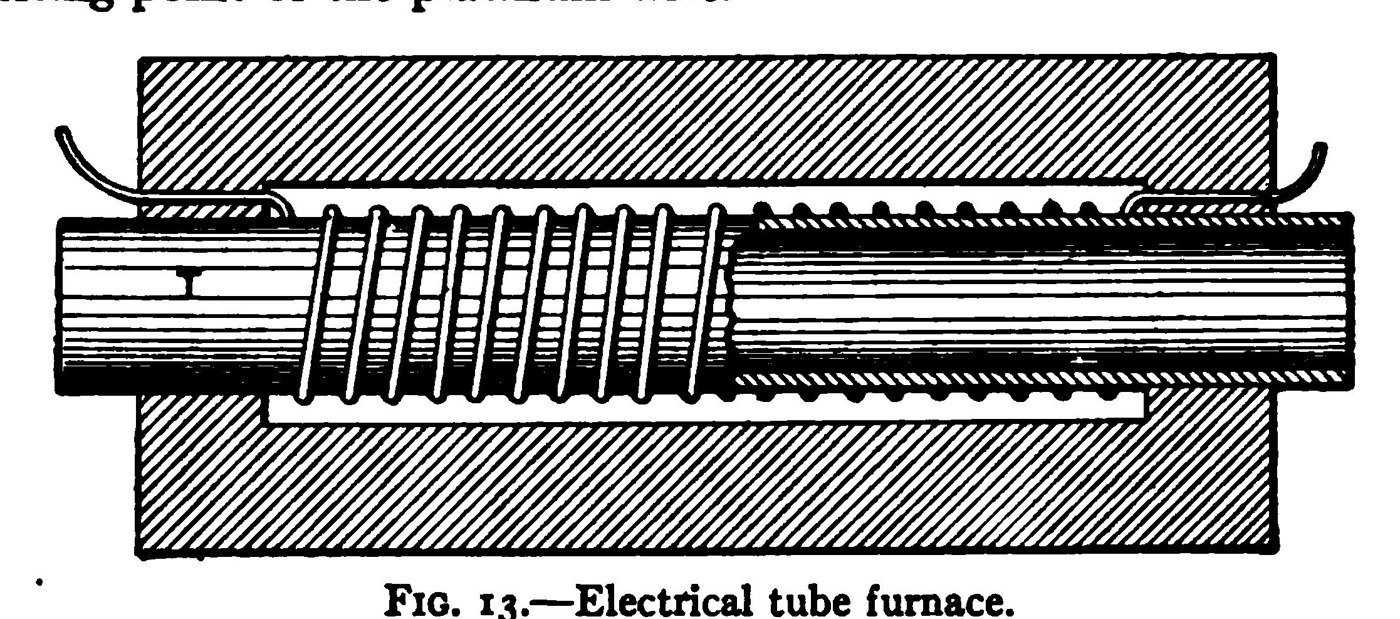


Tube Furnace: Porcelain Tube Wound with Platinum Wire in a Heat-Retaining Jacket (Stansfield, 1914)
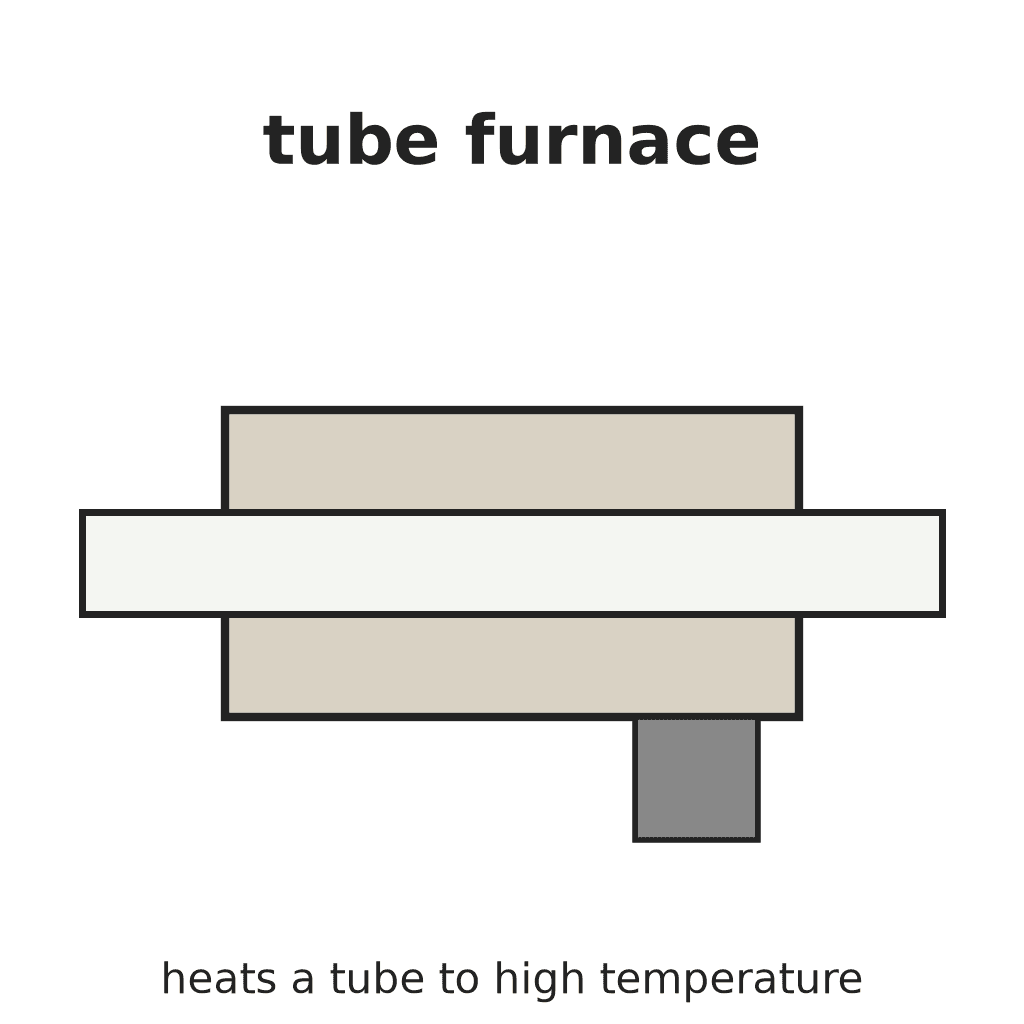
The laboratory tube furnace: a porcelain tube wound with a spiral of platinum wire and wrapped in a heat-retaining jacket. Current through the wire heats the tube and whatever is inside it. A gas can be passed through the tube, the work watched through windows at the ends, and the temperature read with a thermocouple pushed in from one end.
Result: a small furnace for heating a material in any chosen gas at moderate temperatures, well short of platinum's melting point.
Source: A. Stansfield, The Electric Furnace: Its Construction, Operation and Uses (2nd ed., 1914), pp. 24-25 and 154. Unknown: sizes, the jacket material, current and voltage. Picture: Stansfield, Fig. 13.
Intermediate
2 days
Instructions
1
1
Wind the tube
Wind the tube
Take a tube of porcelain; fire-clay, silica or alundum also serve. Wind a spiral of platinum wire round it, leaving the leads free. Fix the turns so they cannot shift or touch each other when the wire expands with the heat, or they will short-circuit. Platinum foil can be wound instead of wire: its larger surface heats faster for the same weight of platinum. Not given: sizes, wire gauge, number of turns.
Materials for this step:
 Porcelain Tube1 piece
 Platinum Wire1 as required
Tools needed:
 Pliers Set
 Unknown Dimensions
2
2
Jacket it
Jacket it
Enclose the wound tube in a heat-retaining envelope, so the heat stays in the tube. The tube ends stick out through the envelope. Not given: the envelope material.
Materials for this step:
 Unknown Material1 heat-retaining envelope
Tools needed:
Unknown Dimensions3
3
Fit windows and the thermocouple
Fit windows and the thermocouple
Close the tube ends with windows of glass or mica to watch the work. Push a thermocouple pyrometer in from one end and watch from the other. Leave a way in and out at the ends when you want a stream of gas through the tube.
Materials for this step:
 Mica Sheet1 end windows
Tools needed:
 Thermocouple with Readout
4
4
Heat
Heat
Put the material in the tube and pass current through the wire. The wire can run at any temperature below platinum's melting point (1,755 °C, 3,200 °F, as the book gives it). In practice the tube and envelope limit the furnace to temperatures far below that. Nickel or nichrome coils are cheaper, but they cannot go as hot and in time they oxidise. Not given: current and voltage.
Tools needed:
Thermocouple with Readout Multimeter
Materials
4- 1 piecePlaceholder
- 1 as requiredPlaceholder
- 1 heat-retaining envelopePlaceholder
- 1 end windowsPlaceholder
Tools Required
4- Placeholder
- Placeholder
- Placeholder
- Placeholder
Connected Blueprint Materials

This blueprint makes
Related Blueprints
These blueprints share knowledge with this one — techniques, materials, or principles that connect them in the learning graph.

CC0 Public Domain
This blueprint is released under CC0. You are free to copy, modify, distribute, and use this work for any purpose, without asking permission.
Support the Maker by purchasing products through their Blueprint where they earn a Maker Commission set by Vendors, or create a new iteration of this Blueprint and include it as a connection in your own Blueprint to share revenue.