ART
BEAUTY & WELLNESS
CRAFT
CULTURE & HISTORY
ENTERTAINMENT
ENVIRONMENT
FOOD & DRINKS
REVERSE ENGINEERING
SCIENCES
SPORTS
TECHNOLOGY
WEARABLES
Translated

Tum Kop (Isan Frog Pot Trap) — a Woven Bamboo Pot, 12 × 12 cm Bottom, Side Funnel Bound with Coconut Husk, Coconut-Shell Lid, or a Tin-Flap Door; Takes Frogs Alive at Night
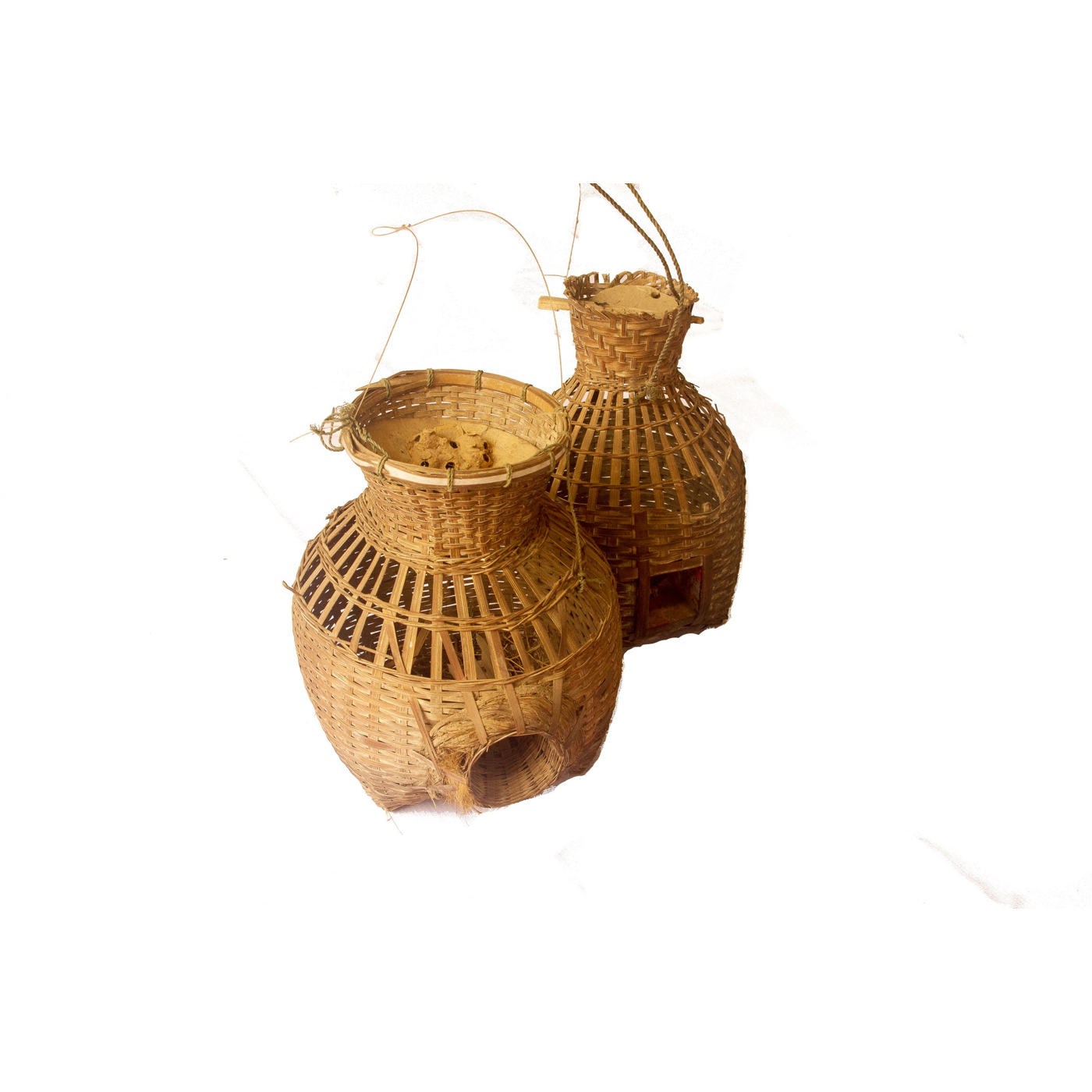
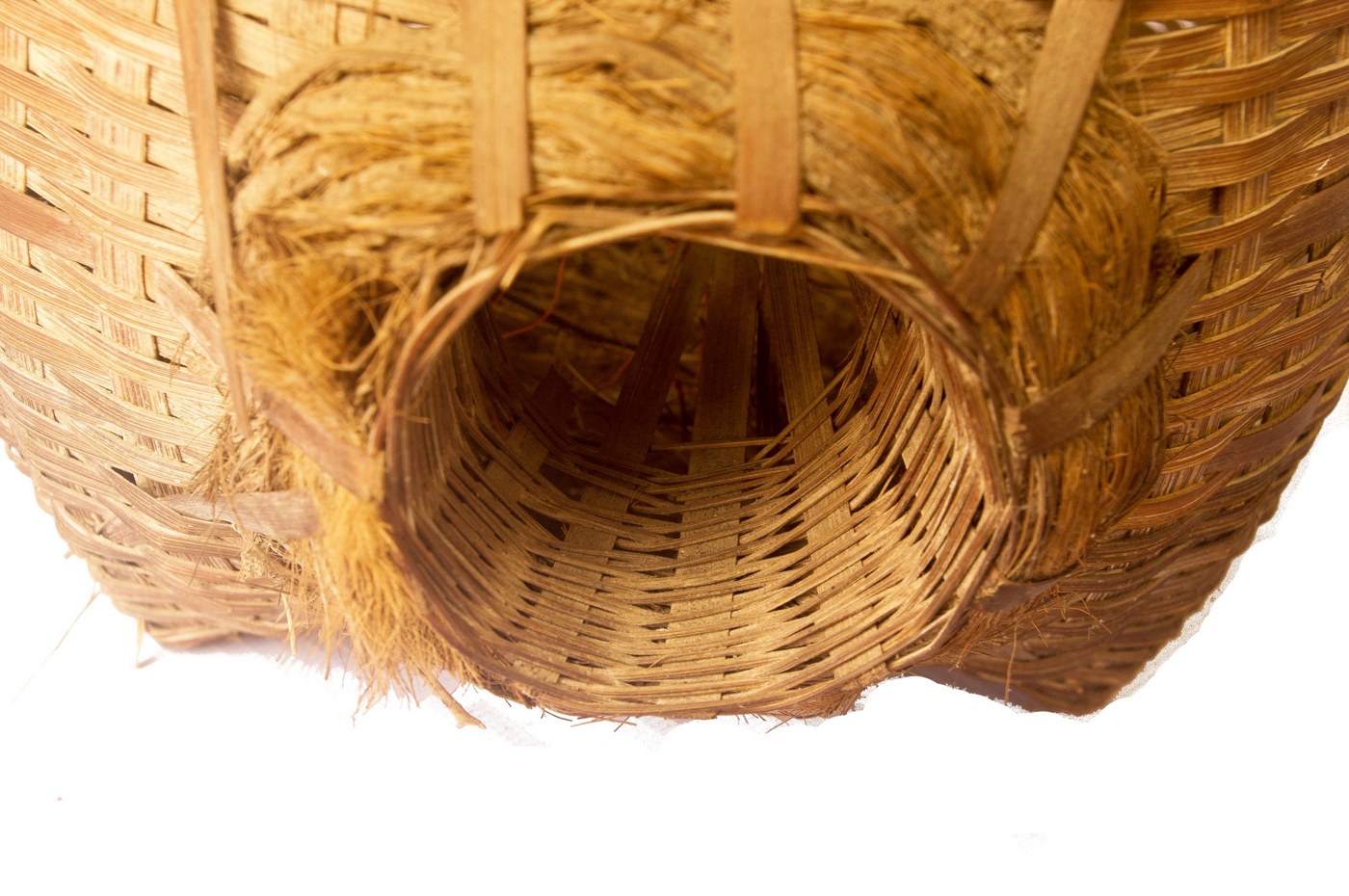
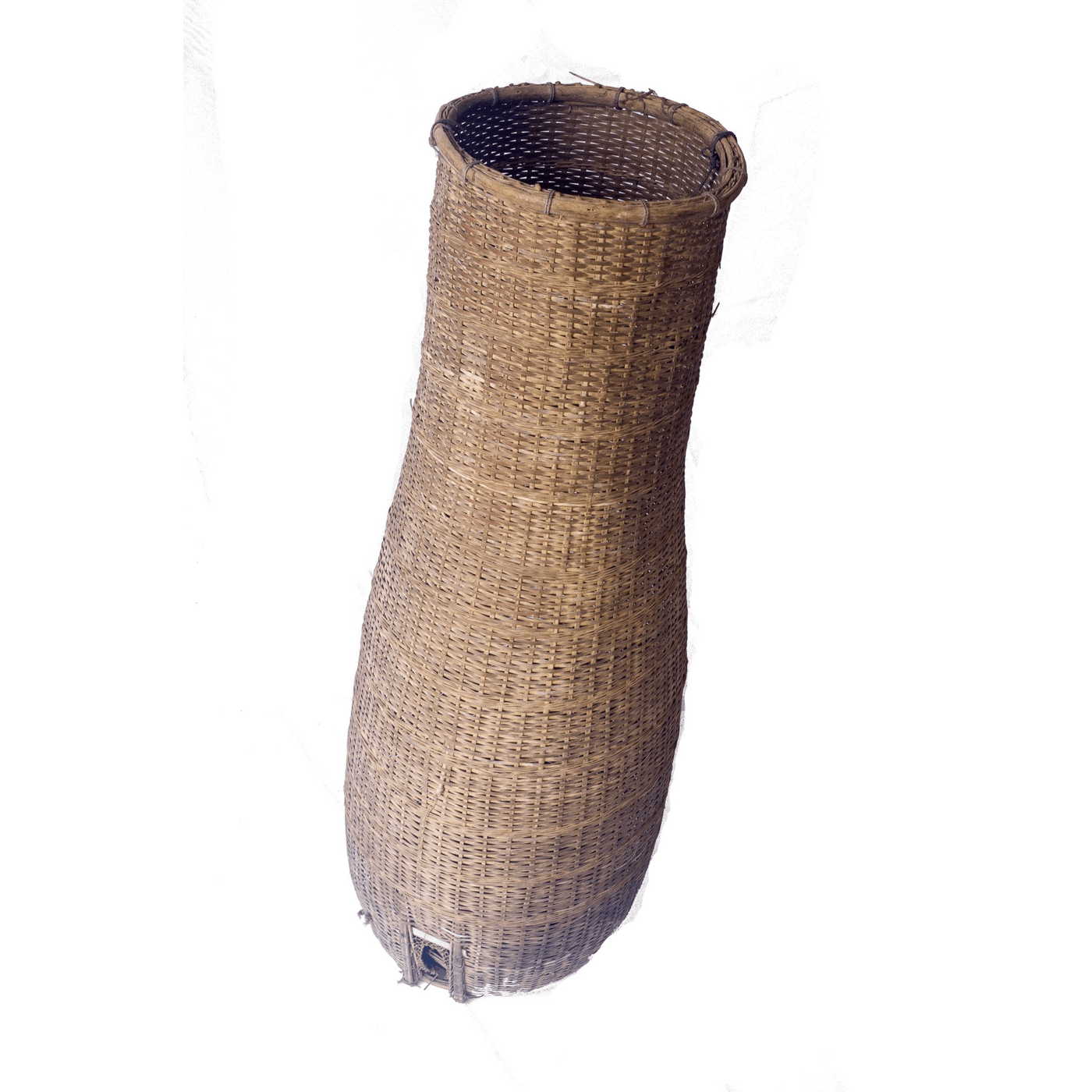
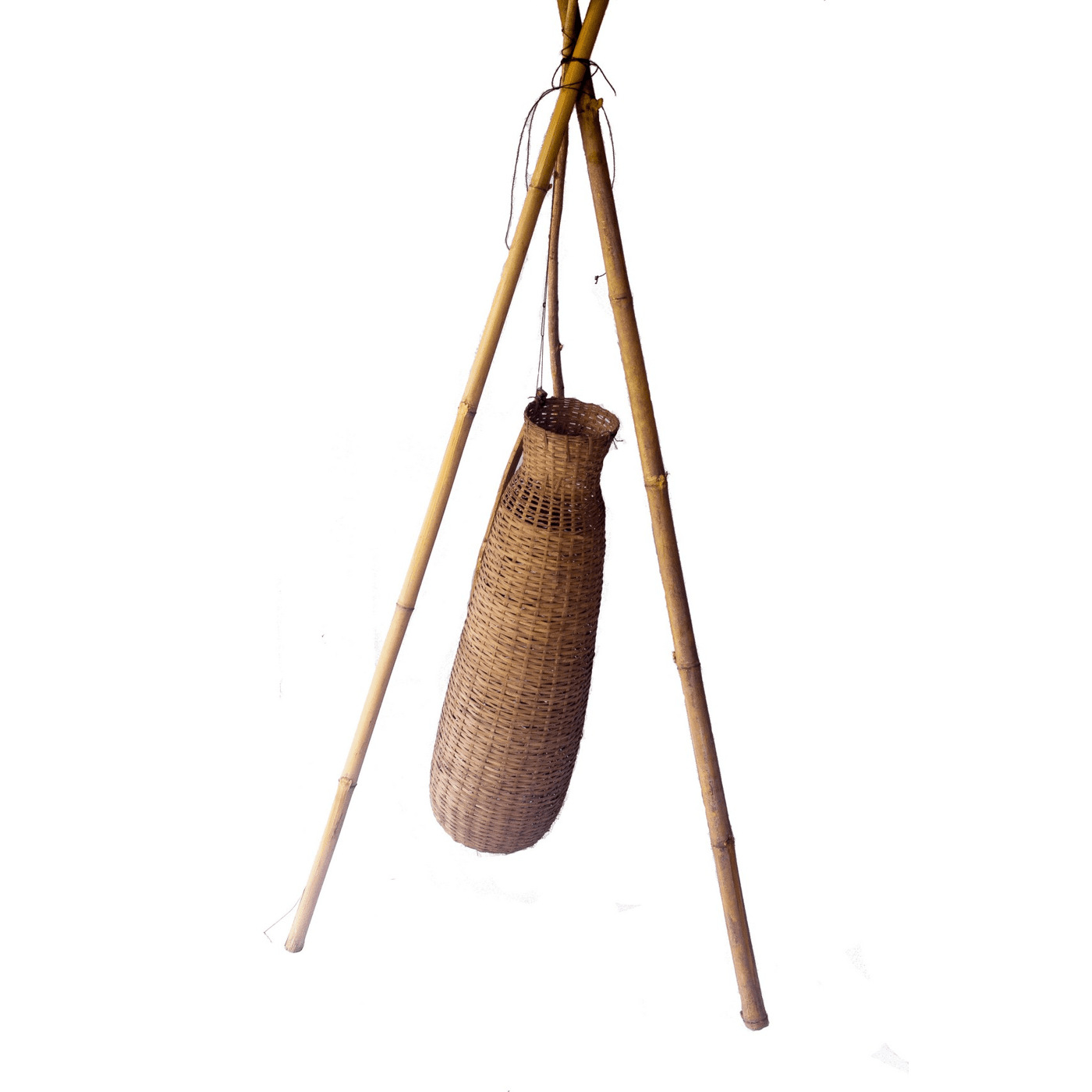
ตุ้มกบ (tum kop) takes frogs alive at night in small pools in the paddies where shrimp, young crabs and fish are stranded. It is shaped just like a khong fish basket but lighter and more delicate. There are two kinds: one with a funnel in a side hole, and one with a tin flap that opens inward only.
This blueprint weaves real tum kop of both kinds to the sizes in the source.
Intermediate
About 1 day
Instructions
1
1
Real sizes
Real sizes
Loading Jupyter Notebook...
2
2
Pot traps, before it
Pot traps, before it
The tum pla duk lures fish with termites; the tum kop lures frogs with live shrimp, crabs and fish, by their smell and the sound of them struggling.
3
3
Read from the source
Read from the source
"When the frogs come out to feed, they smell and hear the prey struggling inside the trap and look for a way in at the entrance, coming through the funnel or pushing the flap, and are caught inside with no way out." (Sirindhorn Anthropology Centre, author ทำนุ วรธงไชย (Thamnu Worathongchai), CC BY 4.0)
4
4
Pot body (funnel type)
Pot body (funnel type)
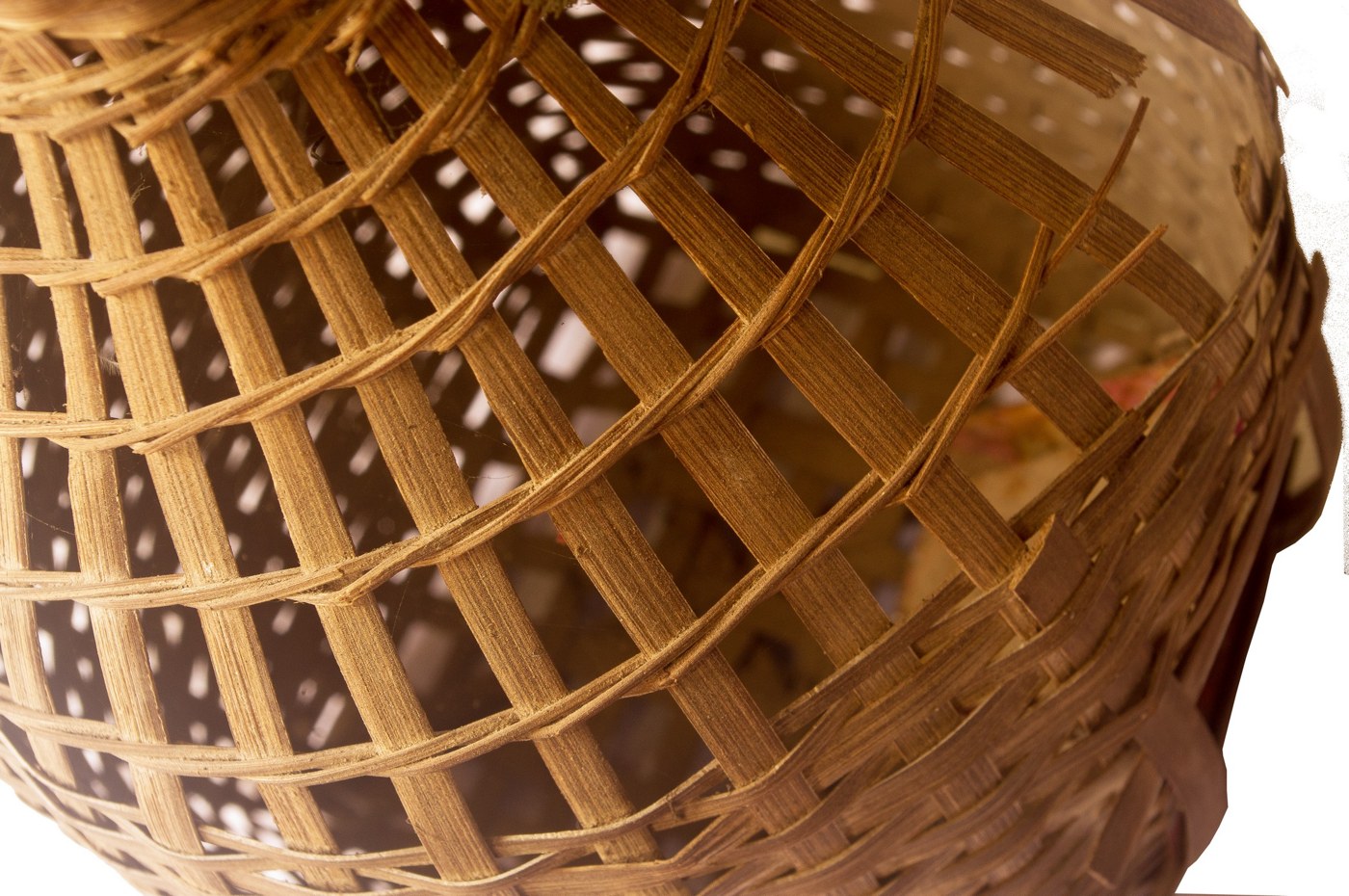
Shave flat strips, with a few round strips to help. Weave a square bottom 12 × 12 cm and brace it with two bamboo sticks crossed in an X, their ends fixed at the corners. Weave flat strips up into a pot belly, then curve inward to about 12 cm high. Leave a gap of standing strips only, curving in to the base of the neck, 6 cm high, then weave flat strips flaring out to the mouth, 7 cm high. Bind a bamboo strip round the mouth with cord; the mouth is 12 cm across. Weave round strips through the middle of the standing-strip gap to strengthen it.
Materials for this step:
 Bamboo Poles1 piece
 Cord1 piece
Tools needed:
 Machete
 Knife
Knife5
5
Funnel and lid
Funnel and lid
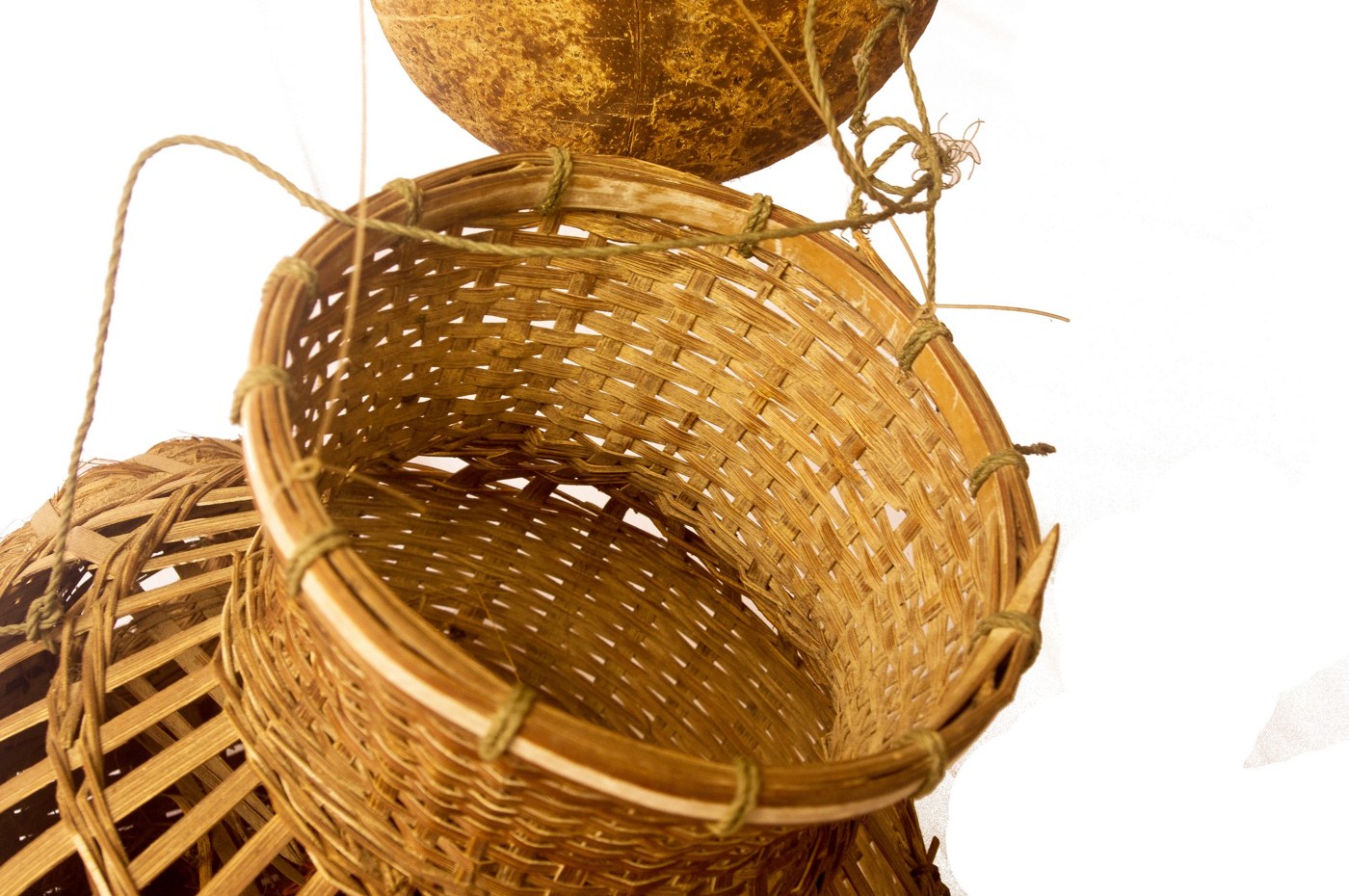
Cut a round hole in the side, slightly above the ground, at the middle of the widest bulge, 5 cm across, and make a funnel mouth 6 cm wide. Weave the funnel with its tips pointing inward. Rub coconut husk into fibres, wrap them round the funnel's rim and bind tightly with bamboo strips. Cut a coconut shell and set it on the mouth as a lid; pierce its rim and tie it to the mouth with cord.
6
6
Tin-flap type
Tin-flap type
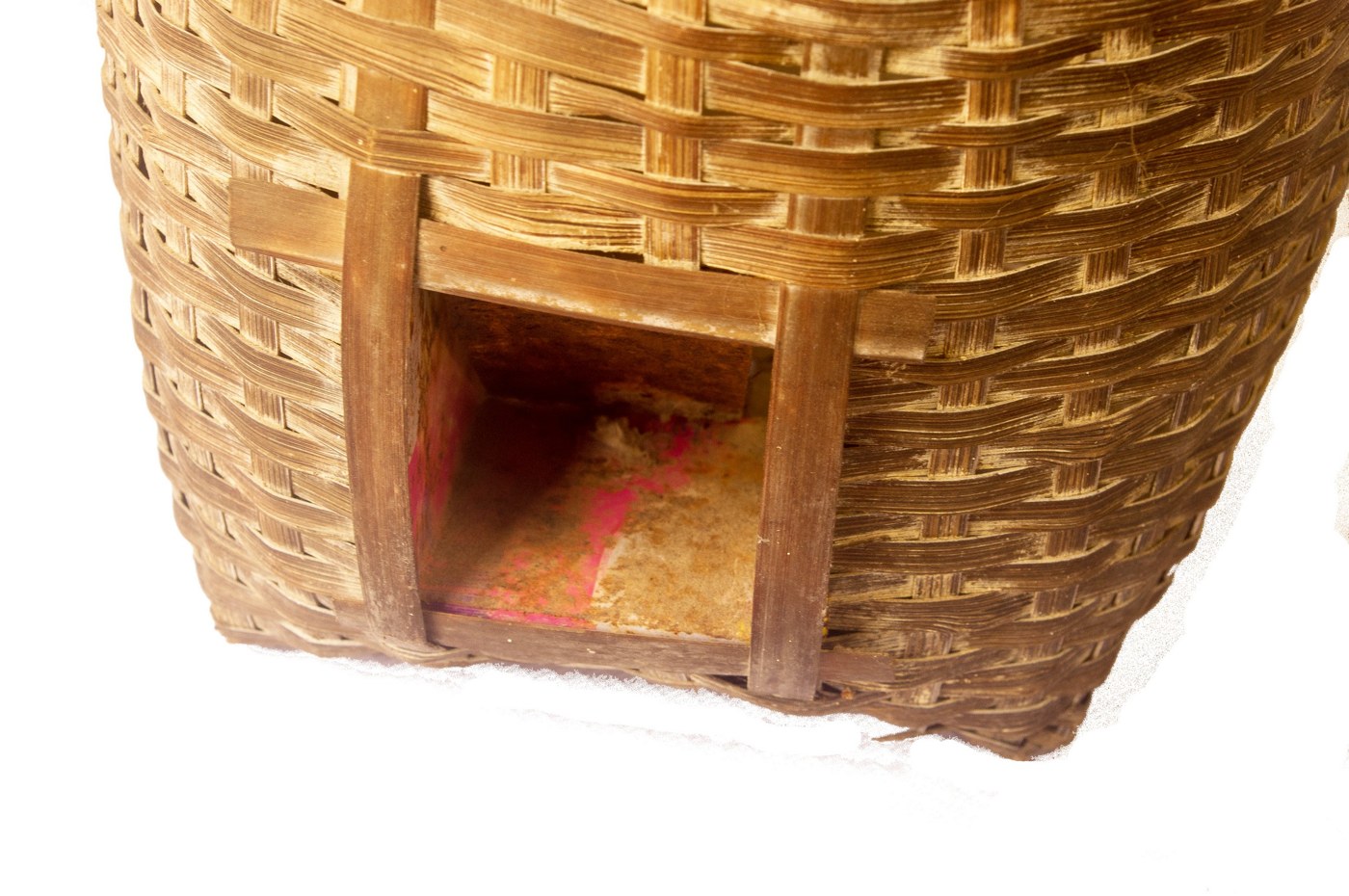
Weave a 10 × 10 cm bottom with no crossed sticks, raise a pot belly about 10 cm high, then gather the standing strips and cross them over the top: no neck, no mouth. Weave small round strips through the standing-strip gap. Cut a 4 × 6 cm rectangular door in the side of the bulge, cut a tin sheet into a flap, fit it inside and fix the door edge with flat strips. The flap opens inward but not outward.
Tools needed:
 Tin Snips
7
7
Real photos
Real photos
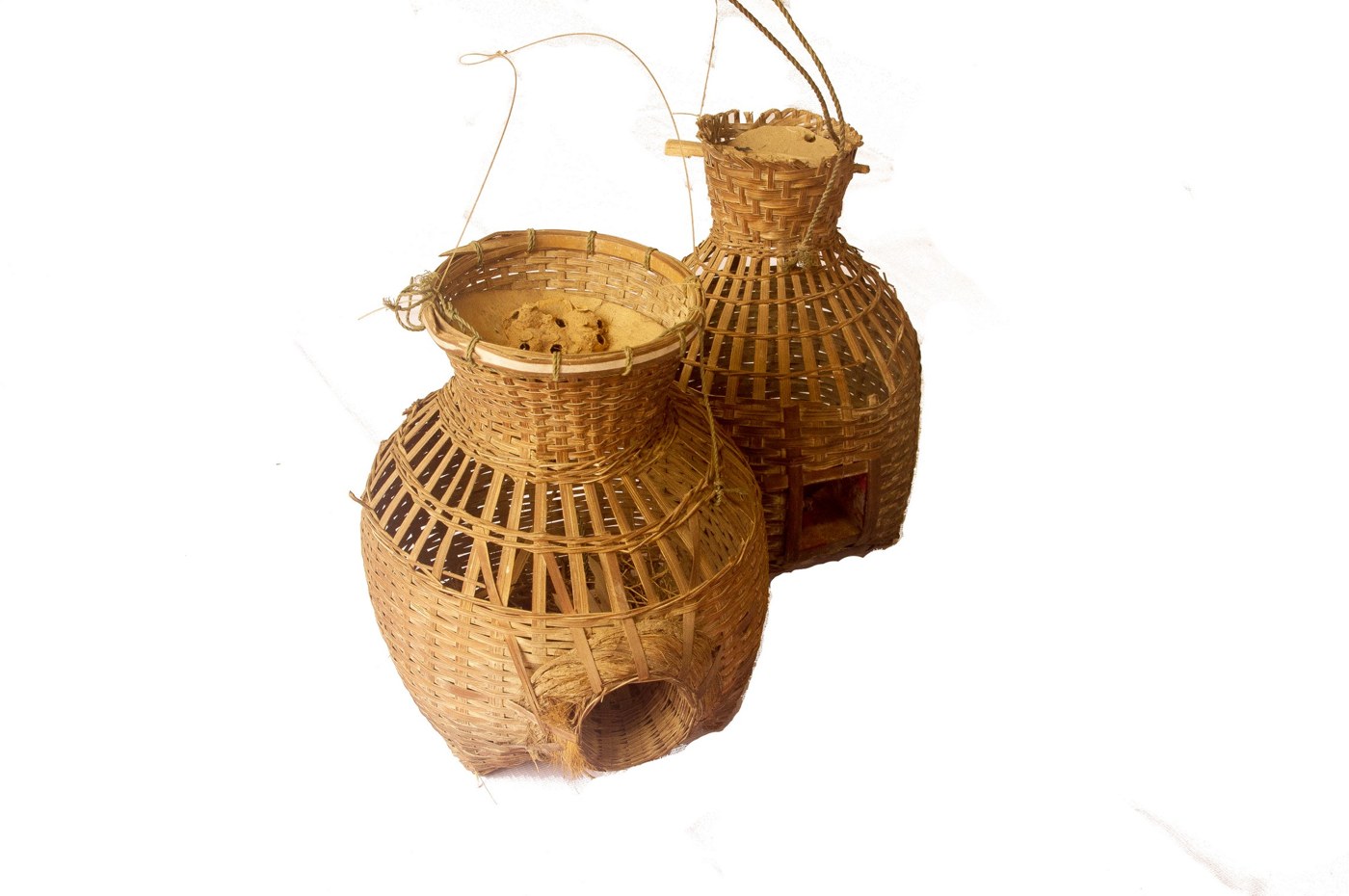
Photos of real tum kop of both kinds from the Nong Bua Khok Folk Museum (Sirindhorn Anthropology Centre, author ทำนุ วรธงไชย (Thamnu Worathongchai), CC BY 4.0).
8
8
How it is used
How it is used
Use several at a time, in the pools in the paddies. Set them in the evening: scoop soil at the pool and set the trap so a little water stays inside, with the entrance at ground level; level the ground at the entrance. Put shrimp, crabs and fish inside, and some at the entrance, and leave it. For the flap type, push the flap up and tip the frogs out through the door.
9
9
Troubleshooting
Troubleshooting
Troubleshooting the tum kop.
Flow
Loading...
10
10
History and limits
History and limits
Frogs feed at night, so farmers set tum kop in the evening at pools where shrimp and fish are stranded. The tum kop takes frogs alive. Beware of sharp tin edges.
Source: Sirindhorn Anthropology Centre, Traditional Objects of Everyday Use database, "ตุ้มกบ", author ทำนุ วรธงไชย (Thamnu Worathongchai), Nong Bua Khok Folk Museum, Buriram (CC BY 4.0 licence).
**Limits** There is no listing for coconut husk, coconut shell or tin sheet, so they are named in the text.
Related Blueprints
These blueprints share knowledge with this one — techniques, materials, or principles that connect them in the learning graph.
CC0 Public Domain
This blueprint is released under CC0. You are free to copy, modify, distribute, and use this work for any purpose, without asking permission.
Support the Maker by purchasing products through their Blueprint where they earn a Maker Commission set by Vendors, or create a new iteration of this Blueprint and include it as a connection in your own Blueprint to share revenue.