ART
BEAUTY & WELLNESS
CRAFT
CULTURE & HISTORY
ENTERTAINMENT
ENVIRONMENT
FOOD & DRINKS
REVERSE ENGINEERING
SCIENCES
SPORTS
TECHNOLOGY
WEARABLES
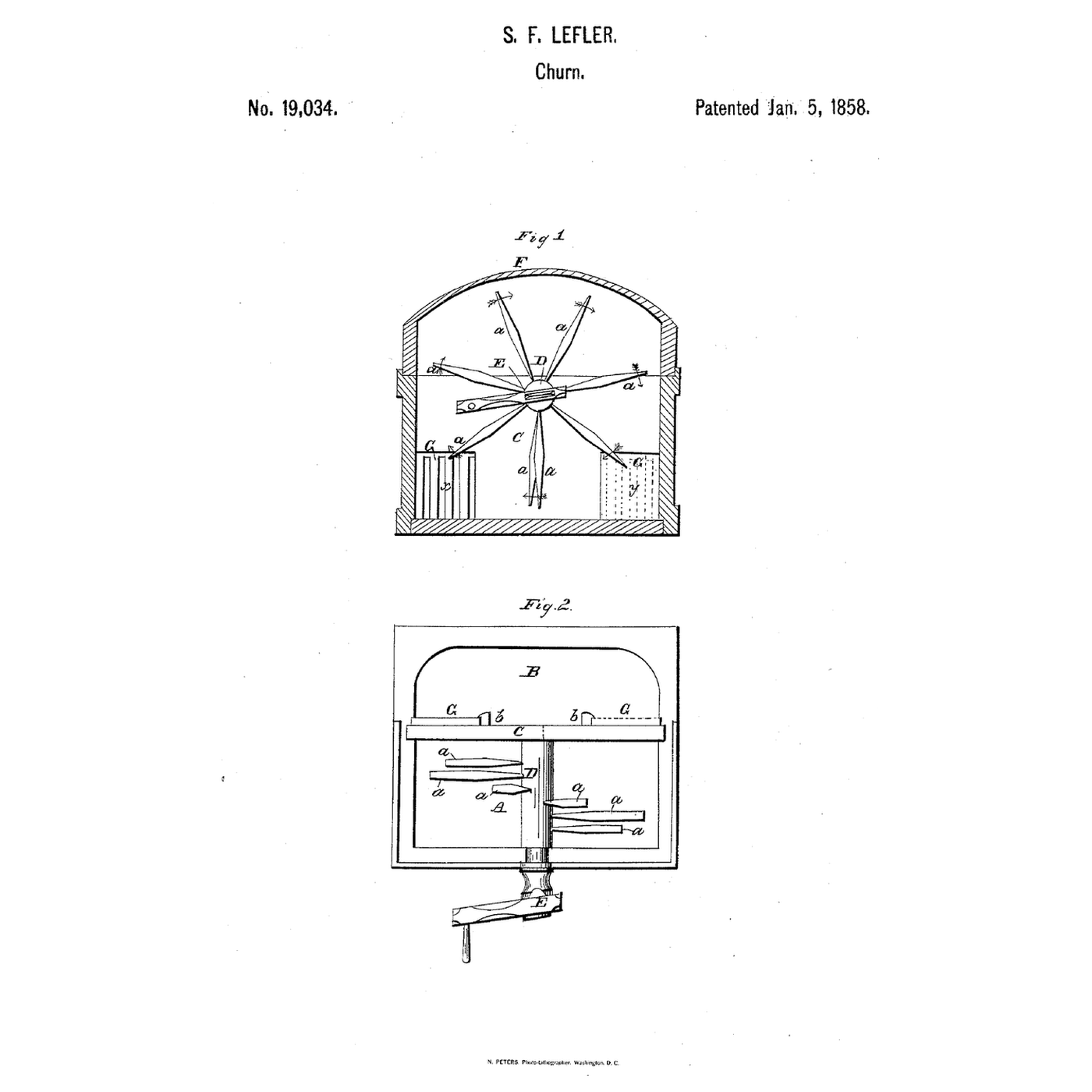


Two-Compartment Gate Churn: Paddles Drive the Cream Through a Slotted Gate Into an Open Side and Round Again
Silas F. Lefler of Racine, Wisconsin, received US 19,034, dated 5 January 1858, for a churn divided into a closed compartment, where spiral paddles turn under a housing, and an open one, joined by gateways at the partition's foot. A slotted gate in one gateway breaks the current, and the cream, driven into the open side, "is exposed to the action of the fresh air" before it returns.
This rung prints the partition, gate and paddle hubs, builds the churn and makes and gathers butter.
Intermediate
About 4 hours, plus printing
Instructions
1
1
A loop through the open side
A loop through the open side
Loading Jupyter Notebook...
2
2
Cream sent round a divided vessel, before it
Cream sent round a divided vessel, before it
True splits the cream round a separator; Lefler drives it in a loop through a gate and an open side.
3
3
Read US 19,034
Read US 19,034
"The shaft with the paddles being then revolved, the cream in the close compartment (A) will be forced through the gate (G), thus breaking its direct motion and causing it to force its way into the open compartment (B) in a highly agitated state most propitious for the formation of butter."
4
4
Print the parts
Print the parts
Print the partition with its gateways and guideways (/uploads/blueprints/two-compartment-gate-churn-partition.stl), the slotted gate (/uploads/blueprints/two-compartment-gate-churn-gate.stl) and three paddle hubs (/uploads/blueprints/two-compartment-gate-churn-paddle-hub.stl). The partition needs a bed at least 240 mm long. Print in PETG at 0.2 mm layers, 30 % infill, 4 walls; wash before first use.
Materials for this step:
 PETG Filament1 piece
Tools needed:
 FDM 3D Printer
5
5
Box, partition and shaft
Box, partition and shaft
Use a rectangular food-grade container about 240 by 170 mm and 180 mm deep. Stand the partition across its length 50 mm from one side, sealed at its ends with food-safe silicone. Run a 10 mm square hardwood shaft through the container's ends in the larger compartment, the three hubs on it each turned 40 degrees, with a crank outside.
Materials for this step:
 Food-Grade Storage Container1 piece
 Silicone Sealant1 piece
 Hardwood Dowels1 piece
 Pine Board1 piece
 Wood Glue1 piece
Tools needed:
 Hand Saw
 Cordless Drill
 Drill Bit Set
6
6
Housing and gate
Housing and gate
Bend a strip of thin stainless sheet over the paddles as the housing, screwed to the container's ends. Slide the gate into the guideways in front of the gateway on the side where the paddles rise.
Materials for this step:
 Stainless Steel Sheet - 3041 piece
 Machine Screws1 piece
Tools needed:
 Tin SnipsCordless Drill
 Screwdriver Set
7
7
The patent drawing
The patent drawing
US 19,034 drawing sheet, public domain (expired patent).
8
8
Churn, then gather
Churn, then gather
Let the heavy cream stand until it reaches about 15 °C, checked with the thermometer. Pour 2 litres into the open side. Crank steadily; time until the butter comes. Move the gate to the other gateway and crank on until the butter has gathered in the open side before it, then lift it out. Pour off the buttermilk, add cold water, churn a little and pour off again until it runs clear; work in a pinch of salt and weigh the butter.
Materials for this step:
 Heavy Cream2000 ml
 Coarse Sea Salt1 piece
 Water1 piece
Tools needed:
 Leave-In Probe Thermometer
 Stopwatch
 Digital Kitchen Scale
 Stainless Steel Mixing Bowl (Large)
9
9
Troubleshooting
Troubleshooting
Two-compartment churn troubleshooting.
Flow
Loading...
10
10
History and honest limits
History and honest limits
**Silas F. Lefler** of Racine, Wisconsin, US 19,034, 5 January 1858. He made the partition and shaft removable so the churn could be cleaned thoroughly. He claimed the churn of an open and a closed compartment with gateways and a gate passing the cream in a continuous current and gathering the butter. A stainless strip stands in for his housing; a container and printed parts for the rest. FDM prints hold food in their layer lines, so wash well and replace when worn.
Materials
11- 1 piecePlaceholder
- 1 piecePlaceholder
- 1 piecePlaceholder
- 1 piecePlaceholder
- 1 piecePlaceholder
- 1 piecePlaceholder
- 1 piecePlaceholder
- 1 piecePlaceholder
- 2000 mlPlaceholder
- 1 piecePlaceholder
- 1 piecePlaceholder
Tools Required
10- Placeholder
- Placeholder
- 1 vendor sell this, none ship to you yetPlaceholder
- Placeholder
- Placeholder
- Placeholder
- Placeholder
- Placeholder
- Placeholder
- Placeholder
Related Blueprints
These blueprints share knowledge with this one — techniques, materials, or principles that connect them in the learning graph.
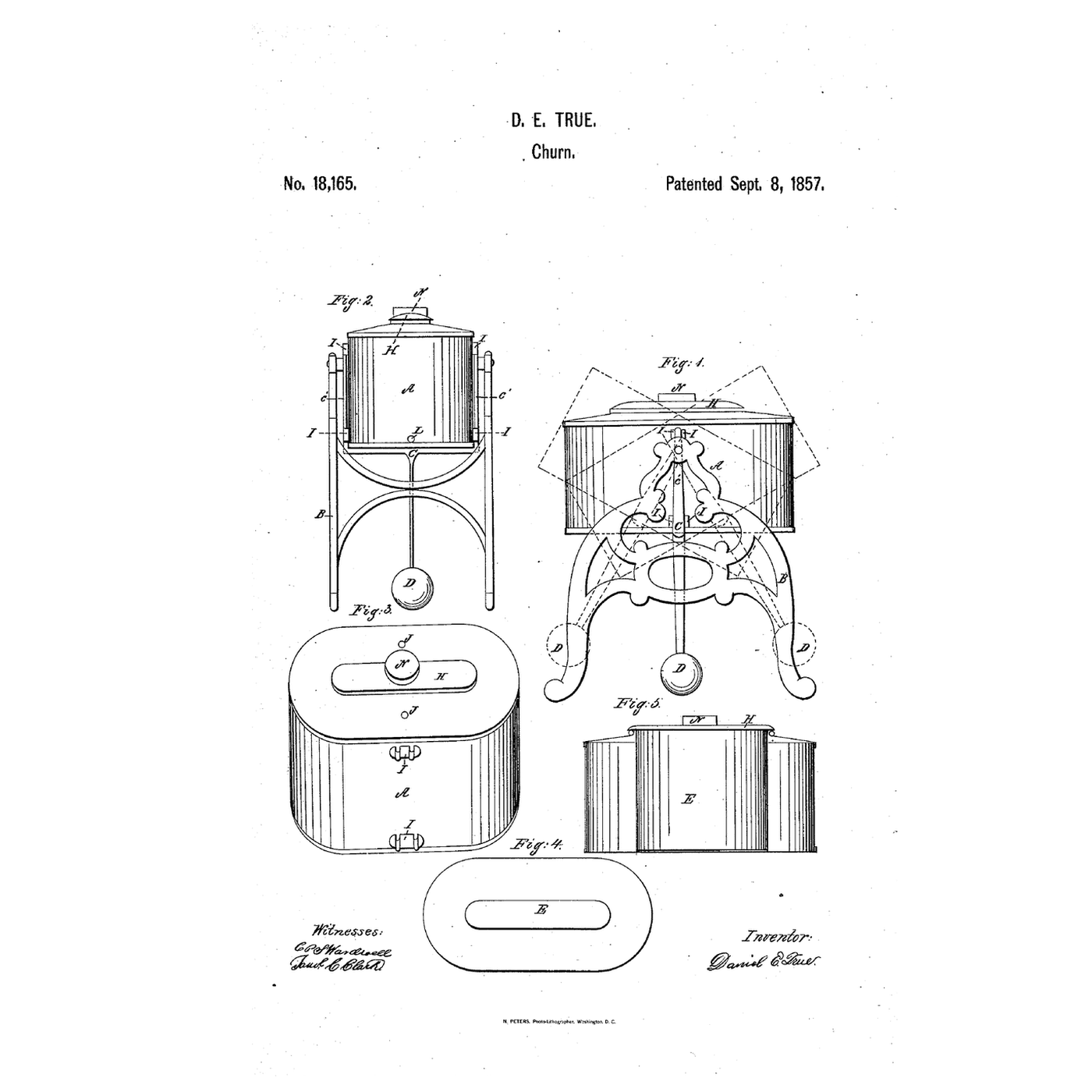
Two-Current Separator Rocking Churn: An Oval Cistern Split Round a Separator, the Currents Collide at Each Tip
by YourGrandma
FOOD & DRINKS
3
0
0
0
0
0
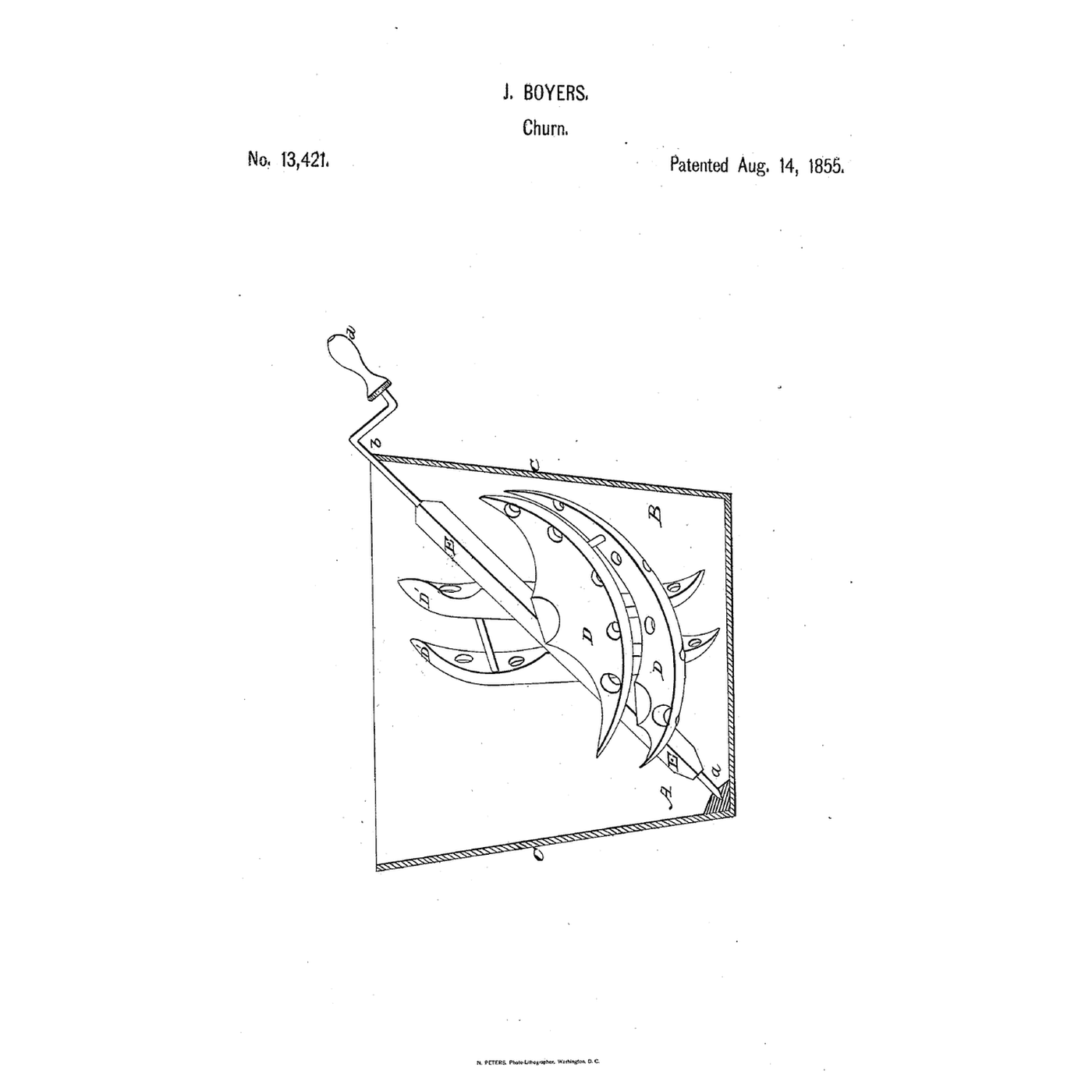
Diagonal Screw Dasher Churn: Dished Blades on a Slanting Shaft Twist the Butter Together
by Hoop
Woodworking
2
0
0
0
0
0
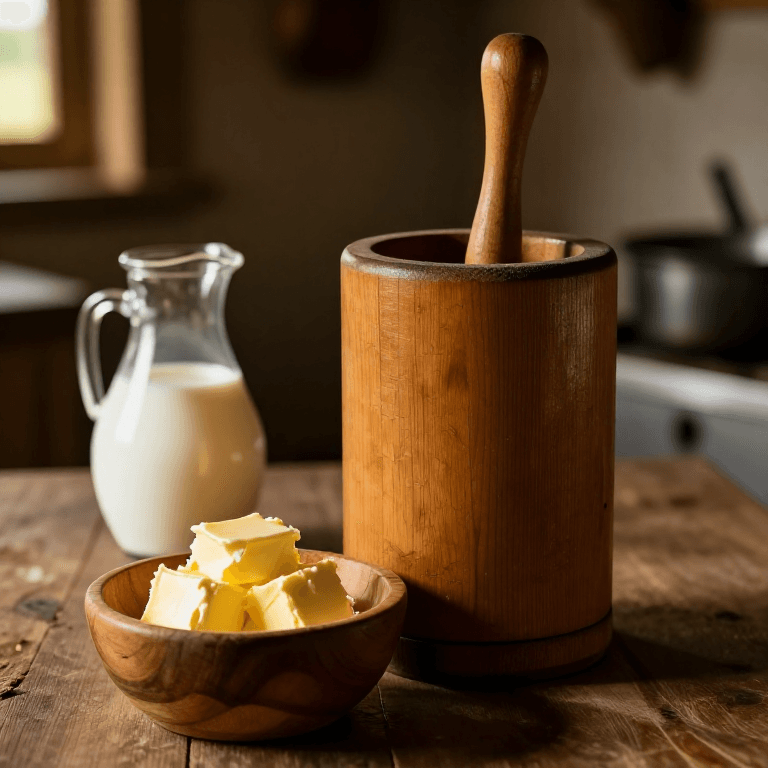
Churning Butter from Cream — The 5,000-Year-Old Fat Separation
by TheChef
CRAFT
47
0
0
0
0
0
CC0 Public Domain
This blueprint is released under CC0. You are free to copy, modify, distribute, and use this work for any purpose, without asking permission.
Support the Maker by purchasing products through their Blueprint where they earn a Maker Commission set by Vendors, or create a new iteration of this Blueprint and include it as a connection in your own Blueprint to share revenue.