ART
BEAUTY & WELLNESS
CRAFT
CULTURE & HISTORY
ENTERTAINMENT
ENVIRONMENT
FOOD & DRINKS
REVERSE ENGINEERING
SCIENCES
SPORTS
TECHNOLOGY
WEARABLES


Two-Part Epoxy Glue: Bis-Phenol Resin Thinned with Allyl Glycidyl Ether, Hardened with Diethylene Triamine
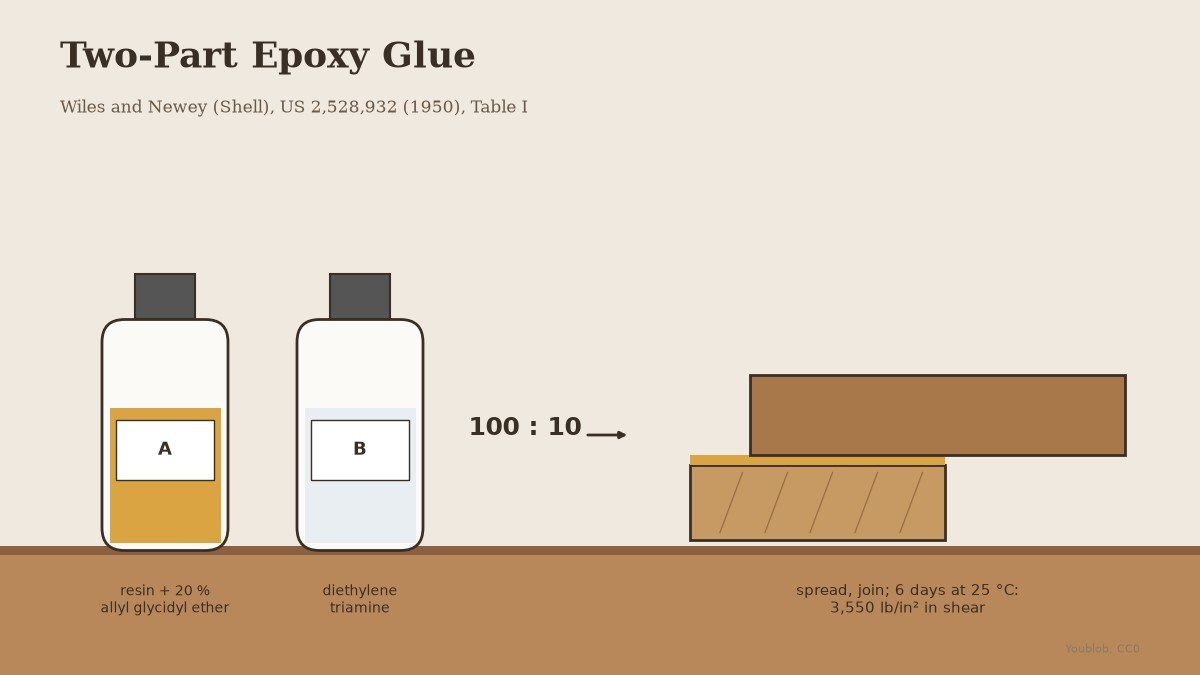
Bis-phenol epoxy resin is too thick to spread, so it is thinned with a fifth of its weight of allyl glycidyl ether, which joins the cure. That is part A; part B is diethylene triamine. Stir 10 parts of B into 100 of A, spread, join, and it hardens at room temperature: after six days at 25 °C, block joints held 3,550 lb/in² (Wiles and Newey, Shell, US 2,528,932, 1950). It bonds wood, metal and resins.
The picture: our drawing of the two bottles and a glued joint.
Intermediate
A week to full strength
Instructions
1
1
Make part A
Make part A
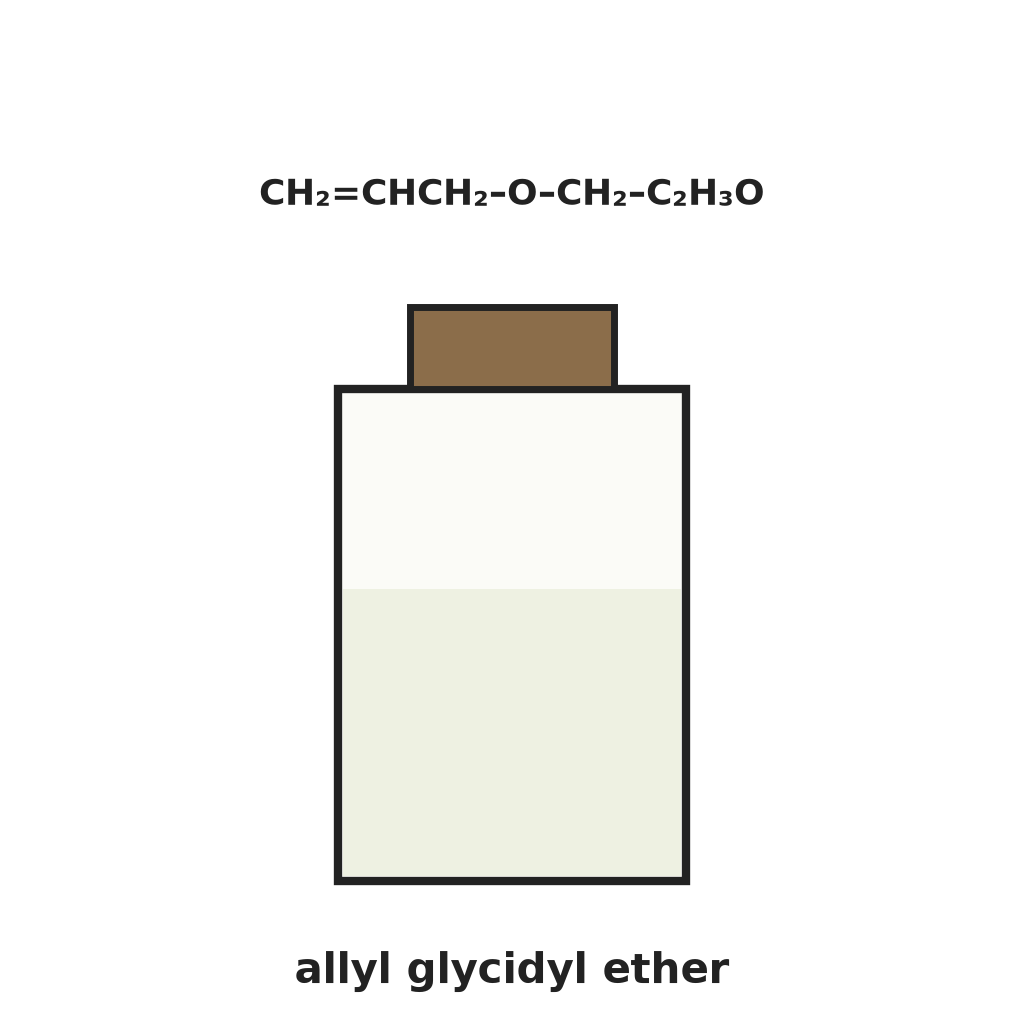
Warm 400 g bis-phenol epoxy resin until it flows (our step; it softens at 43 °C) and stir in 100 g allyl glycidyl ether, to a smooth, spreadable syrup. Bottle it.
Materials for this step:
 Bisphenol Epoxy Resin400 g
 Allyl Glycidyl Ether100 g
Tools needed:
 Borosilicate Beaker
 Hot Plate
 Stirrer
 Thermometer
 Digital Kitchen Scale
 Glass Bottles with Caps
 Rubber Gloves
2
2
Bottle part B
Bottle part B
Bottle diethylene triamine separately and keep it closed: it is strongly alkaline and burns skin. You need 10 g for every 100 g of part A.
Materials for this step:
 Diethylene Triamine50 g
Tools needed:
Glass Bottles with CapsRubber Gloves3
3
Mix only what you need
Mix only what you need
Weigh part A into a cup, add a tenth of its weight of part B, and stir well. It begins to cure at once, so mix just before gluing.
Tools needed:
 Measuring CupDigital Kitchen ScaleStirrerRubber Gloves
4
4
Spread, join, wait
Spread, join, wait
Spread a thin coat on both faces and press them together. At room temperature it sets in half an hour to a day and reaches full strength in one to two weeks; warmth speeds it up.
Tools needed:
 Glue Brush
5
5
Mixing table
Mixing table
Loading Jupyter Notebook...
Materials
3- Placeholder
- 100 gPlaceholder
- Placeholder
This blueprint makes

Related Blueprints
These blueprints share knowledge with this one — techniques, materials, or principles that connect them in the learning graph.
Hazardous
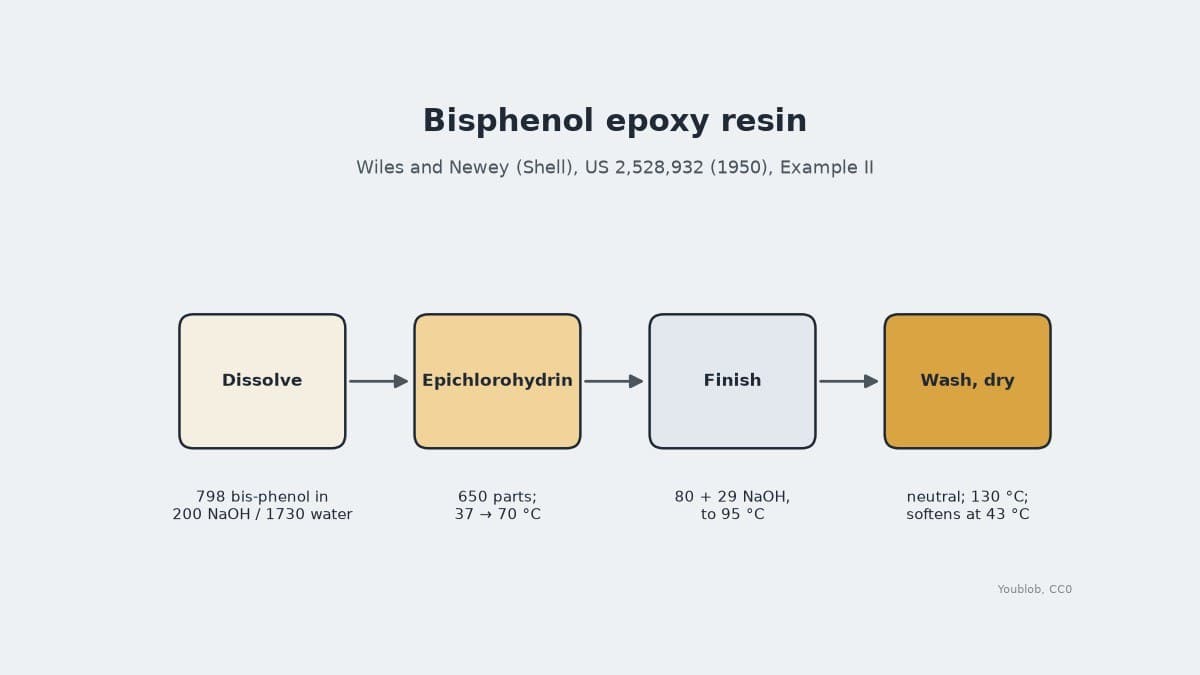
Bisphenol Epoxy Resin: Bisphenol A and Epichlorohydrin in Caustic Soda, Wiles and Newey 1950
by Charlie
Polymer
0
0
0
0
0
0
Hazardous
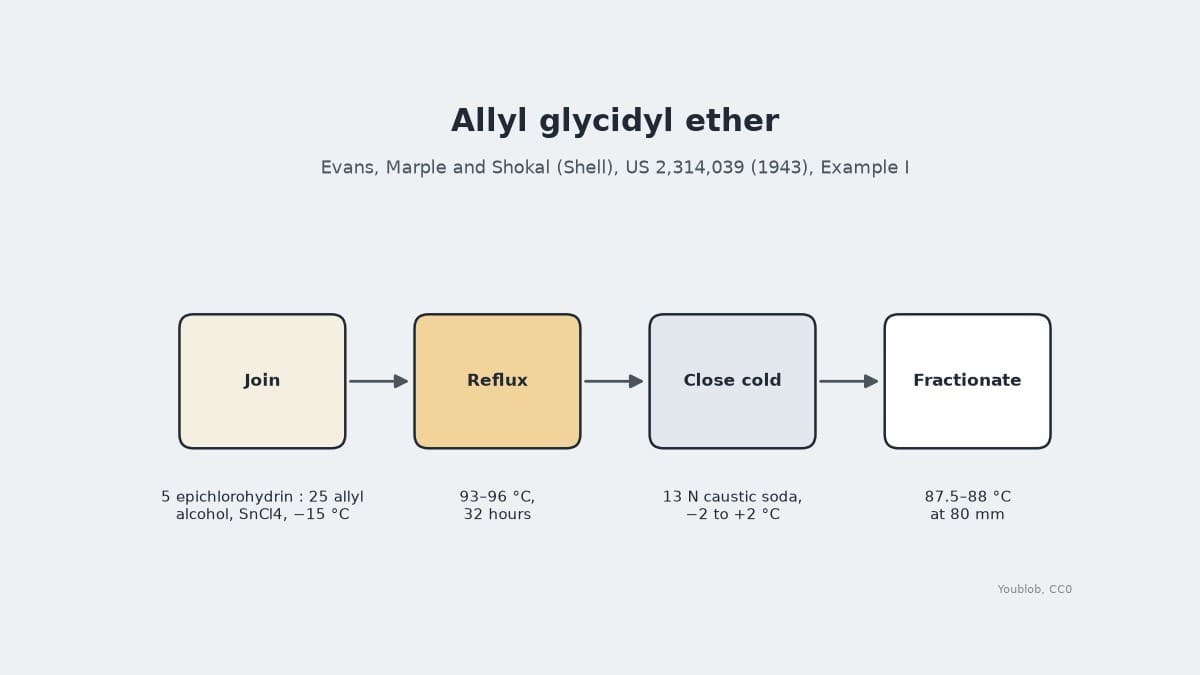
Allyl Glycidyl Ether: Allyl Alcohol and Epichlorohydrin, Evans, Marple and Shokal 1943
by Charlie
Organic
1
0
0
0
0
0
Hazardous
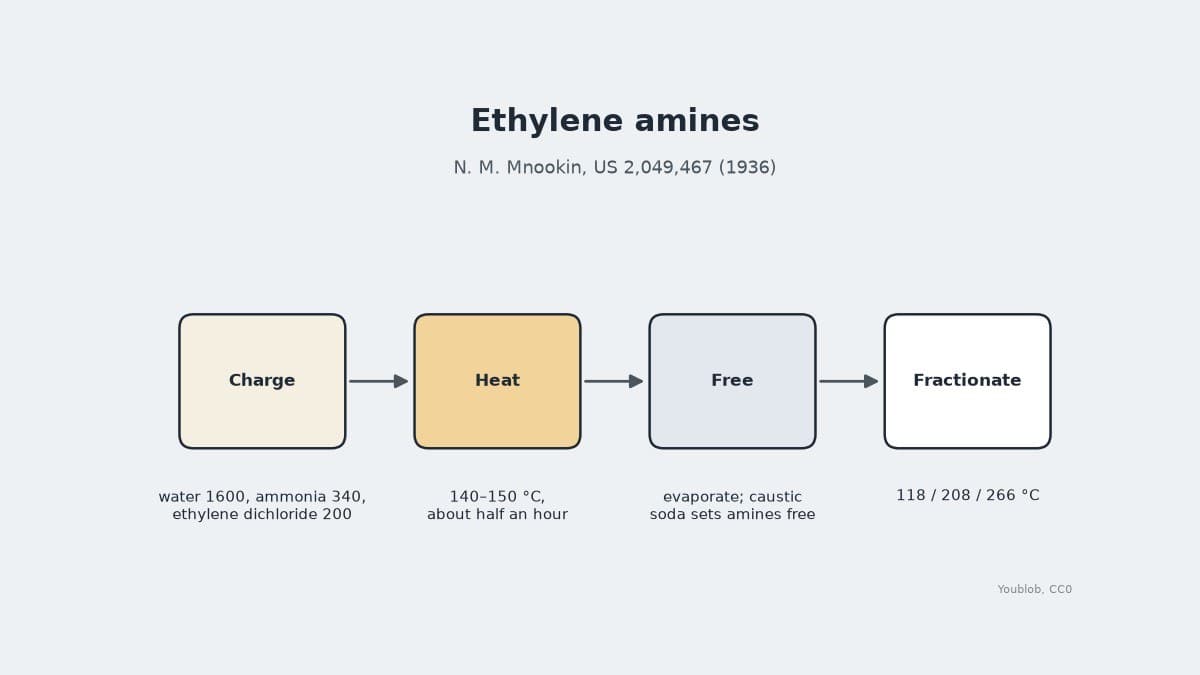
Ethylene Amines: Ethylene Dichloride Heated with Ammonia Water, Mnookin 1936
by Charlie
Organic
1
0
0
0
0
0
CC0 Public Domain
This blueprint is released under CC0. You are free to copy, modify, distribute, and use this work for any purpose, without asking permission.
Support the Maker by purchasing products through their Blueprint where they earn a Maker Commission set by Vendors, or create a new iteration of this Blueprint and include it as a connection in your own Blueprint to share revenue.