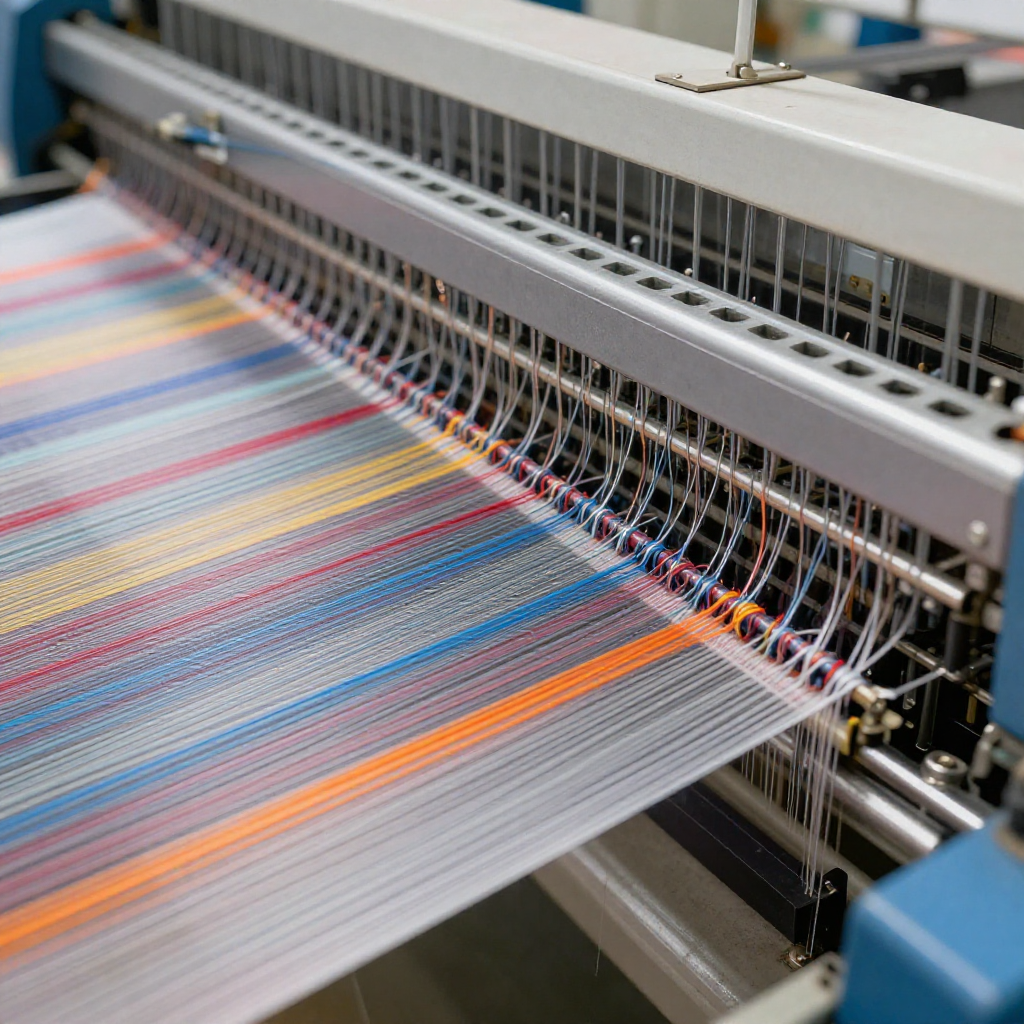

Warp Knitting — The Fastest Fabric Formation Technology in Textiles
Warp knitting is a fabric formation method in which hundreds or thousands of yarns, each fed from its own warp beam, are simultaneously interlocked into loops by a row of independently controlled needles. Unlike weft knitting (where a single yarn zigzags across the fabric width), warp knitting uses one yarn per needle — every warp thread forms its own column of loops, and neighboring columns are connected by lateral lapping movements of the yarn guides. The result is a fabric that combines the stretch and conformability of knitting with production speeds that dwarf all other textile processes.
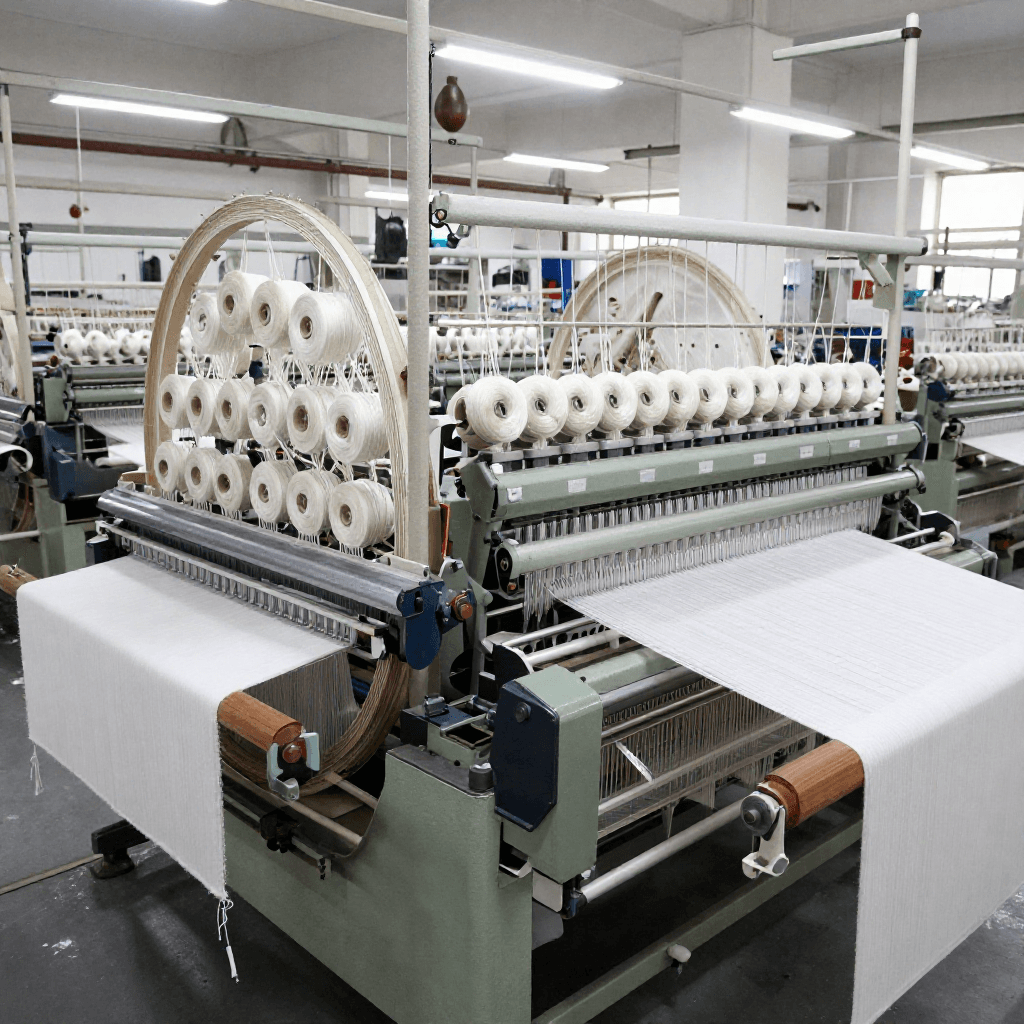
The concept dates to the stocking frame invented by William Lee in 1589, but modern warp knitting emerged in the 1940s–1960s when Karl Mayer and Liba developed high-speed tricot and raschel machines with electronic guide bar control. A modern Karl Mayer tricot machine runs at 3,000–4,000 courses per minute — producing fabric at up to 3 meters per minute across a 3.3-meter width. That is approximately 600 square meters of fabric per hour from a single machine, making warp knitting the fastest fabric-forming technology in existence, roughly 10 times faster than weaving and 3–5 times faster than circular weft knitting.
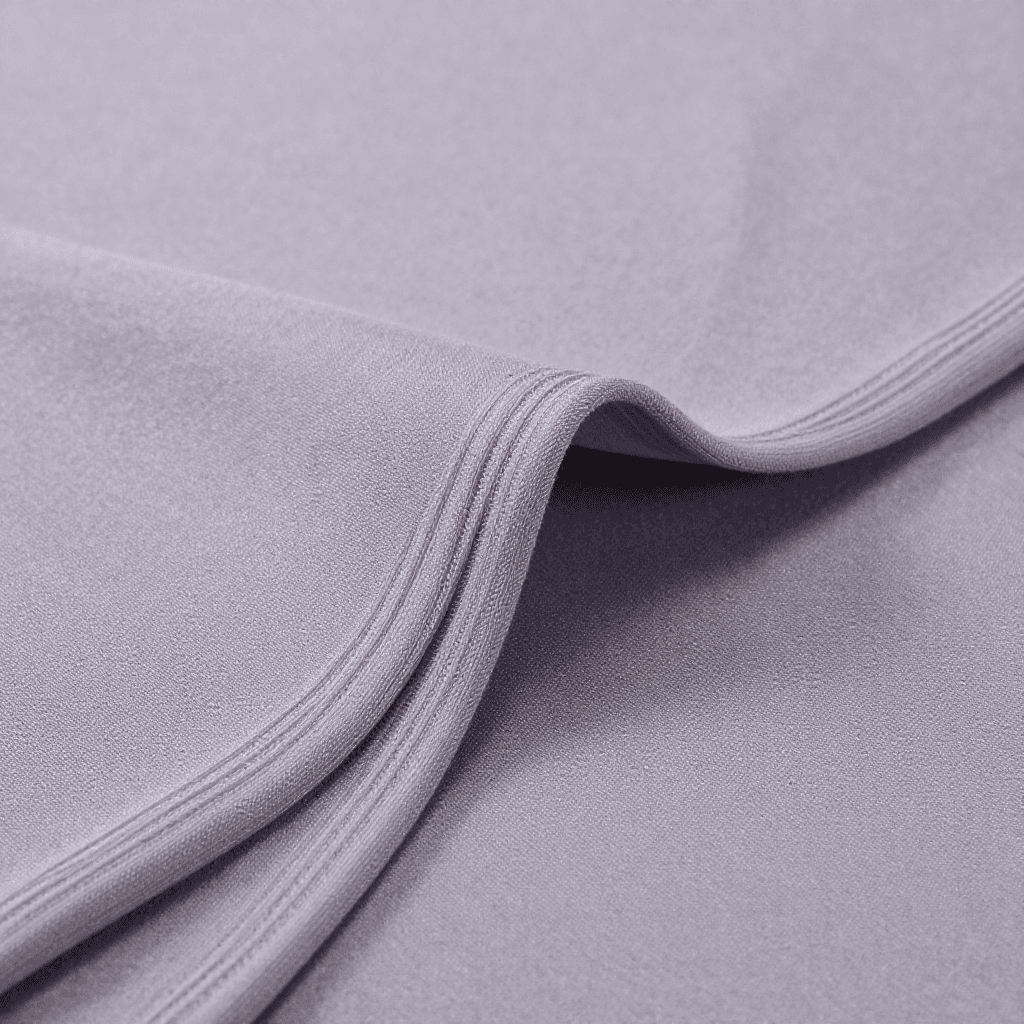
Warp-knitted fabrics are everywhere: lingerie and foundation garments (tricot's smooth, run-resistant structure), sportswear and swimwear (warp knit with spandex), mosquito nets (raschel net), lace (raschel lace machines with Jacquard pattern control), automotive seat covers, geotextiles, agricultural shade cloth, and technical textiles for composites. The technology's ability to integrate multiple yarn types (polyester, nylon, spandex, glass fiber, carbon fiber) in a single fabric construction makes it uniquely versatile. Over 5 million tonnes of warp-knitted fabric are produced globally per year.
Instructions
Understand the difference between weft and warp knitting
Understand the difference between weft and warp knitting
In weft knitting (the type done by hand knitters and circular knitting machines), a single yarn runs horizontally across the fabric, forming loops in successive needles. If one loop breaks, the fabric can 'run' — unravel along the column. In warp knitting, each needle has its own dedicated yarn running vertically (in the warp direction). These yarns form loops that interlock with neighboring yarns through controlled lateral movements. Because each needle has its own yarn, warp-knit fabric is run-resistant — a broken yarn affects only one loop, not the entire column. This structural difference makes warp knitting ideal for lingerie, hosiery, and technical fabrics where dimensional stability matters.
Prepare the warp beams
Prepare the warp beams
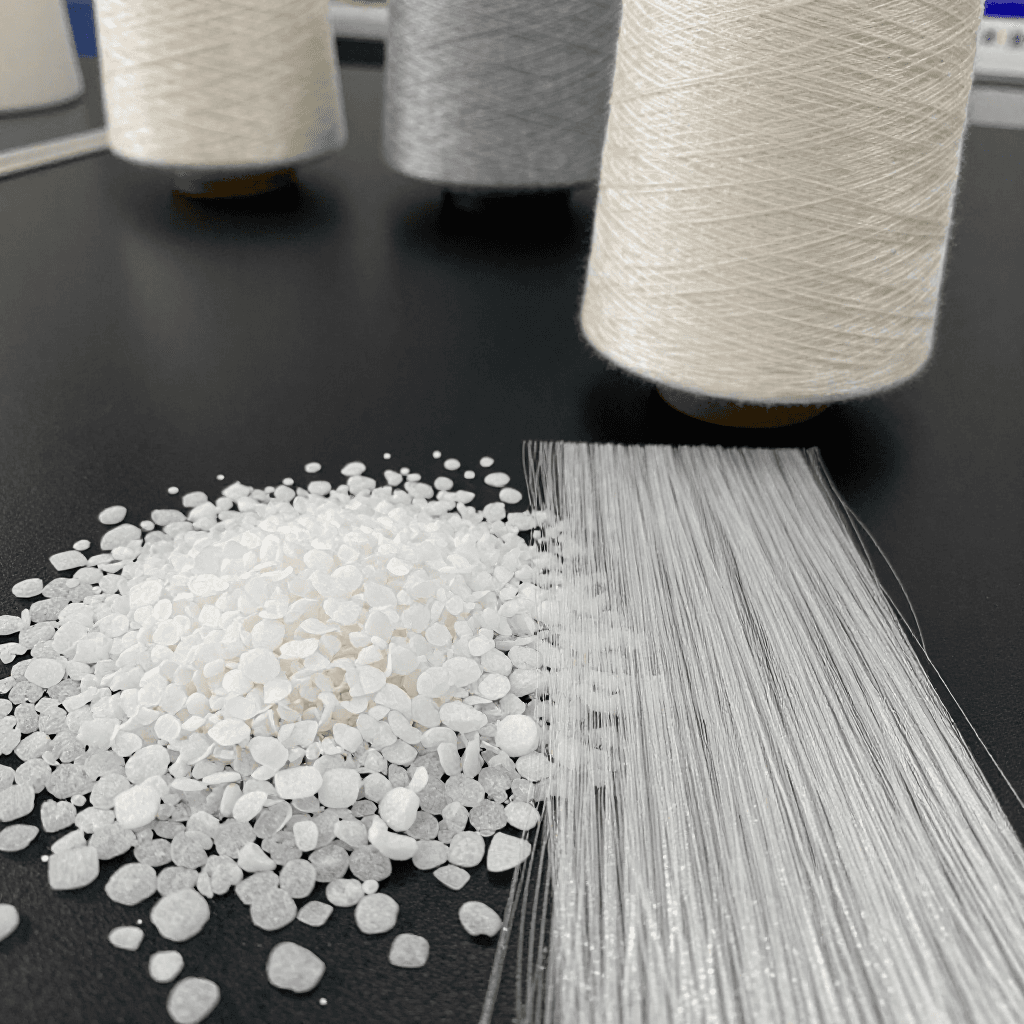
Wind thousands of parallel yarns onto sectional warp beams — large cylindrical rolls that mount on the warp knitting machine. A typical tricot machine requires 2–4 warp beams, each carrying 2,000–5,000 yarn ends. All yarns on a beam must be at identical tension and length — even small variations cause visible defects (tight or loose loops) in the fabric. Warp preparation for warp knitting is identical in principle to warp preparation for weaving, and it is the most time-consuming part of the process — beam changes can take hours on wide machines.
Materials for this step:
 Warp Yarn2 kg
Thread the guide bars
Thread the guide bars
Each warp beam feeds its yarns through a guide bar — a long, flat bar spanning the machine width, fitted with one guide eye per yarn. The guide bar holds the yarns in position and moves them laterally (left or right) between needle columns to create the interlocking pattern. A tricot machine has 2–4 guide bars; a raschel machine can have up to 78. Each guide bar moves independently according to a programmed pattern — the combination of all guide bar movements determines the fabric structure. The guide bars are the 'loom' of warp knitting: they define the pattern as heddles define a weave.
Observe the knitting cycle: overlap and underlap
Observe the knitting cycle: overlap and underlap
The warp knitting cycle has two fundamental movements. The overlap is a lateral movement of the guide bar while the needles are in the hooking position — the yarn wraps around a needle to form a loop. The underlap is a lateral movement while the needles are in the non-hooking position — the yarn floats across the back of the fabric to a new needle position. The overlap determines which needle each yarn loops around; the underlap determines how far each yarn travels laterally between courses. Together, they define the fabric structure — from simple tricot (1-needle overlap, 1-needle underlap) to complex multibar patterns.
Produce a basic tricot fabric
Produce a basic tricot fabric
Tricot (from the French tricoter, to knit) is the simplest and most common warp-knit structure. It uses two guide bars. The front guide bar laps in one direction (e.g., right), and the back guide bar laps in the opposite direction (left). This creates a fabric with a smooth face showing fine vertical ribs (wales) and a textured back showing horizontal floats. Tricot is the standard fabric for lingerie, linings, and brushed fleece. A Karl Mayer HKS tricot machine produces this fabric at 3,000–4,000 courses per minute — each course adds one row of loops across the full machine width simultaneously.
Produce a raschel net or lace fabric
Produce a raschel net or lace fabric
Raschel machines use latch needles (instead of tricot's compound needles) and can accommodate much heavier and more varied yarns. With Jacquard-controlled guide bars, raschel machines produce open-work structures: nets, meshes, and intricate lace patterns. The Jacquard system individually controls the lapping movement of each yarn in a guide bar, allowing unique patterns per yarn — a capability that produces the complex floral and geometric designs of machine-made lace. Raschel lace machines with 78 guide bars and Jacquard control produce fabrics of astonishing complexity at industrial speeds.
Integrate spandex for stretch fabrics
Integrate spandex for stretch fabrics
Warp knitting is the primary technology for producing stretch fabrics — swimwear, activewear, shapewear, and compression garments. Spandex yarn is fed through a dedicated guide bar at controlled tension. The spandex is knitted into the fabric structure alongside polyester or nylon ground yarns. The guide bar pattern determines whether the spandex provides one-way stretch (warp or weft direction) or two-way stretch (both directions). A typical swimwear fabric contains 78–82% nylon and 18–22% spandex, warp-knitted on a Karl Mayer machine — the same fabric structure that enabled the modern competitive swimsuit.
Produce spacer fabrics for cushioning
Produce spacer fabrics for cushioning
Double-needle-bar raschel machines can produce three-dimensional spacer fabrics — two outer fabric layers connected by a layer of monofilament yarns that hold the layers apart, creating a compressible, breathable sandwich structure. The spacer layer thickness can be 2–20 mm. These fabrics replace foam padding in mattresses, shoe insoles, car seat cushions, and sports padding because they are breathable (air circulates through the spacer layer), washable, recyclable (single polymer), and maintain their resilience through millions of compression cycles.
Produce multiaxial fabrics for composites
Produce multiaxial fabrics for composites
Warp knitting machines adapted for technical textiles can produce multiaxial fabrics — layers of straight (uncrimped) yarns oriented at 0°, 90°, +45°, and -45°, held together by a light warp-knit stitch. These fabrics are used as reinforcement in fiber-reinforced composites for wind turbine blades, aircraft structures, boats, and automotive components. Because the reinforcing fibers remain straight (not crimped as in woven fabric), multiaxial warp-knit fabrics deliver higher mechanical properties per unit weight than woven reinforcements. The yarns can be glass fiber, carbon fiber, or aramid (Kevlar).
Dye and finish the warp-knit fabric
Dye and finish the warp-knit fabric
Warp-knit fabrics are dyed and finished on the same equipment used for woven fabrics — jet dyeing machines, stenter frames, and calenders. However, warp-knit fabrics require careful tension control during wet processing because they are more extensible than woven fabrics and can distort permanently if overstretched. Heat-setting on a stenter at 180–200°C stabilizes the dimensions of polyester and nylon warp knits. For brushed fleece (a major warp-knit product), the fabric surface is raised on a napping machine — rotating wire-covered rollers pull fiber loops to the surface, creating the soft, insulating pile of fleece jackets and blankets.
Understand the economics of warp knitting
Understand the economics of warp knitting
Warp knitting's speed advantage over other fabric-forming technologies is dramatic. A single Karl Mayer HKS 3-1 tricot machine running at 3,500 courses per minute with a gauge of 28 needles per inch across 130 inches produces approximately 500–600 square meters of fabric per hour. A comparable weaving loom (rapier, 600 picks per minute, 130 inches wide) produces approximately 40–60 square meters per hour. Warp knitting is 10 times faster. The trade-off is flexibility: changing the fabric structure requires changing the warp beams and guide bar setup — a process taking hours to days, versus minutes for a weft knitting machine. Warp knitting excels at high-volume production of standardized fabrics.
Understand warp knitting's place in textile technology
Understand warp knitting's place in textile technology
Warp knitting occupies a unique position between weaving and weft knitting. It produces fabrics faster than either, with properties that can mimic both — stable and dimensionally controlled like woven fabric, yet stretchy and conformable like knit fabric. The technology's evolution from mechanical pattern control (chain links) to electronic Jacquard (individual needle control) has expanded its capability from simple lingerie tricot to complex technical textiles for aerospace composites. Karl Mayer, the dominant manufacturer, continues to push speeds and capabilities — recent machines incorporate on-machine quality monitoring, predictive maintenance, and digital pattern design. Warp knitting represents the textile industry's closest approach to continuous-process manufacturing — a relentless optimization of the loop-forming principle that has driven textile machinery since William Lee's stocking frame in 1589.
Materials
1- Placeholder
Connected Blueprint Materials
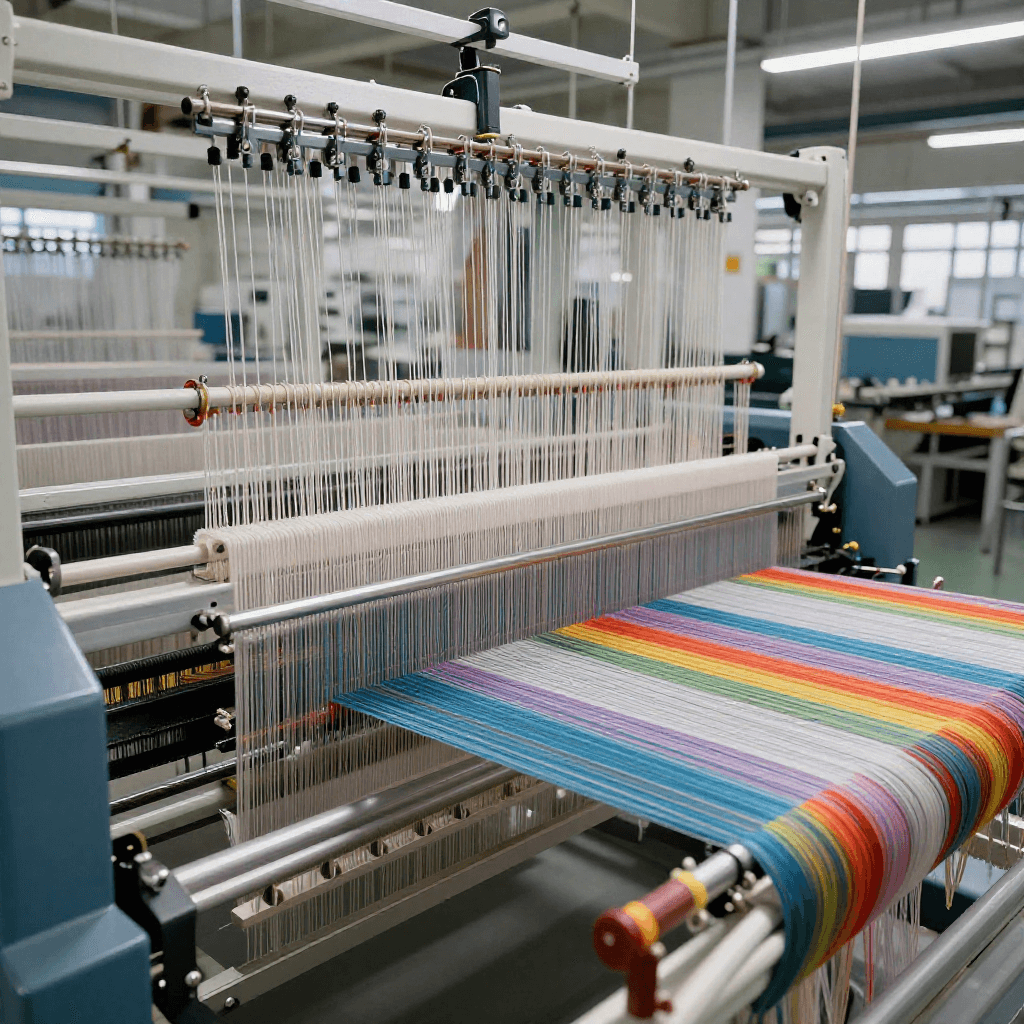
The Rapier Loom — Shuttleless Weaving That Ended 200 Years of Shuttle Technology
by Tex
Textile & Leather
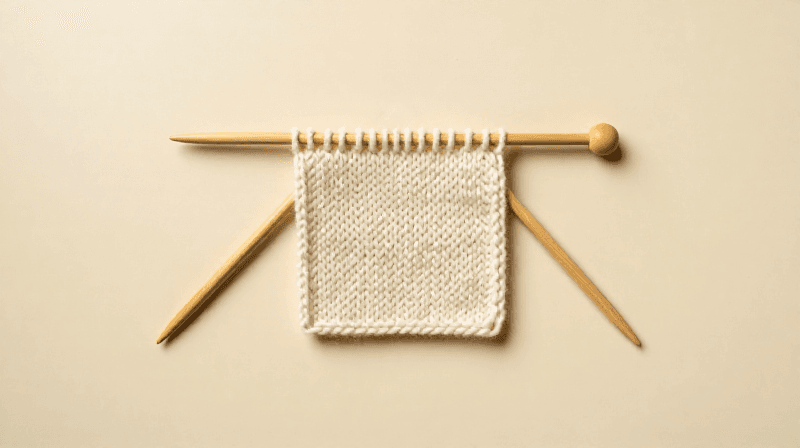
Knitting a Flat Swatch on Two Needles — The Knit Stitch and Garter Stitch
by Tex
Textile & Leather
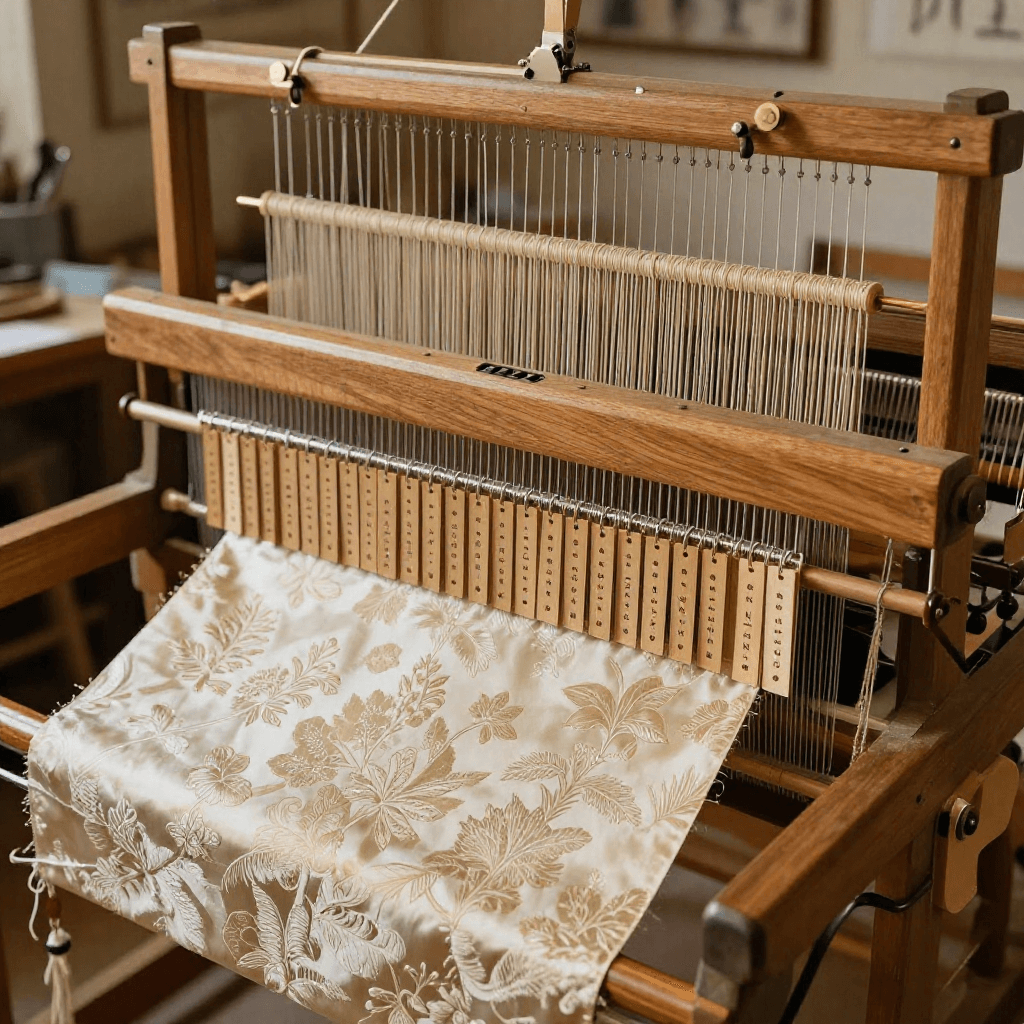
The Jacquard Mechanism — Punch Card Programmable Pattern Weaving
by Tex
Textile & Leather
This blueprint makes
Related Blueprints
These blueprints share knowledge with this one — techniques, materials, or principles that connect them in the learning graph.
CC0 Public Domain
This blueprint is released under CC0. You are free to copy, modify, distribute, and use this work for any purpose, without asking permission.
Support the Maker by purchasing products through their Blueprint where they earn a Maker Commission set by Vendors, or create a new iteration of this Blueprint and include it as a connection in your own Blueprint to share revenue.