Collaboration
ART
BEAUTY & WELLNESS
CRAFT
CULTURE & HISTORY
ENTERTAINMENT
ENVIRONMENT
FOOD & DRINKS
REVERSE ENGINEERING
SCIENCES
SPORTS
TECHNOLOGY
WEARABLES


Spring-Bow Churn: A Bow With Two Springs Keeps Its Cord Tight Round a Screw Whirl on the Crank Shaft
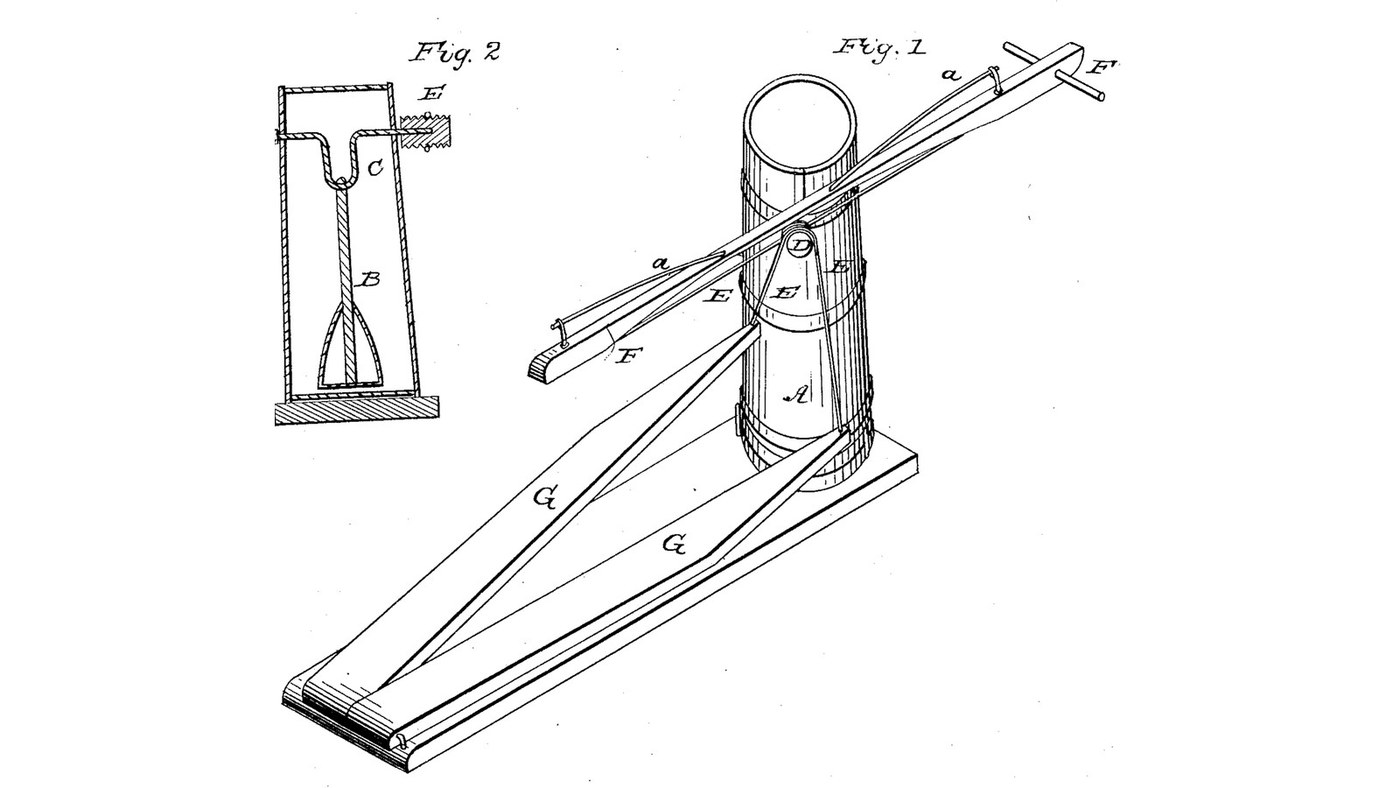
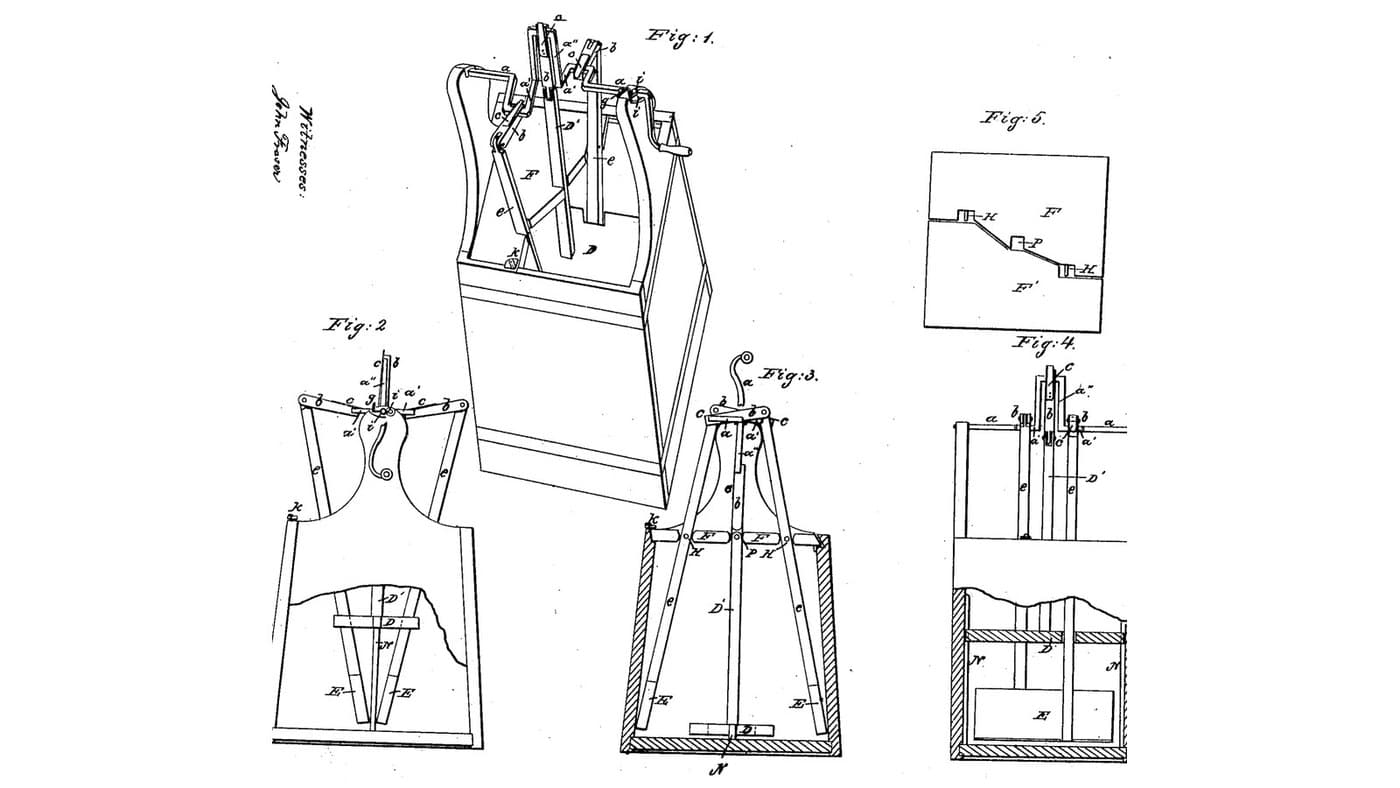
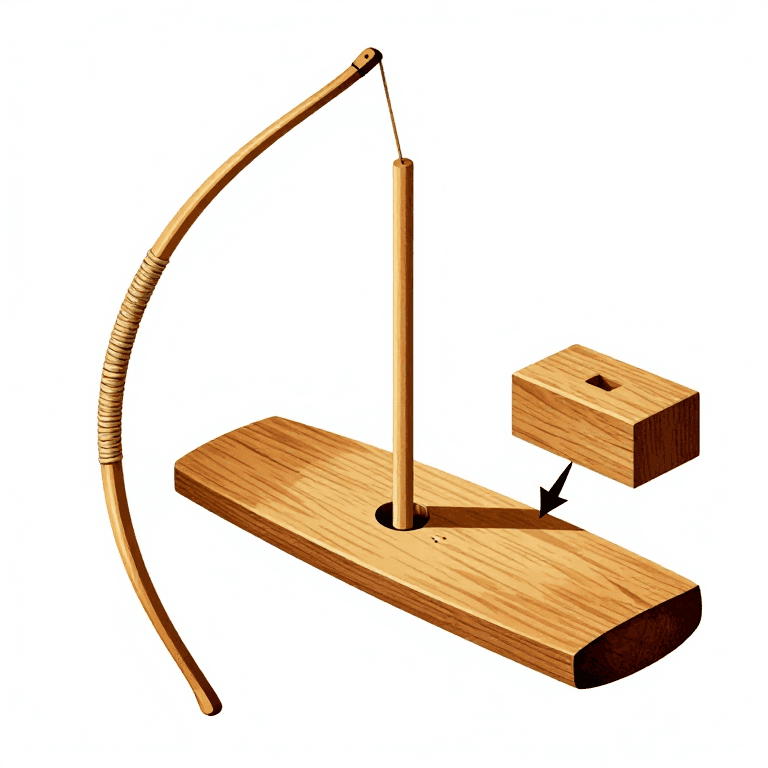
Abner Willson of Colden, New York, received US 27,181, dated 14 February 1860, for a churn worked like a bow drill. A cord from a stiff bow takes a turn round a screw whirl on the crank shaft; pushing and drawing the bow spins the crank, which lifts and drops the dasher. Two springs on the bow, one near each end, hold the cord, so it stays tight both ways and does not slip.
The patent gives no sizes; every size here is ours.
Intermediate
About 2 days, plus printing
Instructions
1
1
From bow strokes to dasher strokes
From bow strokes to dasher strokes
Loading Jupyter Notebook...
2
2
The bow and cord that turn a spindle
The bow and cord that turn a spindle
A bow drill's cord, wrapped round a spindle, turns it back and forth. Willson puts the same bow on a churn.
3
3
A crank that strokes a dasher, the year before
A crank that strokes a dasher, the year before
Austin's crank lifts and drops a dasher. Willson turns his crank with a bow instead of a handle.
4
4
Read US 27,181
Read US 27,181
"The effect of these two springs on an inflexible bow is to keep the cord always at a proper tension; in a flexible bow constructed as is customary, (unless the cord is very tense) when the bow is pushed, that portion of the cord between the whirl and the hither end of the bow slackens; and when the bow is drawn, that portion of the cord between the whirl and farther end of the bow slackens; this slackening which causes a slipping and a loss of power, is avoided by my peculiarly constructed bow. The threads of the whirl keep the cord from chafing."
5
5
Print the screw whirl D
Print the screw whirl D
Whirl 50 mm across and 60 long with a helical groove at 6 mm pitch for the cord, and a hub 36 mm across; bored 12.4 mm for the crank shaft. PETG, 0.2 mm layers, 40 % infill, 4 walls.
6
6
Print the dasher B
Print the dasher B
Cone dasher 160 mm across, open underneath, with a socket 20.6 mm across for the dasher rod. PETG, 0.2 mm layers, 40 % infill, 4 walls.
7
7
Crank shaft C and dasher B
Crank shaft C and dasher B
Drill a 13 mm hole through each side of the bucket, opposite each other, 300 mm above the inside floor. Cut a 12 mm stainless rod 450 mm long. Glue a 20 mm hardwood dowel 220 mm long into the dasher's socket, and drill 12.6 mm across its top end, 12 mm from the end. Starting 155 mm from one end, bend a crank 40 mm deep and 40 mm wide in the vise; slide the dasher rod's eye onto the crank pin before bending the second side. Pass the shaft through the bucket's holes with the crank inside, centred, and fit a collar on the short end. Seal round both holes outside with silicone sealant.
Materials for this step:
 20-Liter Bucket1 piece
 Stainless Steel Rod1 piece
 Hardwood Dowels1 piece
 Wood Glue1 piece
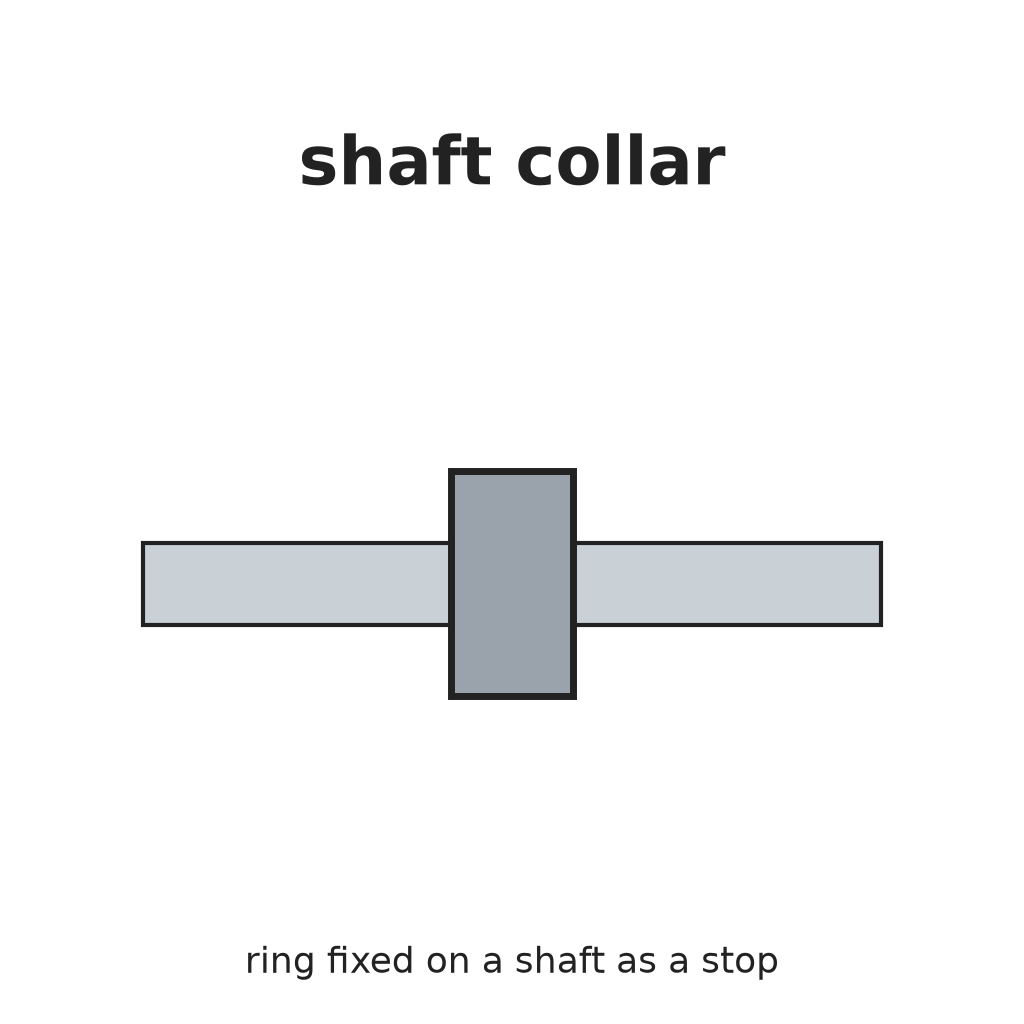 Shaft Collar1 piece
 Silicone Sealant1 piece
 PETG Filament1 piece
Tools needed:
 FDM 3D Printer
 Cordless Drill
 Drill Bit Set
 Hacksaw
 Bench Vise
 Files (Hand File)
 Tape Measure
8
8
Fix the screw whirl D
Fix the screw whirl D
Slide the whirl onto the long end of the shaft outside the bucket, hub towards the bucket, 10 mm clear of it. Drill 4 mm through the hub and shaft, and drive in a 4 mm stainless pin cut from rod, so the whirl is "firmly attached to the crank shaft".
Materials for this step:
Stainless Steel Rod1 pieceTools needed:
Cordless DrillDrill Bit SetHacksawFiles (Hand File)Bench Vise9
9
Bow F with springs a and cord E
Bow F with springs a and cord E
Cut a hardwood bow 700 x 50 x 30 mm, the patent's "inflexible bow", and plane and sand its underside slightly curved. Fit a dowel through one end as a handle, as in Fig. 1. Screw a spring-steel strip 120 x 16 mm by its inner end to the upper side near each end, outer ends free and reaching the bow's ends; drill a 5 mm hole through the bow under each spring's outer end and a 5 mm hole in each spring's tip. Pass a 4 mm cord up through each bow hole and tie it to the spring's tip, leaving enough slack between to take one turn round the whirl with the springs bent down a little.
Materials for this step:
 Hardwood Board1 pieceHardwood Dowels1 pieceWood Glue1 piece
 Spring Steel Strip2 pieces
 Wood Screws4 pieces
 Cord1 piece
Tools needed:
 Table Saw
 SandpaperCordless DrillDrill Bit SetHacksawFiles (Hand File)Bench Vise
 Bar Clamp
 Screwdriver Set
10
10
The build in 3D
The build in 3D
FreeCAD model of this build, the bucket cut through the middle: the crank shaft with its 40 mm crank, the dasher hanging from the crank pin, the screw whirl outside, and the bow with its two springs and cord.
11
11
Churn
Churn
Pour about 8 litres of heavy cream at about 15 °C, checked with the thermometer, into the bucket and put on its lid. Lay the cord in the whirl's groove with one turn round it, have someone steady the bucket or hold it between your feet, and push and draw the bow steadily, timing it. When the butter comes, take off the lid, lift the butter out past the dasher, tip the buttermilk out into a bowl, wash the butter in cold water until it runs clear, salt and weigh it.
Materials for this step:
 Heavy Cream8 l
 Coarse Sea Salt1 piece
 Water1 piece
Tools needed:
 Leave-In Probe Thermometer
 Stopwatch
 Digital Kitchen Scale
 Stainless Steel Mixing Bowl (Large)
12
12
Troubleshooting
Troubleshooting
Spring-bow churn troubleshooting.
Flow
Loading...
13
13
History and honest limits
History and honest limits
**Abner Willson** of Colden, Erie County, New York, US 27,181, 14 February 1860, "Churn". He claimed "the bow F with springs a when constructed as described, in combination with screw whirl D operating as set forth"; he did not claim the treadles G he also shows, nor the dasher, crank shaft or vessel. His vessel is a tall wooden one; ours is a food-grade bucket, and the cone dasher, its rod and our way of fixing the whirl are ours. The patent gives no sizes; every size here is ours.
Materials
14- 1 piecePlaceholder
- 1 piecePlaceholder
- 1 piecePlaceholder
- 2 piecesPlaceholder
- 1 piecePlaceholder
- 1 piecePlaceholder
- 1 piecePlaceholder
- 1 piecePlaceholder
- 2 piecesPlaceholder
- 4 piecesPlaceholder
- 1 piecePlaceholder
- 8 lPlaceholder
- 1 piecePlaceholder
- 1 piecePlaceholder
Tools Required
15- Placeholder
- 1 vendor sell this, none ship to you yetPlaceholder
- Placeholder
- Placeholder
- Placeholder
- Placeholder
- 1 vendor sell this, none ship to you yetPlaceholder
- 1 vendor sell this, none ship to you yetPlaceholder
- Placeholder
- Placeholder
- Placeholder
- Placeholder
- Placeholder
- Placeholder
- Placeholder
Design Files
3This blueprint makes


Related Blueprints
These blueprints share knowledge with this one — techniques, materials, or principles that connect them in the learning graph.



CC0 Public Domain
This blueprint is released under CC0. You are free to copy, modify, distribute, and use this work for any purpose, without asking permission.
Support the Maker by purchasing products through their Blueprint where they earn a Maker Commission set by Vendors, or create a new iteration of this Blueprint and include it as a connection in your own Blueprint to share revenue.