NGHỆ THUẬT
LÀM ĐẸP VÀ SỨC KHỎE
THỦ CÔNG
VĂN HÓA VÀ LỊCH SỬ
GIẢI TRÍ
MÔI TRƯỜNG
THỰC PHẨM VÀ ĐỒ UỐNG
KỸ THUẬT NGƯỢC
KHOA HỌC
THỂ THAO
CÔNG NGHỆ
THIẾT BỊ ĐEO
Youblob (generated from this blueprint's notebook) · CC0


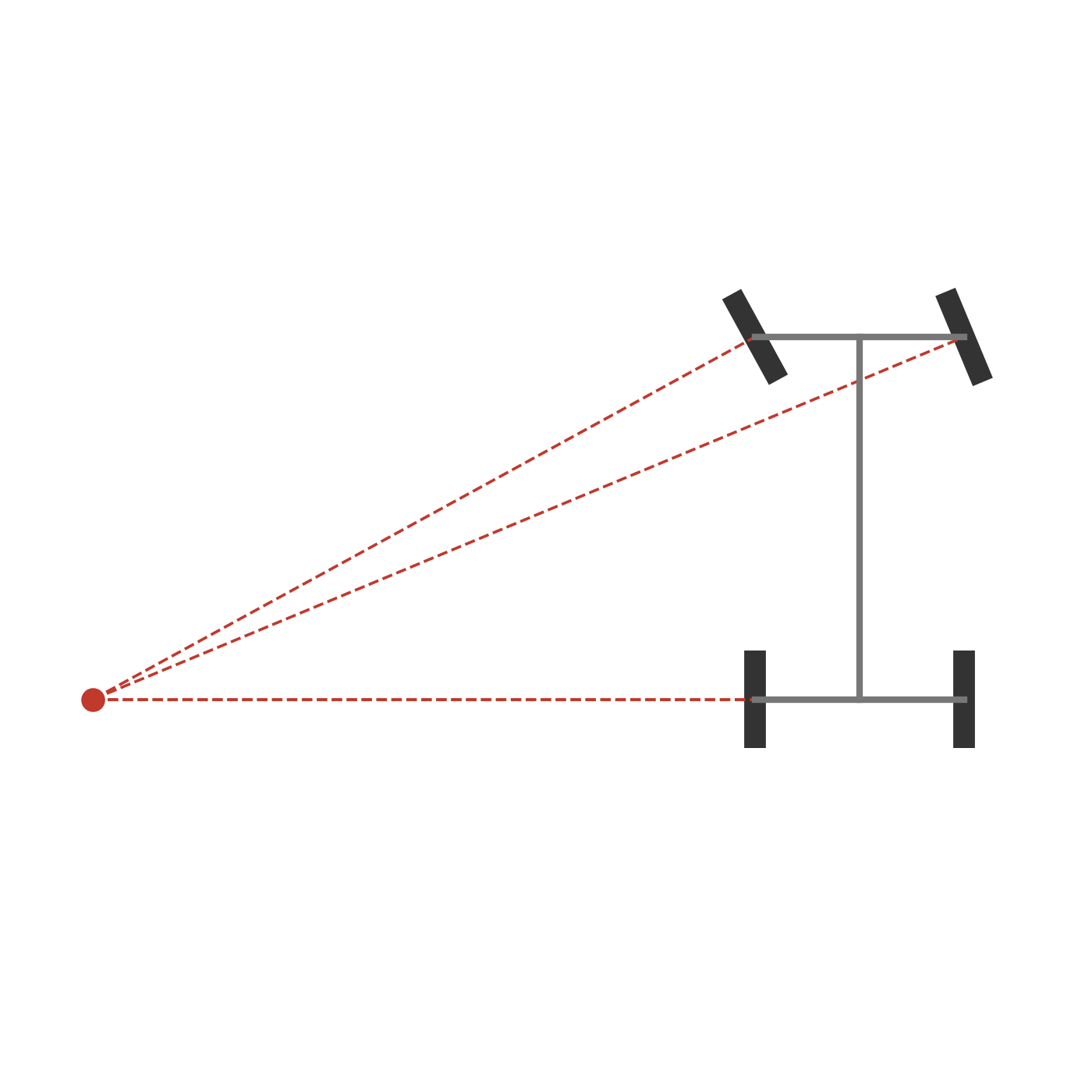
Ackermann Steering: The Inner Wheel Turns Further
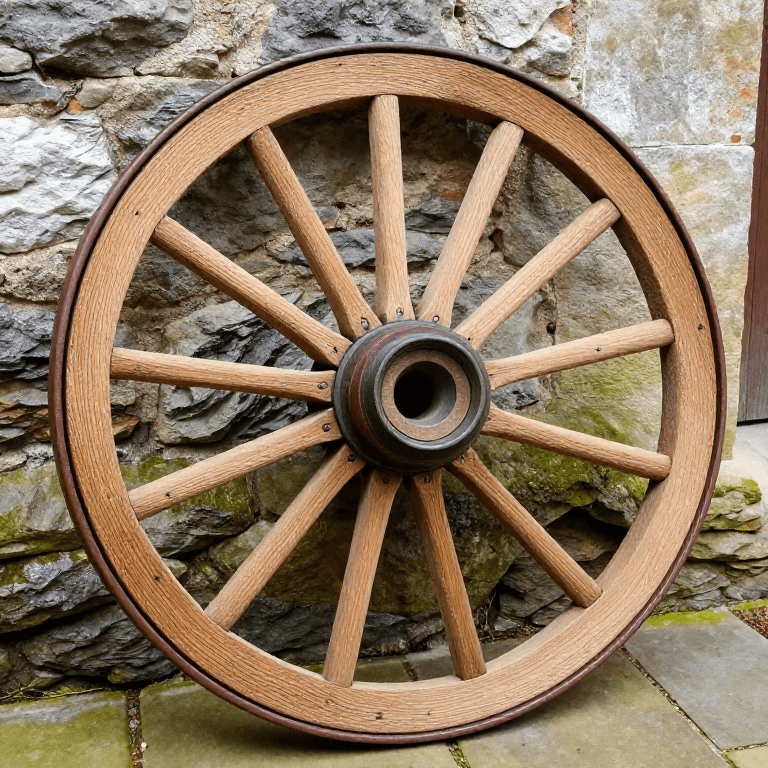
A cart turns by swivelling its whole front axle on a pin — simple, but the axle sweeps under the body and the cart grows unstable. In 1816 the Munich carriage-builder Georg Lankensperger pivoted each front wheel on its own stub instead, joined them with a tie rod, and angled the steering arms so the inner wheel turns further than the outer. Rudolph Ackermann patented it in England on his behalf in 1818, and the geometry has carried Ackermann's name ever since.
Every wheel should roll round one common centre on a turn; this linkage gets very close to that without any clever mechanism at all.
This rung works out the wheel angles and checks a trapezoid linkage numerically, then builds one and measures it with a protractor.
Cơ bản
About 3 hours
Hướng dẫn
1
1
The angles, and the linkage that makes them
The angles, and the linkage that makes them
Đang tải sổ tay Jupyter…
2
2
Build a steering model
Build a steering model
Cut a plywood 'axle beam' 300 mm long. Near each end, pivot a small plywood wheel carrier on a screw (the kingpin). Glue a steering arm to each carrier pointing backward and inward, so that the two arms, extended, meet at a point on the centre line one 'wheelbase' behind — use 520 mm for a 300 mm track, the same ratio as the notebook's car.
Join the arm ends with a tie rod of balsa strip, pinned at each end. Glue a protractor under each carrier.
Steer one wheel to 10°, 20° and 30° and read the other. Compare with the notebook's linkage column. Then make the arms parallel and repeat: both wheels now turn the same angle — the scrubbing layout.
Vật liệu cho bước này:
 Tấm gỗ dán1 tờ
 Tấm gỗ balsa1 tờ
 Vít máy6 cái
Công cụ cần thiết:
 Máy khoan pin
 Bộ mũi khoan
 Thước đo góc
 Thước kẻ
3
3
History and context
History and context
**Georg Lankensperger, Munich, 1816**; patented in England in 1818 by **Rudolph Ackermann**, his agent, as a steering for carriages. No patent number is asserted here. Charles Jeantaud refined the geometry in France later in the century, and the arrangement passed to the motor car.
**Honest limits.** The linkage is exact at only a few angles. At speed, tyres run at slip angles and a car may want less than full Ackermann; racing cars often use less or even reverse it. And the geometry assumes rigid wheels rolling without slip — a fair assumption only for slow, tight turns.
Vật liệu
3- 1 tờTạm thời
- 1 tờTạm thời
- 6 cáiTạm thời
Công cụ yêu cầu
4- 1 vendor sell this, none ship to you yetTạm thời
- Tạm thời
- Tạm thời
- Tạm thời
Blueprint liên quan
Các blueprint này chia sẻ kiến thức — kỹ thuật, vật liệu hoặc nguyên tắc

CC0 Phạm vi công cộng
Bản thiết kế này được phát hành theo CC0. Bạn tự do sao chép, sửa đổi, phân phối và sử dụng cho bất kỳ mục đích nào mà không cần xin phép.
Hỗ trợ nhà sáng tạo bằng cách mua sản phẩm qua bản thiết kế, nơi họ nhận Hoa hồng nhà sáng tạo do nhà bán hàng đặt, hoặc tạo phiên bản mới và kết nối trong bản thiết kế riêng để chia sẻ doanh thu.