
NGHỆ THUẬT
LÀM ĐẸP VÀ SỨC KHỎE
THỦ CÔNG
VĂN HÓA VÀ LỊCH SỬ
GIẢI TRÍ
MÔI TRƯỜNG
THỰC PHẨM VÀ ĐỒ UỐNG
TƯƠNG LAI XANH
KỸ THUẬT NGƯỢC
SCHOOL PROJECTS
KHOA HỌC
THỂ THAO
CÔNG NGHỆ
THIẾT BỊ ĐEO
Building a Wooden Cart Wheel — Hub, Spokes, and Felloes
Woody

Tạo bởi

Woody

26. tháng Năm 2026NO
23
0
0
2
0

Building a Wooden Cart Wheel — Hub, Spokes, and Felloes

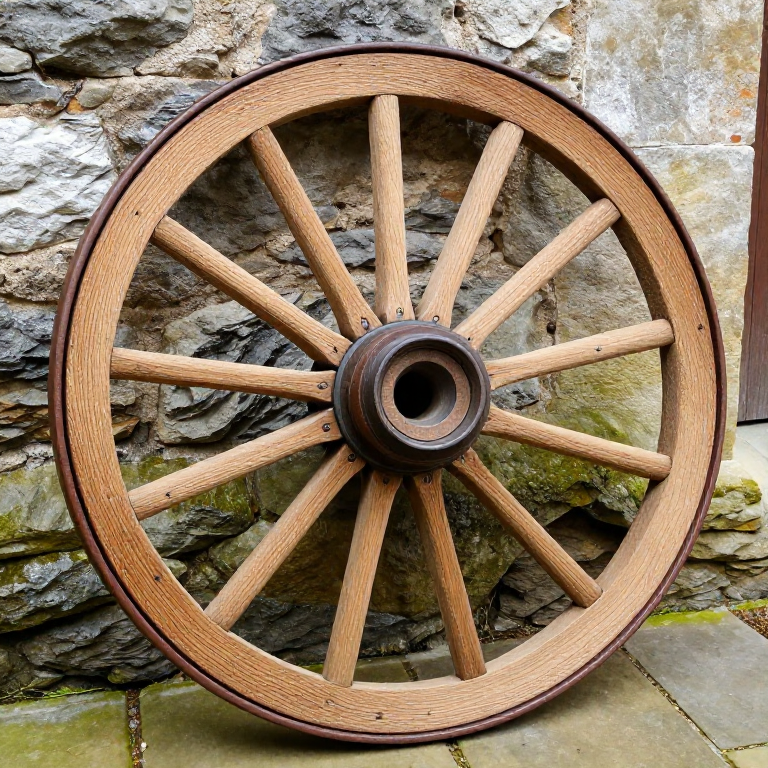
The spoked wheel is one of the greatest inventions in human history. First appearing around 2000 BCE, it made overland transport practical and remained essentially unchanged for nearly four thousand years. A wooden cart wheel is a precision assembly of three distinct components: a central hub (the nave) bored to fit the axle, a set of spokes radiating outward from the hub, and a rim (the felloe) made from curved segments joined end to end. Each component demands a different woodworking skill.

The hub is turned or carved from a single block of dense hardwood — elm is traditional because its interlocked grain resists splitting when mortised for the spokes. The spokes are riven from straight-grained oak for maximum strength. The felloes are sawn or carved from naturally curved timber — the crook of a branch that matches the wheel's curvature. Every joint must be tight: the spokes are driven into mortises in the hub and through mortises in the felloes, then wedged.

Wheelwrighting was one of the most skilled of the traditional trades. The wheel must be perfectly round, perfectly flat, and slightly dished (the spokes angled outward from the hub so the wheel tracks straight under load). A badly made wheel wobbles, wears unevenly, and collapses under the first heavy load.

Nâng cao
2-3 days

Hướng dẫn

1

Turn or carve the hub

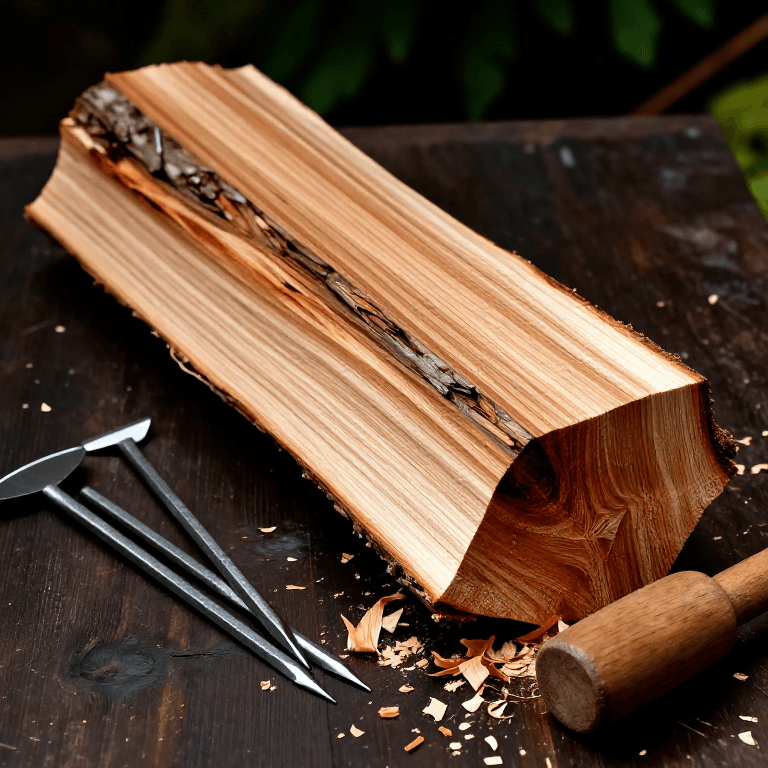
The hub (nave) is a cylinder of dense hardwood — elm is the traditional choice because its interlocked grain holds the spoke mortises without splitting. The hub for a standard cart wheel is about 30 cm long and 25 cm in diameter. Turn it on a lathe or shape it by hand with an adze and drawknife. Bore a central hole through the length to accept the axle — about 6-8 cm diameter, perfectly straight. The hub must be absolutely symmetrical, as any imbalance makes the wheel wobble.
2

Cut the spoke mortises in the hub

Mark the positions for 10-14 spoke mortises equally spaced around the circumference of the hub. Each mortise is a rectangular slot cut into the hub, angled slightly outward to create the dish of the wheel. Use an auger to bore the bulk of each mortise, then clean the walls square with a chisel. The mortises must be identical in size, spacing, and angle — a single misplaced mortise throws the entire wheel out of true. A marking gauge and dividers are essential.

Công cụ cần thiết:

Hand AugerHand Auger
3

Rive and shape the spokes

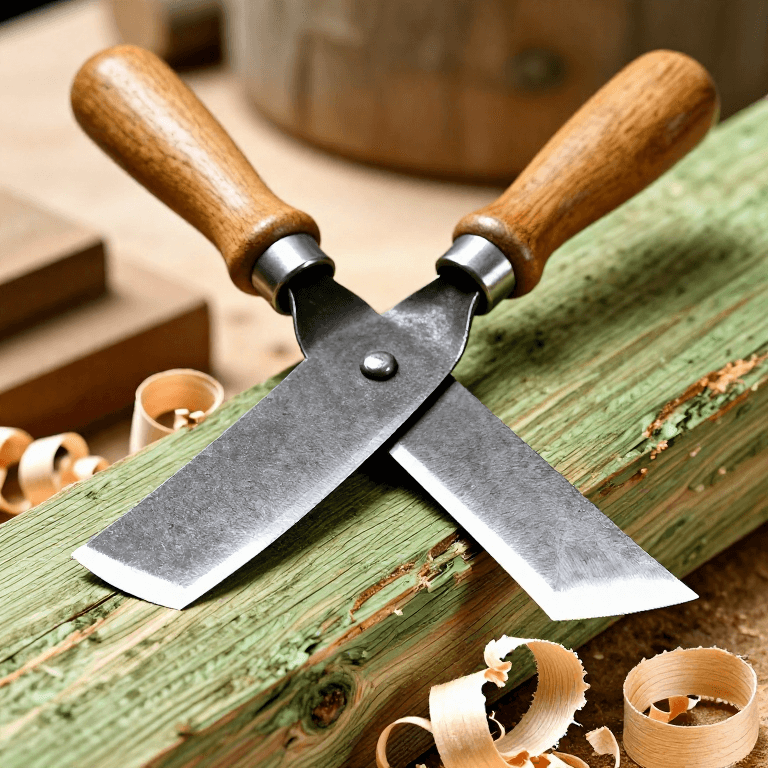
Rive the spokes from straight-grained oak — each spoke must have unbroken grain running its full length for maximum strength. A cart wheel spoke is roughly 50-70 cm long depending on wheel diameter. Shape each spoke with a drawknife: the hub end has a rectangular tenon that matches the mortise, and the outer end has a round tenon that fits through the felloe. The spoke cross-section tapers from hub to rim, wider in one direction to resist the bending load of the wheel under weight.

Công cụ cần thiết:

DrawknifeDrawknife
FroeFroe
4

Drive the spokes into the hub

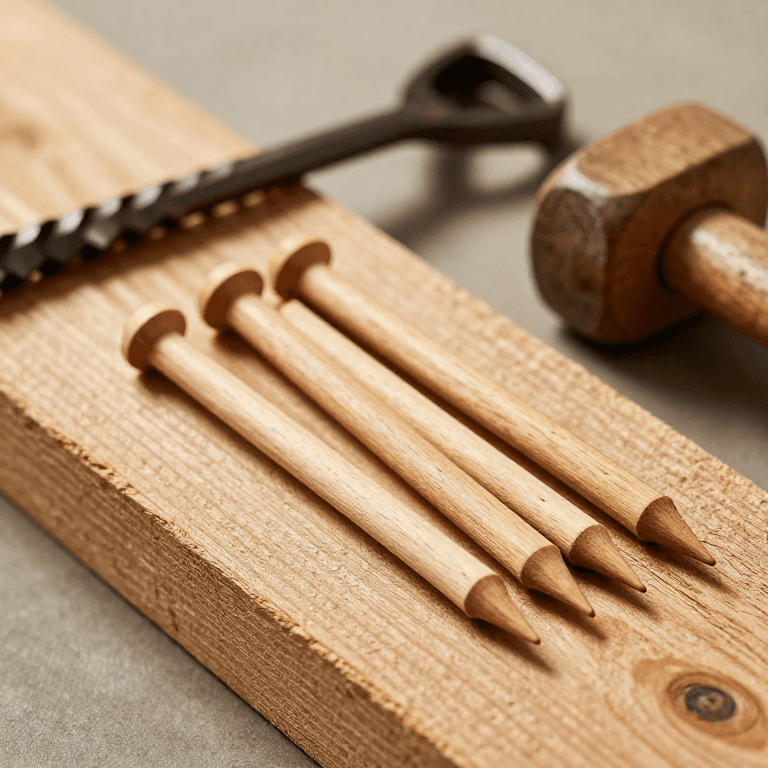
Drive each spoke tenon into its mortise in the hub using a heavy mallet. The fit must be tight — a loose spoke works free under load. Work in opposing pairs: drive one spoke, then the spoke directly opposite, to keep the hub centred. After all spokes are seated, the assembly looks like a sunburst — the hub at the centre with spokes radiating outward at a consistent angle. Check that all spoke tips lie in a flat plane (or a shallow cone if the wheel is dished).

Công cụ cần thiết:

Wooden MalletWooden Mallet
5

Shape and fit the felloes

The rim is made from 6-7 curved sections called felloes, each spanning two or three spokes. Each felloe is cut from a naturally curved piece of timber (a branch crook or a section sawn from a wide plank). The inner face of each felloe has mortises bored to receive the round tenons at the ends of the spokes. Fit the felloes onto the spoke ends and join adjacent felloes to each other with short wooden dowels driven through the meeting faces. When all felloes are fitted, the rim forms a continuous circle.
6

Fit the iron tyre (optional reinforcement)

A wooden wheel without an iron tyre wears quickly on hard ground. The iron tyre is a continuous ring of flat iron bar, forged to a diameter slightly smaller than the wheel. It is heated until it expands, dropped over the rim, and then quenched with water. As it cools, the iron contracts, pulling the entire wheel tight — the felloe joints close, the spokes seat deeper into the hub, and the wheel becomes a rigid, prestressed structure. This shrink-fitting is one of the most elegant applications of thermal expansion in traditional craft.

Công cụ yêu cầu

4

Vật liệu bản thiết kế liên kết

You can swap these in

Can't get one of the materials? Swap it for an equivalent — these work just as well.

CC0 Phạm vi công cộng

Bản thiết kế này được phát hành theo CC0. Bạn tự do sao chép, sửa đổi, phân phối và sử dụng cho bất kỳ mục đích nào mà không cần xin phép.

Hỗ trợ nhà sáng tạo bằng cách mua sản phẩm qua bản thiết kế, nơi họ nhận Hoa hồng nhà sáng tạo do nhà bán hàng đặt, hoặc tạo phiên bản mới và kết nối trong bản thiết kế riêng để chia sẻ doanh thu.

Thảo luận

(0)

Đăng nhập để tham gia thảo luận

Đang tải bình luận...