NGHỆ THUẬT
LÀM ĐẸP VÀ SỨC KHỎE
THỦ CÔNG
VĂN HÓA VÀ LỊCH SỬ
GIẢI TRÍ
MÔI TRƯỜNG
THỰC PHẨM VÀ ĐỒ UỐNG
KỸ THUẬT NGƯỢC
KHOA HỌC
THỂ THAO
CÔNG NGHỆ
THIẾT BỊ ĐEO
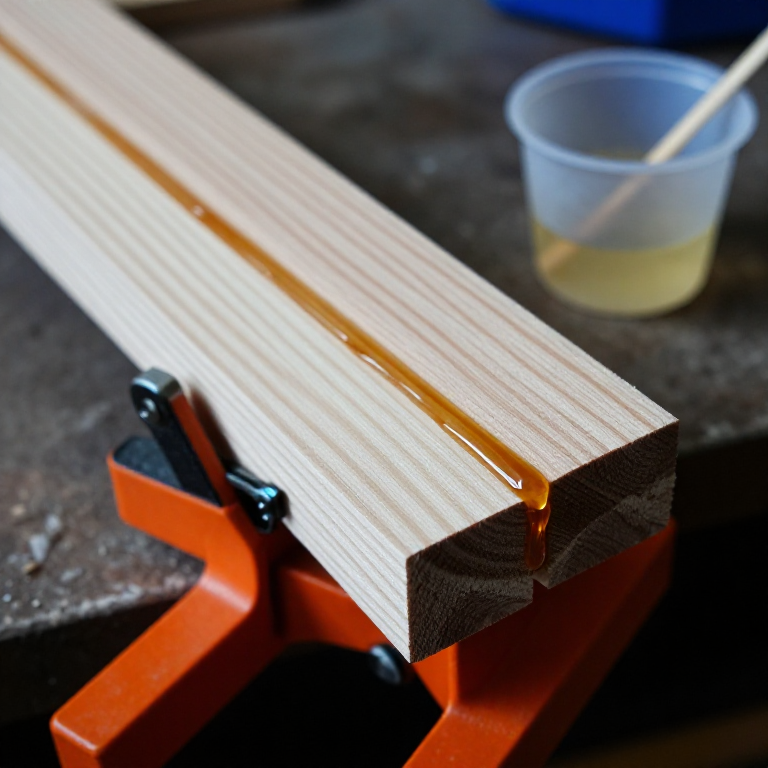


Epoxy Resin
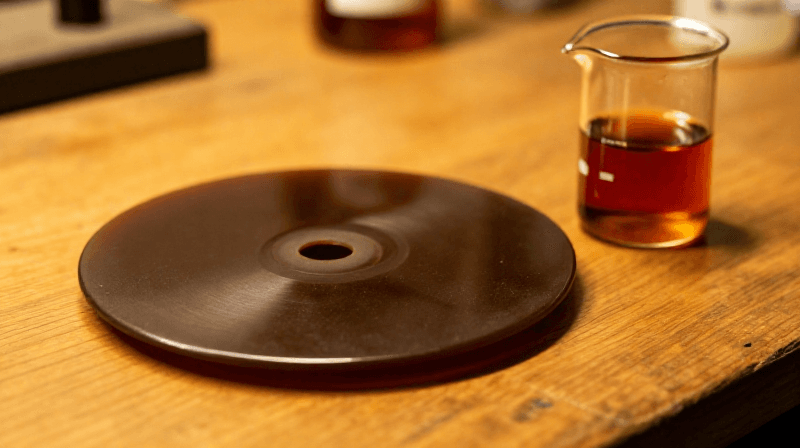
Pierre Castan, a Swiss chemist at the dental firm De Trey Frères, was looking for a resin for dentures. He reacted a phenol carrying two hydroxy groups with epichlorohydrin, then hardened the product with an acid anhydride, and got a hard, clear, unusually adherent solid. Ciba licensed it and sold it as Araldite; in the US Sylvan Greenlee developed epoxies independently.
**US 2,324,483**, "Process of preparing synthetic resins", Castan, granted 20. July 1943, claims condensing "a polybasic carboxylic acid anhydride" with the product of "a phenol having at least two phenolic hydroxy groups and of an epichlorhydrine". It does not single out bisphenol A, the phenol most epoxies use today.
**Epichlorohydrin is a carcinogen; you start from a two-part kit.** You glue pine lap joints at the right ratio and four wrong ones, then test hardness and break the joints.
Cơ bản
2 hours plus 24 h cure
Hướng dẫn
1
1
Cut the joint pieces
Cut the joint pieces
Saw ten pine strips 100 x 25 mm. Sand one face of each end with 120 grit and dust off. Label five pairs 1:1, 1.25:1, 1:1.25, 1.5:1 and 1:1.5.
Vật liệu cho bước này:
 Ván thông1 cái
 Giấy nhám1 tờ
 Băng keo giấy1 cuộn
Công cụ cần thiết:
 Cưa tay
 Thước kẻ
2
2
Measure by syringe
Measure by syringe
Gloves on. For each ratio draw resin and hardener in separate syringes (1:1 = 2 ml + 2 ml; 1.25:1 = 2.5 + 2; and so on) into its own cup. This assumes a 1:1-by-volume kit - scale to your label.
Vật liệu cho bước này:
 Keo epoxy hai thành phần25 ml
Công cụ cần thiết:
 Găng tay nitrile
 Bộ xi-lanh
 Cốc pha có chia độ
 Kính bảo hộ trong suốt
3
3
Mix thoroughly
Mix thoroughly
Stir each cup 2 minutes, scraping the walls and bottom. Unmixed streaks behave like a wrong ratio.
Công cụ cần thiết:
 Đũa khuấy
4
4
Glue and pour
Glue and pour
Spread each mix on the sanded ends of its pair, overlap them 25 mm and spring-clamp over wax paper. Pour the rest as a coin-sized puddle on wax paper beside it.
Vật liệu cho bước này:
 Giấy sáp1 tờ
Công cụ cần thiết:
 Kẹp lò xo
5
5
Cure 24 hours
Cure 24 hours
Leave everything at room temperature, 20 °C or warmer, for 24 hours. Cold slows the cure.
6
6
Pencil hardness
Pencil hardness
Sharpen pencils 6B to 6H and flatten the tips on 400 grit. Push each at 45° across a puddle, from hard down, until one no longer scratches. Record that grade.
Công cụ cần thiết:
 Bộ bút chì than chì
 Kính lúp thợ kim hoàn
7
7
Break the joints
Break the joints
Clamp one strip of a joint in the vise and tap the free end sideways with the mallet until it breaks. Estimate how much of the bond face is torn wood.
Công cụ cần thiết:
 Ê tô bàn nguội
 Búa cao suKính bảo hộ trong suốt
8
8
Ratio, leftovers, results
Ratio, leftovers, results
Đang tải sổ tay Jupyter…
9
9
History & Context
History & Context
**What the patent specifies:** a resin from a two-hydroxy phenol and epichlorohydrin, hardened by a polybasic acid anhydride. **Modern build (derived):** a two-part kit, most with an amine hardener that cures at room temperature.
Epoxy became the glue that holds metal, the matrix of fibreglass and carbon-fibre parts, and the boat-builder's resin. Its limits: it yellows in sunlight, softens with heat, and uncured resin and hardener sensitise skin - which is why the gloves stay on every time.
Vật liệu
5- 1 cáiTạm thời
- 1 tờTạm thời
- 1 cuộnTạm thời
- Tạm thời
- 1 tờTạm thời
Công cụ yêu cầu
12- Tạm thời
- Tạm thời
- Tạm thời
- Tạm thời
- Tạm thời
- Tạm thời
- Tạm thời
- Tạm thời
- Tạm thời
- Tạm thời
- Tạm thời
- Tạm thời
Bản thiết kế này làm ra
Blueprint liên quan
Các blueprint này chia sẻ kiến thức — kỹ thuật, vật liệu hoặc nguyên tắc




CC0 Phạm vi công cộng
Bản thiết kế này được phát hành theo CC0. Bạn tự do sao chép, sửa đổi, phân phối và sử dụng cho bất kỳ mục đích nào mà không cần xin phép.
Hỗ trợ nhà sáng tạo bằng cách mua sản phẩm qua bản thiết kế, nơi họ nhận Hoa hồng nhà sáng tạo do nhà bán hàng đặt, hoặc tạo phiên bản mới và kết nối trong bản thiết kế riêng để chia sẻ doanh thu.