NGHỆ THUẬT
LÀM ĐẸP VÀ SỨC KHỎE
THỦ CÔNG
VĂN HÓA VÀ LỊCH SỬ
GIẢI TRÍ
MÔI TRƯỜNG
THỰC PHẨM VÀ ĐỒ UỐNG
KỸ THUẬT NGƯỢC
KHOA HỌC
THỂ THAO
CÔNG NGHỆ
THIẾT BỊ ĐEO



Knowing When To Stop: Finding the Peak That Says Full
The sealed cell of rung 1 solved the gas. It did not solve the question that comes straight after it: how does the charger know when to stop?
A sealed nickel cell will accept current indefinitely. Past full it simply turns that current into heat, quietly, until the seal or the separator gives up. It has no fuel gauge, and the only outward sign that it is full is a fall in terminal voltage of a few millivolts — perhaps one part in a hundred.
This rung builds the circuit that finds that signal, in the form David Pacholok patented in 1991: not by differentiating anything, but by racing the battery against a lagging copy of itself. Then it adds the two backstops that make the difference between a clever circuit and a charger you would leave running.
Nâng cao
About 4 hours
Hướng dẫn
1
1
Read the claim: three ways to stop, not one
Read the claim: three ways to stop, not one
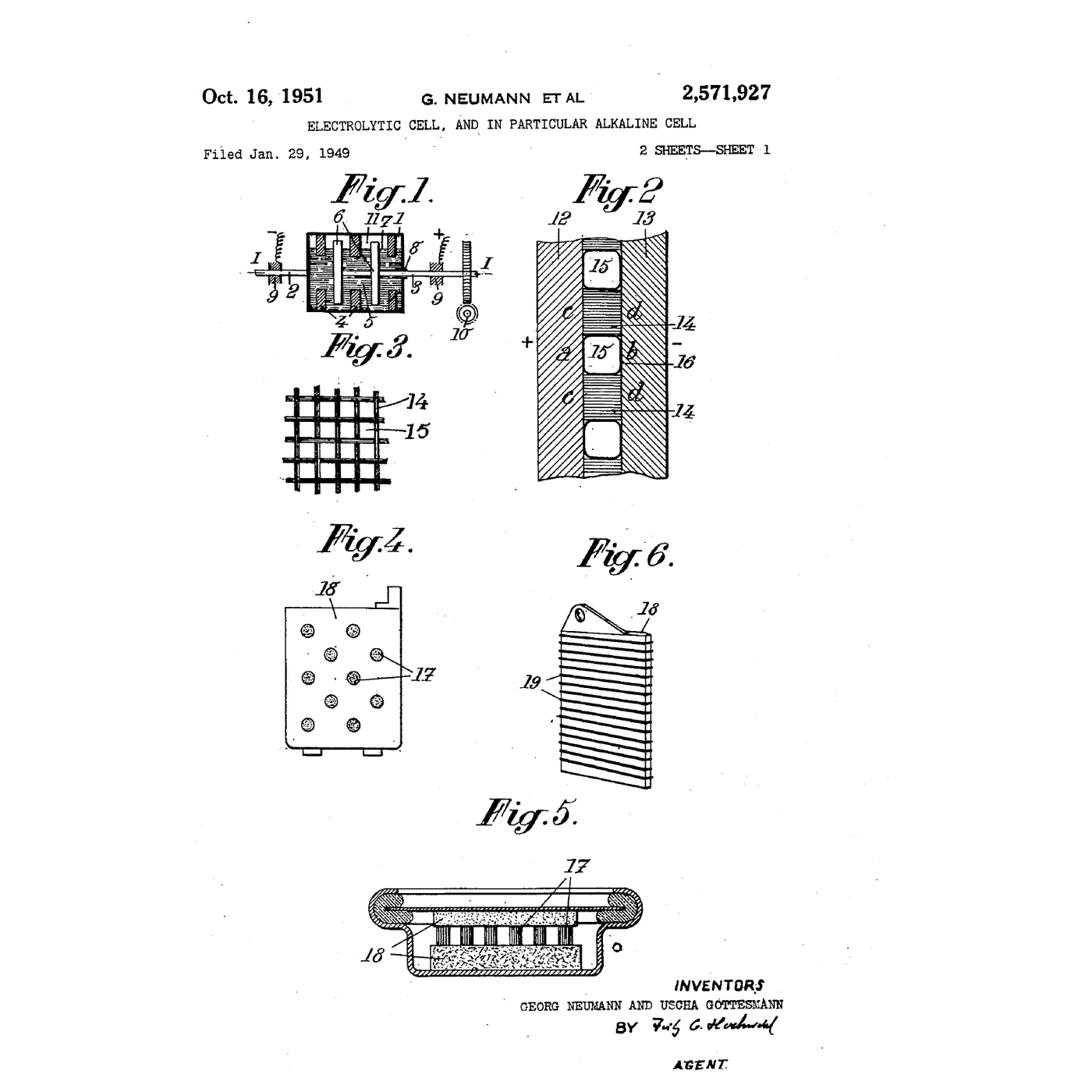
**US 5,196,780**, David R. Pacholok, filed **10 September 1991**, granted **23 March 1993**, expired. The figure on this page is its own sheet 1: FIG. 1 is the voltage-against-time curve with the peak marked, and FIG. 2 is the block diagram — FAST CHARGE and SLOW CHARGE blocks, the RC network into a comparator, and, along the bottom, **TH** and **TIMER**.
Write out the three terminations before you build anything, because the arrangement is the invention, not any one of them:
1. **−ΔV**, detected by a capacitor charged through a resistor from the battery terminal. The capacitor lags. When it *overtakes* the battery voltage, the battery must have turned over. No differentiator, no noise problem.
2. **A timer**, about eighteen minutes on fast charge. If the voltage signal never arrives, the charge still ends.
3. **A thermostat**, set between **40 °C and 60 °C**, on the cells themselves. If they get hot for any reason at all, the charge ends.
Then note what happens after termination: the circuit does not switch off, it drops to a **slow charge** that replaces self-discharge without overcharging. A charger that simply stops leaves you with a pack that is flat again by Thursday.
Sources for this one are clean and the number is verified. Where a later rung says a number could not be pinned, that is a statement about that rung, not a habit.
2
2
See the peak on a real cell before you try to detect it
See the peak on a real cell before you try to detect it
You cannot sensibly build a detector for a signal you have never seen. Log the signal first.
Put one discharged NiMH cell in a holder. Set the bench supply to constant current at **1C** — 2 A for a 2,000 mAh cell — with the voltage limit at 1.8 V so a bad connection cannot produce a surprise. Tape the thermocouple to the can.
Log terminal voltage to **four digits** and can temperature every minute. Four digits is not fussiness: the whole signal you are looking for is about 10 mV, so a three-digit meter reading 1.48 V cannot see it at all.
Expect, over roughly an hour:
- a quick rise in the first minutes as the cell polarises;
- a long, slowly-rising middle;
- a **peak**, then a fall of the order of 5–15 mV for a single cell;
- **temperature climbing sharply** from about the same moment.
Stop at the peak, or at 45 °C, whichever comes first. Mark on your log where the peak was and how many millivolts the fall was. That is the number your circuit has to resolve, and in a twelve-cell pack it is twelve times larger, which is why −ΔV termination works far better on a pack than on a single cell.
Vật liệu cho bước này:
 Pin niken-hiđrua kim loại1 cái
Công cụ cần thiết:
 Nguồn điện để bàn
 Đồng hồ vạn năng số — tự chọn thang, True RMS
 Cặp nhiệt điện loại K với mô đun MAX6675
 Đế pin
 Dây thử có kẹp cá sấu
 Đồng hồ bấm giờ
 Sổ ghi chép phòng thí nghiệm (có bản sao)
 Kính bảo hộ trong suốt
3
3
Build the lagging copy
Build the lagging copy
Now build Pacholok's detector on the breadboard. It is four parts.
1. **The RC.** A resistor from the battery terminal into a capacitor to ground. Pick R and C so that R×C is the time constant you chose in step 4 — 470 kΩ with 470 µF gives about 220 seconds, near four minutes. Use a film or a low-leakage electrolytic; a leaky capacitor is a second resistor you did not plan for and it will hold the copy down permanently.
2. **The comparator.** An LM393, battery voltage on one input and the capacitor on the other. Its output flips the moment the capacitor wins.
3. **A little hysteresis.** A high-value resistor from the output back to the non-inverting input, a megohm or so, so the output snaps over instead of chattering across the crossing. Without it you will trip repeatedly on millivolt noise.
4. **The switch.** The comparator output drives the gate of the logic-level MOSFET, which carries the charge current. Logic-level matters: an ordinary MOSFET will not turn fully on from a 5 V gate and will dissipate the difference as heat.
Test it without a battery first. Put the function generator on the input with a very slow triangle — a few minutes per cycle, one or two volts peak to peak — and check that the output flips shortly after each apex and not before. A signal generator that you can turn around at will is a far better test than a cell that turns over once an hour.
Then put your logged cell curve in front of it for real. Watch the capacitor voltage on one scope channel and the cell on the other; the crossing is visible and it is the whole point of the circuit.
Vật liệu cho bước này:
 Bộ điện trở 1/4 W1 cái
 Bộ tụ điện1 cái
 Dây đấu nối1 cái
Công cụ cần thiết:
 Bảng cắm mạch
 Bộ dây Dupont (đực-cái)
 Vi mạch so sánh kép LM393
 MOSFET mức lôgic IRLZ44N
 Chiết áp tuyến tính 10 kilôôm
 Máy hiện sóng số
 Máy phát hàmĐồng hồ vạn năng số — tự chọn thang, True RMS
 Trạm hàn có mỏ hàn
 Nhíp đầu nhọn
 Kìm tuốt dây
4
4
Choosing the time constant, and why three detectors beat one
Choosing the time constant, and why three detectors beat one
Đang tải sổ tay Jupyter…
5
5
Add the two backstops
Add the two backstops
A −ΔV detector on its own is a circuit that can fail silently, and the failure mode is a charge that never ends. Add the other two.
**The thermostat.** Use the pack's own thermistor if you have the TH pin from rung 3, or a 10 kΩ NTC taped to the cell. Put it in a divider with a fixed resistor and feed the junction into the second half of the LM393; set the reference with the potentiometer so the comparator trips at about **45 °C**. Calibrate it, do not assume it: warm the thermistor with the heat gun on its lowest setting while watching the infrared thermometer, and adjust until the trip lands where you want it. Wire this comparator's output so it can cut the MOSFET gate **regardless** of what the −ΔV half is saying.
**The timer.** The 555 in monostable mode with a long RC gives you Pacholok's eighteen minutes. Work R and C out for your own charge rate rather than copying his: eighteen minutes is right for the rate his charger used, and a timer set for the wrong rate is worse than none because it will cut short every good charge.
Now test each one **alone**. Disconnect the −ΔV half and prove the thermostat stops the charge. Disconnect the thermostat and prove the timer does. A redundancy you have never tested individually is not redundancy, it is three circuits and a hope.
Finally, add the slow-charge path: a resistor that keeps a trickle flowing after termination, at something like C/40. Measure it with the meter and check it against the cell's own self-discharge rate.
Vật liệu cho bước này:
Bộ điện trở 1/4 W1 cáiBộ tụ điện1 cáiPin niken-hiđrua kim loại1 cáiCông cụ cần thiết:
Bảng cắm mạchBộ dây Dupont (đực-cái)Vi mạch so sánh kép LM393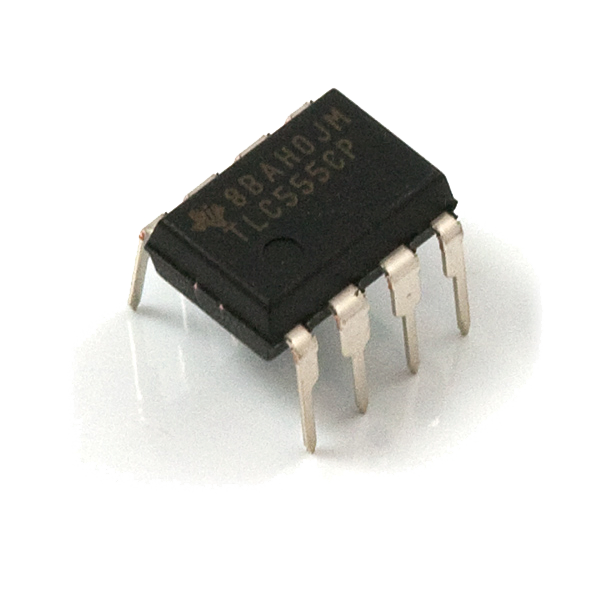 555 Timer
 Bộ nhiệt điện trở NTCChiết áp tuyến tính 10 kilôômMOSFET mức lôgic IRLZ44N
 Súng thổi khí nóng
 Nhiệt kế hồng ngoạiĐồng hồ vạn năng số — tự chọn thang, True RMSMáy hiện sóng sốKính bảo hộ trong suốt
6
6
History and context
History and context
**Attribution.** US 5,196,780, David R. Pacholok, filed 10 September 1991, granted 23 March 1993, expired. The drawing on this page is the patent's own.
**Why 1991 and not 1961.** The −ΔV effect was understood long before this patent; cell makers had been describing it in application notes for years. What was missing was a way to detect a few millivolts of *fall* on a signal riding on more than a volt, cheaply enough to put in a consumer charger, without a microcontroller. The RC-lag trick is the answer to the 'cheaply enough' part, and it is a genuinely elegant one — it replaces a differentiator, which amplifies noise, with a delay, which suppresses it.
**What it changed for makers.** Before reliable termination, the safe charge rate was C/10 overnight, because the recombination cycle could absorb that indefinitely. After it, fast charging became ordinary, and a fast charger is what makes a two-pack workflow work: one in the tool, one on the charger, and no waiting. Rung 3's pack and this rung's charger only make sense together.
**Honest limits.** −ΔV is a nickel-chemistry signal and it does not exist in lithium-ion, whose voltage only ever rises; lithium cells terminate on constant-current to constant-voltage and then on falling current, a different method entirely. −ΔV also gets harder as a pack ages, because the peak flattens, and it is nearly unusable on a single cell for the reason step 2 gives. And the whole scheme is built on the assumption that the cells in a pack reach full together — which, as rung 7 shows, they do not.
Vật liệu
4- Tạm thời
- 2 cáiTạm thời
- 2 cáiTạm thời
- 1 cáiTạm thời
Công cụ yêu cầu
22- Tạm thời
- Tạm thời
- Tạm thời
- Sổ ghi chép phòng thí nghiệm (có bản sao)Hoa hồng 10%Tạm thời
- Tạm thời
- Bảng cắm mạchHoa hồng 10%Magento Legacy Storeships internationallyTạm thời
- Tạm thời
- Tạm thời
- Tạm thời
- Tạm thời
- Máy hiện sóng sốHoa hồng 10%Magento Legacy Storeships internationallyTạm thời
- Tạm thời
- Trạm hàn có mỏ hànHoa hồng 10%Tạm thời
- Tạm thời
- Tạm thời
- Tạm thời
- 1 vendor sell this, none ship to you yetTạm thời
- Tạm thời
Blueprint liên quan
Các blueprint này chia sẻ kiến thức — kỹ thuật, vật liệu hoặc nguyên tắc


CC0 Phạm vi công cộng
Bản thiết kế này được phát hành theo CC0. Bạn tự do sao chép, sửa đổi, phân phối và sử dụng cho bất kỳ mục đích nào mà không cần xin phép.
Hỗ trợ nhà sáng tạo bằng cách mua sản phẩm qua bản thiết kế, nơi họ nhận Hoa hồng nhà sáng tạo do nhà bán hàng đặt, hoặc tạo phiên bản mới và kết nối trong bản thiết kế riêng để chia sẻ doanh thu.