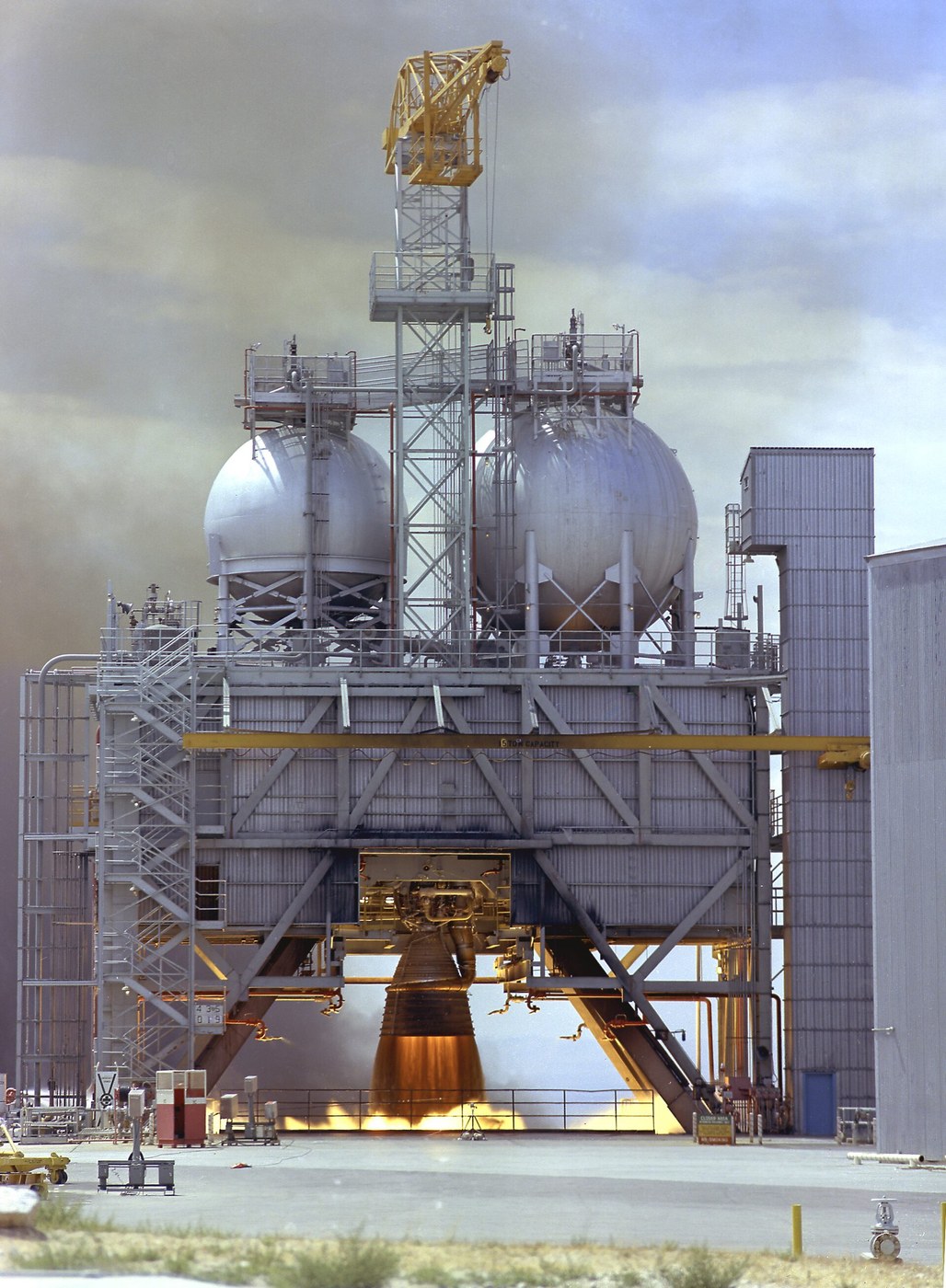


The De Laval Nozzle
Hướng dẫn
Show that a converging nozzle has a hard limit
Show that a converging nozzle has a hard limit
Find the wall before learning how to get past it.
- Make a simple converging nozzle — a smooth taper down to a small throat — and fit it to a regulated compressed air supply.
- Raise the supply pressure in steps, measuring the mass flow each time by timing the pressure drop of a known tank volume.
- Plot mass flow against supply pressure.
- Keep raising the pressure well past the point where the plot stops climbing.
Mass flow rises with pressure and then stops rising, no matter how much more pressure you apply. The nozzle has choked: the flow at the throat has reached the local speed of sound and cannot be told to go faster, because the information that would tell it to — a pressure change — travels at exactly that speed and can no longer make it upstream.
This is why choked flow is used as a precision flow standard. Once a nozzle is choked, its mass flow depends only on upstream pressure and temperature and is completely immune to whatever happens downstream. The air-blast circuit breaker in the power batch relies on the same property for exactly the same reason.Vật liệu cho bước này:
 Thanh đồng thau tròn1 cái
 Giấy kẻ ô ly1 pad
Công cụ cần thiết:
 Máy tiện kim loại
 Thước cặp điện tử 6 inch
 Panme
Panme Máy nén khí 30 gallon
 Đồng hồ áp suất
 Kính bảo hộ trong suốt
 Bảo hộ thính giác (chụp tai, SNR 30 dB)
Add a diverging section and break the limit
Add a diverging section and break the limit
Now do the thing that sounds wrong: widen the passage to speed the flow up.
- Machine a second nozzle with the same throat diameter but add a gently diverging cone downstream — a half-angle of about 15° is a good starting point.
- Run it at the same supply pressures and measure the thrust with a spring scale on a pivoted mount.
- Compare thrust with the converging-only nozzle at identical pressure and mass flow.
Same mass flow, more thrust — so the gas must be leaving faster. The diverging section has accelerated the flow past sonic into genuinely supersonic exhaust.
The reason the rule inverts is worth stating carefully. Below the speed of sound, gas behaves nearly as if incompressible: squeeze the passage and it speeds up. Above the speed of sound, the gas expands so rapidly as it accelerates that its DENSITY falls faster than its velocity rises — so to pass the same mass, the area must increase. The area rule does not change; which term dominates does.
Reverse-engineering note: real nozzles use a bell contour rather than a straight cone, because a cone leaves the exhaust diverging outward and any sideways velocity component is thrust you paid for and did not collect. A bell turns the flow parallel before it leaves.Vật liệu cho bước này:
Thanh đồng thau tròn1 cáiGiấy kẻ ô ly1 padCông cụ cần thiết:
Máy tiện kim loạiThước cặp điện tử 6 inchPanmeMáy nén khí 30 gallonĐồng hồ áp suất Cân lò xoKính bảo hộ trong suốtBảo hộ thính giác (chụp tai, SNR 30 dB)
Find the design point, and see what happens either side of it
Find the design point, and see what happens either side of it
A nozzle is correct at exactly one pressure ratio and wrong everywhere else.
- At a fixed supply pressure, listen and look at the exhaust as you vary the pressure.
- Watch for visible shock structure in the plume — with sufficient pressure and humidity you may see standing diamonds.
- Note the pressures at which the plume looks smooth, pinched, or flared.
When exit pressure matches ambient the nozzle is correctly expanded and the plume is smooth and straight. Below that — over-expanded — the atmosphere squeezes the plume inward and shock waves form inside the nozzle. Above it — under-expanded — the plume billows outward after leaving, and that outward expansion produces no thrust at all.
Those standing bright diamonds in a rocket or jet exhaust are shock cells: the flow repeatedly over-corrects, compressing and expanding as it equalises with the surrounding air. Every visible diamond is a small confession that the nozzle is not perfectly matched to the altitude.
This is why first-stage engines have short nozzles and upper stages have enormous ones. A sea-level nozzle must not over-expand at launch or the flow separates and tears the nozzle apart; a vacuum nozzle can expand almost indefinitely because ambient pressure is nearly zero. The same engine cannot be optimal at both ends of the ascent.Vật liệu cho bước này:
Giấy kẻ ô ly1 padCông cụ cần thiết:
Máy nén khí 30 gallonĐồng hồ áp suất Điện thoại thông minh quay chậm
 Nhiệt kế hồng ngoạiKính bảo hộ trong suốtBảo hộ thính giác (chụp tai, SNR 30 dB)
 Tấm che mặt
Measure specific impulse and understand what it means
Measure specific impulse and understand what it means
Define the number that governs everything in the next blueprint.
- Measure thrust and mass flow rate simultaneously for each nozzle.
- Divide thrust by mass flow to get effective exhaust velocity.
- Divide that by standard gravity to express it as specific impulse in seconds.
- Tabulate for the converging and converging-diverging nozzles.
Specific impulse is thrust per unit of propellant flow — how much push you get per kilogram per second you are willing to throw away. It is the single figure of merit for a rocket engine, and the diverging section buys a substantial improvement in it for the cost of some machined metal and nothing else.
Expressing it in seconds is a historical convention that confuses everybody at first. It is exhaust velocity divided by g, so the units cancel to seconds, and its virtue is that the number is the same whether you work in metric or imperial. Cold compressed air might give 40 to 70 seconds; solid propellant around 250; kerosene and liquid oxygen about 350; hydrogen and oxygen around 450.Vật liệu cho bước này:
Giấy kẻ ô ly1 padCông cụ cần thiết:
Cân lò xo Cân điện tửĐồng hồ áp suấtMáy nén khí 30 gallonThước cặp điện tử 6 inchKính bảo hộ trong suốtBảo hộ thính giác (chụp tai, SNR 30 dB)
Vary the expansion ratio and find the optimum
Vary the expansion ratio and find the optimum
Make several nozzles differing in one parameter only, and let the measurement decide.
- Machine three or four nozzles with the same throat but expansion ratios — exit area divided by throat area — of roughly 2, 4, 8 and 16.
- Measure thrust and specific impulse for each at the same chamber pressure, in ambient air.
- Plot specific impulse against expansion ratio.
Performance improves with expansion ratio up to a point and then falls away, and the peak is where exit pressure equals ambient pressure. Beyond it you are over-expanding: the plume is being squeezed by the atmosphere, and at extreme ratios the flow separates from the nozzle wall entirely, which is violent and destructive.
So the nozzle is not a component you optimise in isolation — its correct shape is a function of where the rocket will be flying. That is a genuinely awkward constraint for a vehicle whose entire purpose is to leave the atmosphere behind.
Several designs have tried to escape it. The aerospike lets the atmosphere itself form one wall of the nozzle, so the expansion adjusts automatically with altitude; extendible nozzle skirts deploy after staging. Neither has displaced the simple bell, because a fixed bell that is wrong at both ends and right in the middle usually beats a clever mechanism that can fail.Vật liệu cho bước này:
Thanh đồng thau tròn2 cáiGiấy kẻ ô ly1 padCông cụ cần thiết:
Máy tiện kim loạiThước cặp điện tử 6 inchPanmeCân lò xoĐồng hồ áp suấtMáy nén khí 30 gallon Đồng hồ soKính bảo hộ trong suốtBảo hộ thính giác (chụp tai, SNR 30 dB)
Công cụ yêu cầu
13- Tạm thời
- Tạm thời
- Tạm thời
- Tạm thời
- Tạm thời
- Tạm thời
- Tạm thời
- Tạm thời
- Tạm thời
- Tạm thời
- Tạm thời
- Tạm thời
Blueprint liên quan
Các blueprint này chia sẻ kiến thức — kỹ thuật, vật liệu hoặc nguyên tắc

CC0 Phạm vi công cộng
Bản thiết kế này được phát hành theo CC0. Bạn tự do sao chép, sửa đổi, phân phối và sử dụng cho bất kỳ mục đích nào mà không cần xin phép.
Hỗ trợ nhà sáng tạo bằng cách mua sản phẩm qua bản thiết kế, nơi họ nhận Hoa hồng nhà sáng tạo do nhà bán hàng đặt, hoặc tạo phiên bản mới và kết nối trong bản thiết kế riêng để chia sẻ doanh thu.