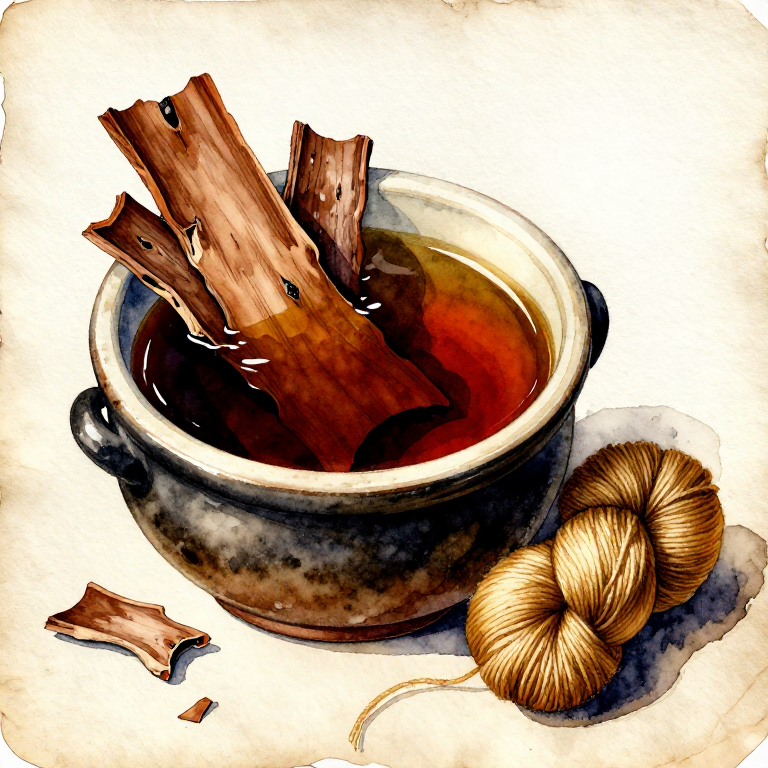

Dyeing with Oak Bark — Tannin Brown from the Most Common European Tree
Oak bark (Quercus species) is one of the oldest and most reliable sources of brown dye in the northern hemisphere. The bark is rich in gallotannins and ellagitannins — the same compounds that make oak bark the preferred material for vegetable leather tanning. When used as a textile dye on alum-mordanted wool, oak bark produces warm tan to golden-brown shades. With an iron modifier, it shifts to deep grey and near-black.
Oak bark dyeing is almost certainly prehistoric. Any culture that tanned leather with oak bark would have noticed that it also coloured fabric. The Anglo-Saxon word for brown — 'brūn' — likely referred originally to colours produced from bark and nut dyes. In medieval Europe, oak bark was so important for leather tanning that forests were managed specifically for bark production through coppicing — cutting trees at the base every 15-25 years to produce multiple stems, each of which yielded bark at harvest. The bark strippers (barkers) were a distinct trade, and the tanning pits consumed enormous quantities.
For the natural dyer, oak bark is appealing because it is free and abundant. Fallen branches, windfall trees, and pruning waste all yield usable bark. The dye is substantive — tannins bond directly to protein fibres without any mordant — but alum mordanting produces warmer, more golden tones and improves lightfastness. Oak bark dye has excellent washfastness and moderate lightfastness, making it one of the most practical everyday dyes from foraged materials.
Hướng dẫn
Collect and weigh the oak bark
Collect and weigh the oak bark
Use 200% WOF of crushed or chopped oak bark. For 100 g of wool, weigh out 200 g of bark. Collect bark from fallen branches, pruning waste, or windfall trees — never strip bark from living oaks, as this damages the tree. Both the rough outer bark and the smoother inner bark contain tannins, but the inner bark is richer. Break or chop the bark into pieces roughly 2-3 cm across to increase surface area for extraction.
Vật liệu cho bước này:
 Vỏ cây sồi (nghiền)200 g
Công cụ cần thiết:
 Cân nhà bếp điện tử
Soak the bark overnight in cold water
Soak the bark overnight in cold water
Place the bark pieces in the dye pot and cover with about 5 litres of cold water. Let them soak overnight (8-12 hours). The long cold soak begins drawing out the tannins gently — the water will turn a pale amber-brown during soaking. This pre-extraction step produces a significantly richer dye bath than heating bark directly from dry.
Công cụ cần thiết:
 Nồi cao
Simmer the bark for 90 minutes
Simmer the bark for 90 minutes
Bring the pot to a gentle simmer (80-90°C) and hold for 90 minutes. Oak bark releases its tannins slowly — the long simmer is essential for a full extraction. Stir occasionally. The liquid will deepen to a rich amber-brown, darker than tea but lighter than coffee. After simmering, the bark pieces will be soft and pale, having surrendered most of their colour.
Công cụ cần thiết:
 Nhiệt kế nấu ăn
 Thìa khuấy bằng gỗ
Strain out the bark pieces
Strain out the bark pieces
Strain the dye liquor through a fine mesh strainer into a clean pot. Squeeze the spent bark to extract the last colour. The strained dye bath should be a clear, warm amber-brown. Bark fragments left in contact with the wool during dyeing can cause dark spots and uneven colour, so strain thoroughly. The spent bark can be composted or saved for a weaker second extraction.
Công cụ cần thiết:
 Rây lưới mịn
Add alum-mordanted wool and heat to 85°C for 45 minutes
Add alum-mordanted wool and heat to 85°C for 45 minutes
Pre-wet the alum-mordanted wool in warm water, squeeze out excess, and lower it into the strained dye bath at room temperature. Slowly raise the temperature to 85°C over 30 minutes, then hold for 45 minutes. Turn the wool gently every 10 minutes for even colour uptake. Oak tannins bond to wool even without mordant (they are substantive), but alum-mordanted wool produces warmer, more golden-brown tones compared to the cooler grey-brown of unmordanted wool.
Vật liệu cho bước này:
 Con sợi len100 g
 Phèn chua (phèn kali)10 g
Cool overnight, rinse, and dry
Cool overnight, rinse, and dry
Turn off the heat, cover the pot, and let the wool cool in the dye bath overnight. The slow cooling allows the tannins to continue bonding, deepening the final colour. Remove the wool the next day, squeeze gently, and rinse in lukewarm water until the runoff is mostly clear. The final colour on alum-mordanted wool is a warm golden-tan to medium brown — the colour of old leather, of autumn leaves, of the forest floor. An iron afterbath shifts the colour to deep grey. Oak bark dye has good washfastness and moderate lightfastness — it fades slowly in direct sunlight but holds well indoors.
Vật liệu
3- 200 gTạm thời
- 100 gTạm thời
- Tạm thời
Công cụ yêu cầu
5- Tạm thời
- Tạm thời
- Tạm thời
- Tạm thời
- Tạm thời
Vật liệu bản thiết kế liên kết
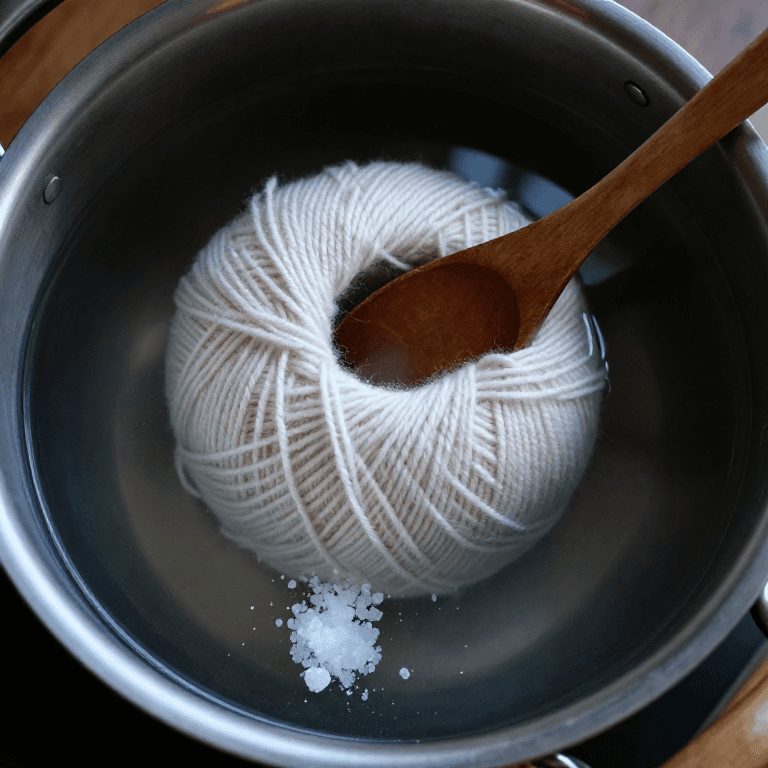
Mordanting Wool with Alum — The Foundation of Natural Dyeing
bởi Tex
Dệt và da
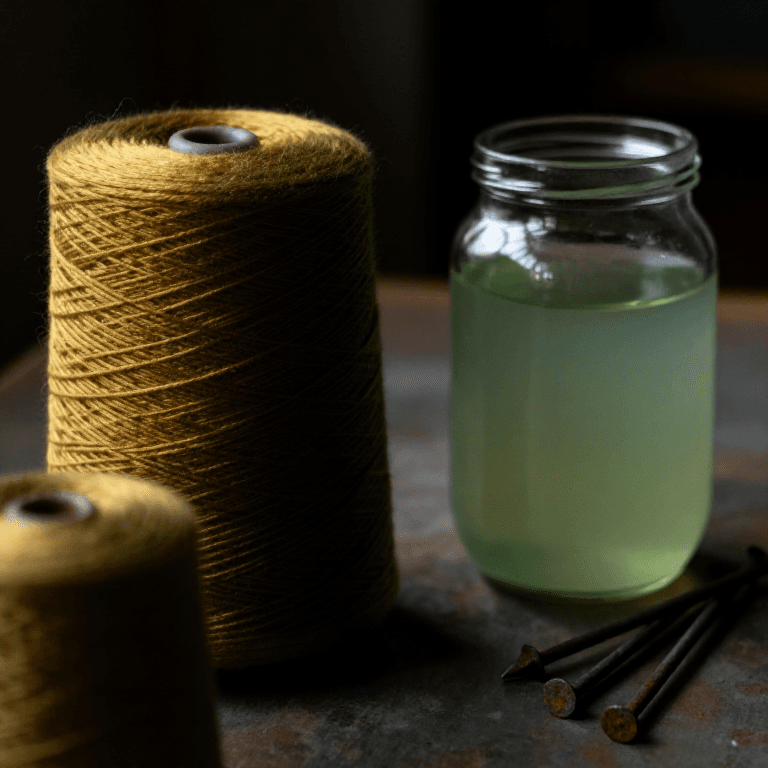
Iron Saddening — Darkening and Shifting Natural Dye Colours with Iron Water
bởi Tex
Dệt và da
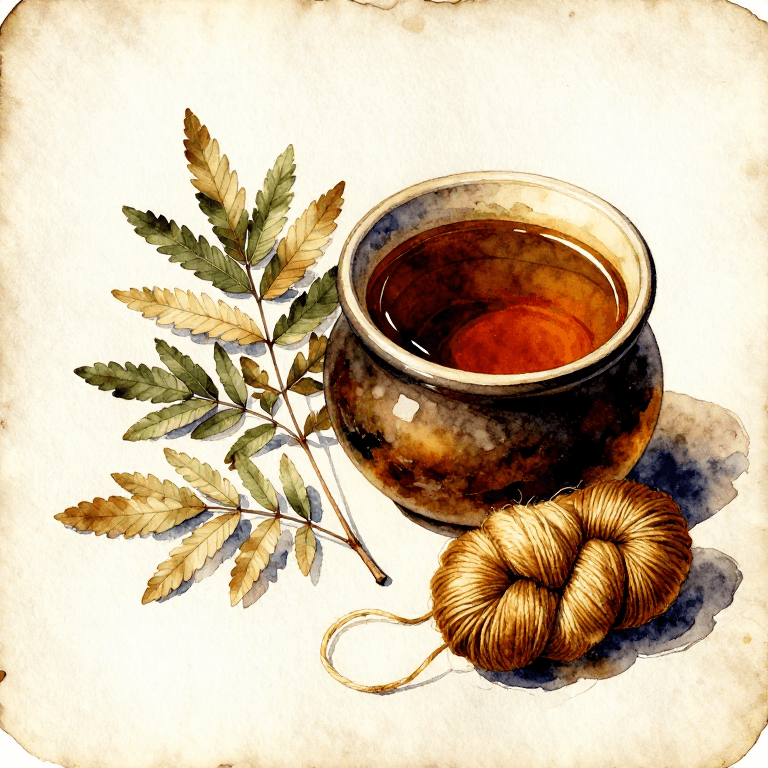
Dyeing Yellow-Brown with Sumac Leaves — The Tannin-Rich Dye of the Ancient Mediterranean
bởi Tex
Dệt và da
Dyeing Brown-Black with Alder Bark — The Northern European Dark Dye
bởi Tex
Dệt và da
Dyeing Brown with Acorns — The Universal Tannin Dye of the Ancient World
bởi Tex
Dệt và da
Bản thiết kế này làm ra

Blueprint liên quan
Các blueprint này chia sẻ kiến thức — kỹ thuật, vật liệu hoặc nguyên tắc
Oak Bark Leather Tanning — Vegetable Tanning with Tannins
bởi Forge
Hóa học
Dyeing with Birch Bark — Salmon-Pink and Cinnamon from the Northern Forest
bởi Tex
Dệt và da
Dyeing with Pomegranate Rinds — Ancient Gold from the Fruit of the Middle East
bởi Tex
Dệt và da
Dyeing Brown with Walnut Hulls — One of Humanity's Oldest and Most Permanent Dyes
bởi Tex
Dệt và da
Dyeing Tan to Rust with Eucalyptus — The Australian Bark Dye
bởi Tex
Dệt và da
Dyeing Red-Brown with Quebracho — The Industrial Tannin of South American Hardwood
bởi Tex
Dệt và da
Dyeing Golden-Brown with Wattle Bark — The Australian Acacia Tannin Dye
bởi Tex
Dệt và da
Dyeing Warm Brown with Coffee — The Universal Kitchen-Cupboard Dye
bởi Tex
Dệt và da
Dyeing Warm Tan with Tea — The Gentlest Tannin Dye in Every Household
bởi Tex
Dệt và da
CC0 Phạm vi công cộng
Bản thiết kế này được phát hành theo CC0. Bạn tự do sao chép, sửa đổi, phân phối và sử dụng cho bất kỳ mục đích nào mà không cần xin phép.
Hỗ trợ nhà sáng tạo bằng cách mua sản phẩm qua bản thiết kế, nơi họ nhận Hoa hồng nhà sáng tạo do nhà bán hàng đặt, hoặc tạo phiên bản mới và kết nối trong bản thiết kế riêng để chia sẻ doanh thu.