NGHỆ THUẬT
LÀM ĐẸP VÀ SỨC KHỎE
THỦ CÔNG
VĂN HÓA VÀ LỊCH SỬ
GIẢI TRÍ
MÔI TRƯỜNG
THỰC PHẨM VÀ ĐỒ UỐNG
KỸ THUẬT NGƯỢC
KHOA HỌC
THỂ THAO
CÔNG NGHỆ
THIẾT BỊ ĐEO

Temperature: The Biggest Lever on Flavour, and It Is Not the Room
Fermentation is exothermic. A vigorously fermenting vessel can sit several degrees above the room it is standing in, and the temperature that matters is the one INSIDE the liquid, not the one on the wall.
That gap is why so many home ferments taste hotter and fruitier than intended. A room at 20 °C can easily mean a fermenter at 24 °C at peak activity, which for most ale yeasts is past the top of its range.
And the flavour consequences are large and one-directional. Warm fermentation produces more esters and more fusel alcohols, and once they are made they do not go away. Cool fermentation is slower and cleaner, and the choice between them is the main flavour decision available after the recipe.
Trung cấp
3 hours
Hướng dẫn
1
1
Measure the liquid, not the air
Measure the liquid, not the air
Stick a thermometer strip on the side of the fermenter, or better, use a probe in a thermowell in the liquid. The difference between the two is exactly the measurement error this rung is about.
Expect 2 to 4 °C above ambient at the peak of a vigorous ale fermentation, and more in a large volume — a bigger vessel has less surface area relative to its contents and sheds heat more slowly.
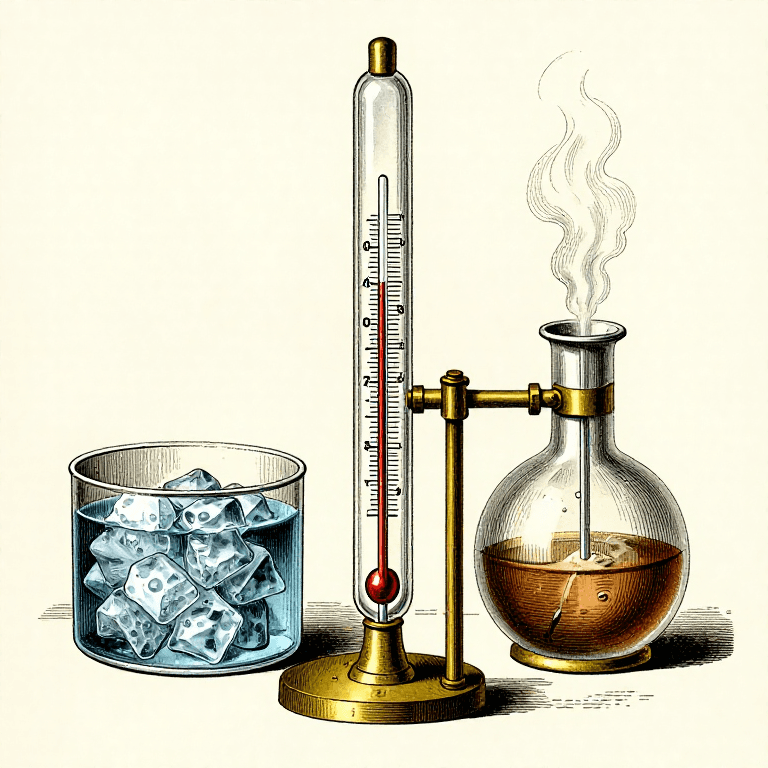
Calibrate the thermometer once against ice water and boiling water, as the Celsius rung sets out. A brewing thermometer reading two degrees high will have you fermenting warm for years without knowing.
Vật liệu cho bước này:
 Nước1 lít
Công cụ cần thiết:
 Nhiệt kế đọc nhanh
 Nhiệt kế nấu ăn
 Bình thủy tinh lên men
2
2
Cool the first three days hardest
Cool the first three days hardest
Most of the heat and nearly all of the flavour compounds are produced in the first 48 to 72 hours, while the yeast is growing. Temperature control during that window is worth far more than control afterwards.
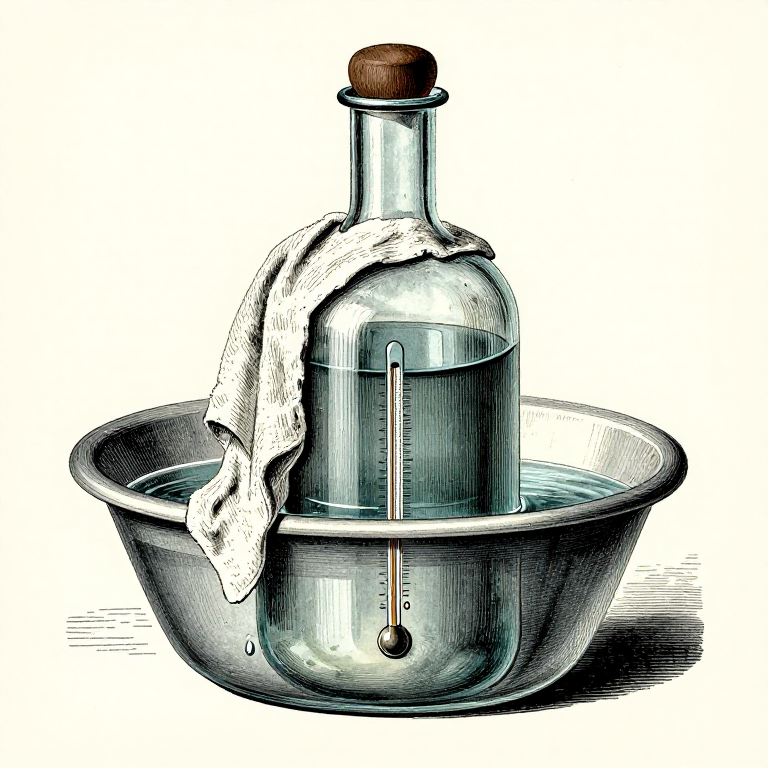
The cheapest effective method is a water bath: the fermenter standing in a tub of water with a wet towel over it. Water's heat capacity buffers the swings and evaporation from the towel cools it a degree or two below ambient.
Many brewers deliberately RAISE the temperature at the end instead, once the bulk of the sugar is gone. That encourages the yeast to clean up diacetyl and acetaldehyde without producing new esters, because growth has already finished — which is the same reasoning read backwards.
Vật liệu cho bước này:
Nước2 lítCông cụ cần thiết:
Bình thủy tinh lên menNhiệt kế đọc nhanh3
3
Every yeast has a range, and it is on the packet
Every yeast has a range, and it is on the packet
Ale yeasts generally work between about 18 and 22 °C, lager yeasts between 9 and 13, and some strains — Belgian, saison, kveik — are bred for much warmer conditions and are perfectly happy at 30 °C or beyond.
Within a strain's range, the temperature is a dial. The same yeast at the bottom of its range gives a clean neutral result and at the top gives a fruity, spicy one, and many classic styles are the same strain used at different ends.
Above the range the yeast makes fusel alcohols — heavy, solventy, headache-inducing — and below it, it goes dormant and leaves the ferment stalled. Both limits are hard, and the packet states them because they matter.
Vật liệu cho bước này:
 Men bia1 cái
Công cụ cần thiết:
Nhiệt kế đọc nhanhNhiệt kế nấu ăn4
4
Change one thing, and brew the same recipe twice
Change one thing, and brew the same recipe twice
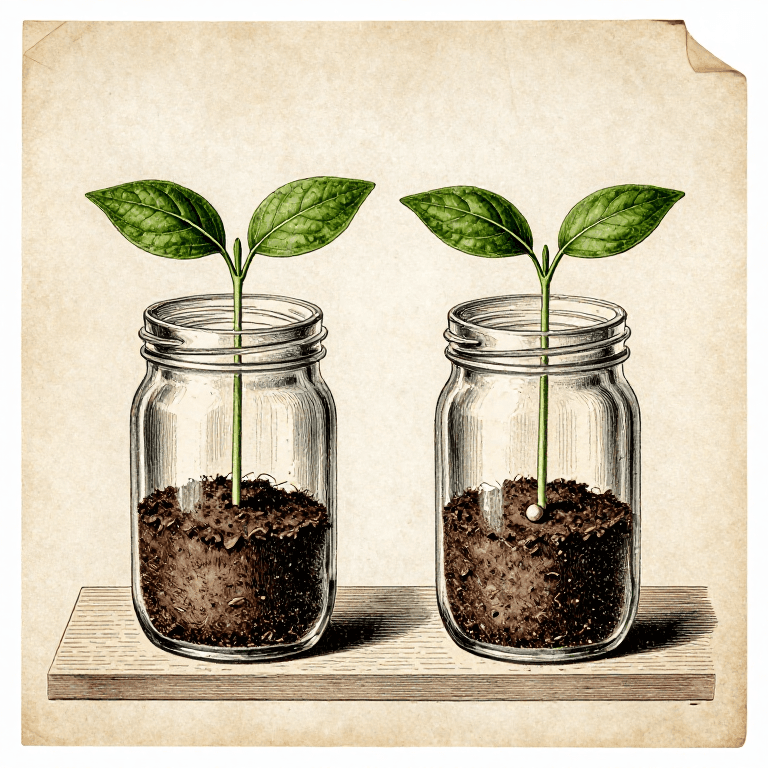
Split a batch between two vessels, ferment one warm and one cool, and taste them side by side. That single experiment teaches more about yeast than any amount of reading, and it costs one extra fermenter.
It is also a proper controlled experiment: same wort, same yeast, same pitching rate, one variable. Changing the recipe and the temperature together is what makes most home brewing un-learnable.
Log the temperature daily, not just at the start. A ferment that spiked to 26 °C on day two and settled back is indistinguishable at the end from one that never did — except in the glass, and by then the record is the only way to know.
Vật liệu cho bước này:
Men bia1 cái Chiết xuất mạch nha khô1 cái
Công cụ cần thiết:
Bình thủy tinh lên menNhiệt kế đọc nhanh Tỷ trọng kế và ống đong nấu bia
Vật liệu
3- 3 lítTạm thời
- Men biaHoa hồng 10%2 cáiTạm thời
- Tạm thời
Blueprint liên quan
Các blueprint này chia sẻ kiến thức — kỹ thuật, vật liệu hoặc nguyên tắc

CC0 Phạm vi công cộng
Bản thiết kế này được phát hành theo CC0. Bạn tự do sao chép, sửa đổi, phân phối và sử dụng cho bất kỳ mục đích nào mà không cần xin phép.
Hỗ trợ nhà sáng tạo bằng cách mua sản phẩm qua bản thiết kế, nơi họ nhận Hoa hồng nhà sáng tạo do nhà bán hàng đặt, hoặc tạo phiên bản mới và kết nối trong bản thiết kế riêng để chia sẻ doanh thu.