NGHỆ THUẬT
LÀM ĐẸP VÀ SỨC KHỎE
THỦ CÔNG
VĂN HÓA VÀ LỊCH SỬ
GIẢI TRÍ
MÔI TRƯỜNG
THỰC PHẨM VÀ ĐỒ UỐNG
KỸ THUẬT NGƯỢC
KHOA HỌC
THỂ THAO
CÔNG NGHỆ
THIẾT BỊ ĐEO
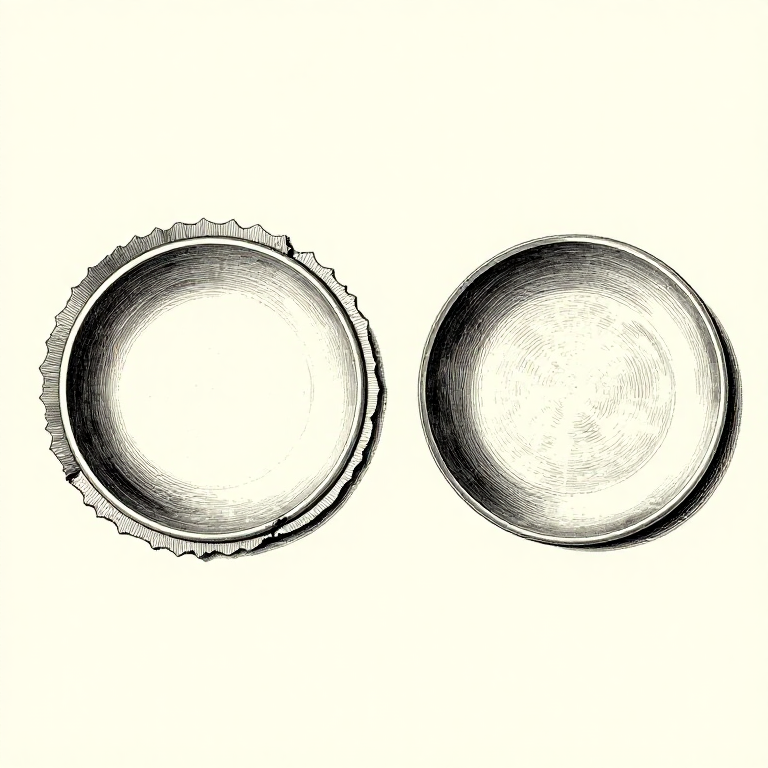


Fettling: What Happens After the Mould Is Broken Open
The casting that comes out of the sand is not the part. It has a sprue, runners, gates, risers, flash along the parting line and sand baked onto its surface — and all of that has to come off.
FETTLING is that work, and it is usually the longest single operation in making a casting. A gating system designed with fettling in mind takes minutes to remove; one designed without it takes an hour with a grinder.
It is also when the casting is finally inspected properly. Dimensions checked, surfaces seen for the first time, defects found — which is why the reading rung comes before this one rather than after it.
Trung cấp
3 hours
Hướng dẫn
1
1
Let it cool in the sand, and be patient about it
Let it cool in the sand, and be patient about it
Breaking a mould open early to see the casting is the commonest impulse and one of the commonest ways to ruin one. A casting cooling in sand cools slowly and evenly; exposed to air it cools fast on the outside and can crack.
Cast iron is the extreme case: cooled quickly it forms hard white iron at the surface that cannot be machined at all, and the whole point of a grey iron casting is lost. Slow cooling in the sand is what makes it grey.
Wait until it can be handled with gloves. That is usually far longer than it feels, and the casting is not improving in any way by coming out early — it is only at risk.
Vật liệu cho bước này:
 Cát đúc1 kg
Công cụ cần thiết:
 Găng tay da ống dài
 Kìm gắp nồi nấu kim loại
2
2
Cut the gating off, do not break it
Cut the gating off, do not break it
Saw or cut the runners and risers off rather than snapping them. A break can run INTO the casting, taking a piece of the part with it, and that is not repairable on anything that matters.
Brittle alloys — grey iron, some bronzes — can be struck off cleanly where a notch has been cut first to control where the fracture runs. Ductile ones must be sawn or cut.
Leave a few millimetres proud and dress back to the surface afterwards. Cutting flush in one operation risks going into the casting, and a raised stub is far easier to remove than a gouge is to fill.
Vật liệu cho bước này:
 Thỏi đồng thanh1 cái
Công cụ cần thiết:
 Cưa sắt
 Bộ giũa
 Thước cặp điện tử 6 inch
3
3
Dress the flash, and keep the form
Dress the flash, and keep the form
Flash comes off with a file or a grinder, following the shape the casting was meant to have. The temptation is to grind until the line disappears, which takes the casting's form with it.
Work with the eye and the hand on the FORM, not on the defect. A flat file on a curved surface produces a flat, and on a cast form that flat is more visible than the flash line was.
Sand is abrasive and it blunts everything quickly. Wire-brush the casting before filing it, and accept that fettling files are consumables — or use a grinder first and files only for the finish.
Vật liệu cho bước này:
Thỏi đồng thanh1 cáiCông cụ cần thiết:
Bộ giũa Kính lúp thợ kim hoànGăng tay da ống dài
4
4
Measure it, weigh it, and write it all down
Measure it, weigh it, and write it all down
Measure the finished casting against the drawing. A systematic difference from the intended size is a shrinkage allowance that was wrong, and that is a pattern correction rather than a process one.
Weigh the casting and the gating separately. That gives the YIELD — casting weight over total poured — which is the number a foundry actually optimises, and 50 to 70% is typical for sand casting.
Then record everything: alloy, pouring temperature, sand condition, gating layout, what came out and what was wrong with it. Every rung in this batch ends at that notebook, because a casting process is reproducible only to the extent that it is written down.
Vật liệu cho bước này:
Thỏi đồng thanh1 cáiCông cụ cần thiết:
Thước cặp điện tử 6 inch Cân chính xác
 Thước kẻ
Blueprint liên quan
Các blueprint này chia sẻ kiến thức — kỹ thuật, vật liệu hoặc nguyên tắc

CC0 Phạm vi công cộng
Bản thiết kế này được phát hành theo CC0. Bạn tự do sao chép, sửa đổi, phân phối và sử dụng cho bất kỳ mục đích nào mà không cần xin phép.
Hỗ trợ nhà sáng tạo bằng cách mua sản phẩm qua bản thiết kế, nơi họ nhận Hoa hồng nhà sáng tạo do nhà bán hàng đặt, hoặc tạo phiên bản mới và kết nối trong bản thiết kế riêng để chia sẻ doanh thu.