NGHỆ THUẬT
LÀM ĐẸP VÀ SỨC KHỎE
THỦ CÔNG
VĂN HÓA VÀ LỊCH SỬ
GIẢI TRÍ
MÔI TRƯỜNG
THỰC PHẨM VÀ ĐỒ UỐNG
KỸ THUẬT NGƯỢC
KHOA HỌC
THỂ THAO
CÔNG NGHỆ
THIẾT BỊ ĐEO
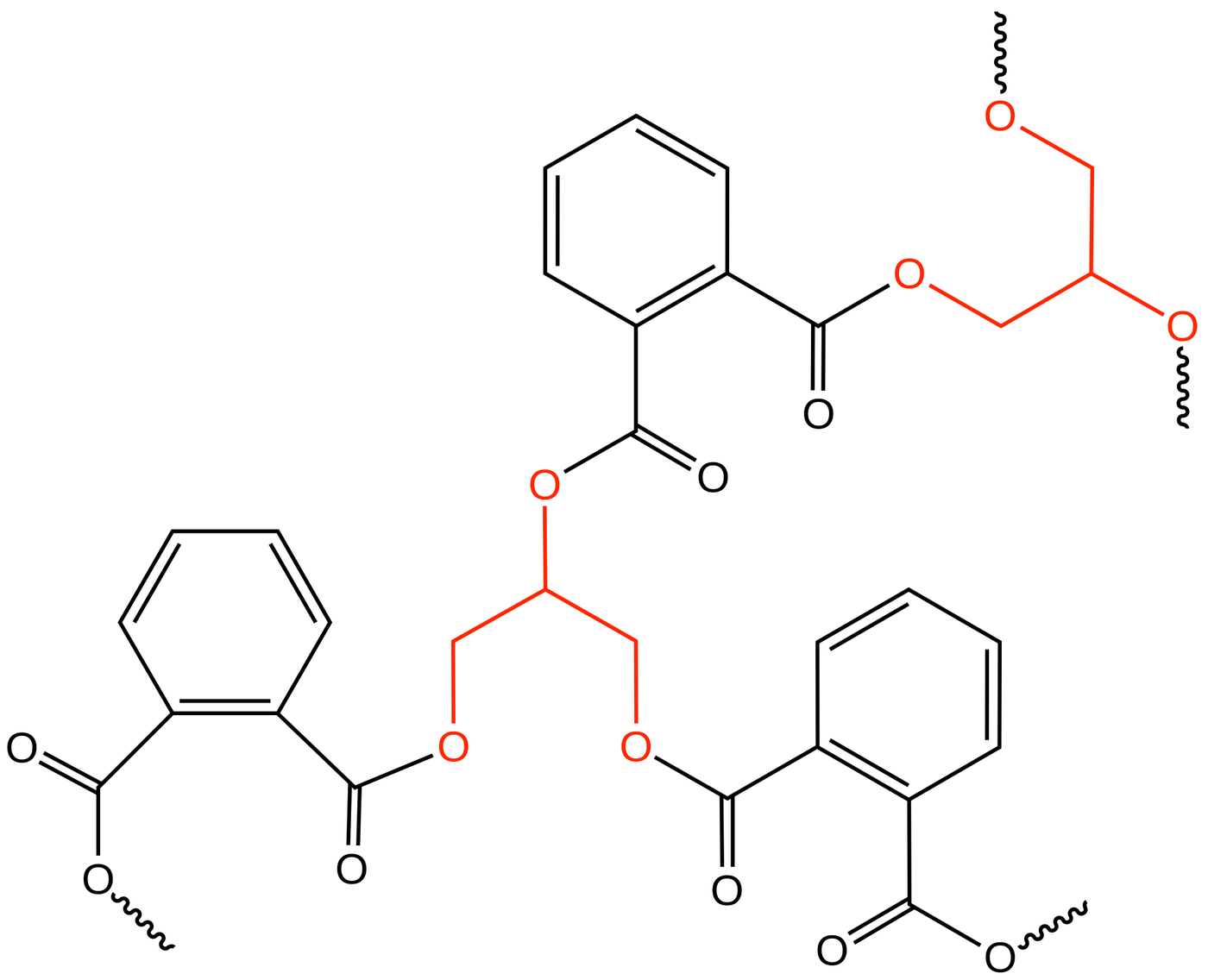


Glyptal Resin from Glycerin and Phthalic Anhydride: Callahan, 1914
Michael J. Callahan of General Electric patented this in 1914, US 1,108,329 (filed 1912): glycerin and phthalic anhydride heated together give a brittle, transparent, yellowish resin that dissolves in acetone and serves as a varnish. Heated afterwards at a moderate temperature for a long time it turns hard, infusible and insoluble, free of bubbles, with high dielectric strength, for insulating coils and wires. Resins of glycerol and phthalic acid like this were the original alkyds, sold under the name Glyptal.
Nâng cao
Workshop process
Hướng dẫn
1
1
Weigh out the charge
Weigh out the charge
Đang tải sổ tay Jupyter…
2
2
Fuse the charge
Fuse the charge
Mix two parts by weight of phthalic anhydride with one part of glycerin and heat slowly in a suitable container. At about 100 °C the two fuse to a clear liquid and a slight distillation begins.
Vật liệu cho bước này:
 Anhydrit phtalic2 parts by weight
 Glyxerol (99 %)1 part by weight
Công cụ cần thiết:
 Cốc thuỷ tinh borosilicat
 Bếp điện phẳng
 Nhiệt kế
 Đũa khuấy thuỷ tinh
3
3
Hold at 185 °C until distillation stops
Hold at 185 °C until distillation stops
Raise the temperature to about 185 °C and keep it there until distillation ceases. Then go on heating at this temperature, or a little higher, about 210 °C, until the first stage of the reaction is complete.
Công cụ cần thiết:
Bếp điện phẳngNhiệt kế4
4
Test samples and stop in time
Test samples and stop in time
Take small samples from the mass and let them cool. As soon as a sample is hard and brittle, without stickiness, stop heating and let the product cool. It sets to a brittle, transparent, somewhat yellowish mass that melts again on heating and dissolves in acetone. Do not heat further: the second stage then starts with a rapid rise in temperature, violent boiling sets in at about 275 °C, and the result is a hard, brittle mass full of cavities.
Công cụ cần thiết:
Đũa khuấy thuỷ tinhNhiệt kế5
5
Dissolve it in acetone for varnish
Dissolve it in acetone for varnish
Dissolve the resin in acetone. The solution is clear and can be used as a varnish: impregnate the fibrous covering of coils or wires with it, or paint it on, then evaporate the acetone.
Vật liệu cho bước này:
 Axeton1 as required
Công cụ cần thiết:
Cốc thuỷ tinh borosilicatĐũa khuấy thuỷ tinh Bút vẽ mảnh
6
6
Harden it slowly
Harden it slowly
Harden the coated or cast resin by heating it at a moderate temperature, preferably about 85 to 100 °C, for a time that depends on the mass: a layer about 0.2 inch thick takes about 15 to 20 hours. In some cases a higher temperature, say 135 °C, can be used. No bubbles form, and the product is hard, dense, infusible and practically insoluble in the usual solvents.
Công cụ cần thiết:
 Lò sấyNhiệt kế
Vật liệu
3- 2 parts by weightTạm thời
- 1 part by weightTạm thời
- 1 as requiredTạm thời
Bản thiết kế này làm ra

Blueprint liên quan
Các blueprint này chia sẻ kiến thức — kỹ thuật, vật liệu hoặc nguyên tắc

CC0 Phạm vi công cộng
Bản thiết kế này được phát hành theo CC0. Bạn tự do sao chép, sửa đổi, phân phối và sử dụng cho bất kỳ mục đích nào mà không cần xin phép.
Hỗ trợ nhà sáng tạo bằng cách mua sản phẩm qua bản thiết kế, nơi họ nhận Hoa hồng nhà sáng tạo do nhà bán hàng đặt, hoặc tạo phiên bản mới và kết nối trong bản thiết kế riêng để chia sẻ doanh thu.