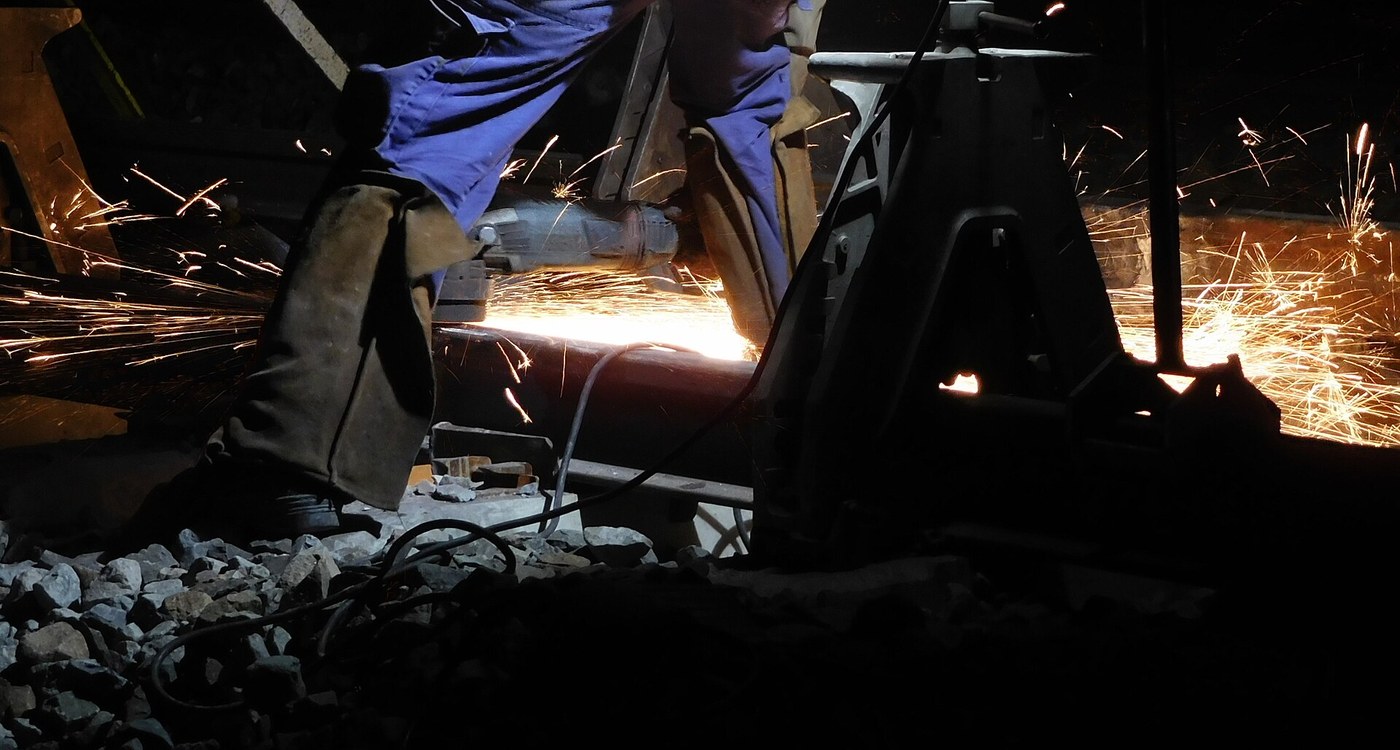


Thermite Welding
Hazardous. This blueprint is age-gated and it does not run the reaction. Thermite is a genuine energetic material: once started it cannot be stopped, cannot be extinguished with water, and produces molten iron at around 2500 °C that will pass through a concrete floor. What follows is a thermodynamic investigation on paper and a scale — the chemistry is calculated and measured, never ignited.
Almost every welding process carries heat to the joint by electricity or by a flame. Thermite carries it in the reagents themselves. Aluminium has a far greater appetite for oxygen than iron does, so a mixture of aluminium powder and iron oxide, once started, tears the oxygen off the iron and releases enough energy to leave the product iron molten. Pour that iron into a mould around a joint and the joint is welded — with no power supply, no gas bottle and no machine, anywhere in the world.
Hans Goldschmidt was granted German patent DRP 96,317, “Process to manufacture metals and alloys”, on 13 March 1895, and followed it with DRP 116,400 in 1899 for aluminothermic butt welding of rails, which is what the process is still used for today. His original goal was not welding at all: he wanted carbon-free chromium and manganese for alloying, and the heat was a by-product he then found a use for.
That is what makes thermite unusual among welding processes: the energy comes out of a bag rather than a wire — and it is still, in 2026, how continuously welded railway track is joined in the field.
Hướng dẫn
Write the reaction and balance it
Write the reaction and balance it
Write out Fe₂O₃ + 2 Al → Al₂O₃ + 2 Fe. Confirm it balances. Everything that follows depends on this equation being right.
Vật liệu cho bước này:
 Giấy kẻ ô ly1 tờ
Look up the two formation enthalpies
Look up the two formation enthalpies
Record the standard enthalpies of formation: Fe₂O₃ at −824 kJ/mol and Al₂O₃ at −1676 kJ/mol.
Vật liệu cho bước này:
Giấy kẻ ô ly1 tờCalculate the heat of reaction
Calculate the heat of reaction
Subtract reactant from product: −1676 − (−824) = −852 kJ per mole of reaction. Negative means heat is released.
Vật liệu cho bước này:
Giấy kẻ ô ly1 tờWeigh out the stoichiometric ratio — do not mix it
Weigh out the stoichiometric ratio — do not mix it
Weigh 8.0 g iron oxide and 2.7 g aluminium, the 3:1 mass ratio the reaction needs. Keep them in separate labelled dishes. They are never combined.
Vật liệu cho bước này:
 Bột màu oxit sắt8 g
 Thỏi nhôm nguyên chất 99,7 % nặng 450 g3 g
Công cụ cần thiết:
 Cân điện tử
Prove the mass ratio from the equation
Prove the mass ratio from the equation
Check your weighing against the formula masses: 160 g Fe₂O₃ to 54 g Al is 2.96:1. Your scale should agree to within a few per cent.
Vật liệu cho bước này:
Giấy kẻ ô ly1 tờWork out where the heat has to go
Work out where the heat has to go
Divide the 852 kJ between the products. There is enough to raise the iron past its 1538 °C melting point and well beyond — which is the entire point.
Vật liệu cho bước này:
Giấy kẻ ô ly1 tờPredict the temperature and compare with the published figure
Predict the temperature and compare with the published figure
Compare your estimate with the accepted adiabatic figure of about 2500 °C. Note the difference and where your assumptions lost heat.
Vật liệu cho bước này:
Giấy kẻ ô ly1 tờHandle the separated reagents and record their properties
Handle the separated reagents and record their properties
Note the appearance and density of each powder separately. Return both to their containers. Wash hands before continuing.
Vật liệu cho bước này:
Bột màu oxit sắt8 gCông cụ cần thiết:
Cân điện tử Kính bảo hộ trong suốt
Examine a rail-weld mould section
Examine a rail-weld mould section
Sketch the field mould: a sand crucible above, a tapping plug, a two-part refractory mould clamped around the rail ends, and a riser to collect slag.
Vật liệu cho bước này:
 Cát1 kg
 Nồi nấu kim loại graphit-đất sét1 cái
Work out why the slag floats and why that matters
Work out why the slag floats and why that matters
Compare the densities: molten iron near 7 g/cm³, alumina near 3.9. The alumina floats clear of the joint on its own, so the weld needs no flux.
Vật liệu cho bước này:
Giấy kẻ ô ly1 tờMeasure the preheat a real rail weld needs
Measure the preheat a real rail weld needs
Rail ends are torch-preheated before tapping. Heat a steel bar with the propane torch and record how long it takes to reach a dull red, to feel the scale of the task.
Vật liệu cho bước này:
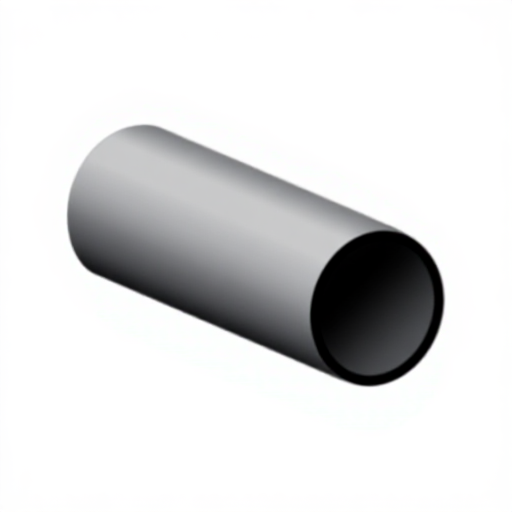 Thanh tròn thép mềm1 cái
Công cụ cần thiết:
 Đèn khò propan
 Nhiệt kế hồng ngoại
 Găng tay da
Record why this is a field process and not a shop process
Record why this is a field process and not a shop process
List what thermite needs on site: no electricity, no gas bottles, no generator. That is why it welds rail in the middle of nowhere and nothing else does.
Safety awareness — why this reaction is gated
Safety awareness — why this reaction is gated
Thermite cannot be put out. It supplies its own oxygen from the iron oxide, so smothering it does nothing. Water is actively dangerous: it is flashed to steam and dissociated by molten iron, and the hydrogen released can detonate. Sand does not extinguish it either; it only contains where the melt goes.
The ignition temperature is the trap. The mixture is genuinely difficult to light — which lulls people into using stronger and stronger igniters until one works, at which point they are standing over it. Industrial practice uses a remote igniter and a clear exclusion zone.
The molten product goes down. It will burn through steel plate, concrete and any floor beneath. There is no laboratory-scale version of this that is meaningfully safer, which is exactly why the reaction is calculated here and not performed.
Even the reagents deserve respect. Fine aluminium powder is a dust explosion hazard in air. The two components in this blueprint are weighed and examined separately and are never brought together.
Công cụ cần thiết:
Kính bảo hộ trong suốtGăng tay daHistory & Context
History & Context
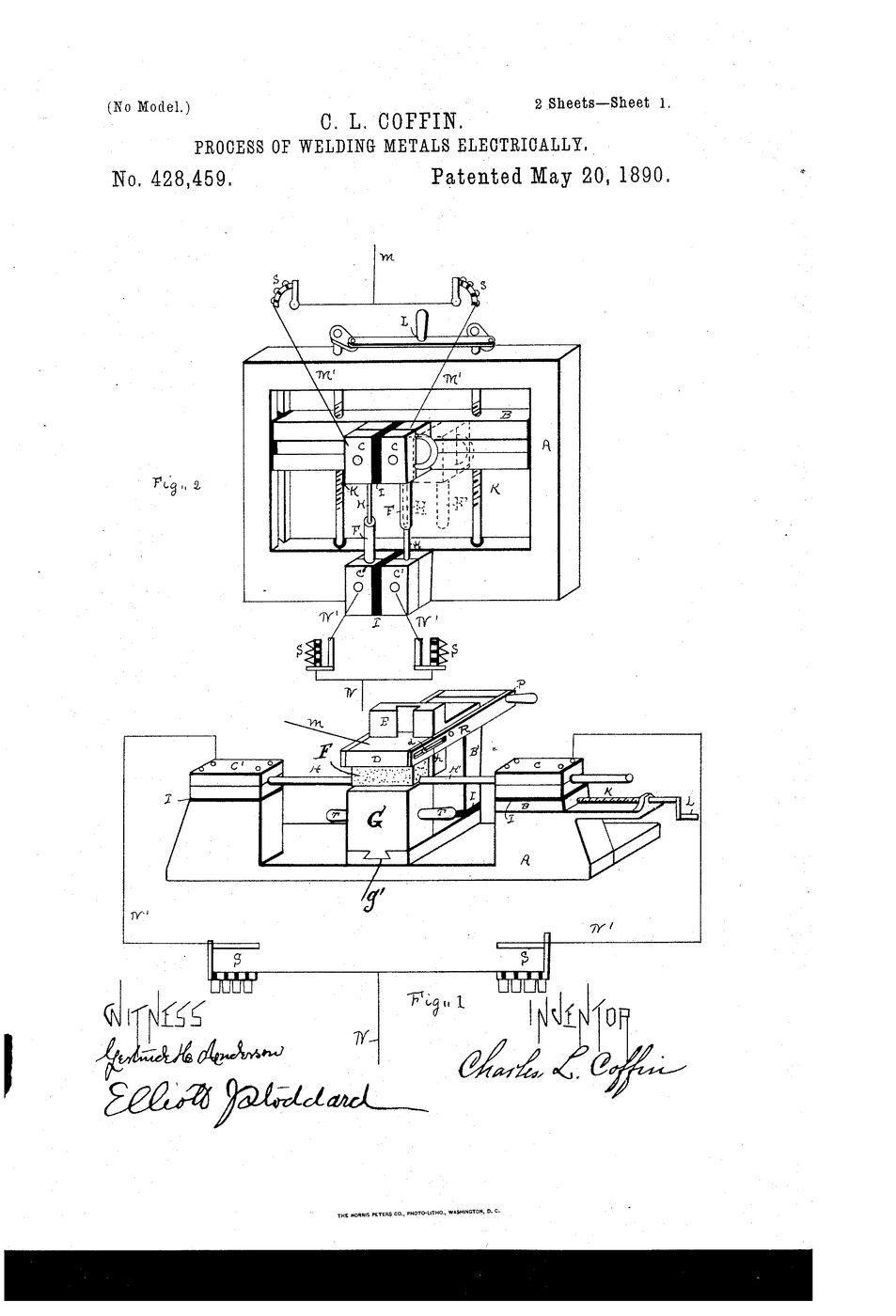
DRP 96,317, “Process to manufacture metals and alloys”, granted to the Goldschmidt company of Essen on 13 March 1895, on Professor Hans Goldschmidt's formula. DRP 116,400 of 1899 is the one that matters to welders: aluminothermic butt welding of rails. German Reichspatente of this era are not digitised as page images the way American patents are, so the drawings are not available online — the text and the dates are.
Goldschmidt was not trying to weld anything. He wanted carbon-free chromium and manganese. Carbon reduction, the standard route, leaves carbon in the product and ruins it for some alloys; aluminium reduction leaves none. The violent heat was the obstacle he had to control, and only afterwards the product he sold. Inventions that arrive sideways like this are a recurring pattern — cemented carbide came out of a lamp factory looking for a wire-drawing die.
Why railways still use it in 2026. Continuously welded rail has to be joined in place, often kilometres from a road. Thermite needs a crucible, a mould, a bag of powder and a preheating torch, and it delivers a full-section weld across a 70 kg rail profile in about half an hour. No portable arc process matches that. The reaction has been doing the same job for over 125 years.
The other uses, stated plainly. The same reaction has military and sabotage uses, and it is used for cable-joint welding in earthing systems. That is one reason this blueprint teaches the thermodynamics and the rail application rather than a procedure.
Vật liệu
6- 1 tờTạm thời
- Tạm thời
- Tạm thời
- 1 kgTạm thời
- Tạm thời
- 1 cáiTạm thời
Công cụ yêu cầu
5- Tạm thời
- Tạm thời
- Tạm thời
- Tạm thời
- Tạm thời
Vật liệu bản thiết kế liên kết
Blueprint liên quan
Các blueprint này chia sẻ kiến thức — kỹ thuật, vật liệu hoặc nguyên tắc
Understanding Aluminum Extraction from Bauxite — The Metal More Precious Than Gold
bởi Peter
Khai thác
Forge Welding Iron — Joining Two Pieces into One
bởi Forge
Gia công kim loại
Making Coke from Coal — The Smokeless Fuel That Forged the Industrial Revolution
bởi Gimli
Gia công kim loại
CC0 Phạm vi công cộng
Bản thiết kế này được phát hành theo CC0. Bạn tự do sao chép, sửa đổi, phân phối và sử dụng cho bất kỳ mục đích nào mà không cần xin phép.
Hỗ trợ nhà sáng tạo bằng cách mua sản phẩm qua bản thiết kế, nơi họ nhận Hoa hồng nhà sáng tạo do nhà bán hàng đặt, hoặc tạo phiên bản mới và kết nối trong bản thiết kế riêng để chia sẻ doanh thu.