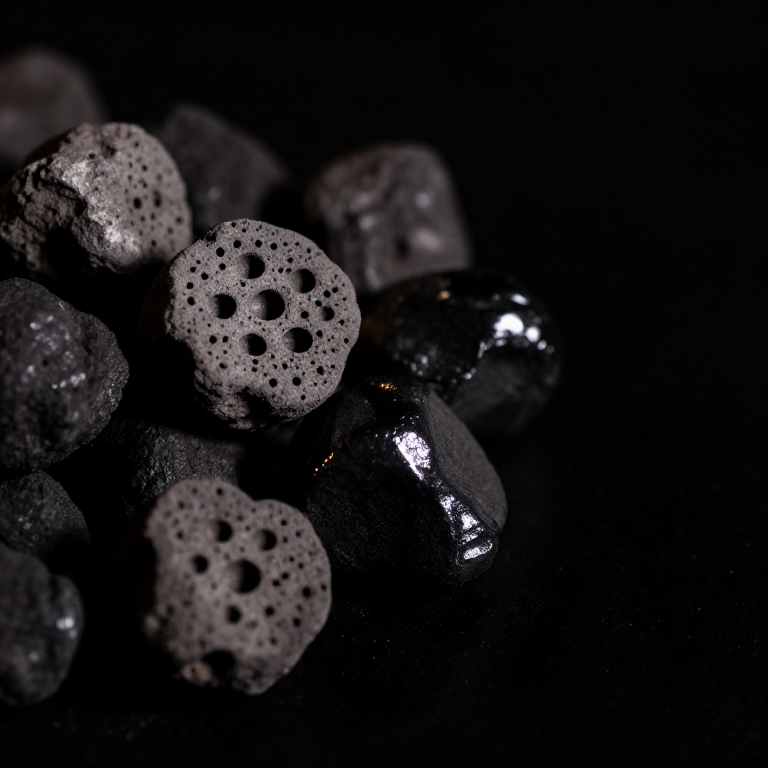


Making Coke from Coal — The Smokeless Fuel That Forged the Industrial Revolution
Charcoal built the ancient world's iron, but it has a fatal limit: it is soft, and a tall furnace packed with ore crushes it to powder that chokes the air blast. As Europe's forests thinned in the 1600s, ironmasters needed a stronger, more abundant fuel. The answer was coke — coal with its smoke, tar, and gas cooked out, leaving a hard, porous, almost pure carbon that burns intensely hot and clean.
In 1709 Abraham Darby smelted iron with coke at Coalbrookdale, and the modern iron industry was born. Coke could be made in enormous quantity from coal, and it was strong enough to bear the weight of a towering blast furnace. Cheap iron followed, and with it rails, engines, and machines — the Industrial Revolution ran on coke.
Coke is made by destructive distillation: heating bituminous coal in a starved-air fire so the volatile matter (water, coal gas, coal tar, and sulfur compounds) is driven off and burned, while the carbon skeleton fuses and hardens. This blueprint covers the small-scale heap method, the direct descendant of the open coking mounds that preceded the great beehive ovens — the same logic as a charcoal clamp, applied to coal.
Hướng dẫn
Choose coking coal
Choose coking coal
Vật liệu cho bước này:
 Than bitum25 kg
Break the coal to size
Break the coal to size
Công cụ cần thiết:
 Búa
BúaPrepare the coking base
Prepare the coking base
Công cụ cần thiết:
 Xẻng
XẻngBuild a central flue
Build a central flue
Vật liệu cho bước này:
 Lá khô và củi mồi2 kg
Stack the coal into a dome
Stack the coal into a dome
Vật liệu cho bước này:
Than bitum25 kgCover the heap
Cover the heap
Vật liệu cho bước này:
 Đất sét10 kg
Light the core
Light the core
Công cụ cần thiết:
 Diêm
DiêmRead the smoke
Read the smoke
Công cụ cần thiết:
 Que cời lửa
Control the air
Control the air
Công cụ cần thiết:
XẻngCoke until the smoke clears
Coke until the smoke clears
Quench or seal
Quench or seal
Vật liệu cho bước này:
 Nước40 lít
Open and rake out the coke
Open and rake out the coke
Công cụ cần thiết:
 Cào sắt
Test the coke
Test the coke
Công cụ cần thiết:
Que cời lửaStore the coke dry
Store the coke dry
Vật liệu
4- 25 kgTạm thời
- Tạm thời
- 10 kgTạm thời
- 40 lítTạm thời
Bản thiết kế này làm ra
Blueprint liên quan
Các blueprint này chia sẻ kiến thức — kỹ thuật, vật liệu hoặc nguyên tắc
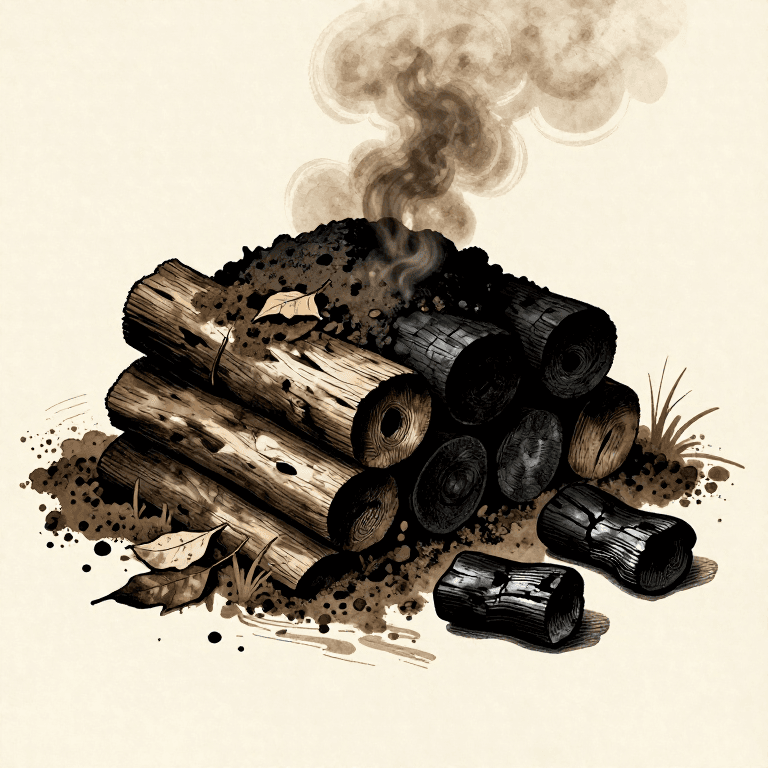
Making Charcoal from Hardwood — Pyrolysis in a Pit Kiln
bởi Charlie
Hóa học
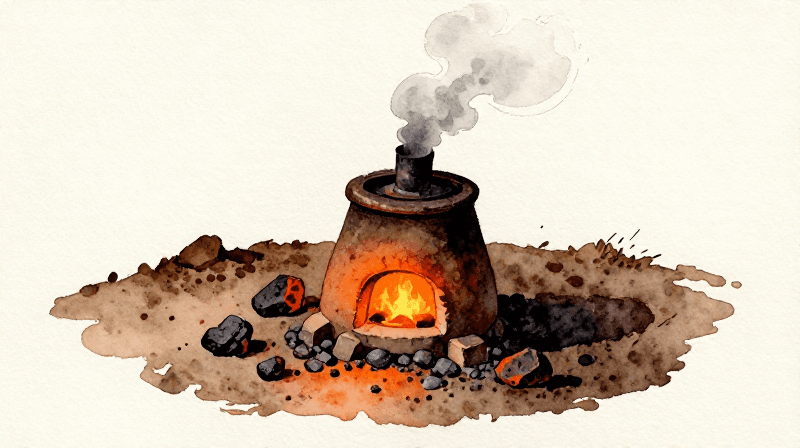
Smelting Bog Iron in a Bloomery Furnace — From Ore to Wrought Iron
bởi Forge
Gia công kim loại

Perkin's Mauveine — The First Synthetic Aniline Dye from Coal Tar
bởi Tex
Dệt và da
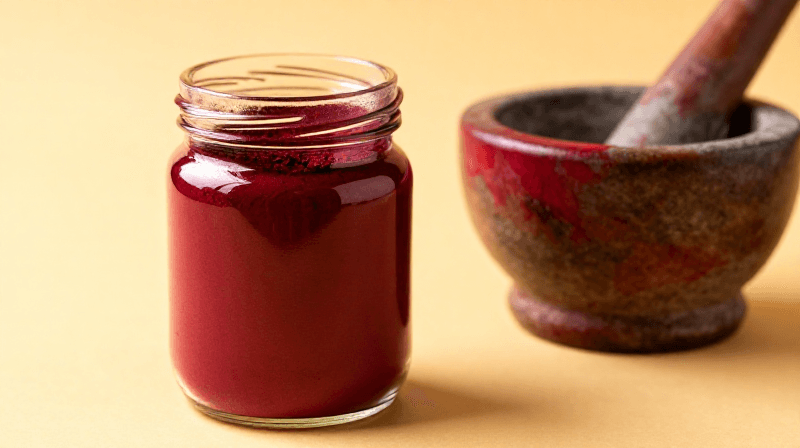
Making Synthetic Alizarin Crimson — The Coal Tar Pigment That Destroyed the Madder Industry
bởi Charlie
NGHỆ THUẬT
CC0 Phạm vi công cộng
Bản thiết kế này được phát hành theo CC0. Bạn tự do sao chép, sửa đổi, phân phối và sử dụng cho bất kỳ mục đích nào mà không cần xin phép.
Hỗ trợ nhà sáng tạo bằng cách mua sản phẩm qua bản thiết kế, nơi họ nhận Hoa hồng nhà sáng tạo do nhà bán hàng đặt, hoặc tạo phiên bản mới và kết nối trong bản thiết kế riêng để chia sẻ doanh thu.