NGHỆ THUẬT
LÀM ĐẸP VÀ SỨC KHỎE
THỦ CÔNG
VĂN HÓA VÀ LỊCH SỬ
GIẢI TRÍ
MÔI TRƯỜNG
THỰC PHẨM VÀ ĐỒ UỐNG
KỸ THUẬT NGƯỢC
KHOA HỌC
THỂ THAO
CÔNG NGHỆ
THIẾT BỊ ĐEO
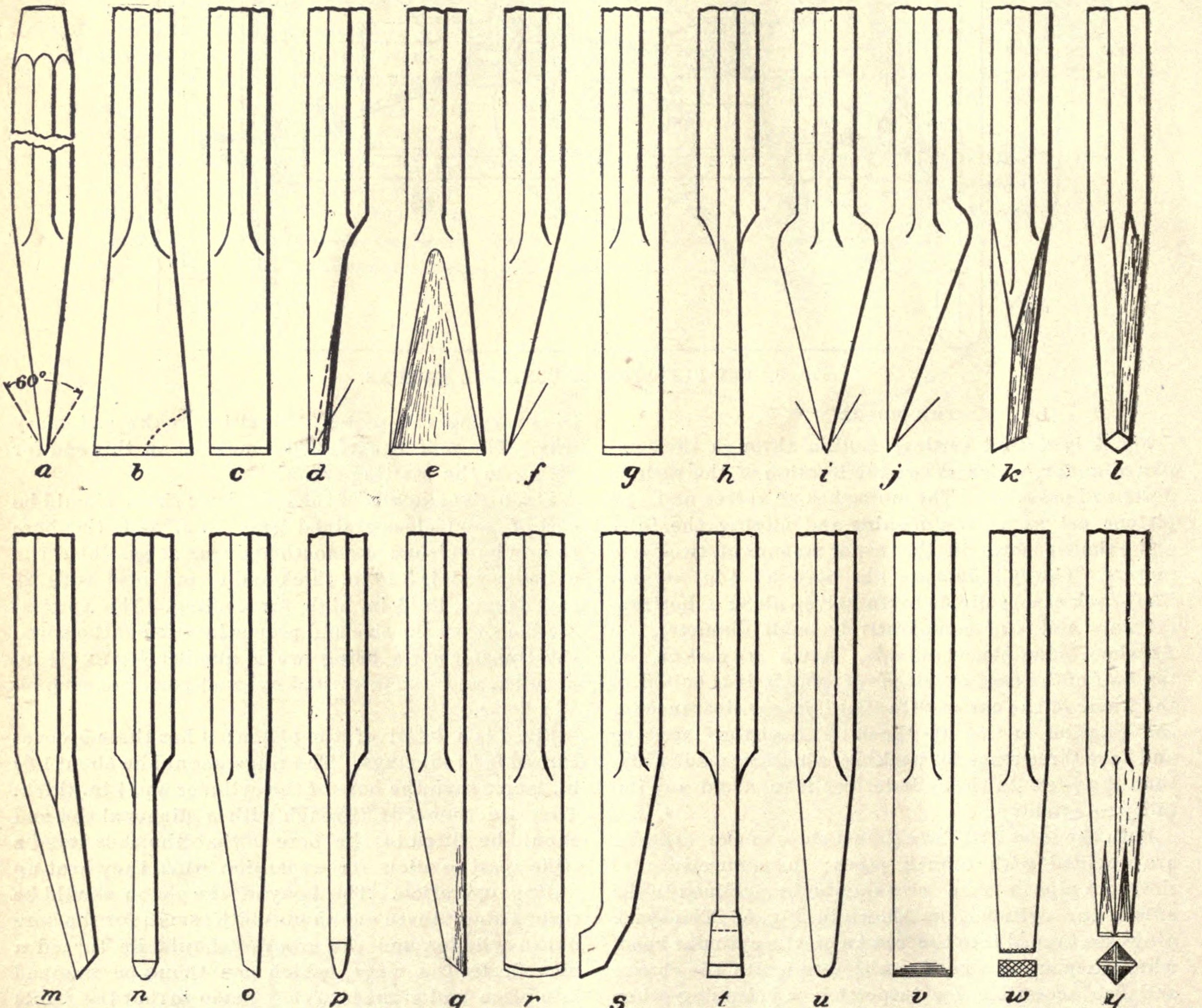


A Set of Cold Chisels: Flat, Gouge, Side, Cape, Diamond-Point and Round-Nose, Edge Hardened Only, Tempered Purple (Griswold, 1904)
Robert Gibson Griswold's working set of cold chisels from Amateur Work (Boston, 1904): octagonal tool steel or old files forged about 5 in. long, flat chisels 3/8 to 1 in. with a 60 degree edge, plus gouges, side, cape, diamond-point and round-nose chisels; only the last 1/8 in. of the edge hardened, tempered light purple for steel or dark purple for iron.
Trung cấp
Two or three days for the set
Hướng dẫn
1
1
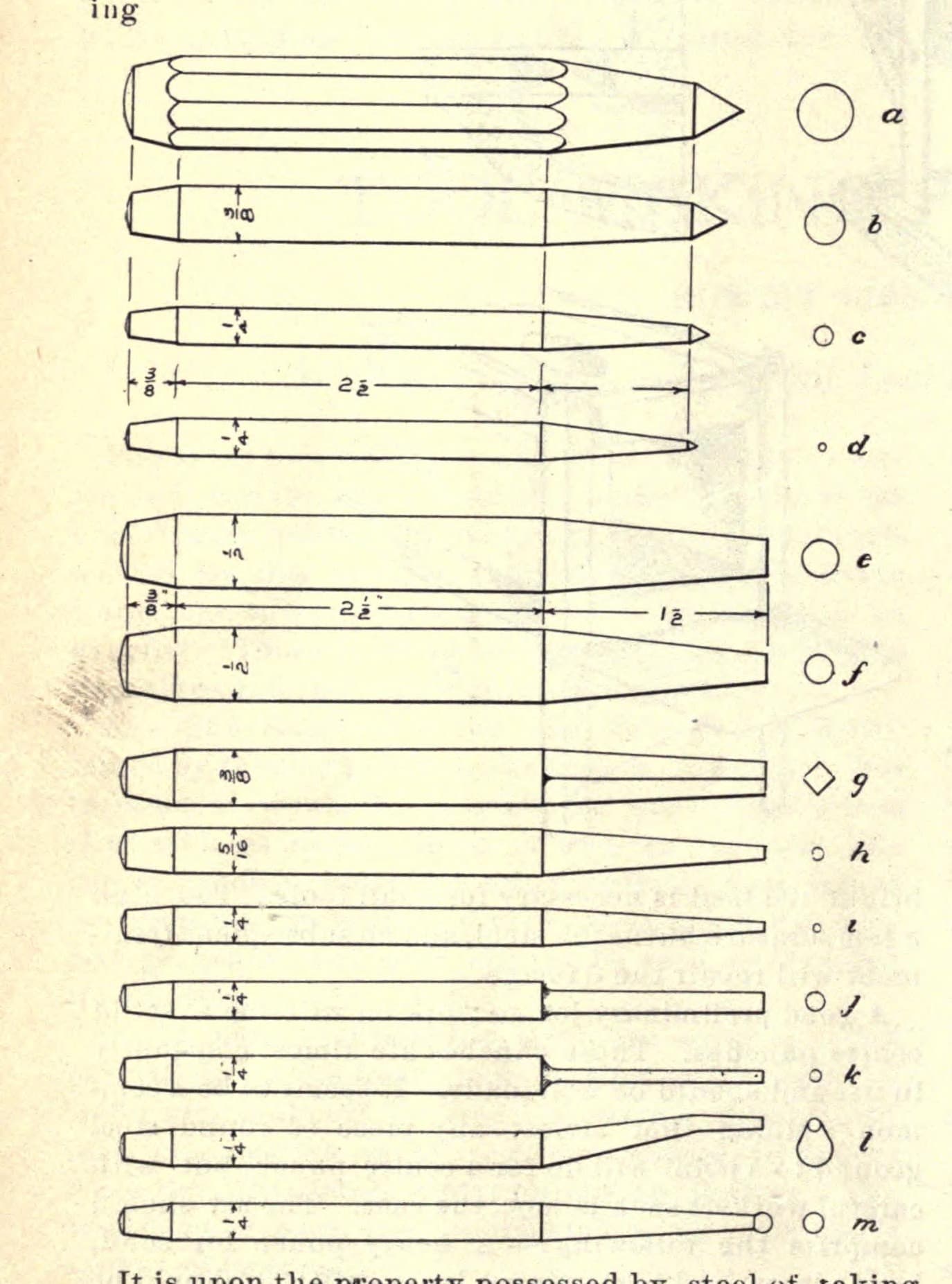
His sizes
His sizes
Đang tải sổ tay Jupyter…
2
2
Read Griswold
Read Griswold
"When the tool is forged the edge only must be hardened for about 1/8 in., the metal above being left softer to withstand the shock."
3
3
Forge the blanks
Forge the blanks
From octagonal tool steel (or old files) forge each chisel about 5 in. (127 mm) from head to edge with a gradual taper to the edge, and forge the head down so it does not broom. Forging steps are ours: forge at a bright red only, as in his part I.
Vật liệu cho bước này:
 Thanh thép dụng cụ bát giác1 cái
Công cụ cần thiết:
 Lò rèn của thợ rèn
 Đe
 Búa
 Kìm rèn
4
4
Shape the edges
Shape the edges
Flat chisels 3/8, 1/2, 5/8 and 1 in. wide; gouges 1/4-5/8 in. with the bevel inside; side chisels 1/4, 3/8, 1/2 in. with the edge in one flat side; cape chisels 3/16 and 1/4 in. with the stock behind slightly thinner; a diamond point about 1/8 in. on the square (bent version for flat work); round-nose chisels, heavy and a long-tapered drawing chisel (his fig. 1).
Công cụ cần thiết:
Lò rèn của thợ rènĐeBúa Giũa (giũa tay)
5
5
Harden the edge only
Harden the edge only
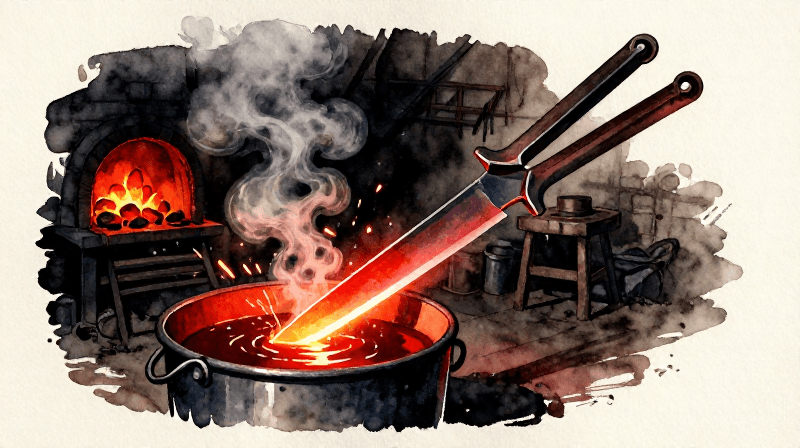
Heat the edge and harden only about 1/8 in. (3 mm) of it in water, leaving the body softer: a chisel hard too far up cracks off on a line under a heavy blow.
Vật liệu cho bước này:
 Nước1 cái
Công cụ cần thiết:
Lò rèn của thợ rènKìm rèn Xô
6
6
Temper purple
Temper purple
Brighten the edge with emery cloth and let the heat run the colour down: light purple (530 F) for chisels used on steel, dark purple (550 F) for cast and wrought iron; then cool.
Vật liệu cho bước này:
 Vải nhám emeri1 cáiNước1 cái
Công cụ cần thiết:
Xô7
7
Grind
Grind
Grind the flat chisel edges to about 60 degrees (45-75: blunter for heavy work), keeping the edge from blueing.
Công cụ cần thiết:
 Máy mài để bàn
8
8
Troubleshooting
Troubleshooting
Cold chisel troubleshooting.
Flow
Loading...
9
9
History and honest limits
History and honest limits
From Robert Gibson Griswold, "Tool Making for Amateurs" II, **Amateur Work** (Boston), vol. III (1903-04), pp. 304-305 and fig. 1 (checked on the archive.org scan amateurwork03bostrich); temper temperatures from his part I table. Forging heats, metric figures and tools are ours.
Vật liệu
3- Tạm thời
- 2 cáiTạm thời
- 1 cáiTạm thời
Bản thiết kế này làm ra

Blueprint liên quan
Các blueprint này chia sẻ kiến thức — kỹ thuật, vật liệu hoặc nguyên tắc
CC0 Phạm vi công cộng
Bản thiết kế này được phát hành theo CC0. Bạn tự do sao chép, sửa đổi, phân phối và sử dụng cho bất kỳ mục đích nào mà không cần xin phép.
Hỗ trợ nhà sáng tạo bằng cách mua sản phẩm qua bản thiết kế, nơi họ nhận Hoa hồng nhà sáng tạo do nhà bán hàng đặt, hoặc tạo phiên bản mới và kết nối trong bản thiết kế riêng để chia sẻ doanh thu.