NGHỆ THUẬT
LÀM ĐẸP VÀ SỨC KHỎE
THỦ CÔNG
VĂN HÓA VÀ LỊCH SỬ
GIẢI TRÍ
MÔI TRƯỜNG
THỰC PHẨM VÀ ĐỒ UỐNG
KỸ THUẬT NGƯỢC
KHOA HỌC
THỂ THAO
CÔNG NGHỆ
THIẾT BỊ ĐEO
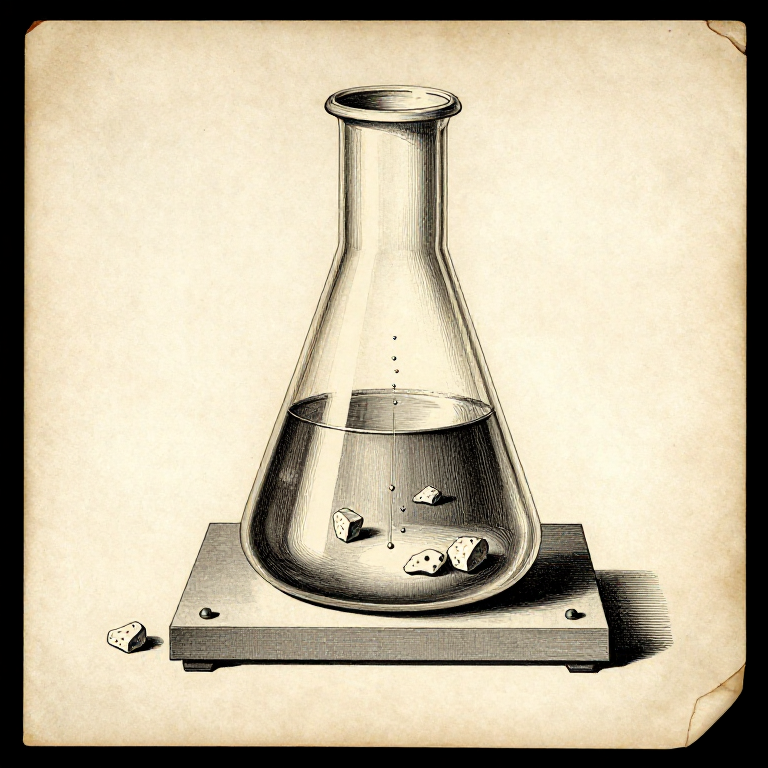

Heating and Stirring Without Bumping: Why the Flask Spat at You
A liquid heated in smooth glass can go ABOVE its boiling point without boiling, because a bubble needs somewhere to start and clean glass offers nowhere. When one finally does start, the whole superheated volume flashes into vapour at once.
That is bumping, and it throws the contents out of the vessel. It is most likely in exactly the situation where it matters most: clean new glassware, a quiet liquid, somebody watching closely from above.
The cure is to give bubbles somewhere to form, all the time, so that none of the liquid ever gets the chance to superheat. Boiling chips or a stirrer bar do that, and they are not optional extras.
Cơ bản
2 hours
Hướng dẫn
1
1
Boiling chips or a stirrer bar, added COLD
Boiling chips or a stirrer bar, added COLD
Add boiling chips or a magnetic stirrer bar before heating starts. Their porous surface or their motion keeps a stream of small bubbles going, and small bubbles continuously are what prevents one enormous one suddenly.
Never add boiling chips to a liquid that is already hot. A superheated liquid given a nucleation site all at once does exactly what the chips were meant to prevent, and does it while your hand is over the vessel.
Chips are single-use. Once cooled, their pores fill with liquid and they stop working, so a flask reheated after cooling needs fresh ones — added, again, while it is cold.
Vật liệu cho bước này:
 Nước cất1 lít
Công cụ cần thiết:
 Bình tam giác Erlenmeyer
 Bếp gia nhiệt kèm máy khuấy từ
 Bếp điện phẳng
2
2
Heat the outside evenly, not one spot
Heat the outside evenly, not one spot
A hot plate heats the whole base; a flame heats a coin-sized patch to a temperature far above the liquid's boiling point. That hot spot is where superheating, decomposition and cracked glass all start.
A water or steam bath is better again for anything below 100 degrees: it cannot exceed the boiling point of its own water, so it physically cannot overheat the contents. Sand baths and oil baths do the same job at higher temperatures.
Use borosilicate, and never heat a vessel that is cracked, chipped or scratched. Thermal stress finds the flaw, and a flask that fails while hot empties its contents across the bench.
Vật liệu cho bước này:
 Nước1 lít
Công cụ cần thiết:
Bếp điện phẳng Cốc thuỷ tinh borosilicat
 Kẹp phòng thí nghiệm (buret/bình cầu)
 Kính chống hóa chất bắn
3
3
Stir the liquid, do not just heat it
Stir the liquid, do not just heat it
Hot liquid rises and cold sinks, so an unstirred vessel develops a hot layer at the bottom and a cool one above. The thermometer reads one of those and the reaction experiences the other.
A magnetic stirrer bar turns the whole volume over and makes the temperature you measure the temperature that is actually happening. It also keeps a suspension suspended, which matters whenever a solid is dissolving or reacting.
Match the bar to the vessel. A bar too long for a round-bottom flask will not spin, and a bar that has lost its grip on the field spins wildly, chips the glass, and grinds the solid you were trying to dissolve.
Vật liệu cho bước này:
 Natri clorua (muối)1 cáiNước cất1 lít
Công cụ cần thiết:
Bếp gia nhiệt kèm máy khuấy từ Đũa khuấy thuỷ tinh
 Cốc thủy tinh (becher)
4
4
Never seal it, and never look straight down it
Never seal it, and never look straight down it
A heated closed vessel is a pressure vessel. Loosen every stopper, and use a watch glass resting loosely on a beaker rather than anything that seals — it keeps dust out and lets vapour go.
Never point the mouth of a heated tube or flask at yourself or anyone else, and never lean over one to look in. If a vessel does bump, what comes out goes straight up.
And keep the heating under control at the end: remove the heat before the last of the liquid goes, the same rule as evaporating. A dry vessel still on the plate reaches the plate's full temperature within a minute or two.
Công cụ cần thiết:
 Mặt kính đồng hồKính chống hóa chất bắnKẹp phòng thí nghiệm (buret/bình cầu)Bếp điện phẳng
Công cụ yêu cầu
9- Tạm thời
- Tạm thời
- Tạm thời
- Tạm thời
- Tạm thời
- Tạm thời
- Tạm thời
- Tạm thời
Blueprint liên quan
Các blueprint này chia sẻ kiến thức — kỹ thuật, vật liệu hoặc nguyên tắc

Nguy hiểm
Acid Into Water, Never Water Into Acid: Why the Order Is Not a Preference
bởi Charlie
Hóa học
19
0
0
0
0
0

Filtering: Gravity, Vacuum, and Why the Filtrate Came Through Cloudy
bởi Charlie
Hóa học
26
0
0
0
0
0
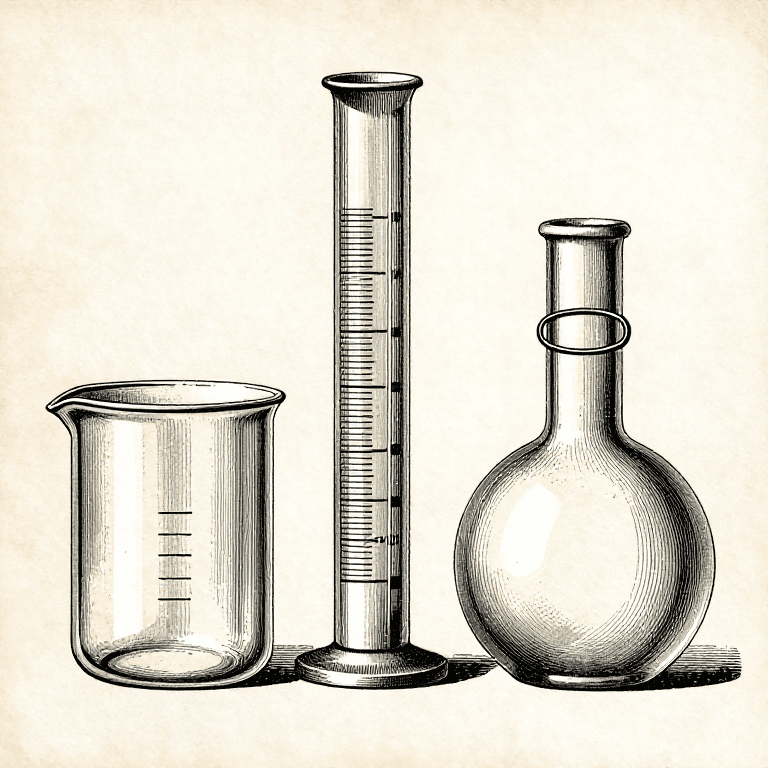
Making Up a Solution: Which Glassware Actually Measures, and Which Only Looks Like It
bởi Charlie
Hóa học
24
0
0
0
0
0
CC0 Phạm vi công cộng
Bản thiết kế này được phát hành theo CC0. Bạn tự do sao chép, sửa đổi, phân phối và sử dụng cho bất kỳ mục đích nào mà không cần xin phép.
Hỗ trợ nhà sáng tạo bằng cách mua sản phẩm qua bản thiết kế, nơi họ nhận Hoa hồng nhà sáng tạo do nhà bán hàng đặt, hoặc tạo phiên bản mới và kết nối trong bản thiết kế riêng để chia sẻ doanh thu.