NGHỆ THUẬT
LÀM ĐẸP VÀ SỨC KHỎE
THỦ CÔNG
VĂN HÓA VÀ LỊCH SỬ
GIẢI TRÍ
MÔI TRƯỜNG
THỰC PHẨM VÀ ĐỒ UỐNG
KỸ THUẬT NGƯỢC
KHOA HỌC
THỂ THAO
CÔNG NGHỆ
THIẾT BỊ ĐEO
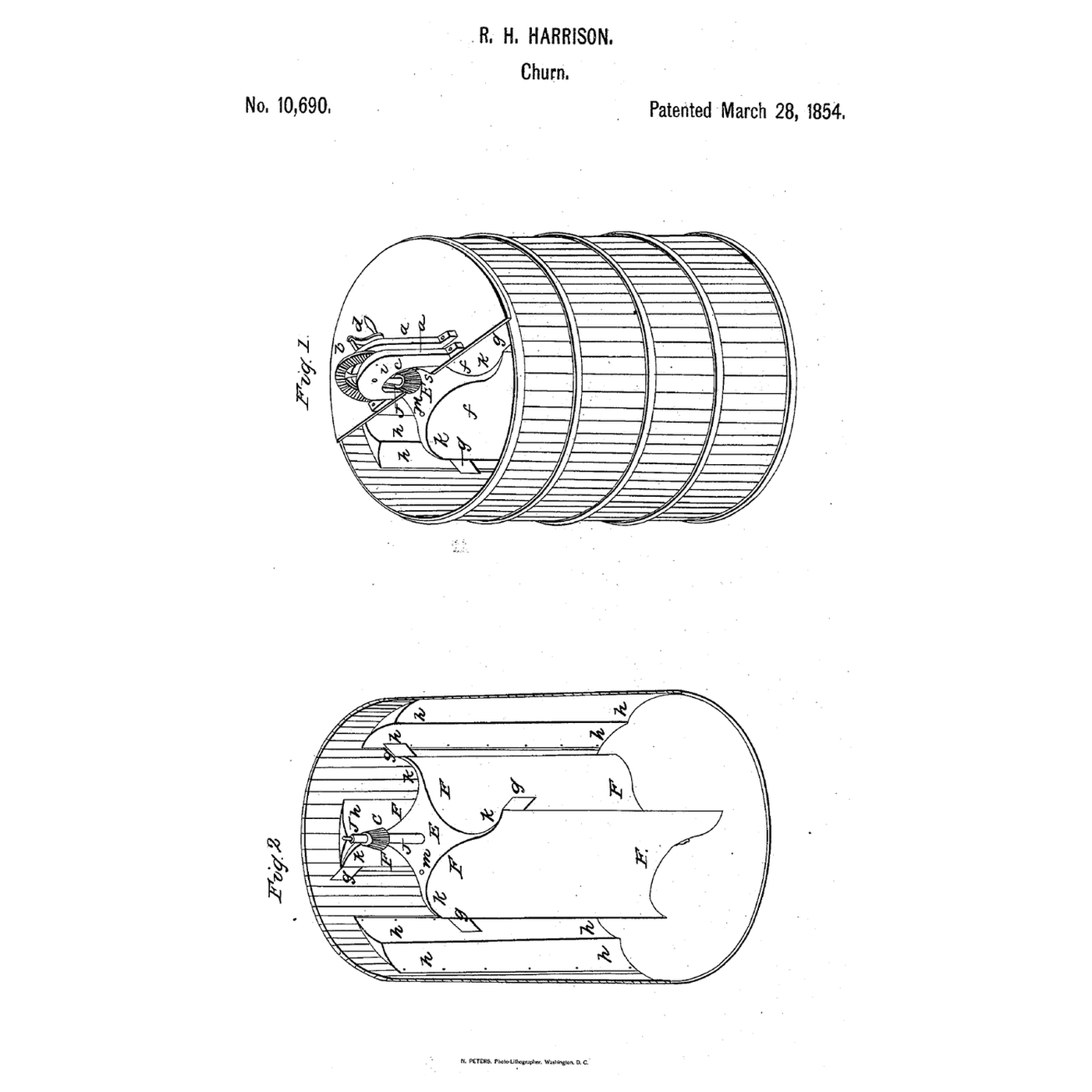

Hydrothermal Reservoir Dasher Churn: Warm Water in the Dasher to Churn, Cold to Firm the Butter
Harrison carried the water to temper the cream inside the dasher itself.
Robert H. Harrison of Washington, District of Columbia, assignor to R. H. Harrison and Jno. S. Gallaher, Jr., received US 10,690, dated 28 March 1854, for what he termed "the hydrothermal churn": a vertical "concavo-convex rotary reservoir dasher having hollow, deflective, or curved radial chambers" and straight radial wings, turned by a winch through a driving wheel and bevel gear, with "double concave vertically arranged cleats or butter gatherers" of tin round the vessel's inside, which can hold water too. Hot water poured in through a hole in the dasher tempers the cream; once the butter appears, cold water substituted for it firms the butter, and in hot weather cold water or pounded ice goes in.
This rung works out how far the dasher's water can move the cream's temperature, then prints the reservoir dasher, gatherers and gears, builds the churn, and makes butter.
Trung cấp
About 4 hours, plus printing
Hướng dẫn
1
1
Water in the dasher
Water in the dasher
Đang tải sổ tay Jupyter…
2
2
Tempering the cream with water before it
Tempering the cream with water before it
The embedded blueprint puts hot or cold water in a chamber under the churn. Harrison puts it inside the dasher and the side gatherers, where it turns through the cream.
3
3
Read US 10,690
Read US 10,690
"These particles are not spontaneously accumulated in concrete mass, but by the aid of cold water substituted in lieu of the warm water, which is withdrawn from the dasher by detaching the dasher from the churn vessel, the concave gatherers F, F, F, F, and h, h, h, h augmenting the concretion and forming the mass of butter without requiring much, if any, additional agency."
4
4
Print the parts
Print the parts
Print the hollow reservoir dasher with its four curved chambers, wings and filling hole (/uploads/blueprints/hydrothermal-reservoir-dasher-churn-reservoir-dasher.stl) standing up with 4 walls so it holds water, three or four hollow gatherers (/uploads/blueprints/hydrothermal-reservoir-dasher-churn-gatherer.stl), the 36-tooth crown wheel (/uploads/blueprints/hydrothermal-reservoir-dasher-churn-crown-wheel.stl), the 12-tooth pinion (/uploads/blueprints/hydrothermal-reservoir-dasher-churn-pinion.stl) and the standard (/uploads/blueprints/hydrothermal-reservoir-dasher-churn-standard.stl). Fill the dasher and gatherers with water and check for leaks before use. Print in PETG at 0.2 mm layers, 30 % infill, 4 walls; wash before first use.
Vật liệu cho bước này:
 Sợi in PETG1 cái
Công cụ cần thiết:
 Máy in 3D sợi nhựa (FDM)
5
5
Vessel and gatherers
Vessel and gatherers
Use a straight-sided round food-grade container about 190 mm across inside and 200 mm deep. Hook the gatherers over its rim, spaced round the side, their double-concave faces inward.
Vật liệu cho bước này:
 Thùng chứa cấp thực phẩm1 cái
Công cụ cần thiết:
 Giấy nhám
6
6
Dasher, gears and winch
Dasher, gears and winch
Slide the reservoir dasher onto a 10 mm stainless rod and tighten its set screw, its foot standing in a shallow hole in a scrap of the lid laid in the bottom. Fix half the lid over the vessel with a hole for the rod, the pinion on the rod's top, and the standard with the crown wheel meshing it; screw a dowel handle into the wheel's boss. Fit a cork to the filling hole.
Vật liệu cho bước này:
 Thanh thép mềm1 cái
 Nút bần1 cái
 Chốt gỗ cứng1 cái
 Vít gỗ #8 x 1"1 cái
 Vít máy1 cái
Công cụ cần thiết:
 Cưa sắt
 Máy khoan pin
 Bộ mũi khoan
 Bộ tua vít
7
7
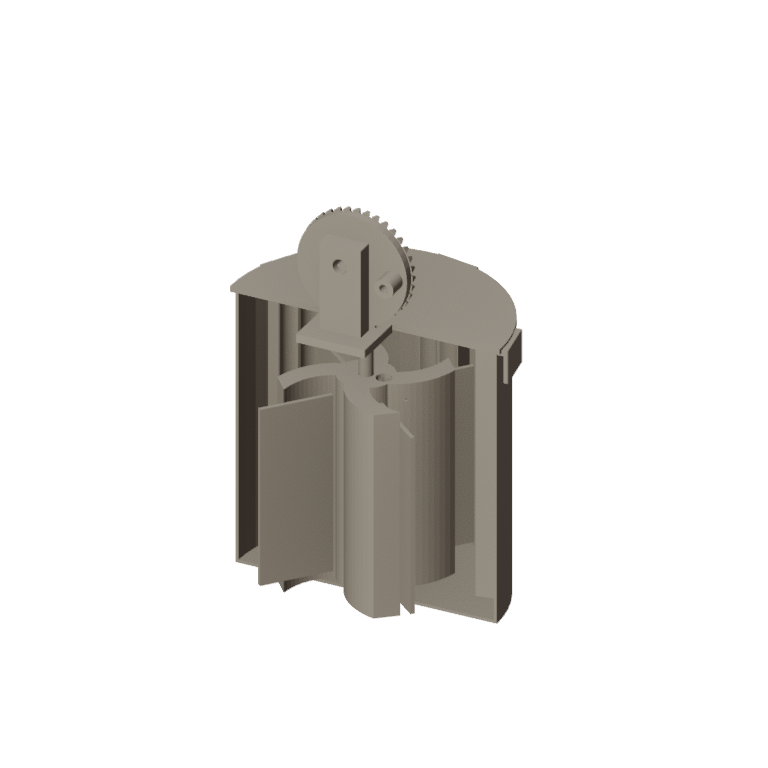
The build in 3D
The build in 3D
FreeCAD model of this build, not of the patent: the vessel cut away to show the hollow reservoir dasher with its four curved chambers and wings, the hollow gatherers hooked over the rim, and the crown wheel and pinion on the half lid.
8
8
Temper, churn, then firm
Temper, churn, then firm
Check the cream's temperature. If it is below about 15 °C, fill the dasher with lukewarm water, cork it and stir slowly until the cream reaches about 15 °C; if it is above, use cold water. Pour in 1.5 litres and turn the winch at a moderately rapid rate; time until the butter comes. Lift out the dasher, empty it, refill it with cold water or ice and water, and turn slowly to gather the butter. Pour off the buttermilk, add cold water, churn a little and pour off again until it runs clear; work in a pinch of salt and weigh the butter.
Vật liệu cho bước này:
 Kem tươi béo1500 ml
 Đá viên1 cái
 Muối biển hạt thô1 cái
 Nước1 cái
Công cụ cần thiết:
 Nhiệt kế đầu dò cắm sẵn
 Đồng hồ bấm giờ
 Cân nhà bếp điện tử
 Tô trộn thép không gỉ (lớn)
9
9
A dasher that leaks, cream that will not warm
A dasher that leaks, cream that will not warm
Hydrothermal churn troubleshooting.
Flow
Loading...
10
10
History and honest limits
History and honest limits
**Robert H. Harrison** of Washington, District of Columbia, assignor to R. H. Harrison and Jno. S. Gallaher, Jr., received US 10,690, dated 28 March 1854. He wrote that turning for "3 to 5 minutes" is all that is required for the separation, that fresh milk can be used, and that the wings act "as coolers or fans" drawing cool air in through a vent round the spindle; these are his claims, not tested here. He claimed the vessel with double concave gatherers or water reservoirs, the reservoir dasher with curved chambers and radial wings combined with them, and the double application of warm and cold water or ice with both; he did not claim the use of hot or cold water alone in butter making, "as the same have been employed separately, or distinctly heretofore."
**Honest limits.** A container, printed parts and a crown wheel with a spur pinion stand in for his tin and bevel gearing. PETG softens at about 55–60 °C, so we use lukewarm water rather than hot. The notebook's temperatures are upper bounds with an estimated specific heat. FDM prints hold food in their layer lines, so wash well and replace when worn. Your times and weights are the result.
Vật liệu
11- 1 cáiTạm thời
- Tạm thời
- 1 cáiTạm thời
- 1 cáiTạm thời
- 1 cáiTạm thời
- 1 cáiTạm thời
- 1 cáiTạm thời
- 1500 mlTạm thời
- 1 cáiTạm thời
- 1 cáiTạm thời
- 1 cáiTạm thời
Công cụ yêu cầu
10- Tạm thời
- Tạm thời
- Tạm thời
- 1 vendor sell this, none ship to you yetTạm thời
- Tạm thời
- Tạm thời
- Tạm thời
- Tạm thời
- Tạm thời
- Tạm thời
Tệp thiết kế
1Bản thiết kế này làm ra

Blueprint liên quan
Các blueprint này chia sẻ kiến thức — kỹ thuật, vật liệu hoặc nguyên tắc
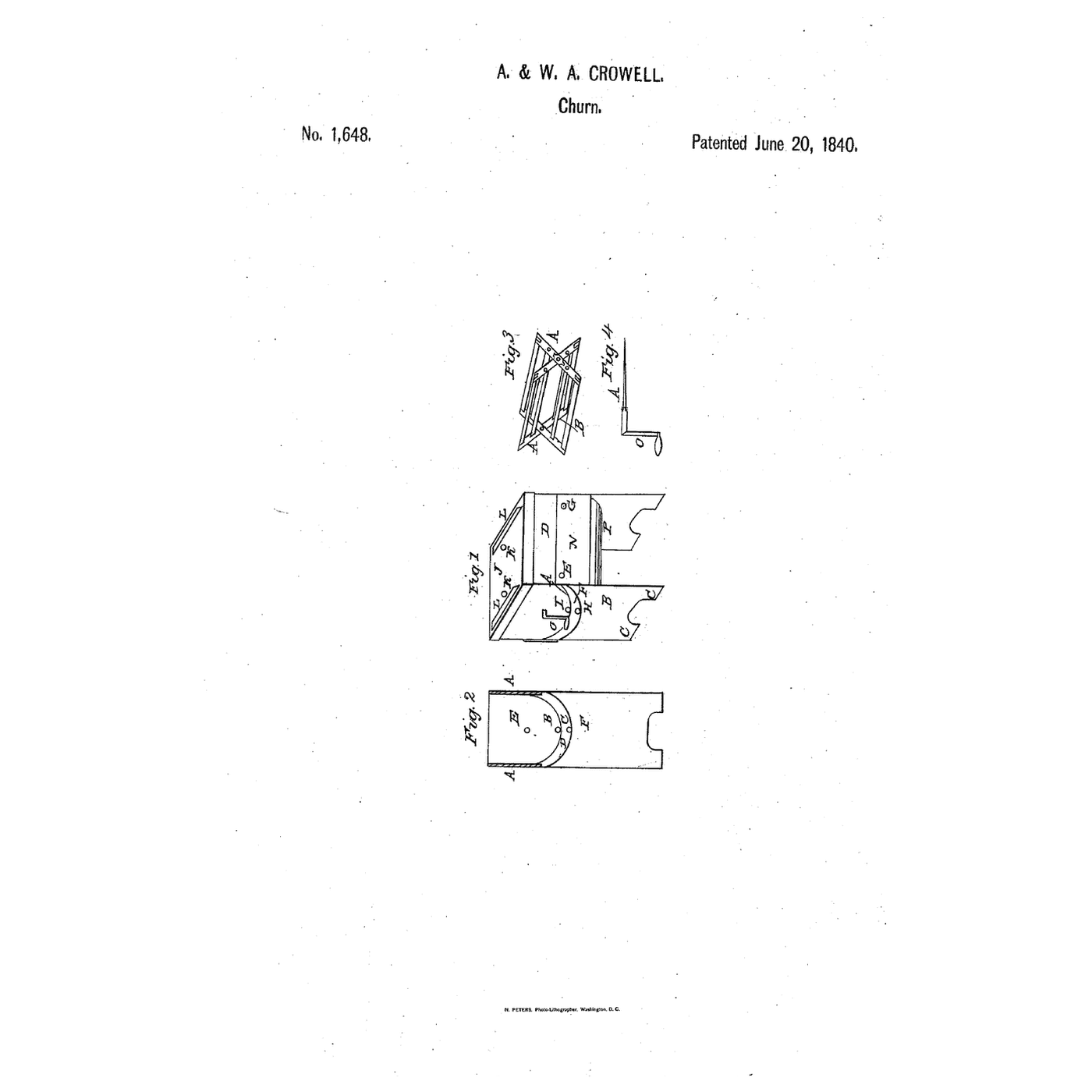
Water-Jacketed Churn: Hot or Cold Water Under a Metal Plate Tempers the Cream
bởi Karen
THỰC PHẨM VÀ ĐỒ UỐNG
34
0
0
0
0
0
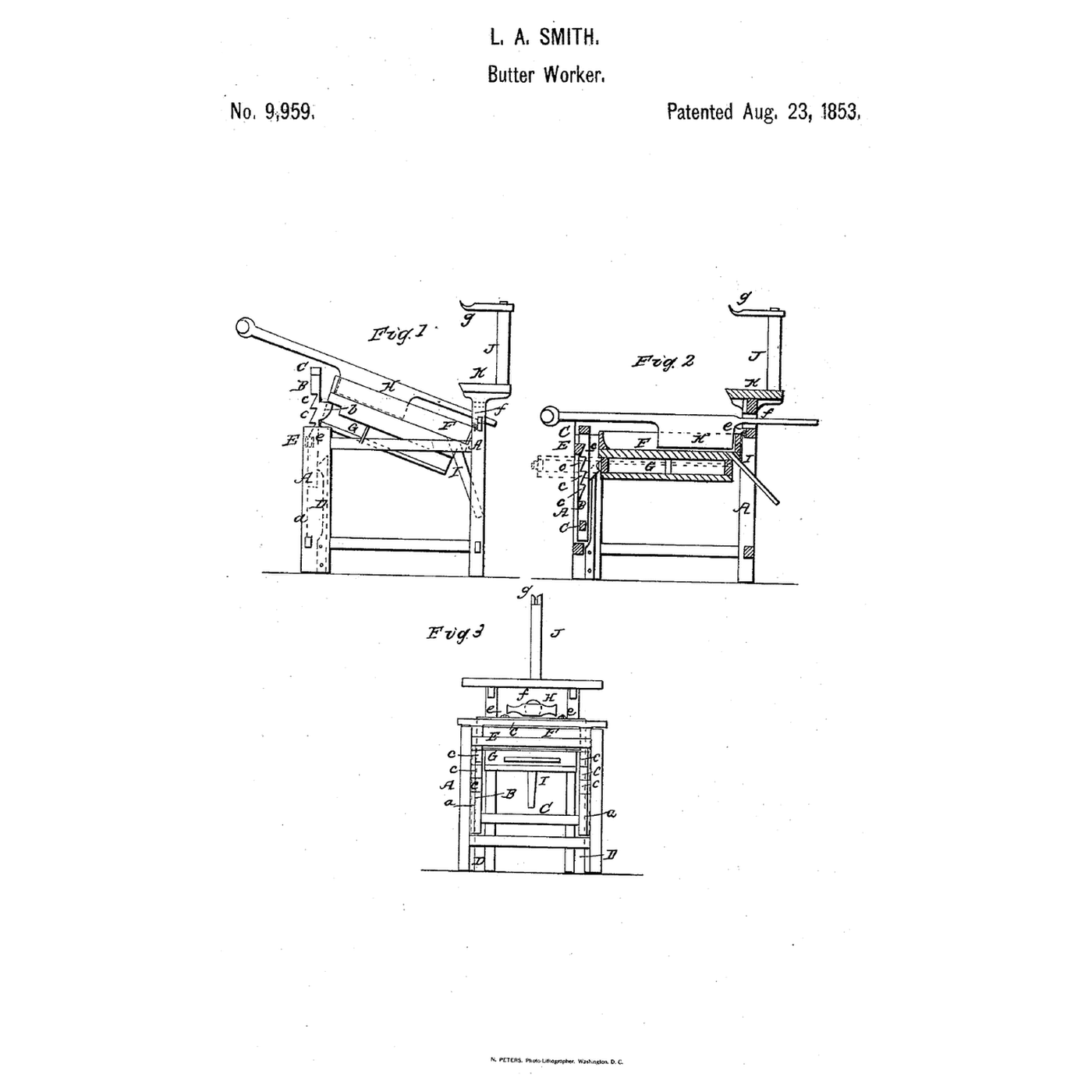
Ice-Drawer Butter Worker: An Ice Box Under the Tray, a Worker With Acute Edges
bởi YourGrandma
Mộc
28
0
0
0
0
0

Churning Butter from Cream — The 5,000-Year-Old Fat Separation
bởi TheChef
THỦ CÔNG
49
0
0
0
0
0
CC0 Phạm vi công cộng
Bản thiết kế này được phát hành theo CC0. Bạn tự do sao chép, sửa đổi, phân phối và sử dụng cho bất kỳ mục đích nào mà không cần xin phép.
Hỗ trợ nhà sáng tạo bằng cách mua sản phẩm qua bản thiết kế, nơi họ nhận Hoa hồng nhà sáng tạo do nhà bán hàng đặt, hoặc tạo phiên bản mới và kết nối trong bản thiết kế riêng để chia sẻ doanh thu.