
Smelting Copper from Malachite — The Birth of Metallurgy
Hướng dẫn
Prerequisite: Making Charcoal
Prerequisite: Making Charcoal
You need 15kg of quality charcoal. Attempting copper smelting with wood fire will fail — copper melts at 1085°C, beyond what wood alone achieves.
Bản thiết kế tiên quyết
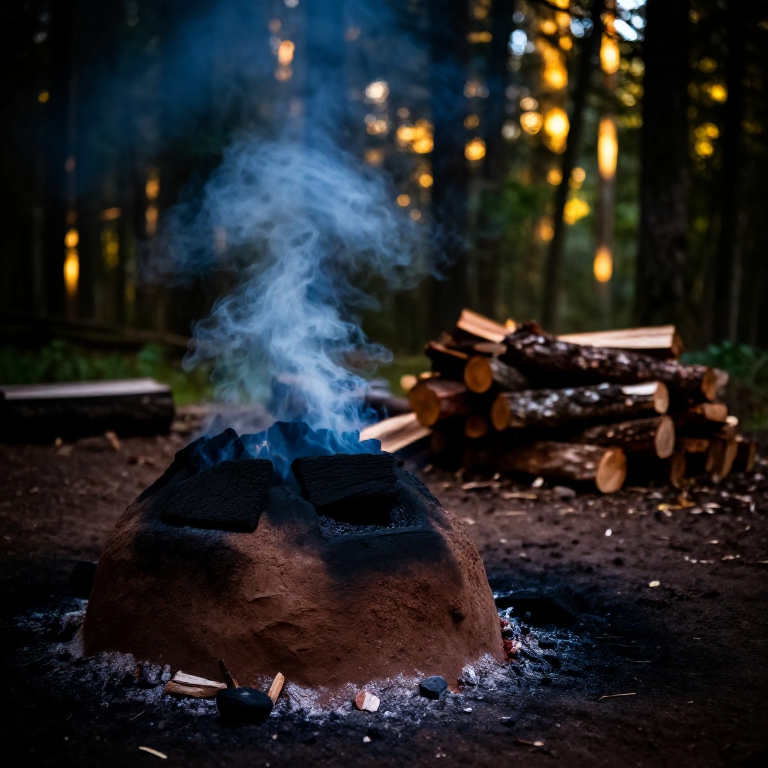
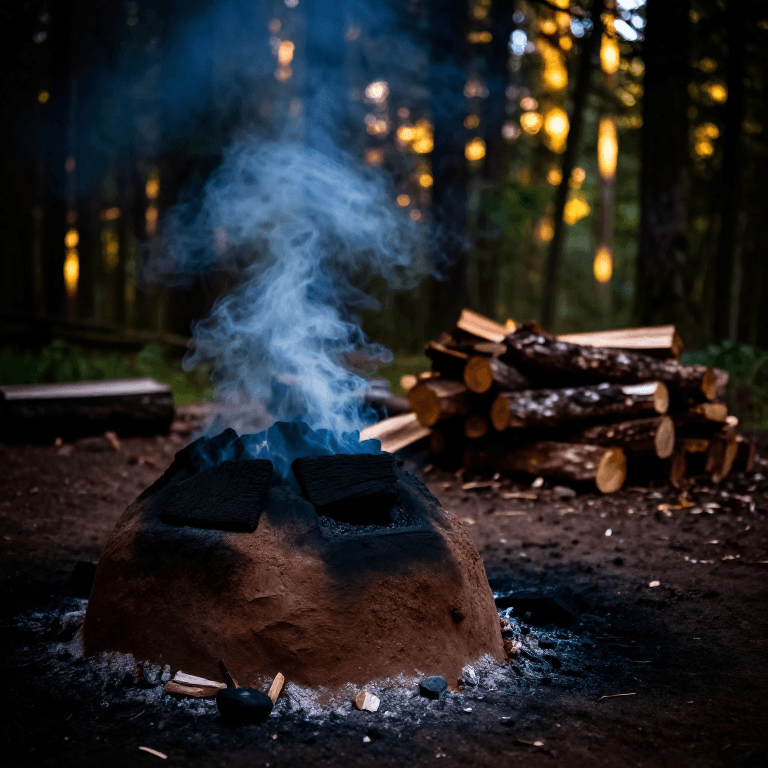
Making Charcoal — The First Chemical Process
Vật liệu cho bước này:
 Bột than hoạt tính15 kg
 Đồng1 tham khảo
Công cụ cần thiết:
 Lò nung
 Bễ thổi
 Kìm gắp nồi nấu kim loại
 Đá rót khuôn (phẳng, nhẵn)
 Búa đá (đập quặng)
Prerequisite: Building a Clay Kiln
Prerequisite: Building a Clay Kiln
You need a kiln capable of reaching 1100°C for copper smelting.
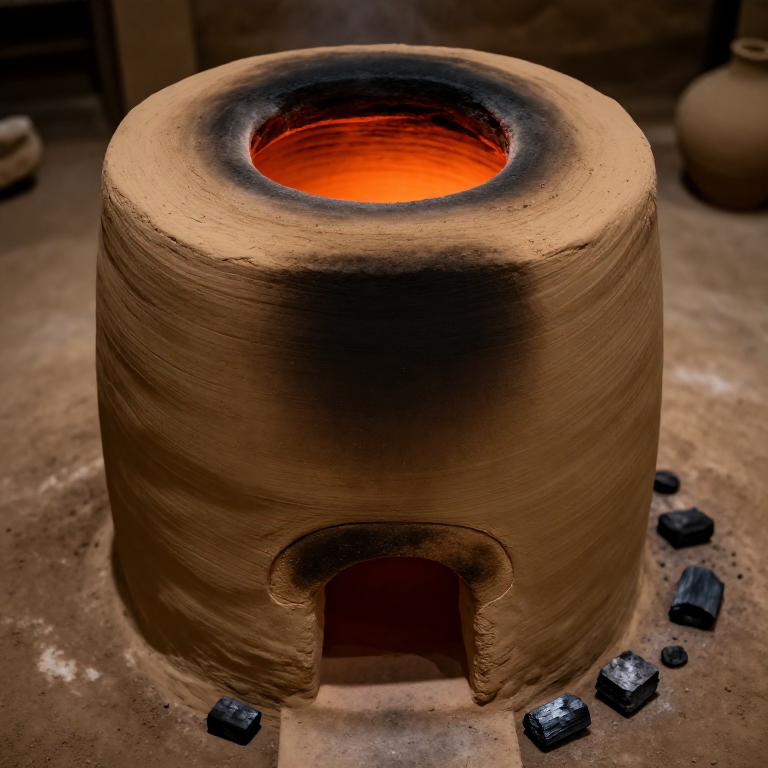
Bản thiết kế tiên quyết
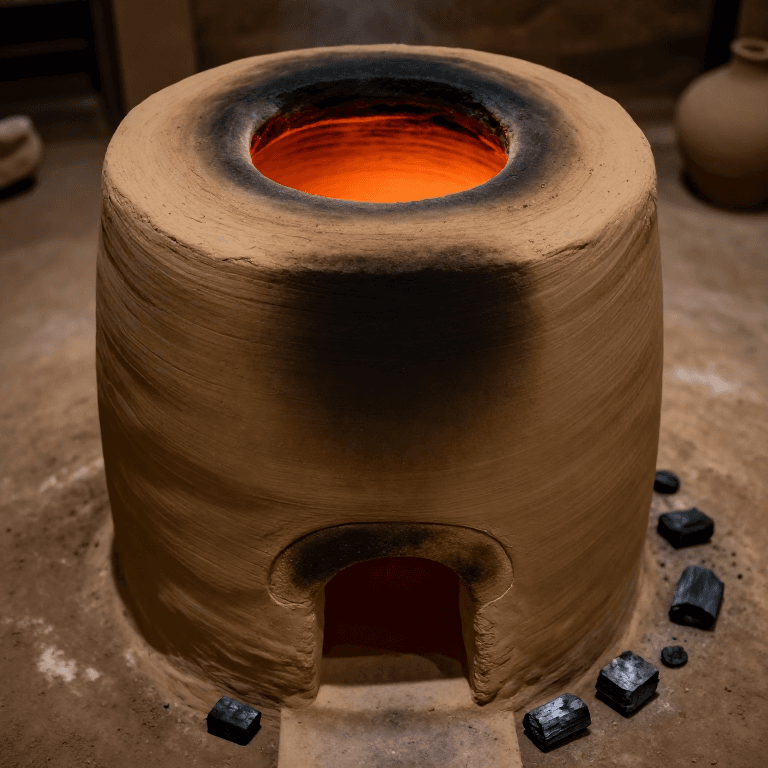
Building a Clay Kiln — The First Furnace
Vật liệu cho bước này:
Đồng1 tham khảo Nồi nấu kim loại1 pc
The Chemistry of Copper Smelting
The Chemistry of Copper Smelting
The Reduction Reaction
Smelting is a chemical reduction. Carbon (from charcoal) strips oxygen from the copper ore:
Cu₂CO₃(OH)₂  →  2CuO + CO₂ + H₂O    (at ~300°C, decomposition)
2CuO + C     →  2Cu + CO₂             (at ~800°C, reduction)
In plain English: heat breaks malachite into copper oxide + gas. Then carbon steals the oxygen from the copper oxide, leaving pure copper metal + carbon dioxide gas.
Why Charcoal, Not Wood?
Two reasons:
- Temperature: The reduction reaction requires ~800°C sustained. Wood fires don't reliably reach this.
- Carbon monoxide: Charcoal produces CO gas, which is a more efficient reducing agent than solid carbon. CO penetrates the ore and reduces it from the inside out.
Ore Preparation
- Crush the malachite to pea-sized pieces (5-10mm). Smaller = faster reduction, but powder clogs airflow.
- Sort — remove any non-green rock (gangue). Pure green malachite smelts best.
- Roast (optional): Heat crushed ore in an open fire for 1 hour. This drives off moisture and CO₂, converting malachite to black CuO (tenorite). Pre-roasted ore reduces faster.
Vật liệu cho bước này:
Bột than hoạt tính15 kg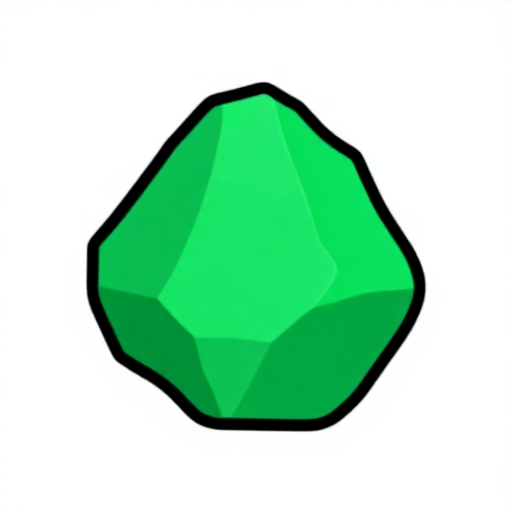 Quặng malachit (Cu2CO3(OH)2)2 kgĐồng1 tham khảo
The Smelt
The Smelt
Loading the Kiln
- Fill the kiln ⅓ full with charcoal. Light it and bring to full temperature (orange-hot interior, ~1000°C) using bellows.
- Place the crucible in the center of the charcoal bed. Pre-heat it for 10 minutes before loading ore.
- Add crushed malachite to the crucible — don't fill more than ⅔ (it will bubble as CO₂ escapes).
- If using flux (borax or wood ash), add a thin layer on top of the ore.
- Cover the ore with a layer of charcoal pieces inside the crucible.
- Pack more charcoal around and above the crucible inside the kiln.
Maintaining Temperature
- Continuous bellows: Pump steadily — one full pump every 2-3 seconds. Temperature drops fast without forced air.
- Add charcoal from the top every 15-20 minutes as it burns down. The crucible must stay buried in hot charcoal.
- Duration: 2-4 hours for a full smelt. Don't rush.
Signs of Success
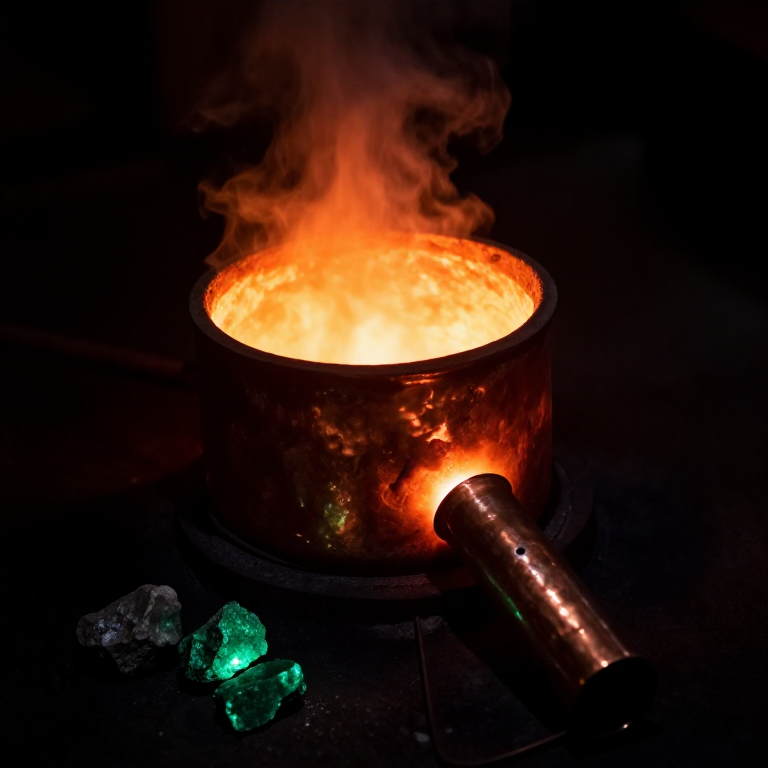
- Green flames: Copper compounds produce distinctive green-tinted flames. Good sign.
- Bubbling in crucible: CO₂ escaping from the reduction reaction.
- Slag forming on top: A glassy, dark layer of impurities floating above the copper. This is normal and desirable — it protects the copper from re-oxidation.
Vật liệu cho bước này:
Bột than hoạt tính15 kgNồi nấu kim loại1 pcQuặng malachit (Cu2CO3(OH)2)2 kg Hàn the làm tiêu bản0.5 kgĐồng1 tham khảo
Pouring and Recovery
Pouring and Recovery
The Pour
- When the slag looks glassy and the crucible contents are liquid, it's time to pour.
- Pre-heat your casting stone by placing it near the kiln opening. Cold stone + molten copper = dangerous spatter.
- Using crucible tongs, carefully lift the crucible from the charcoal bed.
- Pour in a steady stream into the depression in the casting stone. Pour the slag separately.
- Allow to cool naturally. DO NOT quench with water (causes brittleness and can cause steam explosion).
What You Should See
A copper button — a rough, reddish-orange disc of metal. It may have slag inclusions and a rough surface. This is normal for primitive smelting.
Yield
Expect 50-70% copper recovery from good malachite. Some copper remains trapped in slag. Ancient smiths re-smelted slag to recover more.
The Innovation Moment
You've just performed the most transformative chemical process in human history. From green rock, you extracted a metal that can be hammered into tools, ornaments, and weapons. But pure copper is soft. To make it truly useful, you need to alloy it — see Blueprint 07: Alloying Bronze.
First, though, you should learn to shape this copper — see Blueprint 05: Casting Copper Tools.
Vật liệu cho bước này:
Bột than hoạt tính15 kgNồi nấu kim loại1 pcĐồng1 tham khảoVật liệu
6- Tạm thời
- 15 kgTạm thời
- 1 cáiTạm thời
- 1 tham khảoTạm thời
- 0.5 kgTạm thời
- 15 kgTạm thời
Công cụ yêu cầu
5- Tạm thời
- Tạm thời
- Tạm thời
- Tạm thời
- Tạm thời
Vật liệu bản thiết kế liên kết

CC0 Phạm vi công cộng
Bản thiết kế này được phát hành theo CC0. Bạn tự do sao chép, sửa đổi, phân phối và sử dụng cho bất kỳ mục đích nào mà không cần xin phép.
Hỗ trợ nhà sáng tạo bằng cách mua sản phẩm qua bản thiết kế, nơi họ nhận Hoa hồng nhà sáng tạo do nhà bán hàng đặt, hoặc tạo phiên bản mới và kết nối trong bản thiết kế riêng để chia sẻ doanh thu.