NGHỆ THUẬT
LÀM ĐẸP VÀ SỨC KHỎE
THỦ CÔNG
VĂN HÓA VÀ LỊCH SỬ
GIẢI TRÍ
MÔI TRƯỜNG
THỰC PHẨM VÀ ĐỒ UỐNG
KỸ THUẬT NGƯỢC
KHOA HỌC
THỂ THAO
CÔNG NGHỆ
THIẾT BỊ ĐEO
Nguy hiểm


Jungner Nickel-Cadmium Accumulator
The lead-acid cell keeps part of its charge in the acid. Discharge one and the sulphuric acid is genuinely spent - the solution thins, the specific gravity drops, and a hydrometer tells you exactly how much is left. It is a wonderfully honest instrument, and it exists because the electrolyte is a participant.
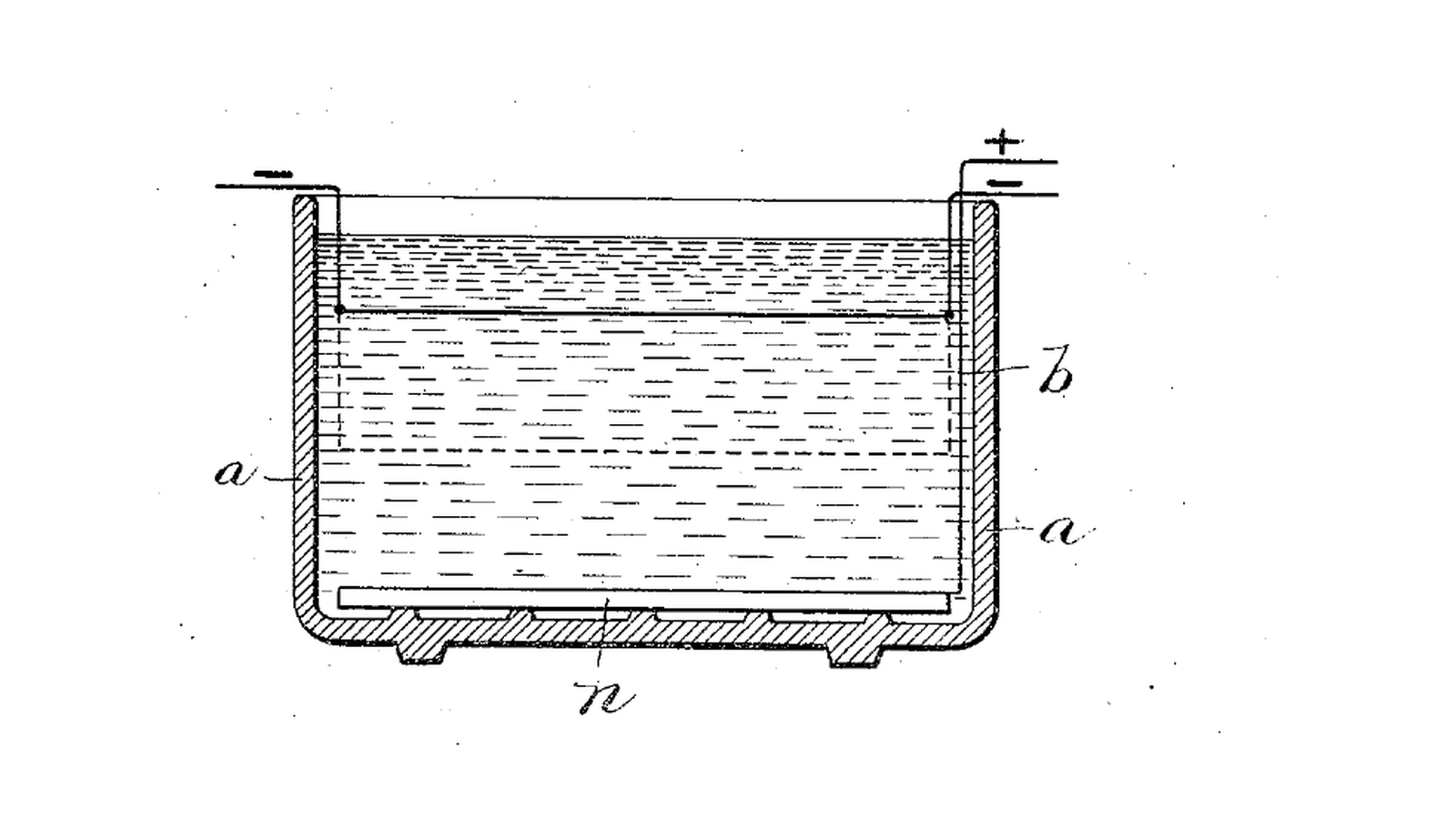
Ernst Waldemar Jungner built the opposite. In his cell the potassium hydroxide takes no part at all: hydroxide is released at one plate and taken up at the other, so the solution ends a discharge exactly as concentrated as it began. Everything is stored in the plates - nickel oxyhydroxide on one side, cadmium on the other - and the electrolyte is only the road between them.
That single decision is why the cell survives treatment that destroys a lead plate. Leave it flat for a year and there is no acid to sulphate it. Freeze it and there is no dilute acid to burst the case. Cycle it thousands of times and the plates are still the same compounds they started as. It also takes the hydrometer away from you, permanently, and the discharge curve is so flat that voltage is a poor substitute - a trade that ships in every alkaline cell since.
**On the patents, because the citation matters.** Jungner invented the nickel-cadmium cell in Sweden in the late 1890s, and his Swedish priority is where the invention lives; this blueprint does not cite a number for it that could not be checked. What CAN be checked are his two US patents, and both are in the build. **US 738,110** "Reversible galvanic battery" is a DIVISION of an application filed 17. April 1899 - which is where the 1899 date comes from, on the face of the patent itself - refiled 23. June 1902 and granted 1. September 1903. It claims the principle rather than the couple: an alkaline electrolyte with "active masses of metallic oxygen compounds" that are "insoluble in the electrolyte under all conditions", so that "the electrolyte remains throughout the same both in quality and quantity". **US 884,930** "Electrode for reversible galvanic batteries", filed 20. September 1904 and granted 14. April 1908, fixes the practical flaw in that idea: the active mass barely conducts, so it is mixed with flake graphite whose particles carry "a thin coating of nickel". Step 2 is that patent.
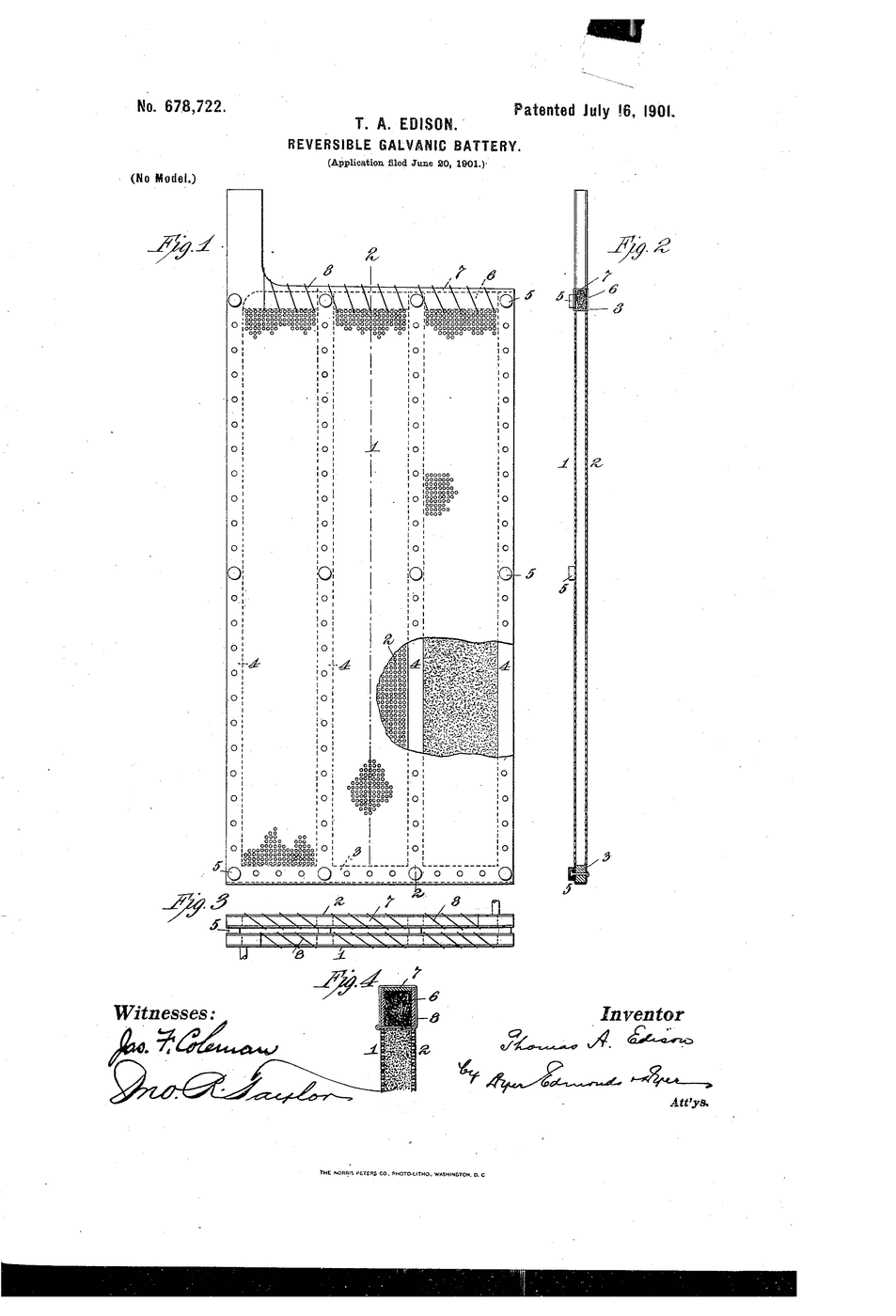
Edison filed his own "Reversible Galvanic Battery", US 678,722, in June 1901 - the same title, a year before Jungner's. He used iron where Jungner used cadmium, and he won the patent dispute that followed, having deeper pockets. Both cells are still made.
Cadmium is a toxic heavy metal and potassium hydroxide is severely caustic. This is gated for the first reason, and the last step tells you what the European Union has since decided about selling cells like this one.
Nâng cao
5 hours over two days
Nội dung nguy hiểm
Blueprint này chứa các quy trình nguy hiểm. Đăng nhập và bật nội dung nguy hiểm trong cài đặt tài khoản của bạn để xem hướng dẫn từng bước.
Blueprint liên quan
Các blueprint này chia sẻ kiến thức — kỹ thuật, vật liệu hoặc nguyên tắc

CC0 Phạm vi công cộng
Bản thiết kế này được phát hành theo CC0. Bạn tự do sao chép, sửa đổi, phân phối và sử dụng cho bất kỳ mục đích nào mà không cần xin phép.
Hỗ trợ nhà sáng tạo bằng cách mua sản phẩm qua bản thiết kế, nơi họ nhận Hoa hồng nhà sáng tạo do nhà bán hàng đặt, hoặc tạo phiên bản mới và kết nối trong bản thiết kế riêng để chia sẻ doanh thu.